Discussing Made to Stick: Why Engineers Need to Master Storytelling (Part 1 of 2)
Book Covered
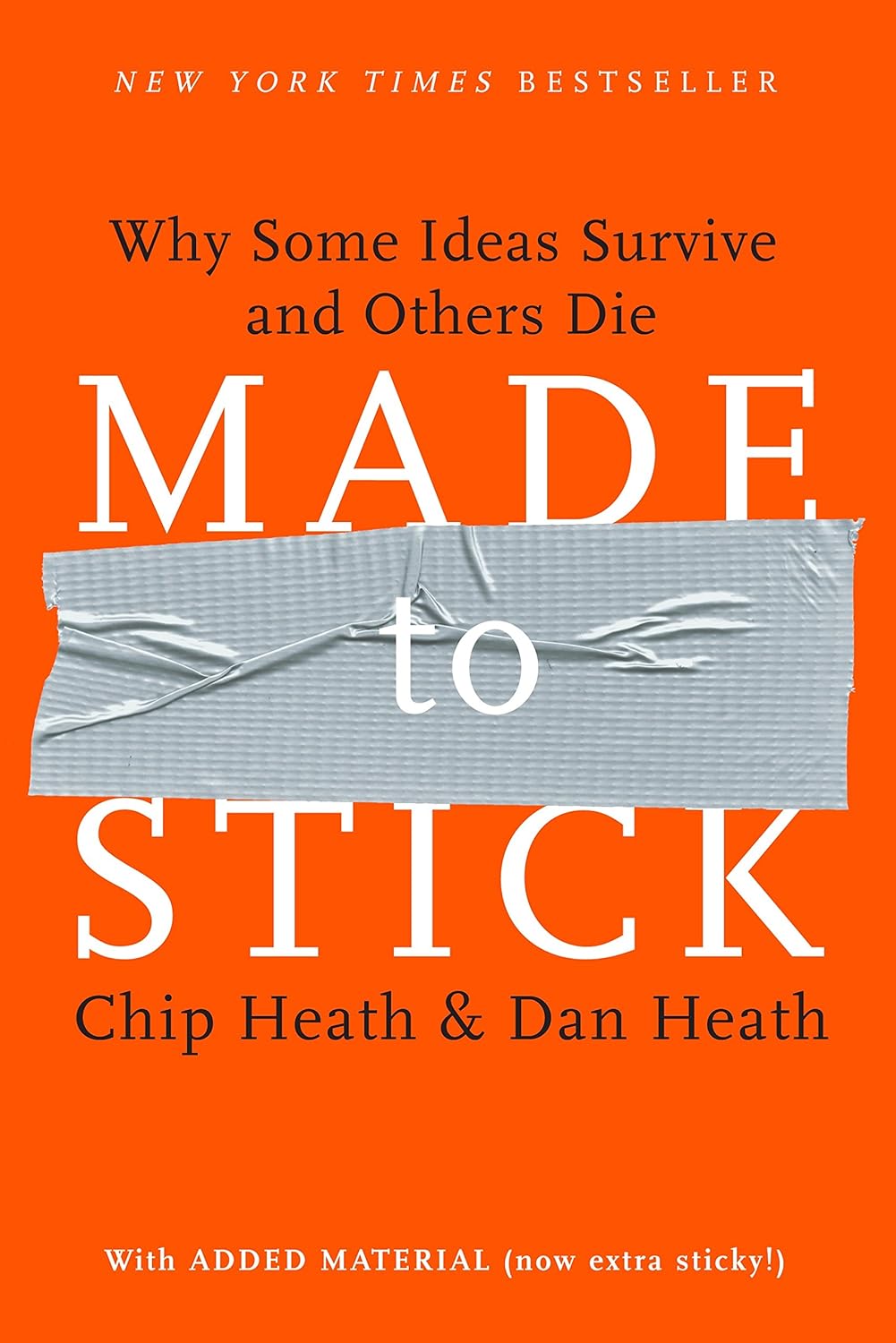
Book links are affiliate links. We earn from qualifying purchases.
Authors
Hosts
Transcript
This transcript was auto-generated by our recording software and may contain errors.
Nathan Toups (00:00)
I do think there's a room, there's room for people who are not good with product. I think that what's going to happen though is that those people
the opportunities are going to shrink and it's only going to be for the people who are truly exceptional.
Carter Morgan (00:19)
Hey everyone, welcome to Book Overflows, the podcast for software engineers by software engineers where every week we read one of the best technical books in the world in an effort to improve our craft. I'm Carter Morgan and I'm joined here as always by my cohost, Nathan Toops. How are you doing, Nathan?
Nathan Toups (00:31)
Doing great, hey everybody.
Carter Morgan (00:33)
Well, thanks for tuning in everyone. Make sure to like, comment, subscribe. You can share the podcast with your friends and coworkers. You can share it on LinkedIn. And thanks everyone for the response to last episode. If ⁓ you haven't checked out last episode, go ahead and check it out. It was a little different. Kind of one of our first more critical episodes. We didn't know how it was going to go over. ⁓ Very good audience response from you guys. And you communicated that you want to see more of that. We're still committed on this podcast to maintaining our overall positive tone. Just like that's
Part of the, like, we don't want to be masochist. We don't want to like just devote ourselves to reading books where you're not interested in just to criticize them. But we do hear you and we, we hear that you like hearing some more critical thoughts and you know, we're going to, we're going to lean into that just a little bit, just let you know where we disagree with the book, even if we like the book overall a little more. Um, and Nathan, any thoughts on that with, uh, how people responded last episode?
Nathan Toups (01:28)
Yeah, the comment section was so much fun. My favorite comment was someone saying it's like reading the Kabbalah and then already deciding that you didn't like the Kabbalah in the first place. And I thought that was a really funny one. Yeah, keep it coming. It's entertaining even if we disagree. I really love it actually if you've got a hot take and we can change our worldview a little bit too. That's great.
Carter Morgan (01:53)
Well, yeah, so we're going to explore more of that. And as always, thanks for tuning in. This is why we do the podcast. We like hearing from you guys. And so ⁓ we are happy to explore more avenues. the podcast, you know, makes it a better listen for you guys. ⁓ And let's talk about this week. We are excited. This is made to stick a first in podcast history, Nathan, I think where we have both read this before.
Nathan Toups (02:19)
Yeah, it's been a while. Yeah, yeah.
Carter Morgan (02:19)
It must be, right?
Yes, yes. You read it what, in 2011? That's crazy.
Nathan Toups (02:24)
2011, so some of you
were probably babies when I was, when I had read, and I read it, I actually listened to the audio book, and this book came out in 2007, right? So it was already a few years old at that point, but yeah, I remember it having an impact on me and it, yeah, we'll bring it up today, yeah.
Carter Morgan (02:43)
I read it in 2019. Um, I read it in college. I, those of you who are familiar with podcasts, Laura know that, uh, like Nathan, I don't have a bachelor's in computer science, a bachelor, master computer science bachelor's in business management. I enjoyed my business management classes, but I felt like everything I learned to them, I could have learned by reading a book. Uh, this is one of the books I had to read for my business management classes. And I mean,
Out of everything I learned in any business management class, this was by far my favorite thing. And I recommended this book to countless people. So super excited to cover it for the podcast. Not a strictly, well, it's not a technical book at all. ⁓ we try to like, we've talked about maintaining a balance between career books, culture books and technical books. So this is definitely more of a career slash culture book. And we're, we're really excited to be able to talk to it. We were at the first half this week, the second half next week.
Let's talk about what made the stick is who the authors are. So I the author is Chip Heath and Dan Heath, their brothers. Chip Heath is a former or is a professor at Stanford Graduate School of Business who researches why certain ideas survive in the social marketplace while others fail. Having spent years analyzing urban legends, conspiracy theories, and proverbs to understand what makes the ideas naturally sticky. Dan Heath is a former Harvard Business School researcher who co-founded Thinkwell, an innovative education company that created multimedia textbooks.
where he worked with award-winning teachers to understand what makes excellent instruction memorable and effective. And that all plays into made to stick, which is in made to stick, Chip and Dan Heath reveal the anatomy of ideas that stick and explain ways to make ideas stickier, such as applying the human scale principle using the Velco theory of memory and creating curiosity gaps. Made to stick will transform the way you communicate through a fast-paced tour of success stories and failures and show us the vital principles of winning ideas and tell us how we can apply these rules to making our own messages stick.
So yeah, it's a, this is a messaging book, a PR book, you might say, uh, very different from anything we've covered on the podcast before, but I think it says a lot that despite it being very different from what we've covered, we have both read it and loved it so much that we wanted to cover it on the podcast. Uh, mean, Nathan, so we're revisiting this, you after almost 15 years, me after seven or so, what are your thoughts on the first half of made to stick?
Nathan Toups (05:04)
Yeah, when I first read this book, was, I had started my own consulting business and you know, messaging and making it so that you stick out from, you know, competition and things like this becomes really important. And this is just one of those books that was considered, you know, an obvious read in the sort of business world. I will say the way it applies to software engineering and what I think is really interesting about this book is that inevitably you're going to take on a project.
in a large noise of projects at your organization or a large amount of noise with a B2B customer or a B2C customer, in understanding why certain messaging sticks and why certain messaging does not, it's actually really important. If you start a product internally in your company, I used these tools when I was doing platform engineering. You have to think about platform engineering tooling as a product and your customer is the other software engineers in the company. And there's ways to make that
those ideas sticky. And there's also ways to make that so technical and convoluted that no one understands what you're doing, right? And this book, I think, gives a good framework for thinking through why maybe certain messaging is falling flat on its face.
Carter Morgan (06:16)
Yeah, this is the oft forgotten part for software engineers that it's often not just enough to build your code. Especially as you move up, you need to be championing your project and sometimes competing for resources. I really, really enjoy this book. It's very encouraging for your average software engineer. We're to talk a bit more about kind of the thesis of the book, but the thesis is that
sticky ideas, ideas you remember, ideas that gained purchase within society are all kind of follow a similar template. that creating ideas that are persuasive is not a matter of necessarily rhetorical ability or, know, like they mentioned this at the beginning of the book, like all of our advice when we talk about public speaking, it's like, stand up straighter, speak with a deeper voice, look people in the eye. Like I'm sure these things aren't going to hurt you.
But none of that actually goes towards making your idea more effective. so this, think is really encouraging for software engineers because, you know, we don't all possess kind of like Obama level rhetorical skills, right? But we, we are pretty good at following patterns. And so if you're interested in the patterns that make ideas sticky, this is the book to read. And I think this book is also great because it's a little self-proving in that like,
I read it six years ago, Nathan read it 15 years ago, and then reading it again, so many of the stories they tell to illustrate their purposes, like they'd get like two sentences into the story, but yep, I remember that one. And I remember exactly what I was trying to teach. you know, like it's a, the book sticks with you, which obviously it has to. yeah.
Nathan Toups (08:03)
Yeah, yeah, I think it's not
a surprise. I think it was on the New York Times and Washington Post ⁓ bestseller list for like two years solid. Yeah, and yeah, it's just, and it's also, I think it's still in the like 100 best business books, you know, lists everywhere. So it's still sort of a ubiquitous text, ⁓ but it's also one that.
Carter Morgan (08:12)
Really?
Nathan Toups (08:25)
I think it was incredibly novel at the time and it's now sort of like been, you know, it's the victim of its own success thing where I think a lot of these are like, yeah, well of course that's how good marketing works or this is how good other stuff. I think at the time though, these were sort of like surprising conclusions of like, ⁓ why does this, you know, urban legend get spread so quickly and yet I can't get, you know, ⁓ some public service announcement to stick with people, right?
Carter Morgan (08:52)
Right.
Nathan Toups (08:55)
I will say, and we'll get into this. think we're going to have things we like and didn't like about this book. One concern that I have, and I think maybe it's just because I'm getting older, is that this is a framework for creating sticky ideas completely devoid of your moral compass. We're actually using tactics and techniques from urban legends and things that cause public fear-mongering.
and then saying, what if we retool these for public good? But the devil's in the details. What you think is public good or what you think is truth is still a malleable thing. And this is an interesting set of tools that can be used to manipulate one's emotions and to manipulate ⁓ ways that you tell stories in a way that gets down to something that's sticky and maybe is a bit reductive. ⁓ we could talk about that. not the point of the book.
But you definitely, it's interesting because there's never this like, and be careful because you can manipulate people with this caveats that going through it. It's just kind of more of like excited that finally we're messaging kind of boring things with like the same techniques that we're using urban legends, right?
Carter Morgan (10:11)
Yeah, we're going to share some more of our hot takes throughout the podcast and, ⁓ and we're experimenting. think we might even have a dedicated section towards the end, but no promises. ⁓ well, I mean, let's just get right into it. ⁓ made to stick. so we write chapter, the introduction and chapters one through three. ⁓ the introduction is that idea we've been talking about basically that all successful ideas or, or not sticky ideas, because what is a sticky idea? An idea that.
people talk about an idea that you remember, an idea that spreads quickly, share basically six principles. They are simple, unexpected, concrete, credible, emotional, and contain stories. ⁓ That spells out success, which is a fun little acronym for us. And then we read the introduction plus the first three chapters, which focus on simple, unexpected, and concrete. ⁓
illustrate this point using urban legends. They kind of open the book with the urban legend of the man. He's at a business meeting in, I think, or Cincinnati or whatever. And he meets an attractive lady at the bar and then they go up for drinks to his hotel room. He passes out, doesn't remember, wakes up in a bathtub full of ice with a tube protruding out his back. He calls 911 and she says, sir, you've been part of the
Are you the victim of an organ thieving ring? They've stolen your kidney and you know, placing the bathtub for recovery. Don't move. And it's like, you know, that's a successful urban legends. You might've heard that one before. And they point out like, this is something that a lot of people know about. And they say, well, why do you know about it? And, ⁓ they, yeah, that's what the book is about. ⁓ anything else from the introduction, Nathan, we should share, the curse of knowledge.
Nathan Toups (12:08)
Yeah,
no, think it's, what's interesting in the introduction before they get into it, they kind of introduce these principles. I think they're kind of priming us for, and again, I think they're using this success model for this, because they start this business book with an urban legend about getting your kidneys stolen, and that kind of makes you go, wait, this book's different. There's something interesting about this. ⁓ And you kind of get primed for, ⁓
Carter Morgan (12:32)
Right. Right.
Nathan Toups (12:37)
Well, how do I make stories that are, I've heard the kidney high story. I've heard some variant of it, right? Cause that's the thing about ⁓ sticky things is that, you you'll get the gist and yes, certain parts of it might be malleable. ⁓ This book actually I wrote years ago. It would probably have been the same year. I ended up writing an article for Mac tech magazine, which I was in the Mac enterprise community.
Carter Morgan (13:02)
nice.
Nathan Toups (13:06)
⁓ doing Apple for Small Business at the time. And I wrote an article about the curse of knowledge. I actually wrote an article and it was inspired because of this book. This idea that, hey, are you having a hard time communicating something it's probably because you're missing concrete examples. And of course we get into this in the book, but it was this idea of having empathy or ⁓ in Buddhism actually, they use this thing called beginner's mind. So beginner's mind is this a concept that you should approach
something that you're very, very familiar with, with the empathy of someone who's doing something for the first time. And I think it's sort of the other side of the coin of the curse of knowledge, right? If you purposefully practice thinking through, and I guess touching on the curse of knowledge, we'll get on this before we get into some of the examples of the book. Curse of knowledge is that you forget what it's like to not know what you know, right? So as we become more expert, and honestly, there are probably people who've listened to some of our episodes and we're using
Carter Morgan (13:57)
Uh-huh.
Nathan Toups (14:05)
terminology and vocabulary that's so deep in our industry, opening a PR or doing a commit or these other things that we're so abstract in how we're talking about things that it sounds like we're speaking another language, right? That's the curse of knowledge. Once you become an expert in something, we can speak very abstractly about something. It's very nice. But if we are, if we are, if we,
take a step back, we realize that maybe we're so deep in the abstraction that no one else understands what we're talking about. And so again, there's techniques for this. There's reasons that, you don't have to be, the kidney heist story, there was no expectation that you understood the deep intricacies of, you know, organized crime and how kidney extractions work. They just explain it in some very simple way that makes you emotionally feel a certain way. So.
Yeah, anyway, I love these kinds of things because it also gives us a way to say, why is this team over here at our company so good at getting our CEOs attention? ⁓ it's because the way that they're building stuff is easy to share, easy to talk about. People get excited about it. Right? They've really communicated how it solves a real problem inside of the business. Right? And if you go back and look at the success criteria from Made to Stick, they're probably at least hitting
Carter Morgan (15:11)
Mm-hmm.
Nathan Toups (15:29)
four of those things, right? Four of the concepts that are in there.
Carter Morgan (15:33)
Yeah, absolutely. ⁓ and, and I love how the book opens with this idea. They have this Israeli ad research experiment, ⁓ where basically they have three groups of trained profession or of untrained people who their job is to come up with like ad campaigns. And one of them is one of the groups. They just have no experience. They kind of just are told like, okay, come up with ads and then they have a creative director select like 15 of the ads and then they run them. Right.
And then they, see how the Republic responds. Right. And so they do that with the untrained group with a group that gets trained on like, uh, two hours of like a free association brainstorming technique. And then the last group, uh, their training is they're literally just shown templates of previous successful ads. And, uh, and, and they basically copy them.
And out of those three groups, like by far the group that did the best, I think they said it was like a 55 % improvement over the free association group in terms of how audiences, how annoying audiences perceive the ads. So it's 55 % less annoying. Uh, it was the group that just went with the ad templates. Um, and so, you know, 55 % reduction in annoyance for a two hour investment. Like that's a crazy good return. So the book kind of does.
There is a bit of like, just trust me, bro, with this book. ⁓ but it does kind of speak for itself because you get to hear all of their examples. And like I said, the book is pretty sticky. still remember a lot of these stories years later. ⁓ yeah. So let's talk about chapter one then simple, ⁓ basically the point of a simple idea, you got to find the core of your message and express it with profound simplicity.
Nathan Toups (17:10)
soon.
Carter Morgan (17:20)
It's not about dumbing down, but about prioritization using schemas to pack meaning efficiently. So they really hammer this point in the book that a simple idea is not a dumbed down idea. A simple idea is the very core of your idea. They compare it to the U S military's commander's intent, which is that the U S military puts a lot of effort into planning, but no plan survives contact with the enemy. And so while the act of planning is important at the end of the day, you still have to know what the plans are for.
And so they say on every order in the, in the U S military, there's a commander's intent at the top, which is, ⁓ expresses. kind of very simple goal of the mission. so they say at a high level that could be like break the enemy's will in the Southeast region, but the very low level, could be secure the Southwest tail, ⁓ with the third battalion to guard the fourth battalion's flank or something like that.
And the idea there being that now everyone who receives that order knows what the ultimate purpose is. And so if the plan goes haywire, you still know what you're driving towards. They compare it to a chess game, basically saying like, if you were to say you're a great chess player, your friend, Sally is going to play another great chess player. And so you're going to write all of her moves ahead of time. Well, you can't do that. Even if you know a lot about Sally and you know a lot about who she's playing. It doesn't matter because at a certain point.
the person she's playing is going to make a move that doesn't make sense or doesn't make, or that you didn't anticipate. And then how is Sally supposed to react to that? She can't react to that off just a list of set instructions. So the commander's intent orients you towards that ultimate goal. And the point of the commander's intent is that it's simple. That is the core of the idea, the core of everything you're trying to do.
Yeah, I mean, Nathan, what do you think about Commandos intent simplicity? I love a lot of the examples shared here and I want to get into them, but I want to get your general thoughts.
Nathan Toups (19:17)
Yeah.
No, Commander's Intent's great. I'll say good managers in a company use this Commander's Intent model versus someone who might be a micromanager who has to be deeply involved in every little bitty decision. And you've probably experienced this, right? You have some manager who's like kind of given this initiative, but it gets his or her fingers in everything, right? Oh, I have to be part of this code review. I have to make sure this is just right. So when I communicate it versus if you have a Commander's Intent model,
you, if your commander, if the manager goes on vacation, you shouldn't have to get direct sign off for them, right? You should be able to go, you know what? I know what the intent of this project is. I'm kind of stuck. I think if I go and work with a couple of people, we can get through this and we'll push this forward. We will fulfill the commander's intent. And I think this is idea that, you know, I talk about this a lot with our team is we should know the purpose of the thing that we're trying to build.
even if you can't get feedback, what we don't want to do is you get blocked and you have to just sit on your hands and wait because you don't have authority to move things forward. so the military, right, which is a very hierarchical authority structure has this amazing sort of decentralized way of understanding how to interpret rules that they have in their system. And I think it's probably one of the most successful org structures ever.
Carter Morgan (20:21)
Right.
Nathan Toups (20:43)
in human history is the way that militaries organize themselves. And this is an area of deep research. There's other books actually in this category of like former commanders and stuff that this area is very interesting because yeah, you know, if you're off on a nuclear submarine and everything goes radio silent, that nuclear submarine better understand how to operate ⁓ when there's radio silence and understand what their intent is and the crew has to be able to work autonomously. And these are things that ⁓
you know, we, we, it would behoove us to not pay attention to. think another one I like a lot, and it's funny, it's aged because Southwest has had some rough patches, but back in, back in 2007, they were very focused on this. And I think if you probably look at anything, Southwest has lost their focus in this area, but Southwest used this sort of mantra that said, we are the low fare airline, right? And so they were like, oh, well, should we improve the meal quality?
Carter Morgan (21:21)
Right, right.
Yeah, yeah.
Nathan Toups (21:42)
you know, from trips to from New York to LA or something. And they would say, well, is that going to help us in our position to be the low fare airline? And of course, the answer was no. And so you get peanuts, right, or whatever. And people who don't like that are going to go fly another airline. But people who want, you know, super cheap, very understandable sort of pricing and everything else, they would just pick Southwest. And they were 100 % focused on this. And everyone in the organization knew, you know, does this marketing campaign
position us to be the low-fare airline? Does this partnership position us to be the low-fare airline? ⁓ Do people understand that we are the low-fare airline? And ⁓ I think that if you, they have some other good examples too. I think you'll probably wanna talk on this, because you're more of a Disney guy than I am. I love the Disney cast member metaphor that they talk about too.
Carter Morgan (22:32)
Yeah, absolutely.
And I love that one. I've thought about that one for years. and, and before we get into it, just kind of set in the stage with Southwest, one of the things that's great about when you have a simple idea, helps people who are following you understand what they can and cannot do. Um, that's the whole idea of the commander's intent. Like we have one simple goal that we're driving towards saying with Southwest, when you talk about your, the low fare airline, it helps, uh, like they point out that like Southwest and they have his written 2007, I don't know.
that we're culture of Southwest is like today, but Southwest back then, at least with regard is a pretty fun place to work. Now you wouldn't think that would line up like, well, how does being the low fare airline line up with being a pretty fun place to work? And the answer is because if all you're focused on is it being the low fare airline, you can kind of evaluate how you comport yourself at work through that goal. And then there are things like, well, can you joke on the PA about a flight attendant's birthday? Sure.
That doesn't stop you from being the low fare airline. ⁓ and, and they talk about this idea of yes, or confetti.
Nathan Toups (23:35)
But can you throw, I think they also said like, but can you throw graffiti, you know, as a prank or confetti, sorry. Yeah,
confetti, thank you. Can you throw a confetti? And they're like, no, because that's actually, you know, like time and, you know, janitorial service wise is more expensive. So like, don't do that. But you, don't have to ask even leadership, if this is good idea. go, yeah, no, it actually a burden, you know, so yeah.
Carter Morgan (23:57)
And they,
one thing I love, they say, this is where I think we as software engineers, we get a little too pedantic sometimes. We're very interested in being technically correct because the authors point out that is the goal of Southwest Airlines to really be the low fare airline? No. The goal of Southwest Airlines is to maximize shareholder value. Like that's the goal of any company, right? But that doesn't help your rank and file employees know how they're supposed to operate. What does it mean to...
at the lowest level to maximize shareholder value. And so they point out that sometimes when trying to pick ⁓ kind of the core of your idea, you might choose something that isn't actually the idea. It might be a little off. It might be a teeny tiny bit of a lie. And that's okay because it helps drive, it helps people orient themselves. And they kind of say with a...
the whole point of this book, they said, we'll give you the core of our book, which is they said, the purpose of this book is to teach you how to find the core of your idea and then to make it sticky using the success template. And they talk about this idea of generative metaphors, which I love. I thought this for a while, because I used to work at Disney and I'm so big Disney fan. Disney calls their employees cast members. And I'll say that that extends to everyone in the company. ⁓
Not in like a, it was interesting just working there because it's not in like a, like, you know, sometimes like a company will be like, I don't know, like at Facebook, like we're all Facebookers and then when they change you, they weren't Facebookers anymore. You were like meta mates. I guarantee you at meta. Yeah, there were meta mates, right? And, and like, I guarantee you at meta, they're not like, I'm a proud meta mate, right? But like, when I worked at Disney, even like us in software engineering people in like
Nathan Toups (25:42)
Is that really Metamate? man, sorry. Sorry, y'all.
Carter Morgan (25:55)
business operations, like we all called ourselves cast members and thought of us as cast members. And that was very normal and natural. And like when we, we had a lot of contractors who worked for us, but you never heard contractors versus full-time employees. It was contractors and cast members. So that metaphor extends throughout all of kind of the Disney parks operation. And they say, what's great about it is it's a generative metaphor because again, this helps.
employees understand how to act and it applies to other areas of the business. And so, you know, if you're a cast member, you know, just Disney terminology, right? Like employees are cast members. there is on stage, which is the parks and there's backstage, which is, the, the, I don't even know what else you'd call this because like, was just so natural when I worked at like the backstage areas, the, areas that are not accessible to the public.
You don't interview for a role, you audition for a role. You don't have a uniform, you have a costume. And so this cast member analogy applies to lots of different facets of the business, but importantly, it helps employees know how to comport themselves. You know, the example they give is like, are you allowed to take a break on stage in your costume? No, because an employer would never do that. An employer would or not employer, an actor would never do that. They'd never stop the show to smoke a cigarette in the middle on stage. ⁓
They mentioned that the street sweepers at Disney are some of the most highly trained employees because they're very visible and they're often asked questions about the parks and that generative analogy applies there, which is like, should we highly train our street sweepers? Well, yes, because they're cast members, they're members of the production. They're highly visible actors in this production. And so it stands reason that they should be highly trained. And then I love they give what they call the evil twin.
of this metaphor, which is the subway sandwich artist. Because when you think about what an artist is, an artist usually has free expression. They have some creative liberty over, you know, how they produce their art. Does a subway sandwich artist have any free expression over how they make that sandwich? Can they deviate from the plan at all? No. And so what's even the point? And I felt this at a lot of companies, like if you're going to have like a metaphor or an ideal, like you got to commit to it. Because if you have
these ideals and then you're not committing to them or worse, you're, you're acting against them. I don't know. It's, very demoralizing as an employee.
Nathan Toups (28:25)
Yeah, exactly. And again, I appreciated the counter example because I think it is important that you can get into this corporate speak where you have a mission statement that's literally, it's like, maximize value to our customers in a humane way. And you're like, what does that even mean? And so ⁓ it has to be, and again, this gets back to the idea of simple doesn't mean cutesy, it doesn't mean
Carter Morgan (28:44)
Right. Right.
Nathan Toups (28:54)
that it's, it still has, it has to be compact, right? So like it has to be something that is easily repeatable. This gets us back into the sticky piece. It also has, there's like an elegance to it. There's like a design characteristic to it. And when you see that it's, you know, I'm not big into the Disney world, but I can appreciate that this is their approach because they are, you know, they're in the magic business and they, you know, this idea of treating everyone as a cast member is consistent philosophically.
with what Disney stands for. And if you look at that and I go, immediately you go, yeah, that makes sense. Like totally, I get it. ⁓ it's internally consistent. And I think maybe that's one of the things with the simple piece to this is you look at these and you go, that's so obvious, but I will push you, anyone who's listening to this episode, coming up with simple ideas is so hard.
Carter Morgan (29:52)
Absolutely.
Nathan Toups (29:53)
especially when it's authentic. so I don't wanna over, like, overstay like, just make it simpler and everything's gonna be fine. It's like, you really have to soul search to go, you're like, what are we focused on? What is the core value that we have here? And so, yeah, it's, I can still appreciate it though. It's like, just like if I see a good minimalist design and I go, wow, you know, there's something powerful in that statement that's there.
Carter Morgan (30:19)
I love they give the example of JFK saying, you our goal by the end of the decade is to put a man on the moon and return him home safely. And you contrast that like how would like your modern CEO present that idea? Like we aim to be the number one nation in space exploration through strategic advancements and intellectual capability. Right. And so it's like, it's like, well, yeah, that's technically true. Um, but that doesn't get people exactly right. I don't get people excited and you can't
Nathan Toups (30:41)
Yeah. Yep. You lost me.
Carter Morgan (30:49)
You can't orient yourself around it. So I agree completely. Like finding the core of your idea is so stinking hard, ⁓ but they compare it to really like software engineering and general design, which is that like a design is not perfected when there's nothing left to add. A design is perfected when there's nothing more to take away. ⁓ And so finding the core of your idea is all about jettisoning the
Nathan Toups (30:51)
Great.
Carter Morgan (31:17)
extraneous parts and that ruthless prioritization can be tough, but it's kind of a prerequisite to making anything else and the rest of this book work. then we have chapter two, we have the unexpected chapter. ⁓ and the idea here is to break patterns to get attention and then hold it by creating knowledge gaps that people want to fill, avoid gimmicky surprises in favor of insight producing unexpectedness. And they talk about that, right? Like, how can you have expected unexpectedness?
it seems like an oxymoron, but really what they're saying is, ⁓ you kind of want to grab attention and then hold attention by breaking those patterns. ⁓ the example they give is a minivan ad, which, you know, it starts out with the, the mom and dad, they pick up the son from soccer practice and it's introducing the all new Enclave minivan. It's got cup holders and cruise control and blah, blah, blah. And then while, you know, this commercial.
is happening, they get T-boned at an intersection and they say, you didn't see that coming? No one did buckle up. And it's a, it's a public safety announcement. ⁓ that plays into that idea of breaking patterns. as humans are pattern recognition machines. We're very good at understanding a pattern and kind of filling in the blanks. so when something is unexpected, it really kind of shocks us and we go, that's, know, I didn't expect that. And you, you remember it more.
They kind of contrast this with an ad during the.com boom, which had a marching man. I love this ad. don't know we got to see if we can find it online. ⁓ it's an, marching band. go out into the field to play the big game and then they all get mauled by a pack of Wolverines. And then it's like, but they, they point out like, we don't remember what this was advertising. ⁓ cause like, yeah, that's unexpected, but it's not unexpected in a way that
breaks our pattern seeking part of the brain. It doesn't connect back to the main idea. so, yeah, I find this personally out of all of the examples in this book, the hardest one, or not the examples, the principles in this book, the hardest to implement. It's really, really hard to have unexpectedness in your ideas.
Nathan Toups (33:37)
Yeah, no, it is. It's, it's, ⁓ I think this gets back into in business speak, they'll talk about surprise and delight, right? It's like a sort of a watered down version of the unexpected. But it's this idea of like, does it add to the mythology? think the Nordstroms was like another example where they couldn't provide some, they couldn't provide something for their customer. And so they went out and just got it from a competitor, just so that the customer had such an amazing experience. ⁓
The idea here is that, ⁓ yeah, these unexpected pieces, and I think this is also like a cat and mouse game, right? As soon as somebody does something that breaks expectations, well, you can't rinse and repeat that, right? You can't do the exact same formula, otherwise people are kind of like expecting it. And so it's like, I think they talk about this like gimmicky versus meaningful surprises.
Carter Morgan (34:21)
Hmm.
Nathan Toups (34:33)
⁓ And that gets back into that, yeah, the band that's attacked and you're like, okay, well, I kind of remember it, but there's what was that versus the car accident PSA, ⁓ which I remember that commercial actually. Yeah. And it was, I remember it shocking because we were just like chit chatting and it like stopped the room. like if you saw this thing and it kind of had this like very sober aspect to it, because it's not, you again, you kind of dialed in, you probably even tuned it out like, this is another car commercial.
Carter Morgan (34:46)
really?
Nathan Toups (35:02)
And it was like, ⁓ what did I just see? That was crazy. And this really, like, if you've ever been in a car accident, that's exactly what it feels like, right? Life's normal. And then all of sudden things go sideways. And the fact that it could do that now, of course, if another commercial does the exact same thing, you're like, yeah, they're just copying the, they're copying the PSA thing. ⁓
Carter Morgan (35:20)
Yeah, right.
the best
way to think about this, they use the term post-dictable, which is that the surprise has to make sense after the fact. The car commercial, that works because, I mean, we took away the message from that. you were saying, Nathan, like this is how real car accidents work. it makes, yeah, it kind of fits within the framework of that ad. The band getting mauled by wolves, what is that advertising? No one even knows.
Nathan Toups (35:31)
Mm-hmm. Yes.
Carter Morgan (35:53)
They point out, said, now, if this commercial had been advertising wolfproof band uniforms, then it would be a fantastic commercial. There's this place, I think it's a flooring store by my house. And you you see on the freeway and have like a big kind of electric billboard outside their store. And for the longest time, and again, I don't even know what the name of this place is, their advertisement strategy was doing things like kind of
unpredictable, like just advertising, like fun facts, you know, like a shark has 82,000 teeth or whatever. And like, it was always interesting. I paid attention to the ads. I still don't know what that business is. I, again, I think it's a flooring store, um, but it's because it's not post-dictable. Like it did surprise me. It was unexpected. You don't expect to see that kind of stuff advertised on a billboard, but it had no connection to the idea they were trying to sell me.
I think the easiest way to think about this is to talk about knowledge gaps, which is because we're kind of, you know, we're pattern recognizers as a species, we really want to fill in these kind of curiosity gaps when you hear a story. Like for example, they talk about a professor who was teaching his students about Saturn's ring.
Like why what are Saturn's rings made out of right? but instead of leading with just like many people did not know what Saturn dreams were like made out of but then we found out that they were made out of blah right says instead you can say one of the biggest mysteries in the world was What are Saturn's rings made out of there are a lot of theories proposed so-and-so proposed this so-and-so proposed this right? But throughout the entire telling of this story you're leaving that central mystery open which is
What are Saturn's rings made out of? And then you're going to remember that when you finally get the answer, you're gonna remember it more because you spent a lot of time pondering it yourself, trying to kind of piece it together and figure out what Saturn's rings are made out of, that when the answer finally comes, it just fills that spot you've already created for it in your memory.
Nathan Toups (38:11)
Yeah, so this is where my theater degree, my undergraduate in my under conventional history comes in handy. Anybody who's a movie buff understands this. It's called Chekhov's Gun. I don't know if you are familiar with this, but this idea is that if you introduce a gun in the first act, it has to be used before the end of the play, right? And I remember I was teaching this principle to my daughter when she was probably like seven or eight years old, because we were watching kindergarten cop, probably not the most appropriate movie for a seven or eight year old, but we had fun.
Carter Morgan (38:23)
Yeah.
Nathan Toups (38:41)
And in kindergarten cop Arnold Schwarzenegger's character introduces a ferret, his like pet ferret. And you're like, what does this have to do with anything? And of course, you know, spoiler alert, the ferret becomes very important when we need to deescalate things at the end of the movie. And so I taught her to look for, you're like, what is that? Why? Why are they fixated on some weird
personality quirk or why is this like weird random prop being introduced in the beginning of something? And it's typically a tell because they have to give themselves permission to do some wild thing later. I think Chekhov's gun fits into this unexpected framework well because you need Chekhov's gun to make it post-dictable, right? If kindergarten cop, they had disarmed an enemy at the end of the movie randomly with a ferret, you that wouldn't, you're like,
Carter Morgan (39:33)
Right, right.
Nathan Toups (39:35)
Well, that was weird. It's called a Dave's X Machina. It doesn't make a lot of sense. But if it's like, the ferret really loves ⁓ Arnold Schwarzenegger, he's like very, you know, he's this kind of thing and you kind of forget it in the back of your mind. And then all of sudden the ferret comes and saves the day. Well, that's kind of hilarious. You were talking about it right now. It was unexpected. Because, you know, there's this big bad, you know, gunfight scene going on. ⁓ And I think that these are the kind of things where like, yeah, that's this is what makes stories sticky. You know, I think in the if we go back to the
Carter Morgan (39:49)
Right.
Nathan Toups (40:06)
kidney story, right? It's the fact that he goes up to the, know, has a drink with this lady and then wakes up with this note, him being in a bathtub and saying, you know, call the, call the police or whatever. That's unexpected. I wasn't, you weren't necessarily expecting that to be the next thing. It might've been like, he woke up the next morning with a hangover. He woke up the next morning with, he realized that his money was stolen. ⁓ but the fact that he's like in a iced bathtub with a tube coming out of his back. And then you go, ⁓ man. Yeah.
Like, I've heard about this. I've heard people get their kidneys stolen, you know, like, and it gives you this whole unexpected pattern piece to it, which is, again, pretty cool.
Carter Morgan (40:45)
This is something I wish I were better at. think sometimes I get to the point a little too quickly and like it's tough because you can't meander, but I just had the opportunity lately to explain to the company what Terraform is and why we're using it more. We try on our engineering team to be pretty evangelical about the fact that we are a tech company and that it's important for everyone at the company to understand these technical things. so.
I just gave a little presentation about Terraform and basically said, you know, so what does Terraform get of us? Terraform gives us, know, the, why I think, what did I say? I said, it's the ability to, ⁓ track what changes are made to our, our infrastructure. It's the ability to, ⁓ spin up infrastructure if it gets deleted and it's the ability to spin up, ⁓ identical, ⁓ staging and production environments, in a kind of a dictated way.
Which anyone overwhelm and I got some compliments after I people saying, wow, you really helped me understand what Terraform is. wonder if I had started with like this kind of unexpected thing. Like, have you ever wondered what the company's plan is if all of our AWS resources got deleted? Right. And then kind of start from that, like, you know, how would we do it?
Nathan Toups (41:57)
Right? Or you could have manufactured
it. I'm going I'm going to spipple on this one because I think this is cool. Give the demo and then accidentally delete something that like ruins your demo and then show how it, you know, Terraform actually, ⁓ not a big deal. I'm just going to reapply this. it shows me what's changed. Okay. It's just going to redeploy it and like problem solved. It took something that was like a horrible nightmare.
Carter Morgan (42:03)
Yeah.
yeah, yeah. Right.
Right.
Nathan Toups (42:26)
Right? man, we just deleted the whatever and things are failing. And then you're like, no, this is solvable in two seconds. Right? This is, don't even worry about this anymore. This is an entire category of problems gone. ⁓ You know.
Carter Morgan (42:38)
Right. When
I was at my last company, I was at the kind of big company retreat and the CEO gave a speech and I thought the speech at the beginning was like, of like, it wasn't great. Like it was fine. ⁓ but I thought, you know, he's, he's kind of like a quirky tech guy. Maybe he's just not great at public speaking. And even at the end of the story, I still think he's not great at public speaking, but what was interesting is that the speech was all about AI and the companies need to embrace AI and about
you know, a quarter of the way through his speech, he stops and says, the whole, this whole speech was written by AI kind of from the beginning, right? And then he pivots more and more into the non, you know, the non-AI, ⁓ the, the part of the speech that wasn't written by AI, but talking about the need for the company to focus on AI. I thought that was a successful example of kind of that unexpectedness, right? Where it, ⁓ they were like, wow.
I was wondering why the speech wasn't going great. And then I found out that it was written by AI. then now we're talking about AI and the need to improve our company's tooling using AI. ⁓ that's another one that's kind of post-dictable. If halfway through the speech, he had stopped and said, this speech was written by AI. Anyway, now let's talk about our new, ⁓ affiliate marketing program. It's like, well, I guess you can do that, but it doesn't really make any sense.
Nathan Toups (44:01)
Right. Right.
Carter Morgan (44:03)
It
was a weird speech in general. the CEO, he, like, I didn't respect anyone who builds a company from scratch and makes it a billion dollar, ⁓ company, you know, public speaking is not everyone's strong suit. ⁓ let's move on. We got chapter three. We've got concrete. the summary here, we've got abstract language is the luxury of experts. Concrete ideas are easier to understand, remember, and coordinate around because they engage our senses and leverage shared understanding.
You want to give us ⁓ a little more insight into this one, Nathan?
Nathan Toups (44:36)
Yeah. So the concrete piece, I think is probably one of the areas where as software engineers, we struggle with the most. Like I said, we talked about this earlier. As you become an expert, and this is where the curse of knowledge really picks up, experts think abstractly. I mean, think about this. Let's think about something that I'm not an expert in, you're not an expert in, Carter. I think of like advanced mathematics, people who are PhDs in mathematics.
And they are so mired in LaTeX and can speak in mathematical notation and like talk about and pontificate, you know, very abstract ideas. Oh, I can apply this, you know, proof and theorem to this. know, they're kind of like manipulating things. And it sounds like they're on a completely different planet. And of course I look at it and go, well, how's this ever going to apply to me? And, know, maybe they're on the verge of, you know, getting a Nobel prize in economics because they've applied to
cool ideas with each other. ⁓ The only way that you can communicate these ideas to a broader audience is to give concrete examples. ⁓ I think that the book doesn't talk about this, I think about this a lot where I think one of the reasons that we talk about Einstein to this day is that not only did he have prolific ideas, but he had these thought experiments that were very sticky. You could talk about
light traveling on a train traveling in the same direction as the light from a candle and thinking about or falling and not knowing the difference between acceleration and gravity and these other like these ideas are perfect example. think using Einstein, he said, if all of these abstract mathematical concepts are correct, there's going to be this solar eclipse. And you if the curvature of space time is as I say it is,
there's going to be a star that's behind the sun that will bend its light around the curvature of the sun. And you'll see it on the edge of the moon covering the sun at this particular time. He makes this prediction incredibly concrete. It either is true or it isn't. You either saw the light of a star that you know is behind the sun curved around the edge of the sun or you did not see that. And I think that it's those kind of victories where he was able to communicate.
Carter Morgan (46:41)
Hmm.
Nathan Toups (46:58)
something that he could have stayed as a professor, sitting off and just thinking about things very abstractly. I think that the people who communicate in concrete terms win over large audiences. It's because these things are something that you don't have to understand five layers of abstraction to get the concrete truth that comes out of it. And they talk about this, the Bible does this a good example of this, right? This is what Proverbs are, right? Yeah.
Carter Morgan (47:21)
Right. ⁓
Absolutely. And that's,
they talk about this a lot in the book, right? Which is like, that's what we're aiming for here is not sound bites, but proverbs. Um, and they mentioned Aesop's fables, right? The, the idea of the Fox who is trying to reach the grapes and he's jumping and they're up too high. And then when he can't, says, well, surely they're sour, you know, and, and, and that's where sour grapes comes from. say this idea survived 2,500 years due to the concrete imagery. We as human beings are wired like,
Nathan Toups (47:36)
Yep.
Right. Yeah.
Carter Morgan (47:54)
Abstract thinking is hard for us, but we are wired to process concrete thinking. so yes, like the real moral of the story of the sour grapes, you know, fable is don't be angry about what you can't achieve, right? But like, that's not, that's not a concrete idea. That's, that's abstract thinking. And so we haven't passed that around for 2,500 years. Instead we've passed around this very concrete fable of, you know, sour grapes.
Nathan Toups (48:20)
Yeah.
And I loved this also talks about all the variants that happen. They talk about all these different cultures that have their version of the sour grapes. And I think we've all experienced these people, right? This ⁓ is the wallflower at, know, our freaks and geeks kind of stuff, right? Where you're like, yeah, football's stupid. And you're like, and it was funny as I was in that camp. I was like the skateboarder punk rock kid. And I was just like, yeah. But it was self-fulfilling.
Carter Morgan (48:28)
Yeah.
Yeah.
Nathan Toups (48:46)
It was for me to feel holier than now, right? It was for me to be like, well, yeah, well, that's what all the normal people do. And that's stupid. And I have better taste in music and do cooler stuff. And you're like, okay, but you also, I couldn't be the quarterback. Not possible, right? Like I would not have been sickest full in that. And so did I have sour grapes over that? Sure. You know, I've created my own value structure to do this. And ⁓ I think that the concrete thing is really important. So.
Carter Morgan (48:48)
Right, right.
huh.
Nathan Toups (49:14)
One of the things that they talk about though is that if you're struggling and you're like, how do you not understand Terraform so awesome? Well, that's a really abstract idea. Infrastructure is code, this idea that you can do idempotent changes. And once you understand these concepts, you're like, oh, this is awesome. And why did we ever do anything differently? But until somebody understands why they should care. And a concrete example might be, hey, have you ever had to deal with a snowflake?
Carter Morgan (49:21)
Yeah.
Nathan Toups (49:41)
servers, right? That was one I used all the time. would say, you know, we come in with the best of intentions. I try to do it following a run book or a script or something. And then an outage happens and I SSH into the server and I change some names and I fix timestamps. And I do these things. Never is it committed to get, never is it recorded anywhere. And then all of a sudden we get drift, right? Well, now we can start to understand this and go, so next time we do an update, well, it worked in staging, but it didn't work in prod because prod's not the same. Prod's a different...
environment and now we have all these weird side effects. Imagine we could live in a world in which I never named another server, right? And I would always talk about that too. I would say like, stop naming your children. You know, you need to treat it like cattle where you like put the little, you know, ID tag in their ear and just call it a day. But these are very abstract things. And so yes, you have to show an example of maybe something going sideways or show an example where we can release to production on Fridays.
and I can not worry about it, right? Or whatever kind of visceral concrete thing, what's the outcome? I can do a production release with confidence and then take a three-day vacation, right? Or whatever.
Carter Morgan (50:43)
Right.
Right.
Well, and the thing with something being concrete though, and how do they define it concrete? Basically, I say, if you can examine it with your senses, it's concrete. But again, it has to connect back to the core of the idea. I can come up with lots of concrete examples. say, this code is like a stick of butter. It's like, well, is it? You know, right? I'm talking in concrete language. ⁓ But this, you know, one of my favorite examples of a concrete idea I've ever heard and
And I know because I've remembered it for 10 years and this is a weird one. ⁓ but I am regrettably a bit of a political junkie and I, in 2016, I followed the 2016 Republican primary very closely and Ted Cruz talked about, and this wasn't like a staple of his campaign. You were saying it over and over again. Ted Cruz said he wanted taxes so simple, you could fill them out on a postcard. And that has, I've remembered that for 10 years.
Even though it's not necessarily an idea that I super agree with or really resonate with me, but just because it's so concrete, it's taking and it's unexpected and it's simple, right? It's this idea of like, I'm taking the tax code, which is incredibly complicated. And I'm going to make it so simple that you could fill it out on a postcard. You know, it's, it's bringing it to exactly. Right.
Nathan Toups (52:08)
I appreciate that, right? Like I think, again, regardless of the logistics or what his,
or how he was going to make that happen, right? Maybe we disagree in the details, but wouldn't it be nice if like the school bus driver didn't need to hire, you know, like everyone, whether you're a CEO or the school bus driver, you all just fill out the index card and call it a day. That'd be kind of cool.
Carter Morgan (52:14)
Exactly.
Right.
And it helps you understand
the ambition there, right? Is this, and let's say you actually, Ted Cruz became president and he was driven on the, we can dream. ⁓ And he really was on this mission ⁓ to simplify the tax code. It does help you prioritize because when you're talking about, ⁓ well, this deduction would be great for working families.
Nathan Toups (52:37)
⁓ gosh. Okay. ⁓ hmm.
Carter Morgan (52:56)
or this credit would be awesome for businesses. I think you can keep coming back to that idea of like, will this fit on the postcard? If it doesn't fit on the postcard, then we can't do it ⁓ until we're imagining an altruistic one. I think about that, Donald Trump, regardless of what you think about him, can be very skilled at this. I remember in the 2016 campaign, we all remember it. I'm gonna build a wall, I'm gonna make Mexico pay for it. And you can, whatever you think about that idea, this is...
Nathan Toups (53:03)
Yeah.
Yeah, yeah, that's clever.
Carter Morgan (53:22)
Concrete language we all understand what a wall is we all understand what that means for his immigration platform And then that idea if he's gonna make Mexico pay for it. You understand that he you know, his intention is to Do this without costing Americans anything and he's trying to you know, portray a kind of a strongman approach to immigration again not commenting on immigration policy there but just that's a very concrete idea and we all talked about it for a year right compared to I think about
Some of the other candidates back then whose policies I might've even agreed with more, but they could never quite get them in those concrete terms. And I think we see that as engineers a lot in our day to day work. Like it's really hard to get people committed to ideas or excited about things, especially non-engineering folks, because our work is entirely abstract and it's a challenge. I I'm trying to think of examples off the top of my head, but it's hard to think about off the top of your head because it is so challenging.
Nathan Toups (54:21)
Well,
Carter Morgan (54:22)
to make them concrete.
Nathan Toups (54:22)
so two stories that came up out of the book that I loved. One of them, It's the Economy Stupid, which was the reason the Clinton campaign really caught on. And of course, I was a kid at the time. I mean, I remember I was in like fourth or fifth grade, I think, when the Clinton campaign was happening. Yeah, there you go. And so it was, I remember it was a big deal because ⁓ George,
Carter Morgan (54:26)
Mm-hmm.
Right.
I was in utero.
Nathan Toups (54:48)
HW Bush was the incumbent president. The economy really had slipped sideways and he had broken some promises on not raising taxes is sort of like a pragmatic thing that happened. And Clinton kind of came in and he was a Rhodes Scholar and he'd done all this stuff and had a lot of charisma. had all the RIS and he was also off message. He had like four or five important things that he wouldn't stop talking about and they ended up getting him to focus on it's the economy stupid as.
Carter Morgan (54:54)
Mm-hmm.
Nathan Toups (55:15)
all everything was through that lens. And I think that this sort of like concrete messaging got him back where George A. B. Bush would fumble in the debates because, you know, there's all these reasons and all this other stuff. And he's just like, no, we've got to fix the economy. We've got to fix the economy. He dropped all the other messaging and people had something to latch onto and it worked. Right. He became president for eight years. ⁓ I think the other one that was really interesting to me was they were talking about VC stuff. And maybe this would tie in with what we're doing. we're talking about ⁓
I think was it the Blackberry or the, I can't remember which, it was the Palm Pilot, thank you, thank you, Palm. And so it was the Palm Pilot and they had this like wooden block and the wooden block was like the size of the thing. And it was like, that was the deciding factor of do we add this feature or not? Is this thing what's going to be included or not? And they took this idea of having this minimalist PDA that did, you know,
calendaring and contacts and notes and task list type of stuff. And that's all it did. Everybody had failed up to this point. Apple had made the Newton. There's all these other devices that try to be literally everything for everybody. And they realized like, no, there's this type of busy business person that would actually love to have, if they had these four things in their pocket and they could hold it like this and they could afford it, it would change things. I loved that when they had this sort of like concrete example of what it was, ⁓
You're talking about this guy who had, they were pitching for VCs and this guy comes in and he's got his nice suit on and he's got this big PowerPoint presentation. And the other guy was like not prepared or he felt like he wasn't prepared. And so he kind of just like dialed it in and he kind of threw the device onto the desk and was like, this is the future of handheld computing. And the room stopped, right? I think every one of the, all of a sudden, instead of them, the VCs, which were, if you've ever done a VC pitch, maybe.
some of you may have, some of you may have heard of them, it can be brutal, right? They're just, they do deal flow, they do hundreds of, depending on which VC it is, they'll do hundreds of pitches a week. And, or, know, month, I think I should say. And most of the time they're just like brutally getting through and pushing a bunch of questions on you. by switching this conversation around, all of a sudden the VCs were all leaning in, was Kleiner Perkins, I think. And...
We're leaning in and they're like, no, this is the future inevitably. And they were debating on what his strategy be. They were like making up vision ideas for him. Like he's sitting there and they're just like, no, this is, yeah, but storage is going to cut in half and you know, every year for the next whatever. And it was cool to see because they, gave them something concrete that they were able to wrap their heads around, not some weird, you know, I'm going to change the world and here's my slide deck, but here's this thing that's going to change.
Carter Morgan (57:59)
Mm-hmm.
Nathan Toups (58:09)
change the world, right? And yeah.
Carter Morgan (58:11)
Yeah, I've been thinking about this a lot with the company I'm at. Um, it's, actually part of why they kind of failed to sell me. They tried to recruit me back in December and I couldn't quite get the vision. It, it, in like a, it was just a lunch meeting. And by the end of the lunch meeting and, know, I think 40 minutes of the lunch was devoted to discussing BYU football and then 20 minutes was, uh, about, you know, the actual business. so in that 20 minutes, I couldn't quite grasp what the vision is after I went back and started talking with them.
a few months ago and sat down with them for several meetings and lunches. Then I started understanding it really excited me like, yeah, I see what's going on. But it's something we're talking about at the company currently, which is like, how, what, what's the elevator pitch? How are we kind of concretely describing the vision for where we want this to go? Because it's a, it's tough. It's really, really tough. ⁓ and this is successful company. they're, doing very well revenue wise, but still, mean, figuring out how to.
communicate this, your ideas concretely in a way that completely random people and new to whatever you're doing can kind of latch onto it immediately. There's real art to that. ⁓ Why don't we talk about Nathan? We want to share some of our hot takes with the book. ⁓ I guess a little background into why we want to do a kind of a section like this. We appreciated people's feedback with our book last week and people seem to really enjoy our ⁓
our thoughts on it, and even if they weren't as complimentary or as some of our thoughts have been in the past, I have kind of wondered for a while with the podcast what our audience wants and whether we are kind of a purely educational podcast that our goal is to kind of roughly summarize these books for you, or if you're more interested in the banter and our opinions on the subject matter. And just what we heard last week was kind of more of the latter that you guys liked hearing us.
Yeah, talk about it maybe in a more meta way or just give more of our thoughts on the subject. And so we're leaning that a little more, but you know, as always, this podcast is ⁓ really it's your podcast. So let us know, you know, if this is the kind of thing you want to hear more of, but either way, I'm excited. I want to, I want to talk about some of the hot takes in this book. Nathan, why don't you go first?
Nathan Toups (1:00:31)
Yeah, so, ⁓ you know, if I'm gonna think about critique, there's two things. Number one, success framework, it's a persuasion toolkit. And I worry about it in the same way that there's like the little sleazy parts about like pickup artists, things like this, right? Or like, how do you manipulate women to like wanna go on dates with you? It's missing the point of the fact that you date because you wanna find someone to connect with and potentially become your partner.
Carter Morgan (1:00:50)
Mm-hmm.
Nathan Toups (1:01:00)
Success framework and made to stick has no moral compass here. They basically say, let's analyze how sticky ideas work. And then they kind of give this very optimistic view of like, but look how we're using it for good. But there's really no indication that you actually must use it for good. And so this is absolutely a playbook for anyone who wants to manipulate the hearts and minds of people for your own devices, right? ⁓ And so,
It's not that you shouldn't read this book, but you should definitely keep it in mind that it's like, it's not how to make truthful things sticky, it's how to make things sticky. And, ⁓ you know, I think that we've seen this over and over again in ⁓ presidential campaigns, in advertising campaigns, that, you know, as more people get skilled at using things like the success framework, that it actually makes it harder to discern reality from fiction because
everything's being heightened to the level of an urban legend.
Carter Morgan (1:02:01)
can appreciate the book for not trying to go for a morality play. I, I joked during, I feel like we all lost our minds a little bit in the early 2020s. And I, uh, and I always joke that like, we, if I ever had a business, our, company mission would be we sell goods and services because there was just a, there's a real feeling amongst like everyone, like every business, every person, like if you have a platform, you need to use that platform to speak up for.
Social cause of your choosing and I think one it made us all miserable and two It didn't really advance a lot of social causes. It kind of just deteriorated trust and institutions and brands ⁓ and so I can kind of I respect when a book is just about Something it's it's not saying now be careful. Don't use this for evil, right? Just say this is just it's a tool and How you use it is up to you
We're just teaching you the framework here. So I get what you're saying. Like I think it's worth calling out. ⁓
Nathan Toups (1:03:06)
Yeah, and
I look at it the same way that I look at the lock picking lawyer, which I'm a huge fan of, which is teaching people how to pick locks actually does a couple of things. Number one, it's kind of cool to learn how to pick locks. It's something I personally like to do. But secondly, it helps me in lock selection. I know, hey, these locks are just hot garbage. I should not use them if I actually care about how good the security is on my lock. And so I think the same thing here is that if you're equipped with thinking about how you could be manipulated,
Carter Morgan (1:03:11)
Right.
bright.
Nathan Toups (1:03:34)
you're now more effective being like, why is this untrue thing so sticky? And I think this gets into my next thing, which was this book was, I thought was funny because all of us have bias. All of us think of things as certain, obviously true things. And they gave some examples throughout the book that I thought were like, it's funny. They haven't aged well. One of them was they had this whole section on coconut oil and how ⁓ popcorn in the nineties was just whole outrage because people were using
⁓ coconut oil on their popcorn and that it was because it was saturated fat, would like clog your arteries and there was all this like concern over it. ⁓ And what's funny is that like, I'm a huge coconut oil fan. And ⁓ really the problem was partially hydrogenated coconut oil. That's what had trans fats like we understand deeply the difference between a partially hydrogenated coconut oil and a coconut oil. Coconut oil is a saturated fat.
Carter Morgan (1:04:19)
Uh-huh.
interesting.
Nathan Toups (1:04:31)
saturated fats have gotten a bad rep. There's actually like lots of good health reasons to eat saturated fats in moderation. There's certain things that saturated fats do that other fats don't. And we also, think, wherever you fall on this spectrum is that there's a thing called seed oils and seed oils are these like industrial waste oils that are used for human consumption. And it looks like it's like a lot of bad stuff. none of that's mentioned in this, but they talk about the sticky story of this campaign to end use of coconut oil in movie theater popcorn.
And it's a good example of a reductive story that just threw the baby out with the bathwater without a deeper conversation of, you know, big food in the United States or maybe that we're eating things that we shouldn't be eating anymore. And again, it's not a critique of the book. It's just a funny thing to me where I'm like, that's hilarious. This is like an example of like a social good stickiness where I'm like, well, actually, it was kind of also wrong. So anyway, that was.
Carter Morgan (1:05:21)
Right, right.
Yeah, they definitely
teach that as like a big one. I don't know anything about anything. eat whatever my wife tells me to. She'll read like these books and then come back and be like, Carter, we're not supposed to eat this anymore. I'm like, great. Well, I'm with you.
Nathan Toups (1:05:35)
Yeah,
and I do also, I agree with you in that after 2020, people went nuts. Like I do think that like, because you'll see dyed in the wool vegan folks or people who are into carnivore diet or keto or whatever, like everyone seems to have like a pure way that they want to live their lives that are incompatible with one another and everyone else is wrong, right? Like, and so I think that is, some of that is because their stickiness to it. It's like, I had all these health problems. I only eat red meat.
Carter Morgan (1:05:52)
Right.
Nathan Toups (1:06:03)
my health problems went away. Well, you're like, well, that's a sticky idea. It sounds weird. Tell me more about this. How do you do any of this? ⁓ so I think it is interesting where we're in a world where it's hard to understand what reality is. And everything is a sticky idea now, right? ⁓ Sun exposure was another one. they kind of carte blanche where there's no healthy level of sun exposure. So therefore, you need to put on as much sunscreen as possible. And again, I'm sure there's people that are going to roll their eyes, but like...
Carter Morgan (1:06:16)
Sure.
Nathan Toups (1:06:32)
I don't think you actually need to wear sunscreen if you're only in the sun for short periods of time. I definitely think that, well, but I think it also depends on how fair your skin is, right? Like if you have very dark skin and you live in Chicago, you probably need as much sun as humanly possible, right? Like you're living in a place that doesn't get a ton of sun year round. We know that vitamin D and sun exposure and some other things are like really, really important for like psychological health and these other things.
Carter Morgan (1:06:37)
You should tell my wife this.
Nathan Toups (1:07:01)
And so carte blanche telling everyone to put like, douse themselves with sunscreen without understanding the caveats. Well, the sun is bad at any level and you're going to die of cancer is what stickier idea than, well, it's complicated and it depends on your melanin. It depends on like how far from the equator you live and how much sun you get every day. Like none of that is sticky. And so it's just, again, it was another example of the fact that like, I think we pendulum swung one direction into like, this is
carte blanche bad, and we've actually kind of realized like, turns out the sun's not just this evil enemy that we need to be mindful. And I will say the number of sunburns you get in your life, unquestionably. If you get a ton of sunburns, really bad things happen. your skin is being mistreated. But just some simple sun exposure. And again, this is the most anti-sticky thing I'm talking about right now. This is like, the caveats.
And so, but it's just funny to me because they treated it like, well, it's obvious. Everyone knows that, you know, yeah.
Carter Morgan (1:08:03)
Right, right. You're, yeah, you're
right. ⁓
As much as you want to say about this book, like, well, you know, it's a neutral book. just, it just gives you the framework. The ideas and the editorial decisions that go into choosing those ideas do kind of betray a bit of a political agenda. And I'm using political and like kind of the most neutral sense of the word. ⁓ I've got for my, my hot take, ⁓ this was a bad one to do hot takes on because I love this book. I love this book so much. Right.
Nathan Toups (1:08:37)
I think it's okay
to not have hot takes, I think that's great.
Carter Morgan (1:08:40)
Yeah, no, no, I just, this is more my, my hot take for, for us software engineers, which is like, you guys got to get better at sales. You know, I think, I'm doing a lot of interview coaching and I say like, it's interviews are frustrating because we learn, we spend all our time learning how to be engineers. Right. And then you wind up in interviews and it's like, you're supposed to be practicing sales this entire time. and.
Nathan Toups (1:08:50)
Yes, it's true.
Carter Morgan (1:09:06)
I think, especially with the rise of AI, kind of, I've been thinking a lot of this idea that like Netflix said for a while, they said, our goal is to become HBO faster than HBO can become us. Basically that HBO wanted to produce, they wanted to produce quality content like HBO faster than HBO could produce quality streaming infrastructure. Right. And those are pretty astute observation for Netflix. I think we're in a similar race with product managers right now with the rise of AI, which is like our goals are.
product managers faster than product managers can become software engineers. ⁓ I think we have a good head start, right? I think AI is not at the level where it could take product manager and make them a competent software engineer. It's easier for a software engineer to become a competent product manager. But I do think we're seeing the models continually improve. I don't know if we're reaching a plateau. I don't know what the future looks like. But I think the days of
Nathan Toups (1:09:41)
Interesting.
Carter Morgan (1:10:04)
Well, I'm just a guy. don't want to think about the product. I don't want to think about the mission. I want to think about the business. I just want to sit in my basement and write code. Those days are coming to an end. ⁓ and, and if you're not replaced by a product manager can code, you'll be replaced by a software engineer who has business insight. And so I think if you're, if you're listening to this podcast and you're still just really drawn to, ⁓ the pure technical side of things, those days are coming to an end.
and you need to be more more involved in the business and the product. And ⁓ this is a great book for that to sort of help you start thinking that way.
Nathan Toups (1:10:41)
I will say there's a caveat to this. I largely agree. I think that most people who are software engineers are going to have to wear more of a product hat. I will tell you, the threshold in which I appreciated what product does, when I was CTO at an early stage startup, we hired a head of product and she changed the entire way that I thought about how I do valuable work in that how do I measure that this actually is returning value to customers, things like this.
And instead of us going off in the wonder list of doing engineering, I had to start wearing a product hat. As CTO, you have to kind of do this as well anyway, because you are having to like take the vision from the CEO and understand the technical logistics and understand the vision of where we want to take platforms and things like this. And so product thinking becomes important. But the other part is that I do think there's a room, there's room for people who are not good with product. I think that what's going to happen though is that those people
the opportunities are going to shrink and it's only going to be for the people who are truly exceptional.
So like if you take this Cal Newport sort of idea, if you want to do just straight up engineering work and writing white papers and thinking about algorithms and thinking about protocols and things like this, you have to be truly magnificent at it. You have to be someone who they can't ignore you. That's like a Cal Newport thing, right? So good they can't ignore you. And
So you can't just be like kind of into protocols. You've got to be like the person who created this new protocol and deeply thinks about how, you know, things work over the wire. You have to be a Linus Torvalds, right? So Linus Torvalds is not a product guy. He's not at all, nor will he ever be, but he deeply understands a domain to the point that he's the natural authority, right? He's not forcing anyone to do it. And so I think that that's the divide that we're going to see is that you have to be either truly exceptional
in some traditional business or, and we've seen this, right? I can go to IKEA and buy cabinets for super cheap, right, for my kitchen, or I can still to this day engage with an artisanal cabinet maker because they have access to certain types of wood or certain types that they understand, like the unique intricacies of some custom designed kitchen. Those custom cabinet makers are largely gone, right? They're probably were a dime a dozen. There are tons of them, but now there's only just a few exceptional ones.
And I think that's the world that we're living in. like, we're going to, like, a lot of us are probably are gonna be like, you know what? I'm pretty well versed in Ikea cabinetry and I know how to like get that stuff spun up real quick. And that's pretty much all you care about versus here's my artisanal cabinets because we have a space that we want a certain emotional response on.
Carter Morgan (1:13:08)
pray.
No, I agree. I think that makes a lot of sense. ⁓ and I think if you're listening to this and kind of hearing, whoa, but I'm not an artisanal cabinet maker and I, know, right? Like I, don't, I don't know if I have what it takes to be truly exceptional. That's fine. I don't either. ⁓ but you, I would say, read this book. If you want to get a good idea of how you can differentiate yourself amongst other software engineers, when it comes to having good business sense, when it comes to, ⁓
Communicating your ideas better. Like this is a really great book to read. It's, pretty short. It just barely made the threshold for us to cover it over two weeks instead of one. And it's very engaging. There's lots of stories throughout. It's a very easy read. ⁓ like I think, yeah, this is different from what we usually cover as a podcast, but like, honestly, like we're jumping ahead to a recommendations. I would recommend this book to literally any software engineer, unless you are like Nathan said, like a Linus Torvalds type, like you were just.
truly so exceptionally technically talented that you think that can stand on its own, then maybe this isn't for you. Even then, I still think it'd be a good read, but,
Nathan Toups (1:14:35)
But no, I think you're right. And
maybe Torvald actually has taken on some of these ideas without even thinking about it. He got on the Minix listserv and then basically was like, oh, I'm writing Minix that runs on x86. That was a very concrete thing where people go, oh, I want to run Minix on x86. And then it picked up and ran off. So even if he doesn't.
Carter Morgan (1:14:50)
Mm-hmm. Right, right.
Imagine if Tor Vaults
had said, ⁓ I aim to build the largest open source, you know, software in the world, like blah, blah, blah. It's like, no, like it's, I'm running Minix and it, I'm writing Minix, it runs on 86. Boom. I understand what you're doing. I'm interested.
Nathan Toups (1:15:09)
Right.
Yep, exactly. Yeah, yeah, cool. Well, a counterexample to my example from earlier. That's great.
Carter Morgan (1:15:13)
Yeah.
We bring it all back. Um, well, so yeah, I guess jumping to recommendations, I would recommend this to almost anyone except unless you're maybe like, uh, so deeply technically in the weeds and you can clearly excel in just that. And people are astounded by your capacity for abstract thinking. If you're that, maybe you're good, but anyone else I recommend this book to, how about you, Nathan?
Nathan Toups (1:15:42)
Same. ⁓ If you want to enhance your storytelling and persuasion skills, if you're trying to figure out why another team at your company is doing so good, kept catching people's attention and you're working on cool stuff, but nobody cares, you probably need to read this book, right? Like this is exactly the kind of thing you're like, well, I'm approaching this wrong. I maybe am too abstract and need to be more concrete. ⁓ I think it's just, it's a fantastic book. It's an easy read. The audio book's great. I'm actually listening to the audio book again this time.
Carter Morgan (1:15:51)
Yeah.
yeah.
Nathan Toups (1:16:12)
I'm going on a run and it's very easy to listen to on a run, right? So if I go on a run and listen to it, and I think it's like, if you listen at one and a half times, it's like less than eight hours of listening to get it all done. So really consumable format. We skipped the other question, which is what are you gonna do differently in your career as a result of this book?
Carter Morgan (1:16:16)
Yes.
Yeah, yeah.
Yes.
Yeah, I want to think about our company's ⁓ mission more concretely. ⁓ company is expanding. are embracing some new initiatives. I'm excited about them. I think they make a lot of sense from a business perspective, but it is hard for me to sort of concretely identify like, okay, what is someone using the product five years from now? Who is that person? What are they doing on the product? How would I explain to my mom what we're trying to build? And I don't think anyone at the company
really has a way of doing that right now. We're actually headed for an offsite in a couple weeks. that's one of the things we've kind of explicitly bookmarked and said, like, we need to kind of hammer this out. So I was already kind of thinking about that prior to reading this book. But reading this book, I think I'm to show up to the offsite really well prepared because I'm going to try to think about, OK, how do I take this success template and apply it to the expanded vision for the company? And I'm excited to see where it takes me. I'll report back.
Nathan Toups (1:17:35)
Awesome. Yeah, I have two. I wrote one down and the other one I think I also mentioned briefly. So ⁓ being more mindful of the curse of knowledge. I think it's again, it's very easy to do, especially if you start talking to like I'm in software architecture. So I'm talking to engineers all day, but making sure that I'm not just talking to engineers that I'm also talking to folks that are the end user and that we as a group are communicating this properly. I plan to this in the short term is that I'm giving a demo.
Carter Morgan (1:17:36)
How about you, Nathan?
Nathan Toups (1:18:05)
of in my, as we've been working through this, I wrote this discord bot that interacts with some of our tools. And I'm actually really excited about it. And I, after looking over all this stuff, I'm doing a demo in a couple hours. I know I need to add a few more concrete examples of why this is so cool. Not just the wonderlust of me showing how these things hook together. So, ⁓ yeah, this has actually been forefront. The other one is the commander's intent. I...
Carter Morgan (1:18:33)
Okay.
Nathan Toups (1:18:33)
want to make sure that any project that I'm involved with actually has a good commander's intent framing. that if, you know, again, if somebody wins a lottery or gets hit by a bus or something like this is that they can roll with the punches. we all agree. And this gets actually, uh, Jurgis book talks about this, right? It's like, you think about the product kickoff. It's a good framing for this product kickoff is that we all agree on the Y, right? Um,
Carter Morgan (1:18:57)
Mm-hmm.
Mm-hmm.
Nathan Toups (1:19:02)
And that's where I think that the commander's intent piece really is, like, okay, well, can the product people and the engineers and the leadership all agree on the intent of why we're about to spin up three or four engineers for a few weeks working on this thing? I think ⁓ it's important that we hold ourselves to account in that sense. so I'm gonna, sometimes I'll get sloppy and I'll just kind of work on stuff. And I need to have a good commander's intent on anything I'm doing.
Carter Morgan (1:19:30)
realizing
now my manager is very good about commanders intent. So we do one week sprints and at the end of every sprint planning, he says, what does success look like this week? And it's often one specific goal. this, you know, the goal is to launch the content view or the goal is to, you know, get the upload process working or whatever. Right. And, and it's good because it helps us throughout the week. kind of know, okay, what are we driving towards? And if a new task comes in, I got to figure out is that.
More important does that help us get to what success looks like this week or at very least it leads to a conversation of has the metric for success this week changed? ⁓ and it kind of keeps everyone swimming in the same direction Well, thanks for tuning in folks. We're we we love this book and we're excited to cover it. ⁓ And hopefully even though it is kind of more of a general communications book. Hopefully we've been able to relate it, ⁓ to our field appropriately and let us know always chime into the comments if you
If you have any thoughts about how the episode went or what you'd like to hear from us more in the future, we love hearing from you guys. And again, you can reach us in the comments. You can reach us on Twitter at BookOverflowPod, me on Twitter at Carter Morgan. Our email address is contact at BookOverflow.io and Nathan's newsletter, Functionally Imperative, is at FunctionallyImperative.com. Thanks for tuning in, folks. We'll see you next week for the second half of Made to Stick.