Discussing Made to Stick: How Stories Beat Statistics Every Time (Part 2 of 2)
Book Covered
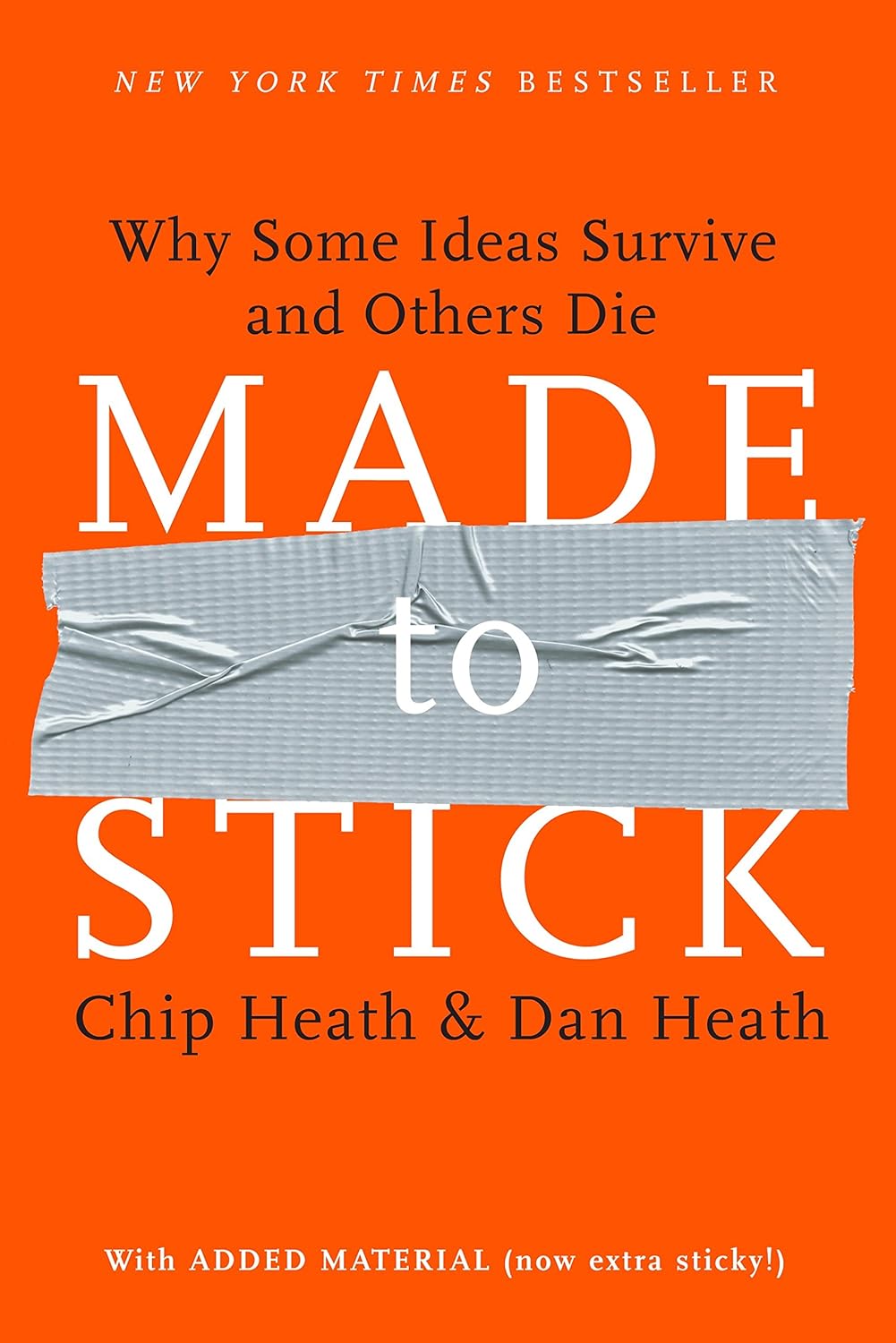
Book links are affiliate links. We earn from qualifying purchases.
Authors
Hosts
Transcript
This transcript was auto-generated by our recording software and may contain errors.
Nathan Toups (00:00)
the idea is instead of saying, we'll help your business scale to 30,000 requests per second,
it would be much better to say, handled Black Friday traffic for Amazon If I can make that claim, I've already said I can scale up to 30,000 requests per second without saying 30,000 requests per if they can solve this problem for this bigger competitor of ours, then they'll do great for us, right?
Carter Morgan (00:08)
Right.
Right, right.
Hey there, welcome to Book Overflows, the podcast for software engineers by software engineers where every week we read one of the best technical books in the world in an effort to improve our craft. I'm Carter Morgan and I'm joined here as always by my cohost, Nathan Toops. How are you doing, Nathan?
Nathan Toups (00:40)
Doing great here, everybody.
Carter Morgan (00:42)
Well, thanks for listening everyone. Wherever you're at, especially YouTube, like, comment, subscribe. If you're on an audio platform, rate the podcast five stars. And we do notice when you get five star ratings. So if you're, you're a long time listener, you've been listening, you know, for quite a bit and you haven't rated yet and you hear us say rated five stars, take a moment, pause the podcast right now. Rate it five stars. It really helps. Um, and share the podcast with your friends, with your coworkers on LinkedIn, on Slack, anything you can to help spread the podcast. And also if you would like to talk with Nathan and I personally,
You can book time with us on Leland. Leland is a coaching platform. That's a way for experts to kind of share their expertise with, ⁓ other folks. you can just book one-on-one time with us. If you're familiar with podcast lore, it's actually the startup I've joined, but, ⁓ Nathan, I mean, you were saying that you've actually been looking for something like this. And so just kind of a little serendipity that this, this is something we've been thinking about doing kind of personally or through the podcast. And then it just happened to be that this platform I joined as an engineer kind of worked.
Nathan Toups (01:41)
Yeah, I'm happy with my full-time job. I would love to act as a coach if I can. And I think it's cool platform and opportunity to give it a try. ⁓ And yeah, I'm cautiously optimistic and excited.
Carter Morgan (01:55)
Yeah, we've already had some people reach out and got some clients through the podcast who are just interested in leveling up their careers in any way, shape or form. You know, if you're happy with what you get from the podcast and just want to keep listening for free, by all means, we love having you. But if you're looking for a more personal connection, that's another way you can reach out to us and ⁓ hopefully take your career to the next level. And speaking of taking your career to the next level, we are very excited this week for our second half of Made to Stick. ⁓ This book is
Awesome. We'll get into our general thoughts in the second half later, but I freaking love this book. But made to stick. Let's talk just about the authors and about the book. So the authors is written by Chip and Dan Heath, they are brothers. Chip is a professor at Stanford Graduate Business School, or I guess the Stanford or Graduate School of Business, who researches why certain ideas survive in the social marketplace while others fail, having spent years analyzing urban legends, conspiracy theories, and proverbs to understand what makes ideas naturally sticky. Dan Heath.
is a former Harvard Business School researcher who co-founded ThinkWell, an innovative education company that created multimedia textbooks where he worked with award-winning teachers to understand what makes excellent instruction memorable and effective. Made to Stick, the book instruction is, in Made to Stick, Chip and Dan Heath reveal the anatomy of ideas that stick and explain ways to make ideas stickier, such as applying the human scale principle, using the Velcro theory of memory, and creating curiosity gaps. Made to Stick will transform the way you communicate
through a fast-paced tour of success stories and failures that show us the vital principles of winning ideas and tells us how we can apply these rules to making our own messages stick. So we rounded out Made to Stick this week, finished the second half. This is a reread for both of us. Nathan, you were saying you read this like what? Like almost like 15 years ago, you were saying 2012?
Nathan Toups (03:45)
Yeah,
think it was 2011. go ahead.
Carter Morgan (03:49)
2011, okay. And I,
I read in 2018, so seven years for me. But yeah, I so this is a reread. We finished the whole book. We were positive on it last week, but now having officially read the whole thing, what are your thoughts, Nathan?
Nathan Toups (03:56)
Mm-hmm.
Yeah, it's, this is a fun book. It builds on itself really well. It's obviously uses its own, it drinks its own champagne, right? Or we call it a dog foods, dog fooding itself. And I, yeah, it's such an easy read. think it's, I think there's a lot that software engineers will get out of this book. And I think we touched on that last week. I actually have like a little bit deeper dive in why this is actually applicable to your career and why learning these techniques is
Carter Morgan (04:16)
Right, dog fooding.
Nathan Toups (04:35)
is actually really useful ⁓ if you want to have influence, right? If you're working on something cool and you're struggling, it's books like this that don't seem like they're actually in the software engineering sort of world that actually are what makes us better software engineers.
Carter Morgan (04:54)
Yeah, I love this book. I was a little nervous coming back to it because I think we all know, you know, what it's like to have a favorite piece of a favorite book, maybe a favorite TV show or movie that you really enjoyed when you were younger, or it's been a long time. And then, you know, I was watching the Avengers with my son and I still love the Avengers. It's got a real soft spot in my heart. And I love the whole Marvel franchise. ⁓
But watching that, very first Avengers movie, now I'm like, this thing's showing its age a little bit. Like it's fun, but it's goofy and it's a little cheesy. And I was worried, I'm like, is this book gonna be like this? Nah, this book is excellent. It holds up. I don't think you'll find a book more approachable than this. this isn't, like I would never recommend like a philosophy of software design to like the layman. And even a philosophy of software design, I think it'd be tough if you were like a new software engineer because you don't exactly know.
what it's preaching against. ⁓ This book you could recommend to anyone off the street and they would understand the core ideas here and they could see how it apply in their lives. And it's amazing how straightforward all of the advice in this book is. And it's still really, really hard to follow because just summarizing the idea of this book is that ideas that are naturally sticky, I'll follow a template. They call it the success checklist, right? And so,
That's like a simple, unexpected, credible, concrete, emotional and stories. And so you kind of think that like, once you know that it's like, ⁓ now I'll be a master communicator, but I've been trying it this week. Like when I've been preparing LinkedIn posts or thinking about how to talk about things that work, like, okay, how can I use the checklist to transform this idea? And it's really, really hard, even just getting to the simple nature of like, what's the core of my idea. And then once you find that figuring out how to talk about it in the ways that this book has like,
Yeah, it's really tough. The book talks about ways around that in particular, how you can spot naturally sticky ideas and leverage them as opposed to creating them ⁓ entirely. But yeah, I just think that to me shows what a neat book this is because despite it being really easy to understand, it's still difficult to apply, which is great because to me that kind of helps it feel like, this isn't like a silver bullet. It's not like, ⁓ drink this weight loss shake and you'll lose 20 pounds a week or something like.
Nathan Toups (07:15)
All right.
That's an astute observation. It reminds me, I don't remember where I originally heard this, but simple is not easy. Simple is not necessarily easy. And the example that I heard was, you know, the criteria for running a marathon is simple. It's that you need to run, what, 26.2 miles. You start and then you finish, right? Like that's the, it's not a complex thing, right? But it's not easy to run a marathon.
Carter Morgan (07:28)
Right.
Right.
No, no.
Nathan Toups (07:49)
You really, most people don't have the physique to just do it on a whim. You need to train for it. If you have any goals of like how much time you want to take, you know, if you don't want to, if you want to at least be better than the sag wagon or the thing that picks you up if you're too slow, or if you want to have a time you're proud of, it takes even more work, even though it's conceptually simple, right? And I think that's the same thing with this book is that, yeah, making something sticky is a tremendous amount of effort. It's very...
Carter Morgan (08:04)
Hahaha
Nathan Toups (08:19)
And even the people who know how to do this, I would imagine that the Heath brothers all the time try to come up with, you know, some elegant sticky thing and are successful and sometimes they're not, right? Or probably more times they're not successful because, and I think we get into this here later in the book. ⁓ I really loved, obviously you can't do the second half of the book, which is ⁓ we're focused on credible stories and emotion. ⁓
Carter Morgan (08:27)
Right.
Nathan Toups (08:49)
or is it credible emotion stories, right? that story, and that success. And you can't really wrap your head around these unless you have the first three criteria that we went over last week. But these are the parts that are like, to me, this is the exciting piece. These are the exciting pieces, specifically story. I struggle with this. ⁓ It's one of those things where I'm in awe of someone who's...
Carter Morgan (08:51)
Yeah, right.
Yeah.
Nathan Toups (09:14)
good stories. And I also, love that this book gave me the permission to, I don't have to create great stories. I can find these stories and we'll get into this as we get in. But it's this idea that, hey, if you know how to identify what a good story is, then that's actually more important than you being, like most of us are not prolific authors and we're not going to come up with these wildly original ideas. But if you see something in real life ⁓ and you can capture that and go, yes, I can tell a story with this. This hits those
Carter Morgan (09:21)
right.
Nathan Toups (09:43)
points that I need and this will be sticky. That's cool. I look at that and go, okay, it still might not be easy, but I can figure that out. can acknowledge the work of a coworker at my office because they have a cool story. I recognize this and I can signal boost this, right? These are the real concrete things that I can do to actually apply this methodology.
Carter Morgan (10:06)
Absolutely. Well, we're excited. We're going to talk all about it. ⁓ stay tuned and we'll be right back.
And we're back. Thanks for listening, everyone.
We wanted to start off the second half of talking about a story they actually share at the end of the book. And I think this is a great story for any software engineers who are listening, who might be thinking, well, sure, you say it's a checklist, but doesn't charisma still matter? Doesn't being well-spoken still matter? We're not in denial here. We know that a lot of software engineers struggle with that. And you might think, maybe this book doesn't have anything for me. Well, they share this great example where one of the brothers, whichever one teaches at Stanford,
He has basically a class on this book, like what makes ideas stick. And he says the very first class, the students come in and they are given like a list of government facts. half of them are made to argue that nonviolent crime is a big deal. The other half are made to argue that nonviolent crime isn't a big deal. There's like 15 students in the class. And so they all give this one minute presentation. And these are Stanford Business School students. So you can imagine one, obviously they're smart. And two, a lot of them are, you know, charismatic or well-spoken.
So they give these presentations and then they are ⁓ supposed to rate this after the presentations. I believe they rate the speakers on like a scale of one to 10 or something about how charismatic or how well delivered their ideas were. ⁓ Then they take a quick break. The professor plays a Monty Python clip just to kind of clear the air. And then he has them, says, okay, now write down every idea you remember from the speeches. And it's crazy. Like no one remembers any ideas. ⁓
When they do the grading, obviously the students are ranked based, if you have a deep booming voice, if you are naturally funny, if you're good looking, whatever, obviously those kind of bump up your grades. But then when it comes down to if the ideas are remembered, they say it's a total equalizer. Charisma doesn't factor into it at all. ⁓ people who English is their second language are on the same playing field as the more naturally gifted speakers. ⁓
Which to me is just like such a cool demonstration of the idea behind this book that like it really like obviously it's going to help if you are naturally gifted storyteller, very funny or any number of qualities. But the core of it, how do I get people to remember what I said is actually fairly divorced from what a lot of what we consider good public speaking, which I think is not common advice at all.
Nathan Toups (12:38)
Right. I think also with the rise of social media, we've seen this where over-polished videos don't do as well ⁓ as TikToks that feel authentic and look like somebody's just talking to you and maybe is somewhat benile. The whole idea there is that those are stickiness platforms, Like TikTok, literally their algorithms are, and stickiness is also like highly addictive, but is this
Carter Morgan (12:46)
Right?
Nathan Toups (13:07)
signal boost worthy and can I get people to stay on the platform longer? And you'll see, right? Like this isn't a bunch of corporate polished videos. This is a bunch of videos from people who become masterful crafters of TikTok fodder, right? And I would imagine if you analyze those with these success principles, they probably check most of the boxes.
Carter Morgan (13:30)
Absolutely. Yeah, that'd be so interesting to look like I'm not on TikTok. I don't, I don't love short form video as you know, a content consumption mode for me, but I bet if you were to look at a lot of the like unexpectedly viral videos, you would see that they, ⁓ that they line up a lot with this.
Nathan Toups (13:44)
Great. This would be a good, this
would be a great large language model tool is ⁓ make a tool that scanned through a bunch of videos using the success criteria to flag whether, you know, which of the principles are in there.
Carter Morgan (13:51)
I know, right?
interesting.
Yeah, yeah.
Well, let's talk about these last four principles. Let's start with credible. Now, credible is a very interesting idea here because it is what it sounds like. says getting people to believe our ideas requires credibility, but we don't always have access to traditional authorities. Because obviously it'd be great if you are pitching your team on a new architecture style and you could get Mark Richards, author of Fundamental Software Architecture, to show up and say, I endorse Jane's idea. This is a great idea. But we don't have that. So they talk about like, well, how do you
make an idea credible. And there's a lot of different examples here. One of the great ones they share is about the Nobel Prize winner who wanted to prove that ulcers weren't caused by stress, they were caused by bacteria. And he couldn't get anyone to publish his paper. He was from kind of like a no-name university in Australia. No one really wanted to take it on. And so finally he said, screw it. And he just drank the bacteria. And then like a week later, he had ulcers. And then he did a...
round of antibiotics and then his ulcers were gone and so immediately he had made his idea credible by showing that it worked ⁓ There I don't know Nathan well, there's so many this is the chapter I think comes the least naturally to me But there are so many tactics they provide here for how you can make something credible What are your thoughts on these tactics anyone that stood out to you?
Nathan Toups (15:23)
Yeah, the credibility went one of my favorite and maybe this is because I grew up, you know, skateboarding and listening to punk rock. The anti-authorities are my favorite ⁓ aspect of this. And this is the idea of like being credible through showing how you screwed up. So it's like, like if we were putting again, if you look on hacker news or on lobsters or something of these link aggregators for software stuff, the post, you'll notice a trend where it's like how I deleted our production database and what I learned.
Carter Morgan (15:52)
right?
Nathan Toups (15:52)
Right.
Which is a anti-authority. saying, Hey, look, I screwed up really bad. Of course that link makes me want to click it. I'm like, wait, what production database did he delete? Like that? want to know. It's a story. And so like that got me to click. And then if it's well-written, of course, if I get my reward from it and all this other, if there really is credible, like, I'm the senior, you know, I'm the principal software engineer and I'm working on this team over at Uber and we deleted this production data. I'm just making this up. I'm like, man.
Carter Morgan (16:03)
And it's a story.
Nathan Toups (16:22)
even at Uber, did you lose your job? But that gets me leaning forward. And I'm like, okay, this is a real person. They're working at Uber. They deleted a production database. And I'm like, that's credibility for me to even listen to this person. Even though it's like, I literally did the worst thing you could do. ⁓ so these kind of, yes, yeah, that's I love it. It's my favorite.
Carter Morgan (16:42)
Yeah, that idea of anti-authority is so interesting, right?
Nathan Toups (16:47)
When I was at tech conferences, I loved it. When we would sit down, I was at, I remember I was at DEF CON one year and it was just a bunch of systems administrators and other kind of like ethical hacker kind of people, maybe some unethical ones. They don't tell you if they are. And they're just trading war stories of like dumpster fires. And they would include themselves in these things. Like, yeah, we thought this thing happened and actually it made it worse. And I remember, I was earlier in my career and I remember thinking like, I can't believe these people are talking this way.
I can't believe somebody who like they were so secure in what they were doing that they were talking about these like insane things that broke and how they screwed up. And I realized like, if I'm just trying to self promote and make myself look as best as possible, that's actually like an arrested development, right? These people are actually got clout within their peer group because of the anti-authority, you know, being like, man, we back in those days, it was the wild west. We didn't even have these tools. And we did all this crazy stuff. And you're like,
Carter Morgan (17:30)
Right, right.
Nathan Toups (17:44)
And then of course, have to give, the payout has to be, well, here's what we learned and here's how this doesn't happen anymore. And you know, like that's the good story arc and we'll get into that. But the credibility thing is so important. Like, why should I listen to you? know, if I wrote an article on how to become president of the United States, I have no authority. I have no authority. No one should listen to me. I don't know what I'm talking about. You know, ⁓ if Barack Obama wrote an article on how to become president of the United States,
Carter Morgan (18:11)
Hahaha.
Nathan Toups (18:13)
It may not be applicable to most people, but I would say that he's got an air of authority, you know, on the topic. So, yeah.
Carter Morgan (18:19)
But it's so hard to kind of obtain that credibility, which is why the idea of the anti-authority is really interesting because that's the idea here that you can find someone who is totally screwed up, is completely, who has lived in complete contrast to the ideal you're trying to put forward. Like the example I have is a woman named Pam Latham. She's a smoker and she was, ⁓ you know, she had.
Nathan Toups (18:23)
great.
Right.
Carter Morgan (18:45)
smoked so much and had to get like lung transplants. And I think she had that surgery, have like the hole in your neck to breathe through. But I believe it was Maryland who was using her a lot in their anti-smoking ads, basically saying like, Hey, you want to be like Pam, keep smoking. and, ⁓ they, they kind of contrast it. Like, obviously it would have been like, when we think of traditional credibility, you get the U S surgeon general to get on a screen and say, I am the surgeon general. And I say to stop smoking, but it's not,
Something about that anti-authority pattern really works. think another thing that really works like this Pam Laughin story. And I think a lot of these stories we're talking about, like the database, like deleting the database. Cause I, I know that same thing. I, or the CS career question subreddit has a lot of this stuff. Like there's the intern who I remember it's a story and these are all stories that I remember. One is the intern who deleted the production database on his first day at the job. ⁓ the other is the poor junior engineer who's interviewing for an interview.
and accidentally stepped on the CEO's elderly dog who was in the office, right? Like that's a kind of a famous one. But a lot of what these ones get right is, and this is another way you can build credibility. They say details, adding details to your story is another way to build credibility. And they share this really interesting example where they simulated a trial of a mother to see if she was still fit to care for children. And they the same arguments for and against the mom in both simulations.
Nathan Toups (19:55)
Right.
Carter Morgan (20:10)
But in certain simulations, the for arguments were more detailed and the against arguments were more detailed. And they weren't detailed like specific ways, but are in like crazy detailed ways, but more like ⁓ instead of saying she brushes her children's teeth, they say she brushes her children's teeth every night with her favorite Darth Vader toothbrush. And the results of this experiment was there was like, it was like a ⁓ 7 % or 8 % swing in either direction, you know, whether for or against. And so they said it's incurred.
Nathan Toups (20:37)
Yeah. For what is a
meaningless detail, right? But it's not. Yeah.
Carter Morgan (20:42)
Meaningless details,
right? And so on the one hand, the book points out like it's good that there wasn't a 50 % swing. You might have to be worried about the justice system if there was, but a seven or 8 % swing is enough to show like these completely meaningless details. They add credibility to a story. And so, you know, I'm trying to think about, like. How does this apply to our work as software engineers?
Nathan Toups (21:03)
So I've
been thinking about this and so there's a couple other things, testable claims, that's like something they bring up with authority, credibility, and the Sinatra test. And I'll talk about the Sinatra test for a second. They bring this up in the book and there's these lyrics from Frank Sinatra that says, if I can make it there, I'll make it anywhere. That's why they call it the Frank Sinatra test. And so the idea is instead of saying, we'll help your business scale to 30,000 requests per second,
it would be much better to say, handled Black Friday traffic for Amazon or something, know, something crazy, not Amazon, maybe some mid-tier company. If I can make that claim, I've already said I can scale up to 30,000 requests per second without saying 30,000 requests per second. That might not mean anything to most people ⁓ where, ⁓ if they can solve this problem for this bigger competitor of ours, then they'll do great for us, right?
Carter Morgan (21:35)
Right.
Right, right.
Nathan Toups (21:59)
Like that's the Sinatra test is this idea that, hey,
Carter Morgan (21:59)
right.
Nathan Toups (22:02)
get credibility from an action that you've taken elsewhere. I think one of them was I was thinking about too is like, ⁓ we'll give you five nines of uptime in a year. And it is like, no, ⁓ we'll give you so much uptime that... ⁓
it's less downtime than making a bag of popcorn in a year or something, right? Like you just put it in some sort of concrete terms that is like, ⁓ well, we can handle downtime of making one bag of popcorn. That's okay. know, like that's, and so, yeah. And again, testable claims. think that was the other one that we can kind of finish off this section on is, you know, doing things like, instead of saying like our API is developer friendly, we can say, your API yourself. Here's the sandbox.
Carter Morgan (22:38)
Right, right.
Nathan Toups (22:56)
So you can say, hey, look, this thing's, you're so confident in the thing that you're doing, try it out, do it yourself, go have fun. Don't just take my word for it. And that gives you credibility because I'm just like, go test it, go try it out.
Carter Morgan (22:57)
Right.
They use the famous Where's the Beef campaign from Wendy's. ⁓ If you're not familiar with that campaign, the idea is that ⁓ Wendy's making fun of McDonald's or Burger King because their hamburger was more bun than beef. And these old ladies are looking at the hamburger, they're like, it's a very big bun. And then they lift it up and there's this little patty and they say, where's the beef? But the idea here is that it's a testable claim that ⁓ you as a customer can go to McDonald's and go to Wendy's. And now you're thinking in that frame.
Nathan Toups (23:11)
Yeah.
Carter Morgan (23:38)
which hamburger has more beef. And then this obviously gives your idea of credibility. And so, yeah, I think like you're saying, Nathan, like if you're saying like, you know, our API is so developer friendly, you know, here, takes five minutes to set up. Like that's all, you know, like that's a testable credential. ⁓ I think ⁓ I've been using CloudFlare Stream as one of our, right, right. ⁓ But CloudFlare Stream is really nice because it handles all that, the kind of video encoding for you.
Nathan Toups (24:01)
yeah, you've been talking about that, yeah.
Carter Morgan (24:07)
But that's given the product credibility for me because like it's testable and that I got it set up. I imported my video and then, you I use their React component and I just stuck the video ID in it and boom, it works right away. Well, let's move on to chapter five, emotional. Again, maybe it doesn't come naturally to us as software engineers. We're an analytical people, but let's talk about it.
Nathan Toups (24:24)
Yeah, that's so cool. That's so cool.
Carter Morgan (24:35)
Here we have, make people act, they must first care. And this chapter explores how to make people care through a variety of topics, association, self-interest, identity, by getting them out of Maslow's basement, so to speak. Maslow, if you're not familiar, he has the kind of hierarchy of needs, like at the very bottom is like you need food, and then you need shelter, and then you need blah, blah, blah, all the way up to like self-actualization. We know now that Maslow was wrong in that.
You don't have to satisfy one to move up to the other. People are kind of working on all of them at the same time. But certainly there is, ⁓ you know, a starving man probably isn't thinking a ton about, you know, self-actualization. ⁓ But when he talks about Maslow's basement, he says that a lot of people, when pitching an idea, will go right to like the bottom of the hierarchy, to like basic self-interest, like, ⁓ this will make you rich. This will, you know, make you ⁓ healthy or whatever. ⁓
He says, really people are much more motivated by stuff at the top of the pyramid, which is like, does this kind of, will this product make me the kind of person I want to be? Does this product line up with my, my own self image? and I think that's really interesting. He says a great example of a, of firefighters that there was a company, they made like a firefighter training video and they wanted to, ⁓
They wanted firefighters to review it. And so they called up the fire station and said, would you please review this training video and consider adding it to your training library. And every firefighter was like, of course, we'd love to review your training video. And then they said, thank you for reviewing the training video. What would you like? Would you like a popcorn maker or a fine set of chef knives for your station? And every firefighter was offended. They're like, how dare you think that we would review this video for a popcorn maker?
And what's funny about this example is like he wasn't saying if you review the video, you will get a popcorn or if you purchase the video, you will get a popcorn maker. He was just saying, no, just, just for reviewing it, whether or not you purchase it not, we just like to give you the popcorn maker, but it insulted this idea that the firefighters and insulted their sense of self because they were saying like, how dare you think that we would, that, that a popcorn maker would influence our judgment about what training materials we use in the act of saving lives. ⁓
Because this really appeals to the kind of who the firefighter is. And so you can make your idea credible if, or you can make your idea more sticky. If you're appealing to this idea of who people want to be, I think a lot of the times when we're maybe you're trying to pitch a best development practice, right? And you can pitch and say, ⁓ you know, well, we should do this thing because it has the, you know, this benefit or this and that. But I found that a lot of, ⁓
You can also get pretty far when pitching this by saying things, not only talking about the benefits, but also saying like, Hey, this is what the best engineers do. This is what, you know, the, highest performing companies do. Don't we want to be like that? ⁓ and that really, that helps motivate people.
Nathan Toups (27:46)
Yeah, I think that this gets ⁓ back to things like the identity appeals, which I think is where the firefighters come in. From an engineering standpoint, it might be like, we're the team that ships, right? Now, pragmatically, it's also like, hey, if we don't ship, we're going to lose our jobs or we will never actually have features that come out. That's the sort of bottom. That's Maslow's basement in
Carter Morgan (28:07)
Right.
Nathan Toups (28:13)
You don't want to hang out there because you don't want people being like, well, I don't lose my job. so therefore, like we have to get this thing done. That's an awful way of managing. That's an awful way of like framing stuff. Even if you know, Hey, if I don't do my job, I probably won't have a job. ⁓ but yeah, Hey, we're the team that ships or like engineers solve problems. We don't want to create bureaucracy, right? Like whatever your values statements are, then you go, Hey, we solve problems. don't have bureaucracy. Have my, half my week is meetings, which means I'm not actually solving problems, right? We're just doing a bunch of like.
Carter Morgan (28:34)
Right.
Nathan Toups (28:43)
bureaucratic stuff, if that's my identity, can go frame it that way and ⁓ make it so that there's an emotional appeal to, hey, ⁓ we're not able to solve problems at the company because half my week's in meetings. I can go to leadership and say that and they go, man, we don't want that. How did we get here? But if I come in and be like, meetings are a waste of time and I don't like meetings and I think they're stupid. If you start with that, they're like, you're attacking this
base level, you're in the basement, you're not gonna win, you know, they're gonna be like, well, meetings aren't stupid. I need meetings because, you know, how can I make decisions without a meeting, right? Like, don't attack. But if you go, hey, look, I can't solve problems if I'm in meetings all day. ⁓ That's like a much, okay, yeah, engineers, they're here for solving problems, right? Like, that's the, Mm-hmm.
Carter Morgan (29:14)
Yeah. ⁓
And especially if you're appealing that higher level of
don't we want to be the kind of place where we're shipping, where we're solving problems. Exactly. One of the junior engineers on my team did an awesome job of this. We do our weekly demo days ⁓ for the team, but then every month we do demo to the company, what we've been working on. ⁓ And our junior engineer got tasked with kind of like a lame demo.
Nathan Toups (29:37)
Yeah, right. Do meetings help a ship, right? No.
Carter Morgan (30:00)
Because what he, his demo was we had, we switched our auth provider from auth zero to super base and like why on earth does the company care about this? Right? Why, why does, you know, you're, you're a non-technical employee care about our auth provider, but he really spelled out the wiffy as this calls it, the what's in it for you. And he basically said, listen, says we, ⁓ he says super base.
Nathan Toups (30:07)
Nice.
Carter Morgan (30:30)
I'm trying to remember like, Auth0 was preventing us from moving to AppRouter, you know, at our next JS, which is a different way of ⁓ how you, structure the application. And AppRouter is blocking us from, and he listed all these things. He's like, AppRouter will help us get, ⁓ reduce our load time, which will boost us in SEO. It will help us run more effective A-B testing so we can understand the product better. And he kind of listed all of these.
business decisions and he actually didn't demo anything technical. Like his demo was a slideshow. It like three slides just showing this and basically saying like, so because we've moved from Auth0 to SuperBase, we're going to get all of these ⁓ business benefits. And like, I thought it was awesome. Like this kid, he was really, really cool. He's just out of college, graduated in April. And he blew me away with like how well he understood how to sell this really technical.
Nathan Toups (31:05)
That's cool.
Carter Morgan (31:28)
and something that could absolutely have flown under the radar ⁓ concept to the business. like, it got people hyped. They're like, my gosh, like, thank you so much for, cause it was a big project moving up from Auth0 to SuperBase. Could have easily been a very thankless project. And he had business people come up to him and being like, Hey, thanks so much for doing that big migration. We're so excited to get A-B testing, you know, more effective. Yeah. Yeah.
Nathan Toups (31:40)
Yep.
That's so cool. That's great.
that's exactly, I mean, not only is this a sticky idea, you remembered the details of the story. ⁓ Obviously, this is going to be, you I don't want to make huge predictions, but this is exactly how you do career advancement, right? They go, this is like higher order problem solving. This is not junior engineer problem solving. This is like they're solving problems at a level that's above and beyond what we asked. And so when the company does grow and is looking for up
Carter Morgan (31:58)
Right, right.
Nathan Toups (32:16)
up paths, this is a, that's a wonderful story. It's a wonderful consideration of being like, yeah, you know, we got the whole team on board with this cool technical thing that they were doing and they explained it in a very clear way. Like, that's awesome.
Carter Morgan (32:24)
Right, yeah.
That's my biggest concern with our junior engineers. Like they're too good. One day they're going to leave because these guys are just going to have no shortage of opportunity. They're killing it.
Nathan Toups (32:34)
Well,
that's to me, this is awesome because it puts pressure on the company to be an awesome place to work. I can't imagine myself being anywhere else. Of course, I'm going to continue to move up here. naturally, if their goals in life get bigger than that, it gets back to in the Plex. When we read Google's in the Plex, a bunch of the product people that they had had moved on to other companies within two years.
Carter Morgan (32:55)
Right.
Nathan Toups (33:03)
They made the whole world more googly, right? So if you're actually doing folks who are thriving and there's not necessarily a place in the company for them, you still, you get these champions for your company all over the place. And I don't know, to me, that's one of those things where you're like, career advancement is such a cool thing. Hopefully you can keep that in house and you can go, you know what? This person knows the secret sauce. They know how to ship stuff. They know how to do things. We need to keep a room for them as they grow. And yeah.
Carter Morgan (33:33)
We're very minor tangent, but that's one thing we're really interested in at Leland is, is Utah actually has like a weirdly vibrant startup tech scene. Like there's lots and lots of startups here. And Utah's had some big B2B successes, ⁓ like Qualtrics is a Utah company ⁓ or Divi, if you've heard of them, they do like corporate, you know, spend management. ⁓ Yes.
Nathan Toups (33:33)
That's pretty awesome.
Mm-hmm.
Yeah. DX is like so fun. They're bootstrapped, but they're
another one. Get DX, yeah.
Carter Morgan (34:03)
Right. ⁓ what's the other, podium podium is a big one. And, ⁓ Instructure, they make canvas. You know them, Nathan. That's, what Georgia tech runs on. Yeah.
Nathan Toups (34:07)
Mm-hmm.
Yeah, actually,
I don't think you even know the story. I almost went to a startup that did like legal document automation. was like a B2B company that was based in Utah. Like they shipped me the laptop and I actually like, it was one of those weird things. I got a counter offer from my old job that was like 30K more than what I was making. And I was very well in the fence because like as a general rule, I think it's a bad idea to do that. But
Carter Morgan (34:22)
really? Okay, yeah, yeah.
⁓
Did it
Nathan Toups (34:42)
It worked out. It was fine. I still ended up leaving later, so it probably didn't work out for them in the long term, but
it was that engineering team that I loved, the best engineering team I ever worked on kind of thing. I stuck around with them for a while longer. Yeah.
Carter Morgan (34:59)
Well,
Utah is interesting because it has a lot of B2B success. But one of the reasons it has a lot of B2B success is Utah actually has a really thriving sales culture. At BYU, so many students go out and will sell during the summer. They'll sell pest control or home security or things like that. And so that translates really well into ⁓ a sales-driven model. But there isn't a really strong startup in Utah Valley that I know of, at least.
Nathan Toups (35:23)
Right. Yep.
Carter Morgan (35:28)
that's really engineering driven or has like, is known for like, this is a fantastic engineering culture. And so it's constantly on my mind at my company, like, how do we become that? Because another thing is there's a lot of B2B success, but there hasn't been a big consumer success out of Utah, or at least consumer tech. And we're in consumer tech.
Nathan Toups (35:43)
Right. Austin, Texas, Austin,
Texas is the same way. So like it was a huge B2B environment there, but that's changed. Right. So, ⁓ Verbo, which would home away was based out of Austin. Right. So there was a few that broke out. I don't know if anybody remembers this one anymore, but there was Diwala, which was like the competitor to four square. They were based out, they were acquired. ⁓ there's a few other companies that were kind of like,
Carter Morgan (35:48)
really?
yeah.
Nathan Toups (36:12)
claim to fame, but most of the VC money in Austin was B2B. And so it was really difficult because I was in a B2C startup. And so we actually took Silicon Valley money, which was super rare. Most of the VC in Austin funded local companies. And so the fact that we went out and got, we ended up getting money from
Carter Morgan (36:17)
Mm-hmm.
Right.
Right.
Nathan Toups (36:41)
More David Owl, is Wildcat Ventures now, which is Jeffrey Moore, which have we, do we have Crossing the Chasm on our backlog? Okay, we should definitely put, we should definitely put it on there. Jeffrey Moore is prolific and I got to meet him one time. It's my little like, ⁓ my little clout chasing, but he was, he's so cool and ⁓ it was like an amazing experience. So yeah.
Carter Morgan (36:47)
We have talked about crossing the chasm, but I don't think it's... We should do it.
Well, all of this to kind of a long way to say that something I have been talking about with like, my boss and the CTO and the other engineers is kind of like, isn't this the kind of company we want to be? Don't we want to be known as a really strong engineering culture? Don't, you know, isn't this, wouldn't that be, and like, you can say like, wouldn't that be a great way to recruit other engineers? Like, of course that's, that's a great benefit, right? But now we're kind of moving towards Maslow's basement.
where instead we think like, don't we want to be the kind of people who are known for having a really strong engineering culture? Like it's, it's effective. ⁓ well, let's move on to, ⁓ the last one stories. Now stories is interesting because this isn't so much like the first five principles. have simple, unexpected, concrete, credible, emotional. Those are kind of the five principles that you operate by stories isn't a principle so much, more.
Nathan Toups (37:37)
That's so cool.
Carter Morgan (37:58)
this is the most effective way to communicate your idea. They had a great example of there was a big conference. I don't remember what it was, they had ⁓ someone who had attended this conference or was the organizer for the conference. Basically, they had all these experts speak. And what they wanted to do was they wanted to create ⁓ just a book or a report basically of all the stories they told during the conference, all the stories that were told.
by the speakers. so they did. The speakers were furious. They're like, how dare you like just rip the story from my presentation because don't you actually know that what my presentation was on the best way to deliver shareholder value. But that's the thing is like at the end of the day and think about it yourself. Have you ever, you know, ⁓ been at a conference and listen to, you know, a, a talk, have you ever heard a sermon? Have you ever listened to a lecture? Right. What do you remember from
all of these things the most. Without a doubt, it's the stories that are told in them. ⁓ And so basically the idea here is that yes, your idea should be just simple. should be unexpected. should be concrete. should be credible. It should be emotional. But really, if you can get all of those things wrapped up into a story, that is the way to really give your idea that extra sticky power.
Nathan Toups (39:21)
Yeah, it's also, it felt overwhelming. I, you know, it's funny, this is a really important part of the book. This is actually the least sticky as far as stories that I remembered from when I originally read this book. And so was really fun to get back into this, but I love that they really focused on this idea that you find these, you know, I think is what you find the stories.
you don't have to create the stories you can find the stories. And so there's idea that like, hey, there's actually only like a certain number of story types that really resonate with people. And if you get good at identifying ⁓ a real story that you hear, ⁓ those story types are something you can discover, you can find. And they talk about like chicken soup for the soul, which was in the early 2000s was like the biggest thing. ⁓ I used to work in a bookstore in college, and there was like an entire section.
Carter Morgan (39:51)
right?
Right.
yeah. Yeah.
Nathan Toups (40:18)
And was like chicken soup for every type of soul. So was like chicken soup for the football coach's soul and chicken soup for the, you know, the lunch lady or whatever. Exactly. ⁓ Chicken soup for the graduate soul. It is like every little thing, but these, this is these motivational stories that kind of inspire you and, know, of course they didn't write these. These are aggregate stories. They would go and find these stories and and put them together. And it was a little cliche. mean, it was never my style. I don't think I ever read a single chicken soup book.
Carter Morgan (40:24)
Right. The babysitter soul, right? You know, like...
Nathan Toups (40:48)
but they were very popular.
Carter Morgan (40:48)
I remember reading,
my grandma lived in Boise and when we would make the trip from Washington to Utah, we would stop in Boise, but she's like 85. And it's like, what are you, what is it, you know, an 11 year old supposed to do in Boise? I bet she had like chicken soup for the soul in her bedroom. Like, well, I guess I'm reading chicken soup for the soul tonight.
Nathan Toups (40:55)
Mm-hmm.
Right.
That's amazing.
That's amazing. This part is so cool though. does in like the stories piece, really, you're right. It like wires together a lot of these things. And again, it gives us a framework to identify what I like is I can now go look at something that's maybe viral or something and go, ah, here's the success principles that it's using. of course, the story's great. And the way they framed this is very concrete. And you know, like all these like,
pieces, I love that I can at least do analysis on why something works. I think that's really cool.
Carter Morgan (41:41)
Yeah, and they share
this really cool example where basically saying that stories ⁓ help us kind of mentally rehearse a scenario. we're not just passive listeners to a story, but we actually kind of put ourselves in the position of the protagonist. they had this really neat experiment where basically they had people read ⁓ stories on a computer screen, some specialized software.
And at the beginning of the story, they had the protagonist be separated from an object or keep the object with him. So in this example, it was he put on his sweatshirt before going on a jog, or he took off his sweatshirt before going on a jog. Later on, they reference the object. So they reference the sweatshirt and they were actually able to measure how long it took the participants to read that sentence. And the participants who got the version of the story,
where he was separated from the object took longer to read the sentence. And so it kind of supports this idea that when we read the story, we are associating ourselves with the protagonist or putting ourselves in their shoes. And so when we're referenced that object that isn't with the protagonist, we have to kind of go, wait a minute, where was that again? Whereas, you know, when the sweatshirt he's wearing it, you kind of keep that information more front and center. And so it kind of is like a mental rehearsal. And I think we've all seen this as engineers, right?
When you, ⁓ we, we do this all the time. We swap stories about like, especially like any sort of thing related, like on call. we'll tell all the time about like a tricky bug that we found and, ⁓ you know, I know I'll do that and I'll say, so at first I thought it was this and it wasn't that. And then I thought it was this and it wasn't that. And then I checked this and then I realized it was that. Right. Why don't we just get to the punchline right away? Why don't we just say, you know, if, if you see this, it's that. Right. And I'm sure you could. And we do, sometimes we do, we put that in run books.
Nathan Toups (43:30)
Right?
Carter Morgan (43:37)
But I just, I don't know. It's who we are as humans where we're natural storytellers and we appreciate stories. It helps to go through the whole process. Yeah.
Nathan Toups (43:42)
Right. And I think that happened,
yeah, with corporate speak is really bad about this, right? So like, you could imagine, I think I wrote this one down, like, our system exhibits suboptimal performance characteristics under high concurrency scenarios. Like, that's an awful way of saying, and here's the same story, right? When 50 users hit save at once on our website, our app became slower than dial-up internet, right? I just told you the same thing, but like one of those is like,
Carter Morgan (43:49)
Right.
Right.
Yeah, there we go.
Nathan Toups (44:09)
That's kind of funny. Like there's unexpected twist. It's like the dial-up internet thing is like hilarious and old. And I have a very concrete example of 50 users hit save. That's actionable. I could give that to a junior dev and that gives them the basis of troubleshooting. Like, can I make a performance benchmark that can simulate 50 saves concurrently? And let's go and do the deep analysis to see what's actually happening under the hood, right? Where if I just told them our system exhibits suboptimal performance and kind of, you know, saying stuff, I'm like, no,
Carter Morgan (44:14)
Yeah.
Right.
Nathan Toups (44:39)
Nobody's going to care. Like you might open a ticket and have something and technically be correct that you did this thing. But ⁓ if you can, if you have the opportunity to tell a story, I think it behooves us to, I think it makes it more human. makes it, and again, I can communicate to that, to the CEO who's like, man, people are going to be hitting save on our app all the time. Like we got to fix this versus like suboptimal. What does that even mean? Like what?
Carter Morgan (45:02)
Yeah.
And you talked about, Nathan, this idea that like, you don't need to create the story. It's just a matter of spotting the story. It's a matter of, you know, and... Right? Right, right.
Nathan Toups (45:11)
Yeah, right, right. 50 users hit the save button, right? Like that's a, didn't make that up. It's like, I looked
at the logs and said, okay, this is what happened guys.
Carter Morgan (45:19)
Well, and this is kind of the way this book is written is funny because this kind of like the crown jewel of the book they say. now what is the example that showcases all of these ideas and worked fantastically, right? Jared from subway. Right. Yeah, Jared. and I know it was written in 2007, but the idea here is in case you're not familiar with Jared from subway, you might be familiar with him with his extracurricular.
Nathan Toups (45:35)
⁓ how the... yeah, this is such a great story. And then you're like, ⁓ no, not Jared from Subway.
Carter Morgan (45:49)
Pedophile activities, which I put him in jail. Um, so, but before, I don't know, maybe it was a pedophile during this. I don't know. Either way, uh, before all of that, and he was, yikes. Okay. So before he was discovered, what was he famous for? He was famous for losing a bunch of weight by eating at Subway. Um, he was, uh, yeah, like he was like 450 pounds. He wore like 60 inch pants. Um, and.
Nathan Toups (45:57)
I watched the documentary and he was, is bad. Yeah.
Carter Morgan (46:18)
His dad was a doctor and basically finally got through to him and said, like, you're going to die at like 35 if you don't lose weight. And so what do you start doing? He started walking a lot. Obviously that helps, but he also just, it was the subway diet. ate, I think it was like a veggie sandwich for lunch and then a, like a turkey sandwich for dinner. Just ate it every day and he lost all of this weight. and he, absolutely.
Nathan Toups (46:41)
It was a phenomenon. mean, this was like,
you couldn't watch television and back then you didn't, it wasn't streaming, right? You'd watch TV and without fail, there was a Jared Subway commercial that would come on at some point within your viewing session. I mean, it was just this huge deal. It was a fast food restaurant that got somebody healthy, right? Like that's.
Carter Morgan (47:00)
Right.
But here's the crazy thing. Corporate turned down the campaign. the advertising agency had found out about Jared through some way or another. It's actually funny. They'd sent an intern because they had heard about this, this guy. so
Nathan Toups (47:05)
Yeah. Yeah.
I think it was an unnamed
person in like a Men's Health magazine being like weird, weird diets that actually worked. You know, it was like kind of one of those things. Yeah.
Carter Morgan (47:19)
Exactly.
Yeah, he's like, this guy lost so much weight on subway.
⁓ And so they're like, send a guy that they're like, okay, you got to go. This guy's in Indiana and he's, we heard he was a student in a university. Like you got to go, you got to go find the guy. And so the interns are like, gosh, how am I supposed to find this guy? And so it's like, I guess I'll just start by going to the subway closest to campus. And so he starts describing, he's like, do you know a guy who, you know, we used be really fat and he was like, you're talking on Jared. He's here every day. Like just wait three hours and you'll meet him. ⁓
Nathan Toups (47:48)
Yeah.
Carter Morgan (47:51)
And by the way, this exact thing would happen if someone was trying to find me and they went to the local Taco Bell. They'd be like, do you know a guy who's here a lot? Like, yeah, Carter, just wait a couple, you know, he'll be here sometime this week. ⁓ And so they, and then like the advertising agency, like they proposed it to corporate. Corporate was like, nah, we don't really want to go with that. We have this great like six subs under six grams of campaign we're going to run. then the, exactly, right? ⁓
Nathan Toups (48:00)
Amazing.
which is not concrete.
Carter Morgan (48:20)
And the advertising campaign, so corporate turns it down, but the regional franchise owners were like, well, we think there might be something here. And so, you know, we'd be happy to spend our marketing dollars, you know, kind of the regional marketing dollars on it, but the regional marketing dollars don't pay for the production of the advertisement. So the advertising agency, the guy, said the only time I've ever done this, my career, it's like, I made the ad for free because I thought it'd be a good ad. And like the rest is history. Like it was a massively successful campaign.
And I just want to, I want to read directly from the book because I think they summarize this really well.
He says, what we have argued in this book and we hope we've made you a believer by now is that you could have predicted in advance that Jared will be the winner in these two campaigns. The other would be like that six under seven under six ⁓ grams of campaign says, note how well the Jared story does on the success checklist. It's simple. Eat subs and lose weight. It's unexpected. A guy lost a ton of weight by eating fast food. This story violates our schema of fast food. The schema that's more consistent with the picture of a fat Jared than a skinny Jared. It's concrete.
Think of the oversized pants, the massive loss of girth, the diet composed of particular sandwiches. It's much more like an Aesop fable than an abstraction. It's credible. It's the same kind of anti-authority truthfulness that we saw with the Pam Laugh and anti-smoking campaign. The guy who wore 60-inch pants is giving us diet advice. It's emotional. We care more about an individual, Jared, than about a mass. And it taps into profound areas of Maslow's hierarchy. It's not a guy who reached his potential with the help of a sub shop. And it's a story. Our protagonist overcomes big ops to try. I am.
It inspires the rest of us to do the same. By contrast, let's size up seven under six under the checklist. It's simple, but notice that is a much less compelling core message. It's core message is we've got a variety of low fat sandwiches versus Jared's eat Subway, lose weight, change your life. And yeah, like it's, I think that's really cool. Like the idea that like one, this was a spotted story. Subway did not invent Jared. This was something they found in the wild. And if you were had to read this book,
Nathan Toups (50:10)
Great.
Carter Morgan (50:23)
You could have spotted immediately and said, wow, this is a sticky story. This is going to work for all the reasons they give, which I think is such a cool distillation of the thesis of this book that anyone could have, anyone who read this book could have recognized Jared work because Jared again, for all that happened, let's ignore all that happened after, like you were saying, Nathan, like this is one of the most successful campaign advertising campaigns in all of history. And it wasn't something cooked up in a lab. was just a spotted store.
Nathan Toups (50:53)
Yeah, it's amazing. doesn't matter how much advertising money you threw at this. You couldn't have outdone this authentic anti-authority person. And again, it gets down to that thing where if I see this seven under six or whatever, to me, that feels like a bait and switch. I'm like, you really want to sell me the meatball sub. And I'm not going to lose weight eating a foot long meatball sub. ⁓ What I really want is the ability to... ⁓
to take something that's approachable. And so like I look at Jared and go, hey, I can eat a couple of sandwiches a day. Like that's a doable thing. Like this guy pulled it off, maybe I can do it too, right? That's the way, if you put in that Maslow's, you're out of Maslow's basement and you're up in the higher thing of like, I can do that. And if I do that, I can lose weight. That's way more powerful, right?
Carter Morgan (51:45)
Yeah. Well, maybe this is a good time to talk about, why don't we talk about some of our hot takes in the book. This is the section of the podcast where we just vocalize if there's anything we disagreed with, anything, you know, that maybe we, we find controversial in the book, uh, just to not let every book off too easy, even if it's what we really like. What about you, Nathan? Any hot takes?
Nathan Toups (52:01)
Yeah.
Again, ⁓ man, the Jared story didn't age well, right? I don't have any, it's no criticism of the book and obviously the Heath brothers had no idea. ⁓ I think this is always the risk of using a spokesperson, right? Whether it's Michael Jackson, whether it's whoever, right? It can have blowback if you're pinning your brand on an individual. That's interesting. It has nothing to do with the book though, right? My hot takes are not...
Carter Morgan (52:07)
Hahaha.
Yeah, yeah.
Nathan Toups (52:31)
that different than before, which is that like, hey, this, I don't want to live in a world where everything's manipulated into sticky stories, right? Like that would be a terrible world to me. ⁓ That being said, some things need to be sticky and some things need to get above this sort of like signal to noise ratio. It's really cool. ⁓ But while I'm glad this book exists, I also fear that you could use this for the dark arts, right?
Carter Morgan (52:41)
Right.
You know, and I don't think we'll ever live in that world because like we talked about, this is a hard book to follow. Even if you understand like, yeah, these are all the different components of the success checklist. I've been trying this out on LinkedIn. Like I get LinkedIn posting a super obnoxious, but I'm actually workshopping a prompt that like I'm feeding it to chat GBT that takes my, my, my draft of my LinkedIn posts and then tries to reformat it to be more like, you know, to use the success checklist, but like,
One, even the large language model is doing an okay job. It's not immediately spitting out sticky ideas. And two, it's just hard. It's a lot of work. so I think even, it kind of reminds me of like software engineering, like who knows what the future of this industry looks like. And obviously we've been in the frosty market for a bit. I've never been too worried about like a massive influx of people becoming software engineers, because at the root of it, it's kind of just a hard field.
Like it doesn't come naturally to a lot of people. You're dealing with a lot of abstraction, you know, a lot of complexity. Like I don't think it's like, man, this is the, this is easy street. And so I'm just going to sign up because like this is easiest way to make money.
Nathan Toups (54:06)
I think there's always room for people who are great at what they're doing, right? Like there might be, let's say there's too many people going to law school, which I think is actually a real phenomenon. We still need great lawyers, right? Like there's like a great lawyer or same thing with doctors, right? Like there's some doctors have no bedside manner. I'm like, why are you even doing this? Like you're obviously doing a money play, but then you meet a doctor who's amazing and you're like, ⁓ this is a great profession for this person. Like they really care. They really want to do this stuff. And I think that there's a room for that.
Carter Morgan (54:15)
That's all I've heard.
Right. Yeah.
Nathan Toups (54:36)
everywhere. yeah, yeah.
Carter Morgan (54:40)
No, absolutely. And I found that too in my career. Like if you are good at what you do, there will always be opportunities for you. And hey, good on you listener for listening to Book Overflow.
Nathan Toups (54:50)
Well, I'm excited
because, know, Carter, you will have arrived on LinkedIn once you get posted onto LinkedIn Lunatics on the subreddit.
Carter Morgan (54:57)
There we go. It's going to be great.
So my hot take for this week, I think Jared gets a bad rap. I don't know. No, I'm kidding. ⁓ I think Jared is in prison just fully. No, I love this book. ⁓ It does have a bit of like, don't try or like just trust me, bro. Energy where like they do share a good amount of like experiments. ⁓
Nathan Toups (55:05)
Woo. If FBI is going to be knocking on that door real soon.
Carter Morgan (55:26)
But at the end of the day, there's not some comprehensive like, and then we ran advertising campaigns using our ideas, right? And then validated in a lab that of course this is the best way to work. I think sometimes as engineers we might really want something like that. You're not gonna get that out of this book. ⁓ It just is what it is. I don't mind that. ⁓ I think the book kind of speaks for itself. And that like when I was rereading this book and again I read this book like seven years ago.
But so many of the stories they told, I get like a sentence into them, be like, yeah, I remember this one. I remember what it was teaching. so that to me is like, again, it's credible. It's a testable credential. It's like, do you think this book works? mean, try it yourself, right? And if you remember all of what this book was teaching, isn't that kind of proof that this is a sticky book in and of itself? But I could see people reading this and being like, this is a of bull crap. Like, this is just some guy's opinion. ⁓ I don't struggle with that, but.
I could see someone struggling with that.
Nathan Toups (56:25)
It's okay, anybody can be jaded about anything, so, you know.
Carter Morgan (56:28)
That's true.
That's true. Well, what are we going to do differently, Nathan, as having reread made to stick?
Nathan Toups (56:35)
Yeah, so one of my personal challenges, I'm going to try to spot stories, not create them. I want to be the person who recognizes when something story worthy happens. And I'm a tech lead on a team. so partly I was like, you know what? I should try to signal boost good stories that come out of our team, like stuff that's going on, or when I'm working cross-functionally with other folks. So I can apply that immediately, but also with like writing on functionally imperative or these other places.
Carter Morgan (56:41)
Right.
Right.
Nathan Toups (57:03)
you know, not putting pressure on myself to create a story, but be like, hey, there's this awesome thing that happened and here's why you should care, right? Like this is one of these cool pieces where that takes a lot of pressure off me. Cause again, I'm not Hunter S. Thompson or, you know, I'm not, uh, you know, George Orwell or one of these other great story writers. Uh, I'm just, I'm just a guy writing code and, I do care about stories. Um, but I'm not, I'm not an author.
Carter Morgan (57:22)
Right.
I want to be better about just kind of running through the checklist more often and just kind of keeping the check. Like I legitimately, they have like kind of a guide at the end, like the super condensed version of the book. I might like honestly print it out and keep it on my desk because I just want to be better about recognizing one stories, but also to these characteristics in the wild. had a great example with my boss. are, we've been using like a third party ⁓ product for like our company's
Nathan Toups (57:51)
I love that.
Carter Morgan (58:01)
content library. Like that's another service Leland offers is like, you can pay a certain price a month and they get access to not live one-on-one coaching, but instead all of this content produced by coaches. So it's really helpful. For example, if you're like trying to get into Harvard and it's like, here's a list of a dozen successful Harvard applicant essays, right? And you can kind of model your essay off that, right? But we've been using this third party provider for that. And we've actually, getting off of it and we've recreated it all.
in-house and we've kind of just, we've got feature parity and, but now the thing is, since we own it, it's completely on our stack. We can customize it and build it out to be the, what we actually want it to be. But one thing we've been talking about a lot is this idea of like, what can we launch with? What's MVP? And we're like, we need, we're like, we need feature parity. least we, this can't be a worse experience than the third party plug and play platform. We can't ship with that. And my manager, I was telling my manager that he's like, yeah, we can.
Nathan Toups (58:40)
That's cool.
Carter Morgan (58:58)
I'm like, what? And he's like, yeah. He's like, the faster we ship and get this into the hands of customers, the faster we can learn. He's like, I am happy upsetting our customers if it means we get the product out faster and get information back. Now, you can disagree on whether or not this is the proper judgment, but I thought to me, this is classic unexpected in the made to stick checklist. It's uncommon sense. It's him saying,
Nathan Toups (59:14)
That's cool.
Carter Morgan (59:28)
And it's showing what he values. He's saying, it is more important to me that we are a team that ships fast and learns from our product than that we're a team that completely satisfies our customers.
Nathan Toups (59:42)
And
I'll tell you, you'll find out the priority queue, right? The most vocal customer who's like, oh, you took away feature X that I loved. And you're like, OK, that's what we're going to build next. And there might be five features that are parity that you're like, no one actually cared about. No one even knew it was there. And you thought, oh, but yeah, that's going to be hard. And nobody cared.
Carter Morgan (59:47)
Yeah.
Right, exactly.
right?
I think what was cool about this though was that I think this story would have always stuck with me. ⁓ But having read Made to Stick, like, why? I started thinking, why did this stick with me? It was unexpected. It was him surprising me and the uncommon sense as they talk about in the book. So I just want to be better about recognizing not just stories, but also when things seem like sticky to me, I'm like, why is that sticky? And then going through the book and being like, yeah, I think this is an example of a really concrete story. ⁓
Nathan Toups (1:00:16)
Great.
That's awesome. It's also, it's a
great example of good leadership. And I will say like that's yeah, cause that is, you have a hypothesis and he'll either come back from that and saying, you know what, I was wrong. Actually, our customers really care about every feature and oops. But I doubt it. I bet that it's going to be a, you know, what a Pareto's law, right? It's like 20 % of the, you know, 80 % of the features or 20 % of the effort or whatever, or 20 % of the features, 80 % of the effort. so.
Carter Morgan (1:00:36)
yeah, yeah, my manager's killing it.
Yeah.
Yeah, yeah.
Right, right.
Nathan Toups (1:01:02)
Like you're probably, they only cared about 20 % of those feature parity things. And you're going to find out what those are and you'll fix them and it'll be great. Yeah.
Carter Morgan (1:01:09)
Nah, I'm
sure you're right. Well, who would we recommend me to stick to, Nathan?
Nathan Toups (1:01:15)
It doesn't change from last week. I will say, know, reading a pop book, a pop nonfiction book, it's very approachable, right? This is like reviewing a Taylor Swift album versus like, you know, some doom metal band who's very challenging to listen to. ⁓ So like, anyone can read this book. If you're interested in storytelling, if you're wondering about the phenomenon of it, ⁓ but it's okay. can.
You can listen to some pop music sometimes. Yeah. Even though I'm a music snob, I can still listen to pop music sometimes. It's great.
Carter Morgan (1:01:47)
Yeah, I would like I think this is the first time I've ever done this I would recommend this book to literally anyone And the reason I would recommend it literally anyone is I think there are people out there who think well I don't care about this stuff. I don't want to understand these things I'm a purely technical engineer and the reason I recommend it to you is because you should care about this stuff If only at the very base level to understand am I being manipulated? Right or how does the world work? ⁓
I think you should really invest in improving your persuasion skills, but even if you're just, you should at least understand how other people might be trying to persuade you. I love this book. It's such an easy read. It's like 250 pages. ⁓ and it's the entire book is just stories. Like, yeah, this is a great book. ⁓ it might not make it when we do our, like our, our, top books of the year, I might rule this one out. So just because I feel like since I read it prior to the podcast, it might
not making it on technicality, but out of everything we've read on the podcast, I think I'm willing to put my stamp on this and say, this is my favorite thing we've ever read on the podcast. I freaking love this book. Yeah.
Nathan Toups (1:02:52)
Wow. So
I will say ⁓ from a how does this apply to software engineering? Like I can put this I'm going to put this into concrete example right here. ⁓ If you're struggling, if you're if a non-technical executive at your company can't understand what you're proposing in 30 seconds, you need this book. Right. If you are onboarding a new software hire a new a new engineering hire and they can't wrap their head around the infrastructure within the first week, you need this book.
Carter Morgan (1:02:57)
Right.
Yes.
Nathan Toups (1:03:20)
Right? Like these are the, this is that curse of knowledge thing that we can get all tangled up in because we become domain experts. It's, you really have to be able to communicate in a way that's a broader appeal. And you will, this junior dev that you brought up earlier, and it's such a good thing, right? This person is going to thrive in their career. And I, regardless of where they go, they're going to thrive in their career if they can continue to frame things this way, because that's the value prop at the end of the day. Right?
Carter Morgan (1:03:38)
yeah.
Nathan Toups (1:03:49)
Obviously you're gonna do cool software stuff inside of, under the hood, but like you have to be able to communicate. I love the what's in it for me thing. That's such a cool framing. So yeah.
Carter Morgan (1:04:01)
Well, we're
excited. I'd love to get Chip and Dan Heath on the podcast. We'll see what we can do. Stay tuned listeners. have interviews in the pipeline. have a, again, we don't count our chickens before they hatch, but we have recorded one we're very excited about and we'll be releasing here soon. So keep your eye out for that. And yeah, thanks for listening. As always find us on Twitter at BookOverflowPod. I'm on Twitter at Carter Morgan. Nathan's got his newsletter, Functionally Imperative at functionallyimperative.com. And we are, you can contact us on our email.
Nathan Toups (1:04:04)
Ooh, yeah, that'd be amazing.
Carter Morgan (1:04:30)
at contact at bookerflow.io. We're excited. Next week is The Staff Engineer by Will Larson, which is going to be awesome. I bought the Kindle and the audiobooks. I'm excited to tackle that. And we will see you around, folks. Thanks for listening.
Nathan Toups (1:04:44)
See ya.