Dan Heath Reflects on Made To Stick
Book Covered
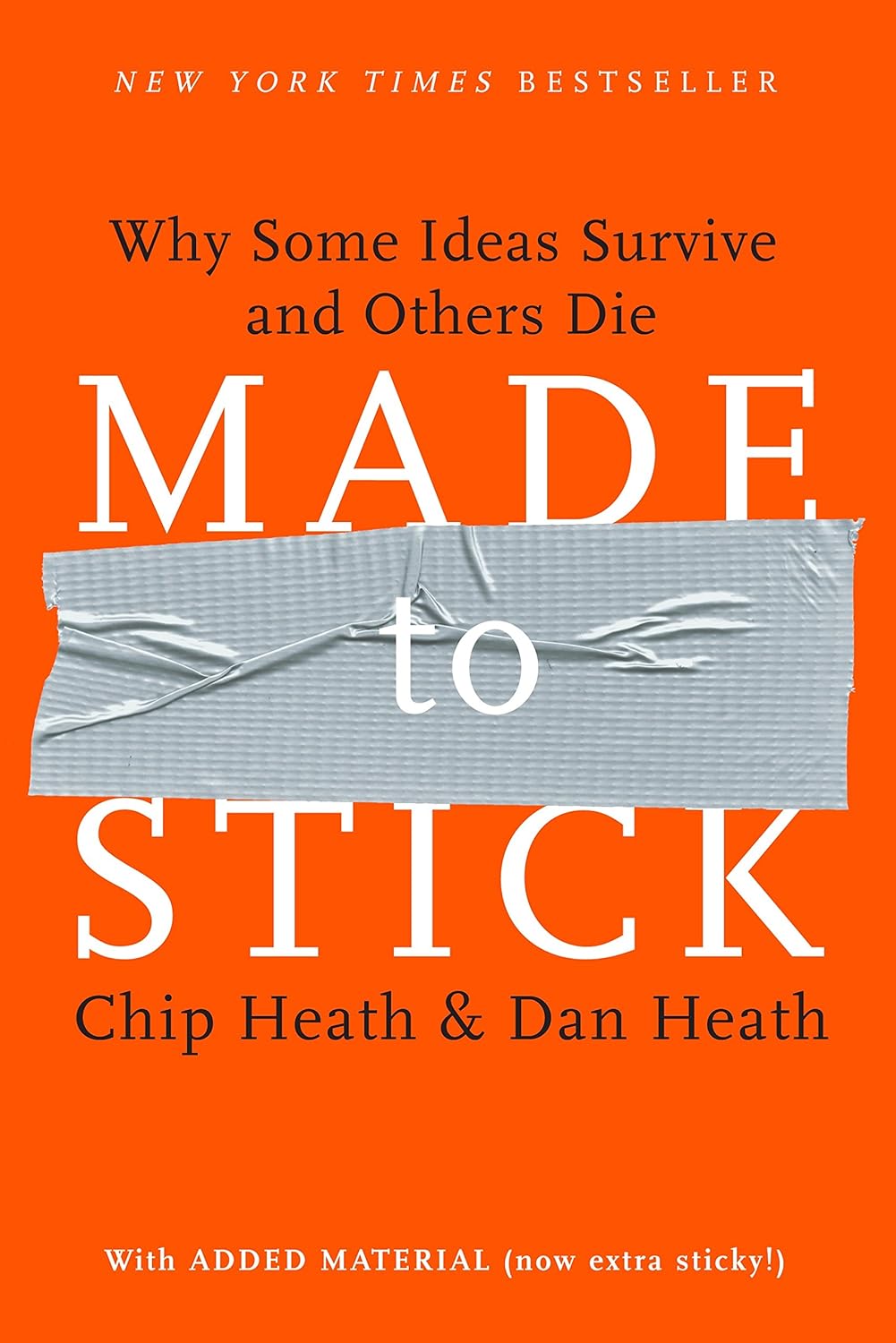
Book links are affiliate links. We earn from qualifying purchases.
Authors
Hosts & Guests
Transcript
This transcript was auto-generated by our recording software and may contain errors.
Dan Heath (00:00)
just going to go do whatever I'm most excited to do, whatever I'm most fired up about, because I know I'm going to, I'm going to work hard and I'm going to work long and I'm going to be engaged. And that's going to mean I do better work. And then somebody is going to notice that better work and open up more doors. And I'm going to jump through the door that I'm most excited. And I just kind of trust my own, you know, flywheel of, of motivation and output. And I found that really convincing.
Carter Morgan (00:33)
Hey there, welcome to Book Overflows, the podcast for software engineers by software engineers where every week we read one of the best technical books in the world in an effort to improve our craft. I am Carter Morgan and I'm joined here as always by my cohost, Nathan Toops. How are doing, Nathan?
Nathan Toups (00:44)
Doing great. Hey, everybody.
Carter Morgan (00:46)
Well, we have another special episode for you folks today. This is one we're very excited about. If you're regular listener to the podcast, we have been teasing this one. ⁓ a New York times bestseller. This is a Dan Heath of made to stick. I have been upfront on the podcast that I believe made to stick is the favorite, my favorite book that we've covered on the podcast. He's an excellent, excellent author and an even better podcast gas. If you can believe it, ⁓ we're very excited to show you this interview. mean, Nathan, give them a sneak peek of what we got today.
Nathan Toups (01:15)
I mean, just the high functioning humility of Dan Heath is just, felt like it's probably one of those natural conversations. I think we had a cue card of questions that we wanted to ask, but we just got to riff, and it was just a really delightful conversation. I hope you get as much out of it as we did.
Carter Morgan (01:30)
Yeah, yeah.
Yeah, Dan, he points out in the interview that, I mean, he wrote Made to Stick back in 2005. So it's been 20 years since he's really been back into this. And so it kind of functions as a little bit of a trip down memory lane. And just, it's really fun to discuss a book, which I truly believe is timeless. And just to see that 20 years from now, you can have an engaging, thoughtful discussion about it. And we're so excited for you guys to get to listen to this.
Really such a high point for us here on the podcast. So enjoy this interview with Dan Heath as he reflects on his book, Made to Stick.
Carter Morgan (02:11)
Well, Dan, we're so excited to have you on. Thanks for joining us.
Dan Heath (02:14)
Thank you, I'm excited to be part of this.
Carter Morgan (02:17)
Well, I mean, we've, we've been teasing this one to our audience. We are usually pretty good. don't count, we don't count our chickens before with a hatch. Most audience or authors who commit to come on usually come on, but some haven't been able to make it on, but we've been very, very excited about this. I, in particular, yeah, we'll, we'll send you after them. ⁓ yeah, I've, I've been particularly excited. I think I've been on the record that this is the favorite book I've read for the podcast. ⁓ and so.
Dan Heath (02:25)
Mm-hmm.
lakes.
Yeah.
Carter Morgan (02:45)
Yeah, such a pleasure to have you on. Yo, yeah, yeah, it's excellent. maybe, I mean, talk to us about the origins. know ⁓ you wrote it with your brother and kind of tell us a bit. How did this all come to be? What, what motivated made to stick?
Dan Heath (02:46)
Thank you.
Well, it mostly a story of serendipity really made to stick originated in some of my brother Chip's research. He'd been studying the marketplace of ideas and you know, why is it that some ideas seem to catch on and get spread from place to place while others, you know, wither, you know, on contact. And he had studied in particular naturally sticky ideas such as urban legends. In fact, I remember one of his urban legend studies.
was basically trying to isolate like what emotions is it that make urban legends, you know, so, so viral? Like, is it disgustingness? Is it, ⁓ you know, I don't know, fear. And, and so I remember him creating, you know, five different versions of the same urban legend with like increasing levels of disgust in each one. ⁓ it's sort of like the funnest possible research you could, you could ask for.
Carter Morgan (03:54)
interesting.
Dan Heath (03:58)
And so he'd spent some years thinking about all that stuff. I had nothing to do with any of that. And then at some point there was an editor at Random House named Ben Lennon that came across one of Chip's research papers and kind of proactively reached out to him and said, you know, I find this idea stuff fascinating and I feel like there would be a market for it. Is there enough here for a book? And so I think that was the first time Chip had really thought, hey, maybe there's a pop book version of this.
And then he brought me into the project later as basically the writer of the two of us. So most of the ideas in the book were pretty baked. He had the success framework already at the time when I joined. ⁓ And so in a way, I don't think either of us ever formulated this in our head as a potential book project. It's just like this door opened and we jumped through it.
Carter Morgan (04:52)
That's, yeah, I, I love the book. think we, we always, we call it the book overflow test because just by nature of the podcast, we have to read books cover to cover. ⁓ and a lot of technical books we get are kind of supposed to be more like reference material, but we have to read it cover to cover. And that makes some excellent books kind of slogs to cover for the podcast. ⁓ made to stick passes the book overflow cover to cover test with flying colors. ⁓
Dan Heath (05:01)
Mm-hmm.
Yeah, yeah.
Hey, thank you, thank
you. I'm hoping you read only boring books from here on out so I can keep my place on the throne. I appreciate that.
Carter Morgan (05:23)
Hahaha
I think it's interesting you said like, this sounds like the most fun research possible, you know, to, you know, like write ideas from, you know, construct ideas on different levels of disgustingness, but us coming from the software engineering world. mean, I know plenty of engineers who would think that resource would be incredibly monotonous or very boring. ⁓ you know, so what kind of draws you and I guess Chip as well, what interests you in this space in particular?
Dan Heath (05:52)
I think what interested me in particular was I've always had an interest in education. ⁓ I started an education startup back in the dot com era and have always had some aspect of education in my life. I had a job in executive education and I wrote case studies for Harvard Business School. And so there's something that I don't think I can explain, it's just something in me that I love trying to think about.
how do I share this idea in a way that clicks with people? And how do I share it in a way that they remember and that they can do something with it? And as far back as I can remember, like that's been something that I sought out. So I think that was one reason why I jumped at the opportunity to be part of this, because I just am so interested in the material.
Carter Morgan (06:45)
You have, so you, write this book and then have you been surprised at kind of the audiences it's reached? Like obviously when you think of like, okay, who would find made to stick most useful? You're thinking, I guess I'm marketing executive, right? But then now here you are on a podcast of two software engineers who loved it. mean, ⁓ has it resonated really strongly with some groups of people that you didn't think it would or kind of the opposite? Or are there other people you wish had really picked it up that had never quite reached?
Dan Heath (07:15)
I'll tell you, we wrote the book very explicitly with a couple of personas in mind. And the chief two were, and we talked about this all the time, a high school science teacher and an entrepreneur pitching their thing. And we would kind of run through, like for a given concept, if we were deciding, is this interesting enough to put in the book, we'd be like, what would the high school science teacher do with it? What would the entrepreneur do with it? We had some kind of guest stars from time to time. We talked a lot about pastors.
Carter Morgan (07:20)
Okay.
Dan Heath (07:44)
talked a lot about marketers, people who have a regular organic need to be communicating ideas. The pastor has to stand up every Sunday and deliver some kind of religious message that resonates. I think we had, I'll tell you what we got right and what we got wrong. We knew that kind of the bullseye in terms of the marketing in this book was gonna be marketers and advertisers just because they have such a profit motive for getting this stuff right.
Carter Morgan (07:53)
Right.
Dan Heath (08:11)
We didn't really write the book for them. We didn't want to write an advertising or marketing book. We wanted, really wanted to write something that was, that was broader and more for audiences who don't think about the craft of this as much. You know, the, high school science teacher that knows everything about biology or chemistry, you know, but maybe hasn't thought a lot about how do you construct a lesson so that it, lasts? I mean, I think that the biggest surprise by far to Chip and me was that the book sold well.
And we just had absolutely no, no expectations. This is our first book and in our minds it was our last book. And then like a couple of months before the book comes out, it's like there's, there's this interest brewing and we're in time magazine and us news and the week the book comes out, we're on the today show and we're just like living in this alternate universe. ⁓
that completely blew us away. And ⁓ there is no more terrifying experience than sitting ⁓ on the set of the Today Show. mean, it's just like, one, you know, live TV to millions of people. So, ⁓ yeah, I mean, I think we had, we sort of hit the lotto with this in a way that we never expected.
Nathan Toups (09:28)
Yeah, software engineers.
suffer from this maybe this extreme version of the curse of knowledge. And I'm curious, you know, it seems like we're maybe an unintended audience, at least a perfect fit for specifically speaking about curse of knowledge. What other industries have you seen in which maybe the curse of knowledge is one of the biggest factors in coming up with sticky stories?
Dan Heath (09:54)
Yeah, yeah,
great question. And I think your self diagnosis is right. was thinking about, know, my brother always had this joke where if he was talking to crowds about the curse of knowledge, he would be like, if you want to see the curse of knowledge in action, just picture the IT person coming over to your desk and starting to tell you what you're doing wrong. And everybody would chuckle. And the other chuckles that we got were in talking about doctors who were
Carter Morgan (10:14)
Hahaha.
Nah.
Dan Heath (10:21)
terrible at this, you know, cause they just
know so much more than you do about the body and the systems. I think lawyers are the same, you know, I, I definitely think there are professions where there's a kind of occupational hazard with excess terminology and acronyms and it's all obviously a byproduct of expertise. You know, it's, that is what the curse of knowledge says that the more you know, something, the harder it is to imagine what it's like to lack that knowledge. And that becomes,
kind of the fundamental curse that we're fighting in made to stick. And I think the same phenomenon shows up with a high school algebra teacher that just knows algebra inside and out and teaches it every year. And the mistakes that kids make are familiar. And in your 18th year, how in the world could you possibly go back in time and kind of recapture
what it was like to see an X instead of a number for the first time. It's very difficult to think your way into a solution to that, which is why we're prescribing this kind of checklist approach where you kind of forcibly translate your ideas ⁓ into a form that a beginner can appreciate.
Nathan Toups (11:23)
frame.
Carter Morgan (11:41)
really like in the book, your focus on spotting good ideas as opposed to kind of creating them from whole cloth. And I want to talk more about spotting in a bit, but I was proud of myself when I as I've been trying to work at that. And ever since I read this book, kind of spot those ideas. And one of the ones that I spotted ⁓ was it was the 2016 Republican presidential primary and, and it was Ted Cruz and, you know, ignore for a second.
Dan Heath (11:46)
Mm.
Carter Morgan (12:10)
Thoughts might have about Ted Cruz, but one of his proposals he was putting forward, he says, he wanted you to be able to do your taxes on a postcard. And I thought, now that is a sticky idea right there. It's been 10 years and I still remember it. And when I think about like, okay, so why is that? Well, it's simple. The idea is basically taxes are too complicated. It's concrete, right? I mean, everyone knows what a postcard is that, you you can kind of visualize that it's unexpected, you know, to take something as.
Dan Heath (12:18)
Hmm.
Carter Morgan (12:37)
complicate as your taxes and to say, I'm gonna put on a postcard. ⁓ And so that, and I'm regrettably a bit of a politics junkie. And every time I kind of hear politicians talk about their ideas, I'm always a little surprised. like, why aren't they doing more of that? Because that was something that really stuck with me. Have you had any experiences with like politicians coming to you and talking about this book? I feel like it's a cheat code. I'm like, why haven't they all read this? Why aren't they all doing this?
Dan Heath (12:54)
Yeah.
100%, I couldn't
agree more. we've had a fair amount of contact with politicians and I think the diagnosis is as follows. I think they all know they're bad at it. so it's not, they're not oblivious. It's just that I think the trap is that to be simple, you have to be declarative. You know, have to put a flag in the ground and that's very uncomfortable.
Carter Morgan (13:08)
Hahaha
Yeah.
Dan Heath (13:35)
Right, to be simple
Carter Morgan (13:35)
Interesting.
Dan Heath (13:36)
is to probably antagonize some faction. I remember ⁓ this, this is so memorable. So ⁓ Chip and I wrote another book called Switch right after Made to Stick and there's a rant and switch about the food pyramid and we're sort of just hammering the food pyramid for what a just terrible piece of communications it is.
The whole point of a pyramid is hierarchy. Like where the thing at the top of the pyramid is the most powerful or the best or whatever. And what's at the top of the food pyramid? Oils. Like, what are we doing here? our ultimate point was if the food pyramid is an effort to shape people's choices on diet, to make them healthier, which I think is the underlying spirit of it.
It's just too cumbersome and there's no need for a pyramid and there's no need for little icons for what wheat looks like or whatever. Like just get to the advice, like forget this structure. And so Chip and I are like, you know, what we really need to do is we need to come up with a national priority list. Like what's the simplest thing that somebody could do to become a lot healthier? I mean, that's what we're looking for. A lot of bang for the buck. And so let's get the best nutritional minds in the country and let's figure out what's on that list. Like our, our guess was,
Carter Morgan (14:35)
Yeah.
Dan Heath (14:57)
at the very top would be something like reducing sugary drink consumption, right? Cause it's just, it's zero health benefit, full of calories, like easy to shift to something else. Like you can switch to some kind of, you know, a flavored soda or whatever that's calorie-less, whatever. So, you know, we think we're really smart and we're going to get the government focused. And then there's just this kind of unease and almost dismissiveness around the table. This is like a
Carter Morgan (15:02)
Sure.
Dan Heath (15:26)
a federal committee that was designed to overhaul the food pyramid. And what became very tangible to us is like, the government is not gonna pick a fight like that. know, cause it, what happens the moment after you say we should reduce sugary drinks and, you know, cafeterias should be alert in schools across the country to reduce. Well, then you've picked a fight with Coca-Cola and Pepsi and all the, you know, the juice manufacturers and
Carter Morgan (15:39)
Interesting.
Dan Heath (15:55)
And now you have enemies that are coming at you and it's so much safer to have this kind of pyramid construct where, well, we need some protein and we need some grains and just a titch of oil, you And it's like, that's a way to appear to say something without really saying something. So anyway, to circle back to your question, I think that in a nutshell is what's going on with the lack of things like taxes on a postcard.
Carter Morgan (16:22)
Interesting. I guess thinking about kind of as software engineers,
That's so interesting you say like you have to be declarative. So you've got to take a stand. ⁓ So I mean, made to stick. Yes, yes.
Dan Heath (16:37)
It's like the example we use in the book about Southwest, the low fare airline, like
super simple idea. And it's going to make a lot of people mad because the people in the customer experience group are like, well, wait, what, what if we had better food? What if we, you know, gave people little Southwest tchotchkes? What if we spruced up the upholstery to be more on brand with our latest logo revamp or whatever? And then, but if you're, if your strategy is we want to be the low fare airline.
You gotta let that stuff go. And so it's ⁓ the polarizing that comes with an effective strategy, ⁓ comes with costs as well as lots of benefits.
Carter Morgan (17:19)
Do you think that there's a place for, like, I guess what I'm getting at is software engineers, by nature, most of us are individual contributors, not a ton of us have direct leadership responsibilities. And so in some ways, this is all the power we have to kind of influence a vision, is the ability to communicate our ideas effectively. But you're talking about ruffling feathers, right? I mean,
How do you balance that? How do you balance trying to make the most persuasive case possible with also knowing that maybe at the end of the day, you're not the person. I think about ⁓ the editor of that newspaper in the book who said, I mean, he had complete control and he could say things like, I would hire more typesetters if it meant I could print more names, right? A lot of software engineers don't have control over like, I would hire more engineers if we could do this or whatever. How do you balance that?
Dan Heath (18:03)
Yeah.
don't know if I have a universal law for that, because it is tricky, right? I mean, you have to, it's sort of like short game versus long game. You want to have influence on some particular policy or feature, but you also want to not spend all your political capital in ⁓ one flush. I think ⁓ the best solution to dilemmas like that is typically to put yourself in the position of showing, not advocating. So, you know, the,
I'm thinking of a story I think is right on, but unfortunately it's again a leader story, not a contributor story, but maybe it'll help just illustrate what I'm talking about. So this was one of the leaders of Azure years ago, the Microsoft Cloud service. And when this guy took over Azure, his personal assessment was strong feature set, strong potential, but clunky to use. ⁓
Like user experience was his big thing. So you could imagine being a contributor and feeling that way. Like, you know, we just keep adding stuff, but we're not doing a good job with elegance and simplicity and usability. And he knew that if he just went around as the new guy, the leader who hadn't been part of any of the past iterations, and he just was wagging his finger at everyone, like you're doing it wrong. You know, he knew how that was going to be greeted. It was going to instant resistance. So was like,
His model had to be, how do I get people to figure this out for themselves? So it's their idea instead of mine. So he did this offsite thing where he split people into kind of working groups and he gave them a surprise assignment. And I don't know the details of the assignment, but the intent was not to be some kind of really tricky challenge. wasn't like, you know, some kind of aggressive, it was something quite prosaic that basically any user would be expected to do.
And so the team split out, we're using their own product to do this thing. And he said they just completely botched it. Like some teams couldn't figure out how to log in to Azure. It was too cumbersome and essentially no one completed the assignment as given. And so it was just a fiasco. But he said that was the point of this is I wanted them to feel what it was like to be in the client's shoes using this tool. And that opened the door.
to a discussion of solutions. So it's like anytime when you can disintermediate and forget about, need to convince you of my opinion. No, it's like, hey, come look at this thing and expose them to whatever problem or gap that you see so that their discovery can be yours and then you can have a discussion together. So they don't get in that defensive crouch that comes from when someone comes at you saying something's wrong.
Nathan Toups (21:08)
Yeah, that's really powerful. As an Azure end user, I think I've noticed his efforts and the team's efforts over the years because early on I was like, I was a native US user, which I guess for the uninitiated, these were all the major cloud providers. And while Azure had a lot of powerful features that were very specific to Microsoft, those of us who'd used other cloud providers were a lot happier elsewhere. ⁓
Dan Heath (21:18)
Mmm.
Mmm.
Nathan Toups (21:36)
But that's really shifted. think actually the three major players are very competitive these days, and you really are just focused on solving business problems. ⁓ Which is, yeah, yeah, it's a good place to be. ⁓ Good place to be. You'll always hear people, him and Ha, there's a, software engineers have no shortage of opinions, and very strongly held opinions. ⁓ But, yeah. Yeah, it's interesting. We're really in shifting times. ⁓ I'm curious.
Carter Morgan (21:41)
Yeah.
Dan Heath (21:45)
There you go, it worked.
Carter Morgan (21:47)
Hahaha
Nathan Toups (22:05)
I would love this, we have to have AI questions, I guess, at this point. Have you seen people try to use success framework ⁓ in conjunction with tools like ChachiBT? And what gaps do you think that there are as far as like generating sticky ideas?
Dan Heath (22:10)
Mmm.
I have some experience and I'm also kind of loathe to go on the record because, know, three years from now they may well have eclipsed us and be managing all of us. And it's so dependent on which release you're at and whatever, but I will at least give a point in time observation. So I was approached by someone who basically wanted to kind of productize, like what if we had
the AI flexibility and interactivity married to the switch, I mean, the made-to-stick framework. So you have an idea you wanna create and you kind of feed in the inputs and what you're trying to do and then armed with the success framework and spit out this brilliant sticky idea. And I played around with it a little bit ⁓ and I just found it ultimately very, very unconvincing. ⁓ And my armchair diagnosis was,
Carter Morgan (23:07)
Mm-hmm.
Interesting.
Dan Heath (23:26)
I think what chat GPT and the others are so, so good at is just kind of like BSing really well, know, like, ⁓ it's just like, it reminds me of business school actually in that sense. It's like, you know, where we, I feel like what we were trained to do in a way is develop confident opinions quickly on things that we knew very little about. And so it was like,
Carter Morgan (23:35)
Uh-huh.
Nathan Toups (23:36)
Yes. ⁓
Carter Morgan (23:42)
Hahaha
Great.
Dan Heath (23:53)
the tool was really, really effective at kind of playing back the language of the book. ⁓ And I felt like the answers that were generated were just kind of generic chat GPT answers. Like it was basically taking its own natural impulse about how to do whatever the task was and then adding ⁓ another layer on top of appropriate made-to-stick terminology.
Carter Morgan (24:09)
Right.
Dan Heath (24:20)
And I don't know, it just felt a little hollow to me. Cause I, I, I've been through enough of these assignments, you know, neither Chip or I are consultants, but, but, you know, over the years we kind of volunteered ourselves to different quests of making ideas stickier. And it's just really hard. mean, I, we're not the guys that are going to say, you know, six minute abs. Like this is not, this is not simple stuff. Like you have to agonize over this stuff. Like a simple strategy.
Carter Morgan (24:43)
Yeah.
Dan Heath (24:48)
might come out as a phrase or a sentence, but it might take you six months to figure out like what's the right place to anchor. And so the idea that it's just going to be kind of auto-generated, I think is probably wrong-headed.
Carter Morgan (25:03)
I mean, you mentioned that in the book, you say that really the whole thesis of your book is very simple. It's find the core of your idea and then transform it using the success checklist. Like that's it. So to speak, like it's hard. I know it's hard because, ⁓ we do a demo days at our company every month where engineering presents what we've been working on to the rest, to the non-engineering folks. And, every time I wish I had more time to focus on it, but I, I pull up the success checklist and I think, okay, how am going to present this idea?
Dan Heath (25:15)
That's it.
Carter Morgan (25:32)
in a way that, you know, it's a little funny because it doesn't necessarily need to stick, but I am trying to navigate the curse of knowledge. I'm trying to, you know, show value, especially when we're working on, it's easy when you've built a new feature that's very like flashy on the website and people notice it and you say, Hey, we're doing this. But for example, we migrated from Azure to AWS. I'm like, how do I explain this to the, to the business and product folks in a way that, you know, like makes them understand why we got real actual business value out of this.
Dan Heath (25:37)
Mm-hmm.
Carter Morgan (26:01)
I mean, it's, and I guess maybe something I struggle with is I wish I had more opportunities to practice. Right. I wish I had, you know, like it's just the nature of being a software engineer. we're typing and working on, you know, code most of the time. how do you recommend getting more reps in, ⁓ trying to, you know, use this as a checklist and, you really perfect this kind of way of thinking.
Dan Heath (26:07)
Hmm.
Yeah, that's a great question. mean, I think part of... ⁓
Part of the discipline is just figuring out how to choose your shots. Because like you said, there's a great majority of everyday communication that doesn't need to stick. Chip and I, we did not have a mental model that this book is going to reframe how you talk to your kids or your team. It's really strategic. It's about, okay, when am I gonna communicate an idea that needs to outlive the situation?
Carter Morgan (26:45)
Right.
Dan Heath (27:03)
That's really the test. And most communication does not pass that test. I mean, you're just saying, hey, come here, check this out. What do you think's going on with this? Or, you know, there's somebody pulling up numbers on a mortgage and they're like, okay, well, if you go to 3.75%, this is what it does to your payment. Like that doesn't need to stick, right? It just needs to be comprehensible in the moment. And so the test is, when am I communicating something that I need the people who hear it to be able to reproduce faithfully to somebody else?
Carter Morgan (27:03)
right.
Right, right.
Dan Heath (27:31)
When am I communicating an idea that I really need to kind of linger in their heads for a couple of weeks or months or whatever? When am I communicating an idea that needs to help other people make a decision? And I think that's when it's worth the administrative burden of thinking about all this stuff. it, I mean, it slows things down, right? To have to think about, how do I make it more simple? How do I make it more unexpected and so forth? And so you have to be just strategic about when to go through this process, I think.
Carter Morgan (28:00)
It's interesting. Yeah, it's a, I like that idea about kind of, you know, being strategic and thinking like, what are the ideas that have to outlive themselves? And when you were talking about like ideas that outlive themselves immediately, I'm a big, I'm big admirer of Walt Disney. And I think he's an example of someone who has had ideas outlive himself. And I was gonna ask, I was gonna be like, have you guys done anything around that? Like, you know,
looked at anything Disney's done. I'm like, wait, you did in the book. And it's ⁓ it's cast members that the generative analogy, which I love because that was my first job out of college. I was a software engineer for Disney for the theme parks and and had the cast member badge and all that. ⁓ Yeah, that idea of a generative analogy. And I love ⁓ the evil twin. You talk about the subway sandwich artist, right? Yeah. ⁓
Dan Heath (28:33)
Mm-hmm. Yeah. Yeah. Yeah.
Yeah, yeah. I mean, this is
so common and corporate life is so filled with just layer upon layer of just nonsensical BS. And that's what I admire about the cast member thing is that's a real thing. If you're playing a role on stage, it really does affect your behavior in useful ways for both you and the guests.
Carter Morgan (29:04)
Right, right.
yeah.
Dan Heath (29:19)
It's like if you're working the hot dog stand and some classless guest is insulting you, there's a layer of depersonalization there because it's not you, it's the character you're playing. And it's almost like you can practice how to turn around a ⁓ snotty client interaction as your character versus the sandwich artist, as we say in the book, it's just like a goofy marketing.
Carter Morgan (29:30)
Right. Yeah.
Dan Heath (29:47)
spin, right? It doesn't really mean anything or change any behaviors.
Carter Morgan (29:51)
It's all about that idea of actually, you talk about meaning something. Because I can say having worked at Disney that it's real. This isn't something people put up with. People take a lot of pride in being a cast member. Even us who are, I mean, we call ourselves the backstage cast members. And again, there's onstage and offstage. ⁓ There's, again, the costume. you talk about, think, people treat their uniform with a certain amount of respect because it's a costume. Like you said,
Dan Heath (30:03)
Mm-hmm.
Yeah, mm-hmm.
Mm-hmm.
Carter Morgan (30:19)
there's that depersonalization, I people really took pride in what they were doing. And it was cool working at Disney and seeing that, obviously, it's a job. And a lot of people treat it just like that. everyone was very bought in to this. And I think it's because there's no trickery.
around it, right? It's not like someone saying like, we need to get this kind of corporate layer of BS because as soon as we introduce the new vision statement, then everyone's going to really buy into it. It's like, it was just very inherent to everything Disney was trying to do. was the core of their idea. They leaned into it. And then the result of that has been a culture and a way of thinking that has outlasted Walt Disney. It's outlasted any CEO of Disney, any president of any individual Disney park.
Dan Heath (30:41)
Yeah, that's right. Yeah.
Mm-hmm.
Carter Morgan (31:07)
Yeah, it's very, very impressive. getting back to that idea of spotting, obviously all this stuff existed before Made to Stick, right? ⁓ And so I think it's so fascinating to kind of look at that. again, you don't need to come up with all of this on the spot. You just need to spot that good idea and then think, okay, well, how does what Disney did kind of apply to me? Which I think is just so awesome about this book.
Dan Heath (31:14)
Mm-hmm. Mm-hmm.
Yeah, thanks. Yeah, I mean, I think what's tricky about all this stuff is there's a kind of chicken and the egg, which is how do I make an idea stickier is the departure point for the book. But part of figuring that out is what idea needs to stick, what idea is worth sticking, what idea is important enough that it's worth the trouble to stick. there's a kind of, I think that's what makes it
Carter Morgan (31:56)
Right.
Dan Heath (32:01)
really challenging in practice is that ⁓ it's like the book says input idea and output stickier idea but a lot of the challenge comes in okay what is the idea you know which is not really the turf of the book.
Nathan Toups (32:20)
As an outside observer, because I have never worked for Disney, this is also, I think it's interesting too, because it's actually a very honest way of letting you say, do I even want to be a cast member? Do I want to think of myself this way? So this very forward declaration of values. And I remember, Carter, you actually have a good counter example where you had another corporate job where they tried to imitate this, but it was actually quite disingenuous. And I think that that's probably the backfiring.
Dan Heath (32:31)
Hmm, yeah.
Carter Morgan (32:32)
Yeah, yeah.
Dan Heath (32:37)
Mm-hmm.
Carter Morgan (32:42)
⁓ yeah.
I worked for another cloud provider to be unnamed, where they listed. So it was interesting. They had some company values. And a lot of those company values, they actually really sincerely believed in. And I could respect. And then they added to, during the pandemic, think, when there was a lot of funny ideas flying around. And one of was like, strive to be Earth's best employer and like,
Dan Heath (32:51)
Hahaha
Carter Morgan (33:17)
There was another weird one about like your commitment to the environment or something like that. But it was so frustrating because in everything this company did, they were not striving to be Earth's best employer, right? They were sincerely striving to be customer obsessed. They were sincerely striving to, you know, dive deep on ideas. Like I, you know, and I could respect that, but then it just, like, I would have had more respect for them if they just said like, you know what, we don't care about being Earth's best employer. Like you're.
Dan Heath (33:27)
Yeah.
Mm-hmm.
Carter Morgan (33:44)
Your well-being as an employee is not terribly important to us. What is important to us is is this and I would have been like great I understand and I think to your point Nathan exactly, right and I think to your point Nathan you kind of know what you're signing up for like I think again like there are plenty of people who would look at a job at Disney and even like a software engineering job at Disney and be like I'm not into all of that, right? Like I don't want to be kind of obsessive over
Dan Heath (33:47)
That's right.
At least I know where you're coming from. We're honest with each other. Yeah.
Nathan Toups (33:54)
Yeah.
Carter Morgan (34:11)
this particular product. don't want to be called like a cast member. What are you talking about? I got to wear a badge every day. Like that's crazy. ⁓ and I think with this other employer, yeah, like, no, I was going say with this other employer, like there are a lot of like cut through people who want to work for them because it's like, yeah, I do want to be the most customer obsessed engineer in the world. And I think that's awesome. ⁓ but then it's like, when you start putting like this, like the sandwich artists layer on top of it, it's like, what are we even doing here anymore? Yeah.
Dan Heath (34:15)
Yeah, yeah. mean, no, go ahead.
All right.
Yeah, I mean, I can't count the number of times after this book came out, you know, people would start to reach out to Chip and I, you know, can you help us make an idea stick? And there's so many cases where you get on the phone with someone and it's like, well, we're having a really hard time retaining nurses. You know, they're quitting at unprecedented levels. Okay, well, what's the situation? What are they dealing with? ⁓ And the presenting challenge was how do we make an idea stick?
with our nurses to keep them from leaving. And then you kind of get under the hood a little bit and you're like, well, this is just a terrible place to work is the honest reality. ⁓ And so, you know, we would just have to say like, look, this is not like a miracle drug. Like you're not gonna trick someone into thinking their job is awesome because you use the right, you know, set of words together. Like that's not really the thing. Made to Stick is not so much about
Carter Morgan (35:12)
Yeah.
Nathan Toups (35:12)
Right.
Carter Morgan (35:22)
Yeah.
Dan Heath (35:33)
you know, putting lipstick on a hog. It's about the more common failure mode, which is you have a genuinely good idea and you talk about it in such a kind of mystifying, bureaucratic, jargon laden way that people can't really see the gold in your idea. And then like, that's the person we're trying to help.
Carter Morgan (35:54)
Right, like the core of the idea has to be good, right? ⁓ I have to ask ⁓ because I love kind of like the crowning, the crown jewel of made to stick at the very end, the piece de resistance of like, is the best example we have of a sticky idea is Jared from Subway. That's what I was gonna say. And I love it. think it's such, we talked about it in our discussion episode.
Dan Heath (35:56)
Right. Right.
Mm-hmm.
⁓ That aged well, didn't it?
Carter Morgan (36:23)
book, but like it is such a great example of like, this is not something a marketing campaign cooked up. This was a naturally occurring idea. And kind of like what you pointed out is like you compare it to like Subway's other. Campaign where they wanted seven under six, exactly seven sandwich under six grams of fat. Right. ⁓ and you're like, anyone who read this book could have looked at the two campaigns and said, of course, Jared is going to work. ⁓ and so, so I love it. mean,
Dan Heath (36:36)
Seven under six, yeah.
Carter Morgan (36:51)
I still think it's probably the best example of a naturally occurring idea. If you could have looked into the future, would you have chosen something else? ⁓
Dan Heath (36:57)
Yeah. I,
yeah, I think no matter how good the story is a pedophile protagonist, not, not great, not a good look. ⁓ yeah, I mean, I just kind of despair about that one because it is just like a, perfect illustration of what we're saying, but it's also, I mean, in a way it's like a kind of backhanded example of the real challenge of this stuff, which is,
Carter Morgan (37:16)
Right.
Dan Heath (37:26)
You can make an idea stick too well. It's a danger that when you attach your brand to a story, you're attaching it to the person who lived the story. And for however many years, 15 years, mean, they rode that wave. And then because they hitched their ride to one problematic pony, they had to take their licks.
Carter Morgan (37:28)
Yeah, that's fair.
Yeah.
Right.
That's interesting.
Nathan Toups (37:57)
So to loop back, I guess, from the end of the book all the way back to the beginning, this book leads with this really strong urban legend, the kidney heist urban legend. I'm curious, did you have to collect urban legends as you were building up this book? And do you have any other urban legends that are particular favorites?
Dan Heath (38:16)
⁓ Chip had just an astonishing collection of urban legends from his research. So we were, we were well armed on that front. And I think probably the two best decisions we made with this book were the cover and, that first story. I mean, the book came out in 2007 and I'll have people come up to me all the time. loved made to stick. Yeah. I, I never forget that story about the kidney thieves.
Carter Morgan (38:33)
interesting.
Dan Heath (38:45)
And as an author, like I'm sort of a split mind about that. Like on one hand, that's literally the first page of the book. Like, and if that's all you remember, that's not great. I was, you know, I was hoping for more. ⁓ And I mean, we put it on the first page for a good reason. And I think if you remember that story and if you remember our analysis for why it's so sticky, then you've got a big part of the case we were making.
Carter Morgan (38:46)
You
Dan Heath (39:14)
Maybe that's okay.
Carter Morgan (39:18)
love, ⁓ your example of the coach who is, he's doing that kind of, he's not using the word sportsmanship, but he, it's a, it's a ⁓ campaign to improve sportsmanship, but he talks about honoring the game. Right. And he, he would tell that story or give that kind of example. Like his goal was at the world series to see some coach get frustrated with the empire and for the announcer to say, ⁓ that's a shame. He's, he's not honoring the game. Right.
Dan Heath (39:47)
Mm-hmm.
Carter Morgan (39:48)
And I love that idea of kind of giving people that concrete vision. We have been, I've been talking to our CEO about it a bit and saying like, we deal too much with like abstract ideas in terms of like, we have some visions for where we want to take the company, but it's hard to know like, well, what exactly is that? Right? Like how do we, how can we talk about kind of in a concrete way, what the experience using the product looks like a year from now, five years from now.
Dan Heath (40:00)
Mmm.
Mm-hmm,
Carter Morgan (40:17)
10 years from now, how are people talking
Dan Heath (40:17)
mm-hmm, yeah.
Carter Morgan (40:18)
about the company? But yet, we gravitate towards abstract ideas. It's funny because we as ⁓ a species, as a people, we deal with the concrete every day, but then when you actually try to communicate a vision, we immediately go to the abstract. Why is that?
Dan Heath (40:38)
I think it's a product of experience and knowledge. as we, as we say in the book, abstraction is the language of the expert. You know, it's abstraction that allows a doctor to diagnose you because, know, hidden in their head is this elaborate mental model of, you know, given symptoms, A, B and C, what are the possible paths? What are the questions I need to ask? What are the tests I need to conduct to put them on a path? And so it's like, what gives a doctor value?
is their ability to abstract from the particular. But then, you know, it comes with this kind of baggage where because you're so soaked in that way of thinking, when you communicate, it comes out sounding like that. You know, so it does take, it's not hard to speak concretely, I don't think at all, but I do think it takes an act of will to kind of get yourself back to the conversational level, like to house things in the experience of a user or to talk about,
you know, particular buttons or screens rather than, you know, abstract structures or to talk about, you know, particular goals or obstacles to those goals. And I think anybody in development has been through a lot of cycles of these things where, know, there are various ways to, to, bring the customer's voice into the project, which I think is a really, a really healthy instinct.
Nathan Toups (42:02)
I'm gonna give a quick shout out because I think there's a couple things. Number one, it's obvious that you've been able to follow your curiosity and really kind of dive deep into these topics. ⁓ In doing research for this interview, I started listening through a bunch of episodes of What It's Like to Be, which is ⁓ highly recommended to our audience. It's an amazing show and, ⁓ sorry, yes, dance podcast and there's a...
Dan Heath (42:24)
No, thanks.
Carter Morgan (42:26)
This is Dan's Podcast.
Dan Heath (42:27)
Yeah, that's...
Nathan Toups (42:30)
There's a software engineer episode that is just, I mean, right up our alley, came out in April. And I really appreciated the fact that like, even though there's this theme across all of these professions, ⁓ and yet the software engineer, was like very approachable. Like could share this with my parents or siblings, but I also got a lot out of it because I was like, yeah, this is like good war stories.
Dan Heath (42:32)
Hmm?
Cool. Yeah.
Yeah, I mean this, the, so the podcast, what it's like to be the, the conceit is in every episode, I talked to somebody from a different profession and just ask them a bunch of questions about what it's like to walk in their shoes. So I, everybody from a cattle rancher to a long haul truck driver, to a homicide detective, to a forensic accountant. And I, this has been like such a labor of love for me. Like it has,
It has changed the way I see the world. It gives me a lot of ongoing joy. like just this morning I saw a review posted and it was like this person said, I've just started listening to the show, binging it. And it's changing the way I see people in a positive way. I think meaning that, you know, it just makes you, I think we tend to kind of like harden into our little shells. ⁓
Carter Morgan (43:38)
Interesting.
Dan Heath (43:49)
And we forget that like all of the stuff swirling in our own minds and all the things we're dealing with are replicated inside, you know, the heads of everyone around us. it's almost hard to be reminded that other people are as deep and multifaceted as we are. And I think one entry point to that reminder is just to see that actually it's not easy to be a
a dog groomer. Like it's not, ⁓ it's not a simple career. There's like probably just as many challenges as you have in your job and, talking to, you know, a hairstylist and learning, you know, what it's like to cut someone's hair when they're going into kindergarten and then when they're getting their driver's license and then when they're going away to college and then to do their hair for their wedding, like that, that's just a level of depth that, that I never would have appreciated before I talked to one. So anyway,
Carter Morgan (44:18)
Right.
Dan Heath (44:45)
I'm rambling, but that's what I love about the show.
Carter Morgan (44:49)
I, I had a similar feeling. I'm, I'm religious, a Latter-day Saint, a Mormon for that's the more common terminology, but I served a mission for my church and I generally missions are usually served only in a, in one location for two years, but I was called to Brazil during the world cup. And so there was a huge backlog of visas. And so I wound up spending the first year in Rancho Cucamonga, California. So Southern California kind of split between.
Dan Heath (45:08)
wow. Yeah.
Okay.
Carter Morgan (45:17)
the valley and then like the high desert area, the second year in Brazil. And so, and I love my time in Brazil and that was a lot of fun. California was almost more interesting.
Dan Heath (45:23)
which population
was more unwelcoming to you between Southern California and Brazil?
Carter Morgan (45:26)
But oh,
oh, easily Southern California. That was. Yeah. Yeah. Brazilians are very, they're very welcoming and warm people, but also afraid to say no in a way that Americans aren't like an American. If you said like, can we come to your house and teach you? They'd be like, what are you talking about? No, like we don't want to hear it from you. Right. But then Brazilians would just say, of course. And then lie about their, where they lived. Right. Like just give you a fake address. Um, and so, uh, yeah, I know. Right.
Dan Heath (45:39)
that's interesting. Yeah.
Of course.
Carter Morgan (45:56)
but when I was in Southern California, think very, cool to be immersed in a separate culture in separate country and speak Portuguese fluently and all that. But when I was in California, I would often walk into people's houses that I would like recognize from high school, but almost in a way like, like that kind of quiet kid or that kid would maybe seem like stuff was going on at home. That's his house right here. Right. And you would kind of get this impression of like,
Dan Heath (46:20)
Hmm
Carter Morgan (46:23)
Kind like you're talking about with your podcast, like there's this whole other world of people that you just, I think about that a lot as a software engineer that just like, when you settle in to be a software engineer for good or for bad, you're to spend about 90 % of your time now with people who are upper middle-class, generally of upper level intelligence, right? Of a certain kind of sociability. And you lose that perspective. And I always say my least favorite thing about my job is that I don't get as, ⁓
Dan Heath (46:44)
Mm-hmm. Mm-hmm.
Carter Morgan (46:52)
ton of good stories out of it, which I loved about being a missionary. I felt like I had a new story every day of someone I met or a new place I went. ⁓ So I, I don't even really have a question, just more to say that I am jealous that we didn't think of your idea for a podcast first because, because that sounds great.
Dan Heath (46:57)
I bet, yeah, yeah.
I I honestly think of it as like
just a little trick that I played on the universe where I just took, kind of created a structure where I could go and have this unnatural curiosity about people's jobs and like have an excuse for it. You know, it's like it comes in this wrapper of a podcast and so it kind of makes sense in a way that just, you know, pigeonholing someone at a park and, you know, asking them 70 questions in a row would not be socially appropriate. But if you call it a podcast, then all of a sudden, boom, it's good.
Carter Morgan (47:20)
Yeah. ⁓
Dan Heath (47:38)
haha
Nathan Toups (47:39)
It's great. it's, yeah, I don't know. ⁓ I'm a fan now and I'll be binging a bunch of episodes too, so yeah.
Dan Heath (47:46)
Thanks, man
Carter Morgan (47:46)
Yeah.
I like that about being a missionary too, which is that, uh, if I were to go up to anyone today and now and say, Hey, do you believe in God? They'd like, what are you, get away from me, you freak. because you're wearing a white shirt and tie, if you were like, well, I guess that's his job, right? Um, yeah. Oh yeah. Oh yeah. It's very interesting about Utah. Cause I live in Utah and which obviously has a lot of, you know, Mormons in it. And so Utah is a growing tech sector, but the Utah model for.
Dan Heath (47:57)
that's, yeah, right, right. I mean, it must have built like thick skin for you.
Carter Morgan (48:15)
a tech business is make software which is pretty good or good enough and then you hire an army of salesmen to go sell it because Utah has a lot of people with thick skin and know, to go sell, ⁓ know, because essentially that's what you're doing as a missionary. so, but it's as the tech sector matures, there's been trying more of a focus of not just, you know, make business a business software that's good enough, but there's more and more interesting ideas.
Dan Heath (48:21)
Mm-hmm.
Mm-hmm.
Carter Morgan (48:44)
developing out here. And we're very fortunate that we have both the University of Utah and then my alma mater, BYU, which have good computer science programs. And so there's kind of a good pipeline for technical talent out here. But yeah, it's an interesting place to be. ⁓ I could talk about Utah and BYU all day. I'm a big BYU football fan. it's always, I always have to stop myself on the podcast. ⁓ It's a great year for that. mean, tell us a bit about so obviously you have had
Dan Heath (49:04)
Good year for that. Yeah, right, yeah, yeah.
Carter Morgan (49:12)
I don't want to call it like a winding career, but you have, like you said to Nathan, followed your curiosity, ⁓ and that's led you to a lot of really cool places. Is that something that comes really natural to you, or have you had to kind of make some big jumps every now and again, that you thought, is scary, this might not work out, and then, I don't know. I guess, yeah, talk to us a bit about that.
Dan Heath (49:38)
Career wise. Yeah.
Carter Morgan (49:40)
Yeah, career wise,
like have you ever, like for example, you decide, okay, let's write made to stick. Is that just a lark the whole time and tons of fun or, okay, so that's a pure lark, but then, mean, right.
Dan Heath (49:48)
Pure lark, yep.
But that doesn't mean we didn't take it seriously. I
think looking back.
I think 90 % of the success I've had is luck. I think that's actually, if you had an auditor look at it, I think they would come to that conclusion. It's not like humility. Because it's just, there are a lot of people that write good books and they didn't hit the timing right or the cover wasn't right or whatever. There's a million things that can go wrong. And for us, everything kind of lined up. ⁓ But the 10 % part is pretty important, because it's like,
Carter Morgan (50:12)
You
Right.
Dan Heath (50:31)
Even if we had the luck and we wrote a crappy book, like it's not, it's not going to go. So we just, we did everything we could control. And when, you know, the dice happened to line up for us and I mean, my career has been very, I mean, I hear from authors all the time. How do I, know, how do I become an author and how do I, you know, get on the speaking circuit and this and that. And, and I, I feel inauthentic giving them advice. Cause I'm, mean, my advice would pretty much be like, we'll try to get lucky.
⁓ cause I don't, this is just a hard, it's a hard career to engineer from, from the ground up. So I think about all that I credit myself for in my career is just being quick to quit something that was terrible, which I think is important and, being really zealous to accept things that look like good opportunities and trying hard to turn them into more opportunities. It's like just at the margin, walking away from what's bad eagerly.
Carter Morgan (51:01)
Yeah.
Interesting.
Dan Heath (51:31)
bear hugging what's good and then just hope you get a little bit of tailwind.
What would you guys say?
Carter Morgan (51:41)
I've had similar thoughts. I've been fortunate to have a fairly good career and people ask, students come up to me and they'll say, well, Carter, if I want to have your career, what do do? I'm like, I don't know, man, graduate when interest rates are zero. that, you know, like that helps. But there is certainly a lot of truth. Like you're saying, like a lot of it is luck. A lot of it is being in the right place at the right time, but hey.
Dan Heath (51:57)
Right, right.
Carter Morgan (52:07)
There are plenty of people who get lucky and then are not able to capitalize on it. And so I've always told people like, I've been fortunate to have some good opportunities. I've also worked hard so that when those opportunities come along, I've been able to capitalize on them. ⁓ and I think that, you know, that humility is important. You hear about that, like people who are born on third base and live their whole life thinking they hit a triple, right? And,
You know, you don't want to be that way. And I see that with, have some junior engineers at our company and brilliant guys and, and it's just a different environment, right? Like they, they're graduating into a harder job market. ⁓ I think they've landed a good place with us at our company, but, know, sometimes they'll ask me about like, well, how do I do what you do? How do I go work at like the big tech companies? I'm just like, I don't know. Like when I did it, like, it was a little easier to get in. It was during the pandemic. So everything was remote. So like I didn't have to, even if you got an offer from say,
Apple, right? You're going to have to weigh, do you want to move to Cupertino? Right? Which is a choice I never had to make. And so, yeah, it's like, you don't want to be useless, but at the same time, I would say our industry in particular has an overabundance of people who think that everything that's happened to them is purely because of their genius. And so I think if maybe I, I can over index on, yeah, I don't know, Nathan, what are your thoughts?
Dan Heath (53:06)
Mm-hmm.
I've met some of those people. Yeah. Yeah.
They go into venture capital a lot, don't they?
Carter Morgan (53:30)
Yeah.
Nathan Toups (53:31)
Yeah,
mine, I've used the term meandering or.
standpoint, I have no advice because like I started with a theater degree. I was playing in like, yes, yeah, the classic, you know, computer science path. I had a theater degree. I was like playing in a band. I was into skateboarding. I was not a missionary. ⁓ Probably the opposite of that in a lot of ways. Never was into sports, but I just kind of like, I don't know. I got very lucky. was in a very stable relationship with a high school sweetheart. still are.
Carter Morgan (53:41)
Yeah, yeah.
Dan Heath (53:42)
The classic path. Yeah.
Hmm?
Nathan Toups (54:07)
Yeah, like I feel if I look back over time, like one of the like grounding principles is that I've just had like a very stable household from that standpoint, which has allowed us to kind of take calculated risks. And I think maybe that is the common piece here is that ⁓ being ready for these sort of like ⁓ these sort of, you know, random upsides, these lucky events that take place, I think you.
Dan Heath (54:14)
Mm-hmm.
Nathan Toups (54:34)
you have to work hard and then you get lucky. And if you're open and the luckiness just kind of pays off, you look back and go, wow, you know, this is an amazing thing. But ⁓ I've also been doing a bunch of strange things back and forth. ⁓ But I don't know, I can't like put my finger on exactly what it is other than if I'm working on something interesting and I'm working with people that I respect and I listen to my gut, I think a lot of that has
Dan Heath (54:37)
Mm-hmm.
Nathan Toups (55:03)
turned out to be the right thing. think I need to work, I need to be better at quitting the bad stuff ⁓ sooner. I think maybe being more aggressive about that. ⁓
Dan Heath (55:08)
Mmm.
Carter Morgan (55:08)
Yeah
Dan Heath (55:12)
You
know, I heard, ⁓ I heard Barry Diller speak one time at business school and it was like, of course a packed room was everybody wants to be on the Barry Diller career path. And, and somebody, you know, ⁓ a classic MBA question was like, do you, do you have a ⁓ five year or 10 year plan for yourself? And, ⁓ and Barry Diller was like, no, I've never done any kind of long range planning like that. He said, my, my mindset has always been to your point, Nathan, that
Carter Morgan (55:21)
You
Dan Heath (55:40)
I'm just going to go do whatever I'm most excited to do, whatever I'm most fired up about, because I know I'm going to, I'm going to work hard and I'm going to work long and I'm going to be engaged. And that's going to mean I do better work. And then somebody is going to notice that better work and open up more doors. And I'm going to jump through the door that I'm most excited. And I just kind of trust my own, you know, flywheel of, of motivation and output. And I found that really convincing.
⁓
and a good rationalization for not having a 10 year plan as well. So that's good.
Carter Morgan (56:13)
⁓ I really, I appreciate that. I've been having a lot of similar thoughts about my career, which is, ⁓ just, I did kind of the big tech thing for a while. And, a lot of ways I felt like for a while I've been kind of like checking boxes, like, this is the responsible thing to do. That's actually how Nathan and I met is because you have a theater degree. I had a business management degree and we both kind of felt like, you know, Hey, we should maybe get some more computer science fundamentals under our belt. so
Dan Heath (56:27)
Mm-hmm.
Nathan Toups (56:37)
Yes, some people bake
bread during COVID. I got a master's degree in computer science. That's what it, yeah.
Carter Morgan (56:41)
Yeah, yeah. So
Dan Heath (56:41)
Hahaha
Carter Morgan (56:42)
we met in the Georgia Tech Online Masters program. so, but in a lot of ways like that, I know, right? Nathan and I have never met in person, if you can believe it. That's right, yeah.
Dan Heath (56:47)
I love this kind of odd couple thing that you guys have going. That's so good.
Nathan Toups (56:51)
Yeah, I'm the hood rat over here and yeah.
Dan Heath (56:56)
Is that right? You know,
Nathan Toups (56:57)
No.
Dan Heath (56:58)
my producer for my podcast and I, it was like a year and a half before we met in person. I mean, isn't that just the weirdest thing that you can be a really close collaborator with someone and like never be in the same room with them? Whacko.
Carter Morgan (57:03)
right?
I know, right?
Well, that's
people have listened to the podcast before know this kind of lore, but I, I had the idea for book overflow. had initially wanted to do it with like a kind of a mutual, ⁓ one of my wife's coworkers and he, and he was a great guy, but he was like, you maniac. I am not going to read a software engineering book every week until I die. Right. Like, and so I was like, I need to find someone who's like a glutton for punishment who would want to do is like, you know, who would want to do this? Someone who signed up for an online master's degree at Georgia tech. so I.
Dan Heath (57:27)
Hahaha.
Mmm.
Carter Morgan (57:38)
I post on the Georgia Tech subreddit. I'm like, does anyone want to do this with me? And Nathan reached out and it was just like from the beginning. I'm like, this is exactly the kind of guy who we need on, you know. Yeah. ⁓ but, but in a lot of ways I've been kind of like checking boxes. I'm like, well, okay, probably good to work at like a big tech company. That makes sense. And I'd probably good to get a master's degree. And then my most recent job, you know, it's just been tough in the tech industry. And I got laid off.
Dan Heath (57:47)
That's so good. The rest is history.
Yeah.
Carter Morgan (58:04)
And we had plenty of money saved and we have a nice house out here in Utah. And I was just telling my wife, I'm like, I'm kind of done figuring out what like the right thing to do is. Like, I'm not going to take a job unless it sounds fun. Right. And, and, and so I, right. But I, I've kind of almost felt guilty about that with like, well, wait a minute. Yeah. And so I like hearing that from you like, okay, like maybe, that was, maybe this is an indulgent.
Dan Heath (58:15)
There you go. Boom. That's the takeaway for the listeners.
No, don't. Yeah.
I see that so often. I work with a fair number of MBAs and it's almost like, I feel like they unwittingly get in this kind of credential accumulation mode. It's like, well, if I have this brand on my resume and this function and this job and I really need to beef up the AI part of my portfolio or I need to get the consumer voice or whatever it is. it's almost like they're auditioning. ⁓
Carter Morgan (58:41)
Yes.
Dan Heath (58:57)
in front of a panel that they'll eventually discover doesn't exist, you know? And so I think...
Carter Morgan (59:01)
Yeah. You were describing me to a T, Dan.
Nathan Toups (59:07)
We recently read finite and infinite games and I do think that there's like this form of ⁓ professional procrastination where you're waiting to give yourself permission to do the thing that you knew you wanted to do in the first place.
Dan Heath (59:10)
Mm.
Yeah,
that's right. That's right. Yeah. Well, if we can just get one listener onto that path, then we've done our job.
Carter Morgan (59:26)
There we go. And that's what I was going to say. People are messaging you and saying like, wow, you've really changed. I'm seeing the world with your podcast book overflow people send that to us. Tell us how our podcast is. Dan, this has really just been such a pleasure. mean, I can't tell you, um, I I've told the listeners this before, but sometimes when we do these interviews, I go into them a little nervous just because we're usually wearing everything people have written.
Nathan Toups (59:36)
Tell us how Dan changed your worldview.
Dan Heath (59:39)
That's
right.
Carter Morgan (59:53)
very advanced technical books, I'm like, how am gonna be able to do justice? so, and I mean this the best possible way, like I woke up this morning giddy for this interview. I'm like, can't, I'm gonna talk to Dan Heath. I have so many questions to ask him. And then, yeah.
Dan Heath (1:00:01)
Hey, thanks, thanks. And this was, mean, honestly, this
was fun for me. I think probably something that people don't appreciate is the last time I was invested in this book on a daily basis was 2005. was published in 2007. There was a long gap before publication. So, I mean, I listened to part of your episodes on the book and some of the things you're talking about, I like, that was in the book. I'm like flipping through. I mean, there are literally parts of this book that
Carter Morgan (1:00:17)
Yeah.
Yeah.
Dan Heath (1:00:30)
that I don't remember. Like I was just flipping through it before we went live and I'm like, there's a story about Safe Express. What the hell is Safe Express? So it was, I mean, it was really fun for me to kind of revisit some of the details of this. Obviously the themes and the big stories and the framework I've used many, many, many, many, many times, but some of the details have long since faded and it was fun to go back.
Carter Morgan (1:00:32)
Right.
Yeah.
We had a similar experience. interviewed Brian Kernahan, who is a somewhat well-known name in the CS industry. But basically, currently he is the director of undergraduate studies at Princeton for computer science. But what he's more famous for, he's one of the inventors of Unix, the operating system and one of the big names, the C programming language. And so we had read a book that he had written back in 2000. And because he was professor, his email address is public. And so we just emailed him and were like, hey, we love the book.
Dan Heath (1:01:09)
Mmm. Yeah.
Mmm.
Carter Morgan (1:01:23)
Do you want to talk about it? And he was like, I haven't thought of that book in 20 years, right? He's like, but I would love to come on. And so I think if the whole idea of made to stick and we've talked about this kind like with Disney and other ideas is to make an idea that lives longer than you. mean, take a bow Dan, because I think, you know, it's been almost 20 years at this point and we're covering on our podcasts and finding it incredibly relevant. I, you know,
Dan Heath (1:01:27)
That's awesome. Yeah.
Carter Morgan (1:01:49)
Let's not get too morbid and think about what happens when we're all dead. But I would not be surprised if Made to Stick is a book that is read for, you know, the next hundred years or so, because it really is timeless. yeah, absolute pleasure, absolute pleasure having you on. I want to make sure we ask you before we leave. We always like to ask our authors if they have any books they would recommend to our audience. So anything ⁓ you'd like to recommend?
Dan Heath (1:02:11)
Yes, I have the perfect book recommendation for your audience. It's it's called Made to Stick and it's by no. I have kind of a curveball for you. So ⁓ a friend of mine just wrote a book called I'll Do It Later, which is everything about this. I love I love the inspiration for it. I love the format. You can I would just advise you to get it on on Kindle or ebook version.
Carter Morgan (1:02:15)
Okay. Yeah. ⁓
Okay.
Dan Heath (1:02:39)
So here's the presenting question. There are a lot of teenagers right now in the world who struggle with ADHD or, you know, related non-psychological disorders. They procrastinate too much or they're addicted to screens. ⁓ I don't think I'm breaking any news here. But the question is, if you're a parent or a loved one of one of these kids who you see kind of...
squandering, maybe too strong of a word, but depressing their true potential and not living a joyful life and not kind of living a non-screen existence. What do you do? And of course, everybody under the sun has an answer to that. But what I admire about this book is this was an attempt to do sort of free volunteer life coaching for five, they highlight five case studies among many that they've done.
⁓ And it's just so vivid and it's so real. And they talk about all the things that they tried that didn't work ⁓ and how hard it can be for something that maybe works for a couple of weeks and it doesn't stick and they revert back to old habits. And I just found it ⁓ a very illuminating way to see the world. I don't have a teenage, a lot of the case studies are boys. I don't have a teenage boy or a teenage girl for that matter, but I still found it riveting just as like a glimpse of what life is like. So I'll do it later.
Nathan Toups (1:04:02)
Hmm.
Carter Morgan (1:04:07)
Okay, great. Well, I don't know if we'll cover that on the podcast necessarily, but I don't know, maybe we will. Who knows?
Dan Heath (1:04:14)
Yeah.
Nathan Toups (1:04:14)
Well,
and I'll tell you, I somehow fit other books in my schedule other than what we're reading for this. And this has been a big topic because I have a 10-year-old daughter. And so this is an inflection point that's very important to me personally.
Carter Morgan (1:04:19)
Yes.
Dan Heath (1:04:20)
Hahaha
Mmm. Yeah.
Carter Morgan (1:04:27)
Yeah,
I have an eight year old son. so I, I often when authors recommend a book like that, I want to say like, I'll have my wife read that. And just because she reads a ton and we read a ton for the podcast. And sometimes I don't get to fit it in as much as I want, but I love it. And, ⁓ and we love those kinds of curveballs.
Dan Heath (1:04:43)
The other thing I should say is it's
very bite-sized. I'd be surprised if it was 10,000 words. It's in, it's out, it's quick, it's accessible, it's case study-focused. It's all the stuff we've been talking about from the success framework and book form.
Carter Morgan (1:04:46)
Okay. Okay, nice.
Nathan Toups (1:04:51)
Love it.
Carter Morgan (1:04:56)
There we go.
I love it. I love any book that is mostly stories. That's the perfect book in my opinion. Dan, this has been such a pleasure and we can't thank you enough for coming on the podcast and we can't recommend enough made to stick. Hopefully it's still giving you some royalties. Maybe we'll bump it up a bit ⁓ by publicizing it. Anything you want to plug before we let you go.
Nathan Toups (1:04:57)
That's so cool.
Dan Heath (1:05:15)
Hey, yeah, here's hoping here's hoping. Yeah.
No, listen, I really appreciate the chance to be with you guys. This was fun. It was like a trip down memory lane for me and I appreciate your thoughtfulness and I appreciate what you're doing for the world.
Carter Morgan (1:05:28)
Yeah.
Well, thank you. we're happy that this podcast, we've, we've had lots of listeners, ⁓ express their appreciation. And as much as we'd love to say that we're making money hand over fist doing this, it's not quite true yet. ⁓ and so. Exactly. What's been very rewarding for us is exactly this is getting to talk to some people we really admire and whose work we really admire. And yeah, just can't thank you enough for coming on Dan and.
Dan Heath (1:05:45)
Someday, someday.
Carter Morgan (1:05:58)
you know, ⁓ listeners, if you ever want to get in contact with us at BookOverflow, can go contact that BookOverflow.io. That's our email. We're on Twitter at BookOverflowPod. I am on Twitter at Carter Morgan. And you can ⁓ see Nathan and his work with his newsletter, Functionally Imperative, at FunctionallyImperative.com. Dan, such a pleasure. We can't thank you enough. And again, thanks so much for coming on.
Dan Heath (1:06:21)
Appreciate it guys. Have a great day.
Carter Morgan (1:06:23)
All right, see you.