Two software engineers review Project Hail Mary
Whole Book
Book Covered
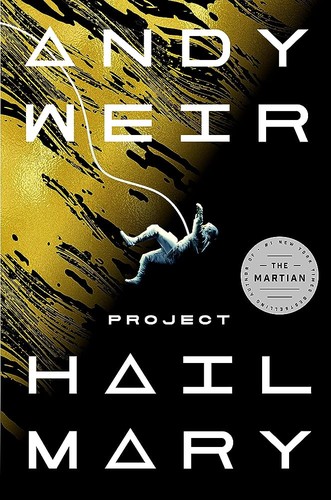
Book links are affiliate links. We earn from qualifying purchases.
Author
Hosts
Transcript
This transcript was auto-generated by our recording software and may contain errors.
Carter Morgan (00:07)
Hey there, you're listening to Book Overflow. This is the podcast for software engineers by software engineers where every week we read one of the best technical books in the world in an effort to improve our craft. I'm Carter Morgan and I'm joined here as always by my co-host Nathan Toops. How you doing, Nathan?
Nathan Toups (00:18)
Doing great here, everybody.
Carter Morgan (00:20)
I love an episode where I start with the usual introduction just to say, and we're not doing that today, where usually we read one of the best technical books in the world. But today we're reading what I consider just one of the best books in the world. At one of the best fiction books, Project Hail Mary by Andy Weir. We're to talk all about it today. Every now and again, we get to do an indulgent episode where we just do something that's a little fun and we figured, hey, the movie's coming out in like two weeks. And so, you know, let's get into the zeitgeist a little, talk about this. Before we do, you know, as always, like, comment, subscribe.
Wherever you're at, you can book time with us on Leland if you want one-on-one coaching. You can join our Discord. And you should definitely check out our new episode with Carl Brown from Internet of Bugs. How cool was that, Nathan?
Nathan Toups (00:58)
That was so much fun. it's every time I talk to him, I walk away from going, I learned something. I think I need to have stronger opinions about stuff in general and ⁓ inspired all at the same time.
Carter Morgan (01:11)
Yeah, he's great. He's a, we want to, I think we're going to have him on for a follow-up episode because the episode wound up being, if not AI skeptical, then at least AI counterculture. ⁓ at least when you consider like the AI Maximus point of view, I'd love to have him back on to discuss like how we're using AI in our workflows because we all agreed, I believe we say in the episode and we definitely all agreed off camera, like we use AI a lot. Like we're a big believer in it's how much is transforming.
at least the practice of coding, if not how much you separate that from software engineering is, you know, a word game. ⁓ But yeah, super cool to have him on and definitely a needed voice.
Nathan Toups (01:48)
I just had an idea. So tell us if this
is a good idea. Carter has no idea what I'm about to say. ⁓ It would be really cool to have a John Osterhout slash Robert Martin ⁓ style episode with Carl Brown and maybe someone who is very sort of like super pro AI forward and maybe is less safety focused to have a debate, you know, to have a debate about.
Carter Morgan (02:07)
that'd be cool.
Nathan Toups (02:16)
poking holes in ideas and figuring things out because I think that would be really interesting. So maybe we can find,
Carter Morgan (02:20)
That would be really cool. Yeah.
If you have any recommendations for a good kind of AI maximalist candidate, let us know. ⁓ but aside from that, ⁓ so excited to talk about, ⁓ project Hail Mary this week. let's give the author introduction to the book introduction that you've probably heard of this because it's been in the news a lot, just with the new movie coming out. ⁓ I highly recommend if you are interested in reading the book, don't watch any of the trailers, the trailers provide some spoilers, which I think are best,
experience by reading the book. We're going to do our discussion today. We're going to spend about the first 10 minutes or so doing broad strokes, general spoiler free discussion. Then we'll do a hard pause with plenty of warning that we are entering spoiler territory. So stick around for the first 10 minutes if you care about spoilers and then if you don't care about spoilers or I've read the book, stick around for the whole thing. But anyhow, let's do the author introduction and the book introduction. This is run by Andy Weir.
who built a two-decade career as a software engineer, hey, look at that, until the success of his first published novel, The Martian, allowed him to live out his dream of writing full-time. He is a lifelong space nerd and a devoted hobbyist of such subjects as relativistic physics, orbital mechanics, and the history of manned space flight. He also mixes a mean cocktail. He lives in California. And anywhere, if you don't know, I know he did not love his time at Blizzard, but he is a contributing software engineer to Warcraft II, which is a game I played a lot growing up.
And so I find that, yeah, yeah, yeah. He's pretty open that his time there was not great, but I'm like, he contributed to Warcraft too. That's pretty neat. ⁓ Yeah, so Andy Weir, super cool guy. I have not actually read The Martian. ⁓ I watched the movie and loved the movie. ⁓ But ⁓ Project Hail Mary for the book introduction we have, Rylan Grace wakes up millions of miles from Earth with no memory, two dead crewmates, and a mission he can't recall.
Nathan Toups (03:47)
I did not know that. That's amazing. Yeah.
Carter Morgan (04:16)
One that turns out to be humanity's last hope against an extinction level threat. As his memories slowly return, he must solve an impossible scientific mystery on a tiny ship with the clock ticking and the nearest human light years away, or perhaps not entirely alone. All right. So that is Project Hail Mary. Like I said, I love this book. ⁓ I have read it probably cover to cover twice and then once to my kids. And I will just pick up and read chunks of it every now and again. ⁓ One of my favorite fiction books of all time.
Nathan, I recommended it to you and said like, hey, the movie's coming out. Maybe it'd be fun to talk about this in the podcast. So you actually just finished listening to it. And I point out that you listened to it because many people love the audio book and say it's a fantastic audio book. So Nathan, give me your general spoiler free thoughts.
Nathan Toups (04:58)
I
Yeah, I concur. The audiobooks phenomenal. So if you are looking for something to sort of supplement reading, it's very enjoyable. ⁓ I find fiction. I listened to all three of the three body problem books as well. ⁓ just really great way to kind of supplement things. We don't have to just read ⁓ nonfiction computer science books all the time. I will say, yeah, I loved this in the sense that I got really invested in the book.
Carter Morgan (05:15)
Nice.
Nathan Toups (05:29)
Overall, I really liked the book. It's solid, hard sci-fi. He doesn't pull punches. It's also very approachable. Like, you don't have to be a physics major to understand the concepts. Even if maybe a little bit goes over your head, he explains it in a way that's, like, pretty cool. ⁓ I really enjoyed that. And so if you're, a fan of the YouTube channel PBS Space Time, you're gonna feel right at home. And I found...
Carter Morgan (05:39)
Right, right.
Nathan Toups (05:57)
And maybe this is because like he's writing good characters. I loved the main character, but I also found really frustrating sometimes. And so we'll get into this because like there's some suspension of disbelief and there's some sort of like me thinking about the stakes that it felt a little alienating. But I thought it was plausible, like everything in the book could happen. all of the things that he kind of like builds up to, which is really.
Carter Morgan (06:05)
Yeah.
Nathan Toups (06:27)
fascinating and interesting to think about. ⁓ I will say it's similar to The Martian, and I've only watched the movie for The Martian. It's similar that it's a man alone type of book. so unfortunately, he's the only sort of a real three dimensional character in the book. And ⁓ I think I wish that there was more time. I wish he'd actually been able to give us more time to get some of the backstory stuff that we get into. ⁓
Carter Morgan (06:38)
Right.
Right.
Nathan Toups (06:56)
But at the same time, the pace is great. The plot conventions where we kind of have this dual storyline going on, which is a lot of fun. ⁓ I thought that there's a lot of physics puzzles and biology puzzles that get kind of strung together. it was fun. It's just like a good read. I don't know. If anybody says that they love this book, I'm not mad. It's a great book.
Carter Morgan (07:21)
⁓
Maybe just to give a bit of context, I won't consider it a spoiler if it's revealed in the first 10 seconds of the trailer or the first 30 pages of the book or so. ⁓ Yeah, so basically, the sun, in this book, the sun is dying. they actually, through astronomy data, they determine that all stars near Earth are dying about, ⁓ they've all dimmed in luminosity about 10%, which is enough to cause another ice age.
And the sun is on its way to dim by about 10%, except one star, which is like 13 light years away. And humanity mounts a last ditch effort to send a crew to that star in order to discover why it's not dying and to perhaps come up with the cure for our sun. ⁓ Hence the name of the book, Project Hail Mary. It's ⁓ funny, on the subreddit, this actually has been
Nathan Toups (07:55)
All All right.
Carter Morgan (08:19)
for the movie, they had to translate the title into a bunch of different languages. And it does not translate at all. a lot like in Spanish, it's like Proyecto fin del mundo, right? Like end of the world. Or like, I think they in France, I think it's just called the astronaut because Hail Mary, if you're not familiar, I know we have a lot of audience that isn't American, but Hail Mary, it's a Catholic term. But it's a football term. That's where this comes from. It's on the final play. American football play. Yeah, basically like
Nathan Toups (08:31)
interesting.
American football play, yeah.
Carter Morgan (08:47)
You have to win by a touchdown. You're 50 yards from the end zone. You have one last play before the clock runs out. And so what you do is you just send all of your team down to try to catch the ball and the quarterback just throws it and hopes that it works. Yes, exactly. Right. ⁓ So yeah, that's it. So I really like this book because you're right. There's dual storylines because it's telling the story of kind of what happened to what the ongoing mission.
Nathan Toups (08:58)
Yeah. Yeah, it's YOLO mode, right? And you're just like going full YOLO.
Carter Morgan (09:16)
and then flashbacks about what had to happen to set up the mission. I really like that about Andy Weir. ⁓ He is an optimist, and I am an optimist myself, and he's in particular an optimist about human nature. And maybe it's optimism that dips at points into fantasy, but I really liked that about The Martian, for example, which is a story of just like how so many people, so many smart, hardworking people come together to save one man.
⁓ and then project tail Mary is a bit more about, ⁓ you know, it's not saving a planet, but again, it's a story of like a lot of smart, hardworking people coming together to solve a really, really challenging problem. ⁓ and I love that. think at the, at the Martian at the end of the movie, I think it's an added scene, but Matt Damon's character basically says like, you know, you're in space and like, you're going to get to a point where like it all looks hopeless. And what you do is you solve the problem and then you solve the next problem and you solve the next problem.
Nathan Toups (09:44)
Right.
Carter Morgan (10:13)
And if you solve enough problems, you get to go home.
Nathan Toups (10:15)
which is a very, I will say, it's very software engineering approach to things because we're much lower stakes, but we're constantly, we don't actually know what the end in sight is. We know we kind of just take one increment at a time towards a bigger problem and then they're discovering as we go. This book is also, there's very much this, there's a few things that I like about this book a lot and why I think it's interesting to the Book Overflow audience. There's this real distinction between science,
Carter Morgan (10:18)
Yes, absolutely.
Nathan Toups (10:45)
and research and engineering, because you can have these grandiose ideas. You can have real interesting models of the universe, but you actually have to execute on those ideas. And the engineering part is its own discipline. It's hard. And there's strengths and weaknesses to like, are you actually paying attention to the detail? Have you actually, like he ends up having to like, there's a lot of this stuff where he's building tools to build tools and things that are very familiar with software engineers as he's kind of going through this and
Carter Morgan (10:58)
Yes. Yes.
Right.
Nathan Toups (11:16)
That part's exciting. The other part, and I didn't do it. like, there was a movie, I don't know if you've seen this, because it's, again, I'm a bit older. There's a movie called Memento. was, ⁓ so yeah, so it was just, I think this was Christopher Nolan's first movie that got popular, at least. And ⁓ I I loved it because it had, ⁓ it had ⁓ Trinity from The Matrix was in it too. So, because again, I was, I mean, I was a high school student when The Matrix came out. ⁓
Carter Morgan (11:23)
I need to see momentum. A big Christopher Nolan fan.
I think so, yeah.
⁓ fun. Yeah.
Right, right.
Nathan Toups (11:45)
I will not tell you whether I ever wore a trench coat to be cool or not, ⁓ or wore roller blades or any of that stuff, but maybe. ⁓
Carter Morgan (11:54)
⁓ You know what, you're
a software or a theater kid in the 90s. I feel like you get some permission to.
Nathan Toups (12:01)
Yeah, plus
the movie Hackers came out in 1995 and that was also a pretty important movie for me. yeah, so what was interesting about Memento is that you, protagonist is learning about himself as, so the plot line goes forward and there's this part where he's like discovering something he had done in the past and it was important for moving the plot forward. And so you kind of had these dual timelines. It's a very similar kind of convention that's in this. And this is what I love, it's like,
Carter Morgan (12:17)
Right.
Nathan Toups (12:29)
In the end, this isn't ruined anything. This is like first chapter stuff. He is in a spaceship. He wakes up from a coma, basically, or a long hibernation ⁓ because relativistic physics, ⁓ they've built this amazing spacecraft that can dilate time as it's going near the speed of light. And so he experiences about four years, I think, of time, even though it's about 13 years on Earth time, something like that. ⁓
Carter Morgan (12:56)
Yes.
Nathan Toups (12:59)
Again, very kind way of introducing these ideas for the uninitiated, but still four years goes by and he's been in the suspended animation. And it turns out he's got minor brain damage. He doesn't remember his name. He doesn't really understand why he's on the spaceship. He has a lot of stuff where you obviously can tell he's a geek at the beginning because he's just nerding out about stuff, but he doesn't know why. He knows the things he knows or what's the substance. ⁓
Carter Morgan (13:13)
Yeah, yeah.
Nathan Toups (13:28)
I thought that that was a really fun way of jumping right into the action. And then he's learning something about himself. And then when he learns that thing, it just so happens that it's actually kind of important to move the plot forward in various points. And again, not giving away any of the storyline. It's almost like a murder mystery whodunit meets hard sci-fi. And I don't know, was just, that part of the book was.
Carter Morgan (13:31)
Yes.
Yeah, yeah, that's a good way putting it.
Nathan Toups (13:56)
absolutely delightful. I thought this was not contrived. I thought this was a really fun way of doing it. And then again, you string together a bunch of puzzles where you're like, OK, well, I thought this was how it's going to work, but this isn't how it's going to work. And actually, I've introduced five new problems, and now I might die over and over again. so yeah, I thought that that. And again, we're not doing spoilers right now. So there's actually really fun things we can't talk about.
Carter Morgan (14:12)
Yeah.
Nathan Toups (14:23)
but you will not be disappointed. I'll put it this way, like they go there.
Carter Morgan (14:26)
No, you won't. This is
one, I don't even remember why I picked this up. I think I just, at a certain point was like, I didn't realize Andy Weir had written another book and I loved The Martian and so like, let me check this out. I knew nothing. I got this on Kindle so I don't even think I read like the blurb or anything. I was just like, like an Andy Weir book, I'll check that out. ⁓ And we're gonna kick off spoilers in just a sec here because ⁓ yeah, there are some changes that happen in the book that are surprising and very fun. So I'm gonna say.
All right, spoilers incoming. We are going to take a break in just a sec. After the break, it's full on spoilers. So you have been warned. If you want the spoilers, stick around. If you read the book, stick around. If you haven't read the book, go read this book. It's an excellent, excellent book. All right, take a break. Spoilers after the break.
And we are back. As a reminder, spoilers are starting now. Okay, let's go. Rocky, I freaking love. ⁓ This was so fun. ⁓ if you haven't read the book and just don't care about the spoilers, that's the big twist in this book. At the back of the cover jacket says, know, he, as his memory slowly returning, must solve an impossible scientific mystery alone on a tiny ship with the clock ticking in the nearest human light years away, or perhaps not entirely alone.
Nathan Toups (15:26)
Yeah.
Carter Morgan (15:45)
So gives you just that little hint. And the big reveal, it's about six chapters in, there is another spaceship in the galaxy, but not a human spaceship. There's an alien spaceship in the galaxy that he has wound up at ⁓ because they're trying to solve the same problem. ⁓ Because the reason the sun is dying, it's this kind of organism called astrophage, which can live in space. lives on the surface of the sun. It absorbs the sun's energy and then kind of migrates back and forth between Venus. ⁓
And so all the stars around and our galaxy have been affected by astrophage. So they go to Tau Ceti, the one star that hasn't. And yeah, it's revealed that ⁓ there is another spaceship there ⁓ with an alien on it. And when you were reading this, Nathan, ⁓ I'm like, how far are you? And you're like, I'm in chapter six. like,
Nathan Toups (16:32)
S-
Carter Morgan (16:39)
You're in chapter six or you finished chapter six and you're like, I'm in it. And then you texted me back. You're like, aliens. yes.
Nathan Toups (16:47)
Yeah, yeah, it was it that was it was really fun also, you know, and I'll tell you some of the I'm like there's a few things that have pet peeves about ⁓ relativistic time travel I mean is relativistic stuff in time travel and Like I guess because I do have a bit of a physics background. I'm like pretty snobby He handled every bit of this correctly. There is no time. There's no time travel but there's time dilation, but I was like you can't put a spaceship at
Carter Morgan (17:10)
Nice.
Nathan Toups (17:17)
96 % of the speed of light ⁓ and not just die from alpha particles and gamma particles just killing you. But when he was describing the ship, there was this thin layer around it. He didn't tell us that it was surrounded by ⁓ astrophage, but I was like, realized, I bet astrophage.
Carter Morgan (17:28)
Right, right.
Nathan Toups (17:44)
absorbs all these particles. I was like, I was trying to predict where he was going to go with this. And I ended up I got the payout. It was correct. It's kind of so astrophage is this like amazing sort of like, I mean, this is sort of the magical part of this book, which is astrophage is this. Yeah, so astrophage is cool. First of all, uses it has it has mitochondria, which is nuts. One of the things too is that he would the whole reason that he oh, he's a junior high school
Carter Morgan (17:50)
Yeah.
There's a bit of magic in this book where like that's, but...
Nathan Toups (18:13)
you know, science teacher, but he actually has a PhD. He like kind of fell out of the world because he was frustrated because he postulated that maybe life doesn't have to be water based, that water doesn't have to be part of it. So that's why they end up picking him because they find these things that kind of look like organisms that are in the sun. And it turns out he's wrong. These things actually are still water based. They still have mitochondria. Over time, we actually realized that it might probably be a common ancestor.
between Rocky and the humans, and this opens up these whole other pieces. But the big thing about Astrophage is it has this near-perfect energy conversion, and it's this super fuel. ⁓ Also super dangerous, but it's a super fuel. And so not only do they unlock this, and this is why we can go near the speed of light, ⁓ but it also has this magical kind of property that if you surround your ship with it, ⁓ it will block ⁓ cosmic rays, which we know would
Carter Morgan (18:54)
Yeah, yeah.
Nathan Toups (19:11)
cause lots of problems, the closer you get to the speed of light, it also means that the particles going towards you are gonna become higher energy particles, and so you'll just die. Well, it turns out the alien species that Rocky is from had no concept of cosmic rays. Yeah.
Carter Morgan (19:28)
Yeah, that's, I love that. Yeah, yeah,
that's what's really cool. So he meets this, he finds this other ship and there's aliens, he presumes there are aliens on it. And so they wound up setting this tunnel to learn how to communicate. And comes to realize that there aren't multiple aliens on it. There was a crew of 23 and there's just one left now, Rocky. He names him Rocky. ⁓ And it's a really, really fun book because ⁓ Rocky is very, very alien. Like he's like this like,
Nathan Toups (19:49)
Right.
Carter Morgan (19:58)
Crab-like creature with like five legs and he has like rock like skin. That's why he calls him rocky and he's blind he does he can't see because ⁓ and so he he has basically like echolocation on like like superpowered echolocation his whole body is kind of a microphone because Their planet which is I think that the star is 40 Aradani is where he comes from and so ⁓ Grace calls them Aridians he names the planet Arid and their planet has
so much atmosphere that light doesn't get through. no species evolved eyeballs. And it has so much atmosphere that ⁓ cosmic rays can't get through, that radiation cannot get through. And so the...
Nathan Toups (20:41)
Right, it's like eight,
yeah, eight times the gravity. It's also like super heavy in ⁓ ammonia. It's like, yeah, it's the visceral smell. ⁓
Carter Morgan (20:49)
Ammonia, they breathe ammonia. ⁓ There's a lot of interesting stuff about like Iridium biology.
Andy Weir had a fun time coming up with alien biology. so when they discovered that their son is dying too, they build a spaceship. But they're just not drawn to space like we are because they can't see space. so they build a spaceship. that's what is really interesting is the Iridians are rocky as an engineer.
And Grace is a scientist. So it's a very fun pairing because the iridians have some kind, they have some advanced materials technology, which again are also a little hand wavy. ⁓ They have this very powerful chemical compound called xenonite. It's xenon, but it bonds with something, which again, we believe is impossible. So it's a bit hand wavy, but Rocky uses it to make all sorts of gadgets. ⁓ So they're very, very good at some things. They're excellent material scientists, but they didn't understand about radiation.
Nathan Toups (21:19)
Mm.
Carter Morgan (21:47)
They didn't under, they don't, relativistic physics, no, they didn't understand, yeah.
Nathan Toups (21:47)
Relativistic physics.
They thought that, I mean, the reason they had have a crew of 23 is that they didn't have computing power. And they also didn't have the, like, they kept getting confused, because they would use the astrophage, and then where they were in the universe over the amount of time that they thought it would take was wrong, right? And the only reason, exactly, right, because on their planet, that was.
Carter Morgan (21:55)
Yes, they don't have computers.
Yeah, they only understood Newtonian physics, not relativistic physics.
Nathan Toups (22:14)
more than good enough, where you can predict pretty much everything you need within the universe at that scale. The other thing I thought was interesting is that Rocky survives because he's in the, the engine crew, and he's hanging out near all the astrophage, right? So ⁓ he's working on... Yeah, yeah.
Carter Morgan (22:17)
Right.
fuel base. Yeah, yeah. So his area is just kind of blocked from radiation. ⁓ But
that's why it becomes a very, very fun story because Grace's two crewmates, they die along the way too. They're put into a coma for several years and it's just, they have these kind of like robot arms that take care of them, but it's just dangerous and they just die. It's just theorized they die for like normal reasons, like something went wrong over the trip. And so ⁓ it's Grace and Rocky.
Nathan Toups (22:41)
yeah, yeah.
Carter Morgan (22:58)
And they're both the sole survivors of their ship. And it becomes a story of two very unlikely friends. And as the story goes on, you realize that Grace back home was, he was very much a loner. He didn't have a wife. He didn't have kids. And ⁓ yeah. And so it's really, really fun to watch him form this friendship with an alien. ⁓ And yeah, it's just a, it's, it's a very different book than what you think it would be. And there is still a lot of
pop science ⁓ and engineering in it, but it's a really, really fun story.
Nathan Toups (23:32)
And this is where I'll give my suspension of disbelief, and maybe it's because I'm tainted from the three-body problem. And I'm a big, I think that maybe one of the reasons that the Fermi paradox, which again, it kind of gets into some of these items. There's a few things that are kind of interesting. ⁓ What is the odds of us meeting another alien species I think is super low. But the odds of us meeting an alien species that has any semblance of
Carter Morgan (23:37)
Yeah.
Right.
Nathan Toups (24:00)
culture and morality that would be in any way compatible or that we could even understand. That's where my suspension of disbelief is, like, I'm like, what are the odds that a sort of pro-social, know, scientifically curious organism independently evolves off of another planet and just so happens to be just in the right place to be able to like detect astrophage? And they do address some of this in the book. I mean, like it happened.
Carter Morgan (24:03)
Yes.
He asked,
yeah.
Nathan Toups (24:28)
You know,
it's there. They show up, therefore they must address this,
Carter Morgan (24:33)
He says, he's like, why is our science roughly similar? And he says, ⁓ it has to be, says, because if you have less science, then you die due to astrophage. If you have more science, then you can solve the astrophage problem without needing to come to Tau Ceti. The only thing that bring you to Tau Ceti is if you were at roughly similar levels in the technology.
Nathan Toups (24:43)
Great.
Yeah, and you think about it from like an astronomical, like from a cosmological time scale, it's crazy to think that like, if it was just 300 years earlier in human history, we wouldn't have had any of the mechanisms, our astronomers would have detected that the sun was dimming, but there would have been no, we didn't even have like modern, you know.
Carter Morgan (25:07)
Yeah, right.
Nathan Toups (25:21)
understanding of how cells work and stuff. they wouldn't have made it like, oh, there's an organism. So we would have just died. Humans would have just died. So we're at this sweet Goldilocks zone, which makes it fun.
Carter Morgan (25:23)
Right.
Yeah
Yeah. And you said they theorize that some ancestor of astrophage basically, like what do they call it? The panspermia theory, right? Seated the planets in our galaxy with some form of life. Because I agree, if I have one minor criticism of the book, it is that which is that Rocky and the Iridians are too similar to human culture. And like Andy Weir throws us a couple bones in that like, in things that
Nathan Toups (25:44)
Right, right.
Carter Morgan (26:04)
that are different between them. Like for example, with iridians, when they sleep, they don't sleep like we do. they are, their whole body, again, there's a lot of interesting iridium biology stuff, but they are steam powered in a way. so to, yeah, yeah. So to sleep, they actually have to cool their body's temperature and they are not conscious. And so a sleeping iridium can't wake up until their body has kind of repaired all the damage. And so,
Nathan Toups (26:17)
It's the steampunk fantasy. Yeah, there we go.
Carter Morgan (26:32)
Oridians have evolved a cultural rule where if an oridian sleeps another oridian must watch them Which you know grace theorizes must go back to like cave oridian days ⁓ And so there are fun moments like that were like when they're first they have to learn how to communicate Because that's another thing is that rocky he doesn't have a mouth like his language grace says it sounds like whale like whale song almost but with multiple notes in a ⁓
in a syllable, like organ chords. ⁓ Anyhow, ⁓ and so, you know, when they're learning how to speak, like, Grace says, like, ⁓ Grace says, like, I need to sleep, and Rocky's like, I observe. And Grace is like, well, he's a scientist, like, he'll watch me sleep, right? But then Rocky needs to go to sleep later, and he tells Grace, he's like, you observe? And he's like, no, he's like, I'm good. And he's insistent, he's like, you observe. ⁓
And so there are fun little cultural differences or for iridians eating is a very private gross thing. It's like also Yeah, it's it's like ⁓ to them. It's very much like using the bathroom and so grace rocky is very confused that grace like that he celebrates by eating ⁓ so there's little things like that, but at the end of the day like rocky cracks jokes like they have a herd instinct they Yeah, they ⁓ rocky is much more like
Nathan Toups (27:34)
Yeah, they're kind of ashamed of it.
Carter Morgan (27:57)
computationally, like he has almost like a photographic memory, but in terms of like their thinking speed of like how quickly they can come up with solutions to a problem, they're at the same rate. So it is a little too similar for like pure hard sci-fi, but like you have to have it to ⁓ form the bond.
Nathan Toups (28:14)
Yeah.
And again, yeah, it's I mean, at the end of the day, it's a story of friendship and the levels that you're you're willing to go to. Yeah. I'm trying to think that there's some interesting there's some interesting things that end up happening because, you know, ⁓ grace, you know, is not the first choice, which I thought this was like a kind of a fun a fun piece where there's a few overcoming the odds. Like, first of all, ⁓
Carter Morgan (28:36)
Yes.
Nathan Toups (28:43)
A very small number of humans are even candidates for going into suspended animation. It's very dangerous. Obviously, two thirds of the people who were candidates had a biological sort of propensity to handle this thing.
Carter Morgan (28:54)
Yeah, they say you have to
have a special gene and only one in 7,000 people have it. And so you're limited just from there. Only one in 7,000 people could even be candidates for this mission.
Nathan Toups (29:04)
Right? And so not only is he like, he's a junior high teacher who doesn't cuss, which we haven't gotten into that, but it's kind of like a funny thing that because he'll be like, gosh, darn it, like in the middle stuff, which I'm like, this is hilarious. Yes. Right. There's probably only a couple of times you had to skip a word. ⁓ And then, you know, so it is again, you kind of stack up the odds of why this guy's on the ship at the same time. If you stack up the odds of why any astronaut is on any ship, ⁓ it's incredibly
Carter Morgan (29:10)
Yeah, yeah. They made it easy to read to my kids. I read this one to my boys, yeah. Yeah, yeah.
Right, right.
Nathan Toups (29:33)
unlikely. yeah, it was very interesting. I do think it was like from an optimistic standpoint, it was cool to see two organisms that were so willing to help each other. If they hadn't been this whole thing would have fallen apart. They in very dangerous situations repeatedly. One of the things that I think was interesting is so that the other sort of big enemy slash savior of this book is that
when they're this ⁓ solar system, they discover there's this thing called talmiba. And talmiba are the mortal enemy to astrophage, the natural predator. And so they keeps it in sort of a balance, right? In this one star. And we learn this and ⁓ turns out talmiba are really hard to keep control of and cause lots of problems. And so I thought all of that was interesting of like the hubris of, we're just gonna fix this problem. And then you're like, you end up playing whack-a-mole. And again,
Carter Morgan (30:13)
They're natural predator.
Yes.
Nathan Toups (30:33)
who has not been in this situation where you're like, I'm just gonna fix this one thing. And then you're like, oh no, this thing has gone completely sideways. so again, I love how the book kind of goes into this. Sometimes I'm just like, how is this not in your mental model? But at same time, is struggling with sleep deprivation. There's all these really weird confounding factors that.
Carter Morgan (30:35)
Yeah.
Yeah.
Yeah.
Nathan Toups (31:01)
gives us good reason to nurse the end.
Carter Morgan (31:05)
And there's just, it's fun to watch their, like it was a cool idea from Andy Weir, like Grace is a scientist. ⁓ And that's part of the evolving mystery throughout the book is that every, the Hail Mary, they do wind up getting from the coma resistant people. They wind up getting a primary crew and a backup crew for the mission. But as they're introduced in the flashbacks, because Grace is recovering his memory, you find out that Grace is not the primary or the backup science specialist. And so.
that introduces a bit of a mystery. like, why did Grace wind up on the Hail Mary? ⁓ And, but so Grace does wind up on the Hail Mary as a science specialist, very clever of Andy Weir to make Rocky a genius engineer because they compliment each other very well. ⁓ And, ⁓ go ahead. Yeah, exactly, right.
Nathan Toups (31:46)
Yeah, ⁓ they both would have been dead. Either one of them would
have been dead if they hadn't shown up exactly when they did.
Carter Morgan (31:53)
And
you find that about Rocky is that Orideans live about 700 years and Rocky has been floating in the Tau Ceti system for like 45 years, just trying to do anything to save his people, but he just can't. And so, yeah, fun when Grace shows up and they can work together. And another character we haven't talked about is Eva Stratt, who is, she is the, and this is another kind of like suspend disbelief moment, but she is the administrator on earth in charge of
Assembling the Hail Mary of getting this mission going but basically All the top countries in the world have come together Under an alliance and given her ultimate authority to do anything possible and we're talking about like world altering authority like at one point to generate the astrophage they need a massive amount of power and so she paves the Sahara Desert with the solar panels, I mean, of course not her personally but
Reorients like the entire manufacturing base of the world to producing these solar panels. ⁓ there's a little suspension of disbelief there I think again that comes from Andy Weir like was fundamentally a an optimist of humanity and their ability to work together but it's a but she's a fun character because she is just very She's very no-nonsense. She will do whatever it takes to ⁓ To get the mission on board and so she kind of she keeps grace around she goes from first because he's
kind of the world's expert in like, alien, like, ⁓ theoretical alien biology. So she has him look at the astrophage first, but then she keeps him around as like a helper on the ⁓ project. And throughout the book, you're kind of, you're starting to wonder, you're like, well, why did Grace wind up on the ship? Cause he's not the primary science specialist. He's not the back of science specialist, I guess. But then like, there's kind of some hints that like, like,
Eva Stratt has feelings for him. Like they're falling in love. Like that's what I thought was happening. ⁓ And ultimately he winds up in volunteering to save her and to save the world because the backup, the primary and the backup science specialists do die in an accident. And they're like, okay, Grace, like you, you're the one who has to go. And Stratt kind of reveals like, I didn't really need a junior high school science teacher on this project. Like I just knew.
that you should know all this stuff because heaven forbid this happened, but it has happened. So you have to go. And that's the big reveal in the book is that he doesn't want to go and he tries to get out of it. He's a coward. And so she, she basically, kidnapped him, forces him on the ship against his will. And he's, and he's like, I'll, I'll scuttle the ship. I'll, I'll, uh, you know, I'll, I'll screw up the mission. And she's like, no, you won't. She's like, I'm 99 % sure you won't.
Nathan Toups (34:21)
Great. Yeah.
Carter Morgan (34:41)
She's like, but I can't be confident 99 % sure can I? And so you realize she's pumped him before she's rigged the coma machine or basically his medical system on the ship that keeps him in the coma with these special drugs from like the French intelligence agency that provide long-term amnesia. And so what you think is like this like side effect of the coma, it actually isn't. was Stratt giving him amnesia so he would forget that he didn't want to go on the mission. And by the time he remembered he would
Nathan Toups (35:08)
Yeah.
Carter Morgan (35:11)
be all in on the mission. It's a really fun reveal.
Nathan Toups (35:11)
It actually makes you wonder if
those drugs are actually important for actually keeping him alive too. I wonder what a brain kept in a sleep state for four months, or four years.
Carter Morgan (35:18)
Yeah, I wonder, right?
Yeah, you know that's a good point. You
wonder if that's why they why his crewmates died and he didn't.
Nathan Toups (35:29)
So yeah, there's a few times where I'm very invested and very on board and there was a few parts of his character that I was really disappointed in. Number one, given the stakes of the world, not having duty bound and actually being whiny and complainy, it really pulled me out. I was just like, man, really? ⁓ And he was like, it's for the kids. And I like, get out of here. The other time that he complained, so again,
Carter Morgan (35:40)
Right, right.
Hahaha.
Yeah, yeah.
Nathan Toups (35:57)
We're well into spoiler territory. ⁓ This is a one-way trip. They can only generate enough astrophage to get them out to Tal Sede. So there's no way for them to actually come back. They actually have these little, they call them the beetles. There's ⁓ these little ⁓ modules that can go back to Earth because they're such really tiny spaceships that are going to carry whatever payloads that need to be carried back to Earth. They can be much more aggressive at how fast they go to... ⁓
Carter Morgan (36:15)
very tiny spaceships.
Nathan Toups (36:26)
to near light speed because there's no life on it and things like that. ⁓ And so he knows he's like on this one way trip except Rocky, because they don't understand relativistic ⁓ space travel, has way too much astrophage, like a ton and ton of astrophage. And they actually have enough to give him back. for a little while in the book, you think he's actually gonna be able to go back to Earth. And again, this other whiny part of his character that drove me absolutely nuts, he's like.
Carter Morgan (36:43)
Yeah.
Nathan Toups (36:55)
Oh man, I'm going to have to eat the food that we eat during suspended animation. I don't know if I want to do this for four years or whatever. And I'm like, get over it, man. You get to go back to Earth. Just eat the powder. I don't understand. He's literally just whinging about, should I live a life where I can't have yummy food? And I'm like, come on. So yeah, he's consistent.
Carter Morgan (37:01)
Yeah, yeah.
Yeah.
Yeah, yeah.
Yeah.
Yeah, it's a but that is what's
yeah, but that's what's fun about his character because he's not willing to die For earth and so he kind of remembers that I had a point of the ship and he's like, he's like I'm not some intrepid space explorer He's like, I'm a coward who had me force into the ship kicking and screaming and so they wound up they they take the Taumiba and they are able to breed it to the point where the ⁓
Nathan Toups (37:35)
Right?
⁓ yeah,
nitrogen is deathly, know, completely destroys it. Yeah.
Carter Morgan (37:46)
Yes, it's deadly to the Taomi. Yes,
but unfortunately Venus where our because that's their plan. They're like if we can see Taumeba on Venus where the the Astrophagin is migrating from the Sun, then it will eat the Astrophagin and bring the Sun in harmony kind of like Taoseti does with their Venus like planet. And Arid has a similar thing. They have a Venus like planet as well, but both of them have nitrogen. think like
in their atmosphere, Venus's atmosphere is like 3.5 % nitrogen and and Aeroids is like 8.5 % nitrogen. And so they make these special breeding tanks out of xenonite and they're breeding Taumeba to, know, they just introduce every generation a little bit more nitrogen. So they're breeding it to be more nitrogen resistant. And so they do it, they're so happy, Rocky and Grace part ways to go back to their...
their respective planets with with the Taumeba to save their world as heroes, right but Well as they're going There's the Taumeba has escaped so grace is flying back to earth the Taumeba has escaped and the Taumeba it eats astrophage and the ship is powered by astrophage and so if it escapes like and and eats your fuel like your dear licked and so grace figures it out and he cleans it but he's kind of he keeps saying he's like how did the astrophage escape like it it was sealed in like
Nathan Toups (38:46)
Yeah, as heroes, right?
Carter Morgan (39:12)
Yeah, they're airtight tanks. he does some experiments and realizes that the or not the abstract the town me base says the town me but it can't get through plastic, it can't get through steel, it can get through xenonite. He's like, how was that possible? And it's like you're talking about Nathan and we know there's a software engineers like unintended side effects, which he realized, like, we weren't just breeding. Evolution is not a clean thing. He's like, yes, we breed with we bred tau meba that could survive nitrogen. He's like,
We also bred Taumeba that could worm its way into the molecular structure of xenonite to hide from the nitrogen. And he realizes that Taumeba can escape through xenonite. And so he fixes his ship. like, it's okay, my ship's made out of steel, it should be fine. And then he realizes Rocky's ship is entirely made out of xenonite. And so he's left with this choice. He's like, so Rocky is most likely stranded, derelict in space. And so he's left with this choice. Like he can go back to earth and be a hero.
Right, the man who saves humanity, or he can go and save Rocky and bring Rocky on his ship and they can go to Arid, but he doesn't have enough food. He only had enough food to go back to Earth and he can't eat Aridian food. And so it's a very, very fun, he chooses to go save Rocky, ⁓ but it's a very fun ⁓ resolution to his character. This is a man who is not willing to die for his planet and he becomes a man who's willing to die for his one.
friend and so he goes and he saves rocky and it's very touching and then it's also very touching because rocky point because grace kind of tells rocky he's like uh and i love this moment in the book he's like rocky he's like he's get on board he's like i'm taking you back to erid and rocky is very very happy because he has been derelict in space and and he's like my he's like my people they'll make astrophage for you to go back to your home and and grace tells him he's like that's the thing he's like i'm not going back he's like i i don't have enough food he's like i will take you back to erid and then i'll die like i don't have food and
And Rocky's like, he's like, you can't die. He's like, you're my friend. And Rocky tells him, he's like, he's like, you go home. He's like, I'll stay here. He says, maybe Arid will send another ship one day. And Grace is like, that's ridiculous. You want to bet your whole species on that guess? And Rocky is like, no. And so he's like, well, then come aboard. He's like, I'm taking you to the Arid. And Rocky is like, he's like, wait, he's like, can't eat, he's like, you don't have Earth life to eat. You can't eat Arid life. He's like, what about Adrian life, which is the Tau Ceti Venusite Plane? He's like, what do you mean? He's like, I can't eat Ash Fade.
Don't eat ashrac, eat Taumeba. he's like, and Grace is like, wait a minute. He's like, maybe I can, like it has mitochondria, like it does the Krebs cycle. It's like, it's just an amoeba. He's like, maybe I can eat Taumeba and Rocky's like, I have 23 million kilograms in my tanks. How much do you want? And, and the story ends there, but the epilogue takes place on Arid where Grace, Grace lives on Arid. That's the end of the story is that the, Aridians.
Nathan Toups (41:47)
Yeah.
Carter Morgan (42:05)
He eats the Taumeba enough until the Iridians can synthesize vitamins for him. ⁓ And it's a very, very sweet ending where he lives on Arid. They reveal that Iridians get, ⁓ they've been monitoring our son's luminosity and they've determined that it has returned to full luminosity. so the project, Tell Mary was successful. And it's a very sweet ending where Grace, his job on Arid is he is a school teacher for little Iridians. ⁓
It's a very, very sweet, ⁓ sentimental ending. I loved it. And ⁓ I read that final chapter a lot just when I'm bored.
Nathan Toups (42:42)
And if you want the cynical take, know, ⁓ earth is saved by deep state cannibals because he also, which doesn't sit well after the Epstein files, but the Rylan ends up, he ends up being a bit malnourished only just eating Telmeva. So they ended up figuring out a way to clone his flesh and he ends up eating ⁓ Rylan Graceburgers, which is just, I was just like, okay, buddy, like this is, ⁓ didn't need to know that one, but okay.
Carter Morgan (42:50)
Yeah, because they...
Yeah, he's eating human flesh. Yeah. He's like,
I don't feel guilty about it. like, says, he's like, spending a decade drinking only vaguely sweet vitamin enriched milkshakes, right? Or soda, I think. And he's like, yeah.
Nathan Toups (43:21)
yeah, no, no. I think
given this, I don't know. I don't know if I could sum it up, but to each their own. There's a few things scientifically that ⁓ I'm curious about. First of all, ⁓ this really butts up against something that's called the Fermi paradox, which is like why haven't we seen life around the universe? And the questions are, are we early? Which actually, there's an academic paper that just came out that
Carter Morgan (43:46)
Right.
Now,
interesting.
Nathan Toups (43:49)
It makes
a pretty compelling argument that we might be, which is, yeah, we might be early. If that is the case, then interesting, it means it is still a pretty lonely universe, but we will continue over time to maybe have other stuff. The other one, though, is that maybe there some filter, great filter, which is that you get sufficiently advanced and you blow yourself up because you make nuclear bombs and you cannot handle it whatever. It is a much more cynical sort of view.
Carter Morgan (43:51)
That's always been my theory. We just might be the first.
Yeah, right.
Nathan Toups (44:19)
What's interesting here is that if you have control of astrophage and all of a sudden heavy matter can go near the speed of light, from a cosmological time scale, any civilization that has this ability is going to basically propagate through their galaxy within a few million years, which from, again, a cosmological time scale is very short period of time. And so it's interesting to think about the fact that like
Carter Morgan (44:38)
Right.
Nathan Toups (44:48)
If we had a common ancestor that's astrophage, where are the other aliens that travel star to star? ⁓ Why didn't it dim till just now? There's some open questions that I just, I kind of got to the end of the book and I was like, okay, well if it's common ancestor, means these things have been around. They can propagate across stars like the astrophage. why haven't we seen this? So I think that there's either, there's room left to your imagination. ⁓ The other one is.
Carter Morgan (44:54)
interesting. Yeah.
Nathan Toups (45:16)
If you've read the three body problem, have you read the three body problem or, or, okay. Yeah. So again, I don't, it doesn't reveal too much, but like the aliens in three body problem are very alien. Like they, and there's, there's a much more adversarial sort of worldview. And there's a reason that like the Fermi paradox may there's this concept of the dark forest and the dark forest is this idea that if you're deep in the jungle and there's lots of predators that could kill you, there's no advantage to making notice of yourself.
Carter Morgan (45:18)
I haven't, but I've heard good things about it.
Interesting.
Okay.
Nathan Toups (45:46)
Right, that you stop broadcasting electromagnetic spectrum, you don't want anyone else to know because you just don't know who's, if you become, ⁓ if you get the ability to use astrophage, the likelihood of one of those being sort of a colonial society, which is like, hey, we're just gonna take over every planet that works for us to propagate, ⁓ isn't worth it. So if you're a little bit more advanced,
Carter Morgan (45:46)
Right, right.
Right, right.
Nathan Toups (46:12)
it's in your advantage to just kill them. And it's the opposite of the optimistic stuff. This is not the books that we're reading right here. But you start realizing there's this game theory piece which is like, okay, we're really lucky that these two alien civilizations get along. But it's quite possible even in our local cluster if there's other ⁓ more advanced civilizations, the ones who didn't need to travel to Tal Sedi.
Carter Morgan (46:14)
Yeah.
Nathan Toups (46:38)
you've now revealed that you can do this, you might be a target. again, there's like, ⁓ there's that idea. The other one is, ⁓ you know, we kind of had this point where like both of the civilizations kind of shipped out these spacecrafts and then stop. But if you're able to generate astrophage, which again, we ended up being able to manufacture it, you would imagine you wouldn't just have a Hail Mary that you would have actually Hail Mary is the first and most important, but you're probably going to try to start seeding other
Carter Morgan (46:41)
Yeah, interesting.
Nathan Toups (47:08)
other other moons, like you're probably just gonna send waves of, as soon as we have enough resources to send out more ships, we're gonna do it. And there was no addressing of that. Like again, it was not a criticism of the book. I'm just like, as soon as I have near infinite energy, I can do craziest amount, you know, the craziest things you can imagine with that.
Carter Morgan (47:09)
Right, right.
I think that's
the thing they have to pave the Sahara Desert to generate the because you basically ask rate has a doubling time and it's not just that you need to double the astrophage you actually need to enrich the astrophage so it has full, you know potential ⁓ and so they had to pave the entire Sahara Desert just to make enough astrophage to Power the Hail Mary and then I imagine after they did that whatever astrophage was left over was probably used to power the earth, right like
Nathan Toups (47:57)
Right.
Carter Morgan (47:58)
It's left ambiguous because it's about 26 years past, you know.
Nathan Toups (47:58)
but yeah, and again, you know, well, now we've made it effectively free to send rockets to space. So you can now start creating astrophage in space, you could make an astrophage facility on the moon, you could be like, in all of the cost prohibitive aspects of this, and the fact that like the earth, you know, democracy, sorry.
Carter Morgan (48:05)
Yeah, yeah.
Yeah, that's fair. Yeah, yeah.
Nathan Toups (48:23)
but the Earth basically had like a centralized control of resources and so they can do these grandiose operations. Anyway, as soon as I was like, okay, wait a minute, I have like near infinite, super cheap, relatively energy. This would change the Earth in all of the dynamics of human civilization in ways that we couldn't imagine. And so it got me thinking of like, wow, I would love to hear, I would love another book. I would love another book about what's human civilization like.
Carter Morgan (48:28)
Right, right.
Yeah.
I know, right?
Nathan Toups (48:52)
100 years in the future. Yeah.
Carter Morgan (48:53)
50 year, yeah, Yeah,
I'm with you. I don't know if anywhere does sequels necessarily, but I think I agree. Something said 100 years in the future, you're right where it's like, yeah, because if you can reach Tau Ceti in, yeah, how many Earth light years? So it's 13 light years away. They experienced about four years, right? Like why not build like not generation ships, but bigger ships designed to accommodate a hundred people, right? And then you can send them.
Nathan Toups (49:20)
Great.
Carter Morgan (49:22)
and
in five years they can see it other planets,
Nathan Toups (49:24)
or send care packages. The other part that was kind of weird is that he got to a stable spot and decided not to go back to Earth, which is understandable. Later he could have, but he would have been very old, right? He would have been 70 plus years old, maybe probably older than that. And he's just like, that's not really worth it. I'm still surprised that they didn't make something like The Beetle, where they would just continuously send cultural exchange care packages, being like, hey,
Carter Morgan (49:36)
Yeah, yeah.
Yeah, right.
Right.
Nathan Toups (49:52)
This
human is a hero on our planet. We're super thankful. Here's how to translate our language. Here's some cultural artifacts. And that way they could start having cultural exchange because they know they're compatible. They might need they might really need each other at some point if there is an adversarial thing in the future. And so, again, that probably would have just made things way too complicated. And the book would have been three times as long. But that's and again, it's a good author. Right. Because I was like, I left this and I was like, oh, man.
Carter Morgan (50:04)
Right room.
Yeah, right, right.
Yeah.
Nathan Toups (50:21)
a universe that has this, where we have compatible cultural exchange technologies that we could share with one another. I don't know, it would be really fascinating. Plus, with human ingenuity, I can't imagine what 30 years of astrophage development would look like. He does give a snapshot of all the human knowledge, because it comes with him. They have a bunch of ⁓ hard drives and stuff. And so they benefit from...
Carter Morgan (50:40)
Right, right.
Nathan Toups (50:51)
from this, but yeah, anyway, I should, yeah.
Carter Morgan (50:53)
Yeah, Rocky requests
that. He requests a computer, a laptop, because they don't have that. And Rocky, like, this is the greatest gift in the history of my people. Yeah.
Nathan Toups (50:58)
Right.
And again, imagine,
imagine the like, imagine, you know, much beyond Grace's understanding of like, if they could show these fabrication technologies to humans, where they're like, hey, we can make all this advanced material science stuff. It just seems like an incredible, mutually beneficial thing that, again, I understand for the structure of the book and the story that was being told, but I'm like, I'm so inspired to understand the world that, you know, that universe that exists.
Carter Morgan (51:15)
Right, right.
Brian.
I hope
the movie adds a bit, ⁓ because it's unclear how much Earth winds up actually learning about Rocky and about the Orideans. But I hope that we get to see, in the movie, because obviously we can't just have Grace monologuing to the camera, or just talking out loud the whole time. And so they did this in The Martian too, where a lot of what the character in The Martians, his internal monologue in the book, became like vlogs for ⁓ The Martian, which I thought was clever and it's fun.
They're doing the same thing in Project Hail Mary. And so we're seeing that Grace is making lots of videos of Rocky. And yeah, I wish you could have gotten to know Earth's reaction to finding out like only Grace survived and surprise, he worked together with an alien, right, to save him. so the humanity kind of owes their salvation to, yeah, a junior high teacher and a weird rock crab. ⁓
Nathan Toups (52:18)
mind-boggling.
⁓
I'm gonna throw in an idea that is not founded in anything. It's completely ridiculous, but I have to put it in here, which is I had this crazy idea that what if, what if ⁓ Grace never actually met Rocky? That Grace is completely depressed. He wakes up with dead people in his ship and he constructs this world in which he does meet an alien.
Carter Morgan (52:41)
yeah?
Nathan Toups (52:53)
kind of deal with his dying days. And we are living through his sort of like delusional fantasy as he's like floating and dying at the start and it's a failed mission. ⁓ There's no reference to this in the book whatsoever, but I was like, I was just like, you know, because again, we never get into the mind of Rocky. Everything's through the perspective of grace. ⁓ It happens that this works out just at the right time. And it's just sort of like this whole thing works out and I'm just like,
Carter Morgan (52:54)
Ha ha ha ha.
That's a sadder book.
Nathan Toups (53:23)
what if this is a beautiful mind or something like this where, ⁓ and so, you or this is his dying breath before he also dies with the rest of the crew. Completely ridiculous, there's no reference to this in the book. I'm sure that's not the intent of the author, but I was just like, you know, I'm gonna put it out there in the universe so nobody can claim this idea first, because I haven't heard anybody say anything like this.
Carter Morgan (53:26)
Yeah.
Yeah.
Did you ever read The Expanse or watch The Expanse? No, ⁓ that's another one. It's ⁓ yeah, it's like, it's hard sci-fi about ⁓ a multi-planetary ⁓ humanity, but in there, they don't have faster than light technology. It's basically like what we think is feasible. And so really it's about like the politics. I haven't seen too much of it, but it's about the politics between like Earth, the Mars, and I think they call it the belt, which is like the asteroid belt. That's basically all we've colonized.
Nathan Toups (53:48)
No, no it didn't.
Okay.
Yeah.
Carter Morgan (54:15)
It
is neat that because our understanding of technology now basically if we wanted to colonize a planet we would need what we call generation ships, which is this idea that like these ships would have to fly for like 150 years and so you need to build a ship where there will be some generations which are born and die on the ship. ⁓ And only will the third or fourth generation reach it. But it's a it's a plot line in the in the series, which I think this is fun. ⁓ The author when he was thinking about this, he liked the idea of a generation ship.
Nathan Toups (54:27)
Yeah.
Carter Morgan (54:45)
But he thought like what group on earth would have the ⁓ like the the strong belief system necessary to want to go colonize another planet and the organizational like power and discipline to build a generation ship and he chose Mormons my religion, right? And so that's a it's it's Yeah, exactly. Right. Right. And so which I thought was funny. Yeah.
Nathan Toups (55:06)
Again, plausible. As an outside observer, I'm like, hey, pull that off.
Carter Morgan (55:12)
Yeah,
and that's you know for anyone who's not familiar with the history of the latter-day saints mormons that's that's why utah is is like the mormon state because you know, My ancestors were kind of chased from state to state and they said let's just go to a state so far away that no one will bother us and and utah and so they kind of Yeah, there's a ⁓ colonist instinct in there Which i'd like to say i'd like to use the term colonist in the best sense of the word. Anyhow, ⁓ But it's it's fun. They they build the ship called the ldss navu and eventually it gets
I believe hijacked in the story. I don't know too much about it, but it's fun. ⁓ Yeah, I'm always a fan of positive portrayals, my faith in media. like, that's good. Well, I'll sign off on that. I'll sign off on us building a giant spaceship. And so, but I think a project Tell Mary set like a hundred years in the future or something that talks a bit more about like, yeah, what does a multi-planetary humanity look like? Because you're right. wouldn't take, you'd experience like five years of in your time to go see another planet, which would.
be pretty neat.
Well, it's a really good book. I love Project Hail Mary. We're not going to do our usual wrap up of like what we're going to do differently. Maybe we'll, I guess we'll just say, what about our favorite part? What, what, tell me, tell me your, your favorite part. Was there a moment that you, liked the most?
Nathan Toups (56:22)
What are we gonna do? Yeah. Step up to the challenge, yeah.
That's a good one. Let me think. You tell me your favorite part first. Yeah.
Carter Morgan (56:37)
Here, I'll go first while you think about it.
Mine is there's a moment in the book where, cause Rocky winds up, lives on the Hail Mary with Grace, but he's in his own kind of habitat, right? And there's a moment where they start experiencing so much centrifugal force that Grace, his seat kind of gets unscrewed from the ground and he's getting crushed, suffocated, and he's gonna die. ⁓ And Rocky breaks out of his habitat and they just don't have.
remotely compatible habitats at all and lifts grace. He lifts his seat up and then slashes his restraints and then Rocky collapsed. But I just love his last words before he collapsed are save earth, save Arid. I just, you I think it's a really touching moment of ⁓ bravery and sacrifice on Rocky's part, but also this trust he has in grace that he trusted this alien that he's met. If he saves him that he, you know.
Nathan Toups (57:23)
Yeah.
Carter Morgan (57:33)
And I guess it's also desperation on Rocky's part, because Rocky knows that if the ship, if Grace dies, like he's back to square one, except now he's on an alien ship that he can't steer, right? And so maybe there's a bit of that, but I like to think it's a very sincere act of bravery and trust that Grace will save his people. So I love that moment. ⁓
Nathan Toups (57:51)
I
know that's a super strong part. Mine's not going to be as impactful from that side, but I think one of my favorite scenes in the book was, and again, this is a love letter to amateurs, right? And I do think that, you know, he, there's a lot of self questioning where Grace is like, why me? Why am I, why are you picking me? Like you have all these other people on earth, but he's got this sort of like next level creativity and scrappiness that I think is really fun to watch. And when he figures out
Carter Morgan (58:09)
Right, right.
Right.
Nathan Toups (58:21)
how to, that he accidentally reproduced an astrophage for the first time and he's in the lab. And it's like, all of a sudden, there's all these constraints and he's only given three because, know, he even had to like beg to have that. He's kind of becomes obsessed with astrophage and researching it. They give him three and he makes a fourth. And he kind of puts his ideas together and it blows everyone's mind. Like every top scientist on the planet had not figured out how to do this and he did.
Carter Morgan (58:25)
Yeah, yeah. ⁓
Nathan Toups (58:50)
They're in disbelief, they reproduce this experiment. And I loved that whole little section because it was just, it was one of those like eureka moment things that I find really inspiring. And it was, it was cool. It was, I was like hooked after that.
Carter Morgan (58:58)
Yeah.
another fun moment kind of around that point is, cause he's, one of the first to look at astrophage, but they don't have a name for it. And he's like, and Grace is like, what would you name something? Like, what would you name this? And he's like, what would you call something that eats a star? And so astrophage, that's the, I think the Greek or for, or for star eater. ⁓ And later it's like the next day, like two days later, he's back teaching his class and, and one of his students.
used the term astrophage. She's like, where did you learn that? And she's like, well, the president said it last night. Like that's, you know, like Rylan Gray's middle school teacher names astrophage. Yeah, really, really great book. you've listened, hopefully if you've listened all the way to the end, it's because you've read the book and just had fun about, you know, with us geeking out about it. ⁓ If you listened and got spoiled, still read the book. Cause we're gonna talk about everything and it's a really fun ride. ⁓ And if you are like, why would I read the book? Because you spoiled everything. Then you're on the same boat as us. Go see the movie.
Cause the movie's coming out in like two weeks and everything I've heard about it is, ⁓ it's just great reviews. Yeah. It's a, it stars Ryan Gosling as Rylan Grace. Rocky was a puppet. Like it's not CGI. ⁓ And it's actually cool that the guy they're having voice him was the puppeteer. ⁓ It's directed by Phil Lord and Chris Miller, did the Lego movie and into the spider verse and 21 jump street. And I've just heard, ⁓ I've heard nothing but good things about it. Very excited.
Nathan Toups (1:00:03)
I've heard really good things, yeah, yeah.
In the screenplay, it was done by the same guy who did the Martian. Mm-hmm. Yep. Yep.
Carter Morgan (1:00:29)
Drew Goddard, who did The Martian, which I thought was an excellent screenplay. So
a big plus one from us to go see the movie, read the book. ⁓ I have messaged Andy Weir a few times about coming on the podcast and he's very, very nice and he always responds, but he's just a very, very busy man. ⁓ So this is my last issue. This is my Hail Mary. I will be sending him this episode and saying, Andy, come on, you got to, we'd love to talk to you. Yes.
Nathan Toups (1:00:54)
We're two software engineers who are super fans.
Carter Morgan (1:00:58)
⁓ but at any rate, ⁓ really, really fun book. So glad we could talk about in the podcast. We'll be back next week with our regular stuff. we had said the last episode we were going to do was crafting engineering strategy, but we'll Larson, right? So we're. Yes. So we're back at it. We'll Larson friend of the podcast. He's been on before. ⁓ yeah. So, always, you know, check out more of our content. If you're a software engineer or interested in software engineering, we have plenty of stuff there. ⁓
Nathan Toups (1:01:09)
Back to Woolerson. This is his latest book though. Yep.
Carter Morgan (1:01:24)
And you can always contact us at contact at book overflow dot io. can check out our website book overflow dot io to see our schedule and all of our historical episodes. You can find me on twitter at Carter Morgan. We're on twitter at book overflow pod and Nathan and his work with his consulting agency and his newsletter there is at rojo roboto dot com and rojo roboto dot com slash newsletter. Thanks for tuning in folks. Thanks for letting us geek out of it. Love this book and so excited to cover it on the podcast. We'll see you next week with our usual programming with crafting engineering strategy by Will Larsen.