Mastering the Behavioral Interview - Discussing Mastering Behavioral Interviews by Austen McDonald
Book Covered
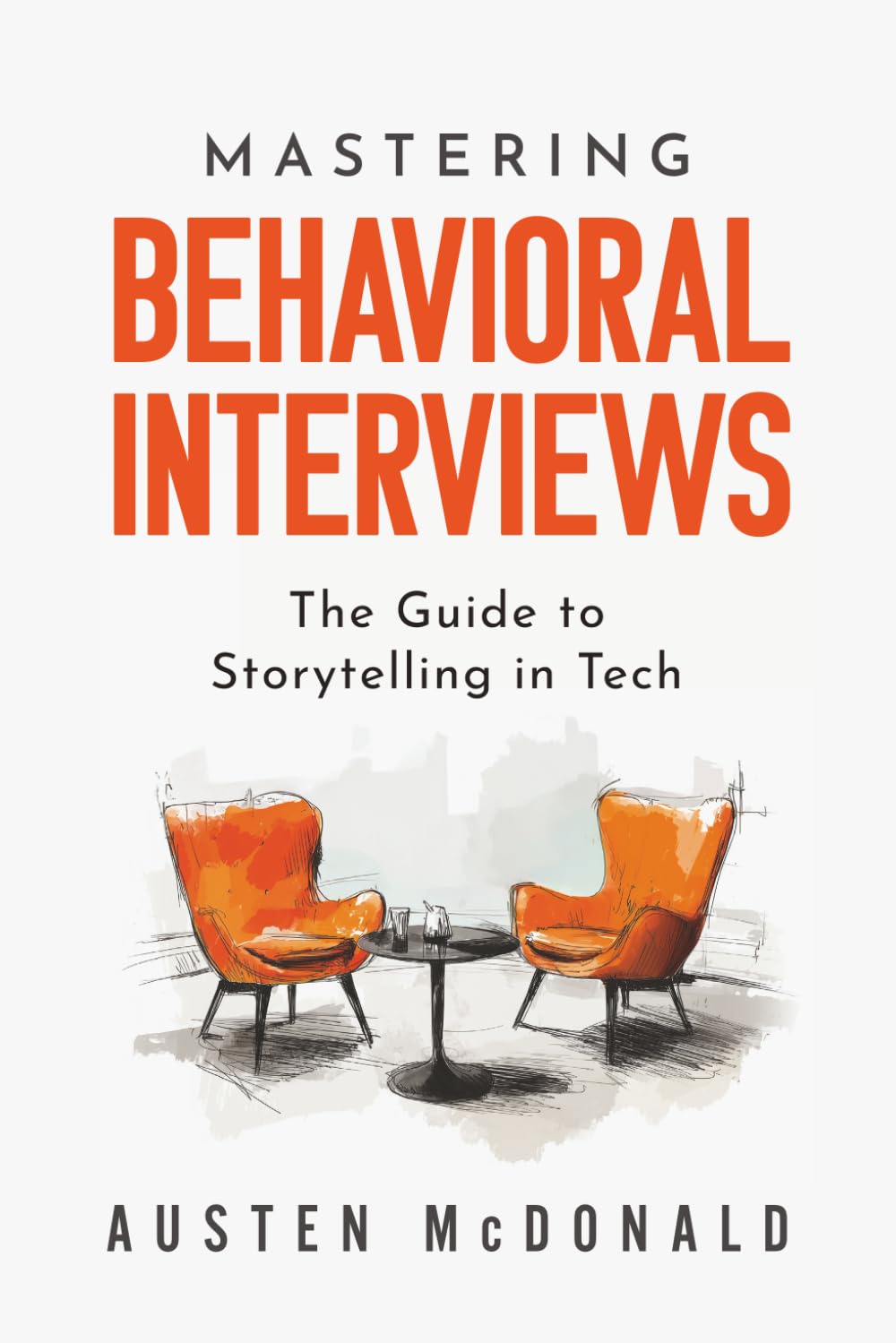
Book links are affiliate links. We earn from qualifying purchases.
Author
Hosts
Transcript
This transcript was auto-generated by our recording software and may contain errors.
Carter Morgan (00:00)
I'm really frustrated when I will conduct an interview and I've been doing a lot of interviews lately. Um, and we get to it and I, we always make sure to save time. say, okay, the time is yours. And I do the interviews with my CTO, my CTO and I, we're both very open people. say about myself, I'm sincere to a fault. And I tell Candice, I'm like, we will tell you pretty much anything you want to know. Like we're open books.
And the amount of candidates I have were just like, um, no, I don't have any questions. And to me, it's just such a signal. Like, do you even want to work here?
Hey there, you're listening to Book Overflows, the podcast for software engineers by software engineers where every week we read one of the best technical books in the world in an effort to improve our craft. I am Carter Morgan and I'm joined here as always by my co-host Nathan Toops. How are you doing, Nathan?
Nathan Toups (00:50)
doing great. Hey everybody.
Carter Morgan (00:52)
It's been a while since we recorded that. I'm impressed that I was able to remember it all. We've, I don't think we've, the podcast hasn't been dark for too long. Cause I think it's only been about three weeks without episodes, but we recorded the last couple episodes all pretty close to one another. And so we, haven't, we haven't recorded an episode in about a month or so.
Nathan Toups (01:09)
Yeah. I think the last book discussion
that we've recorded was two months ago, actually. It's crazy. Yeah.
Carter Morgan (01:15)
Something like that, yeah.
So we are back, back and in the swing of it for the new year. Thanks everyone for listening. Thanks to anyone that knew who came in from our finale episode for last year. That was where we put all of our books into a big old March Madness bracket to find out which one was the best. ⁓ Tons of fun. If you haven't watched it, go watch it. But we picked up a lot of new viewers from that. So if you're here for the first time for a real deal discussion episode, welcome aboard and we're so pleased to have you. ⁓
As always, like, comment, subscribe. If you're on an audio platform, take a moment right now, pause the podcast. Give us a five star review, really helps us. You can book time with us on Leland if you want to talk to Nathan and I individually. I get some career coaching or just general software engineering coaching. And also, Nathan, you want to talk a bit about we've got a Discord setup.
Nathan Toups (02:01)
We just started, it's brand new. ⁓ think we have around, we're getting close to 50 Discord ⁓ server members. And for the first hundred people that join, you get a special status, a special role that no one else is gonna get. it's like getting acknowledgement for being an OG. So join the server. ⁓ If you go to bookoverflow.io, you can find the link for the Discord server.
Carter Morgan (02:16)
There we go.
Ha
Yeah. Nathan's done a lot of great work. He's modernized our website. You know, I was just thinking about this, Nathan, when I built the website, this was like, must've been like early 2024. I paid for a react theme online. It was like $15. I was like, yeah, I'll just get something. And then you just rebuilt the whole thing from scratch using Claude, right?
Nathan Toups (02:45)
Yeah, was me and Claude code just having a good old time.
Carter Morgan (02:48)
Yeah. And
I was just thinking about that. I was like, wow, the idea of like a react theme is probably not nearly as useful anymore.
Nathan Toups (02:55)
Actually, I think this is worth a little bit of a riff. Just catching up to the new year. There's a really good post that went out from the folks who make Tailwind and they're kind of in this dire moment right now because ⁓ all these large language models are pulling in Tailwind and the largest source of revenue for Tailwind is to go to the Tailwind docs and they sell Tailwind UI, which is like a $299 like all in one sort of pack kind of maintains the project.
Carter Morgan (02:58)
Yeah, yeah.
Right, right.
Nathan Toups (03:23)
they just had to lay off like, think 75 % of the folks working on that project. just cause people aren't going to the docs, like they haven't figured out how to transition to like a large language model ⁓ monetization thing. I had never thought of it. And so it just kind of a weird little thing of like, I use Tailwind a bunch on this project, but yeah.
Carter Morgan (03:28)
Just because people aren't going to the docs anymore? Wow.
That's crazy.
Yeah. I, me too.
Yeah. And that's so interesting because like we're used to large language models, like kind of screwing people over it. And like, like, let's say that the large language models had kind of like absorbed some of the more, advanced tailwind features into its training context. And, and those were previously paywall, but then Claude can kind of create them from like first principles, but it's not that it's literally.
their main source of traffic, the Tailwind docks, which was kind of their top of funnel to get them to the paid version. People just aren't going to anymore. That is fascinating. Yeah. Right. No, no, that's, that's good to spread the word because I love Tailwind. ⁓ and yeah, we, think,
Nathan Toups (04:14)
Yeah, it's rough and it happened so quickly. So I know that we need to get into this episode, ⁓ but yeah.
I've also paid for Tailwind UI, by the way. I've used it on enough projects that ⁓ I liked the project a lot. I was in a position to do it. I'm not saying that everyone needs to do that, but I will use it just for the enriched component library and other stuff. anyway, that's a whole other conversation.
Carter Morgan (04:45)
Well, I know that that's a great point out. And as far as the discord goes, we'll include a link to it in the episode description. And yeah, we're excited to grow the community there. Um, and we're really excited about the book this week. This week, uh, we're discussing mastering behavioral interviews, the guide to storytelling and tech by Austin McDonald. Likewise say we don't count our chickens before they hatch, but I think we're going to count one chicken cause it's on the way to hatching. Uh, Austin, this is a collaboration between us and Austin. We,
We had this book in our backlog and then Austin actually reached out to us. And so we're like, you know what, let's bump it forward. And so we have a preliminary agreement with Austin to interview him after this. And so we're excited. We're to get them on the podcast. unless I don't know, he all of sudden developed a fear of podcasting or something. we should have him on, ⁓ very soon after this. And we're very excited. It's always fun. We get to read a book, knowing the author is going to come on. We don't always get to do that. ⁓ so I was.
very happy to read this and I have all sorts of questions already planned for him. We give you a bit of an introduction to Austin. ⁓ comes from the book itself. Austin McDonald is the seasoned and empathetic technology leader and former senior software engineering manager at Facebook slash Meta. During his over nine years there, he served as hiring committee chair for the iOS and Android recruiting pipelines, overseeing hiring decisions, defining leveling standards and mentoring interviewers. With firsthand experience conducting over 1,000 interviews for major tech companies. Austin.
has also coached more than 200 engineers to succeed in their big tech interview journeys. His career spans both individual contributor and leadership roles across big tech and startups are for unique perspective on hiring. Austin earned a degree in computer science from, wait for it, Georgia Tech, woo! Go Jackets. And a PhD from Stanford University where his passion for teaching and mentorship took root. I have to take a moment just because Georgia Tech came up just to advertise ⁓ that.
the bowl game this year, BYU played Georgia Tech in the Pop Tarts bowl, which was exciting for me because my bachelor's from BYU, my master's from Georgia Tech, and the Pop Tarts bowl is the greatest of all the college football bowls because they have the giant Pop Tarts mascots running around. And at the end, the winning team gets to put one of the mascots into a giant toaster and it pops out as an edible life-sized human Pop Tart. ⁓ So it was...
Nathan Toups (07:02)
Wow, I had no idea
any of this existed. Thank you.
Carter Morgan (07:05)
Yes. And I got to watch my head coach Kalani Satake inhale a pop tart. he ate it in like 0.3 seconds. So that was great. Watch the pop tarts bowl next year, everyone. ⁓ and yeah, really cool that Austin McDonald looks like he got his bachelor's from Georgia Tech, whereas Nathan, you and I are the online master's pipeline, but, ⁓ big soft spot in our hearts for Georgia Tech, great school. And as far as this book's introduction goes, it says in today's AI powered world, the technical skills are table stakes.
Nathan Toups (07:13)
Well...
Carter Morgan (07:32)
What separates software engineers, AMs and designers who land $500,000 plus roles at fan companies from those who don't. The ability to tell their story. This book provides the frameworks, examples, and practice scripts to present your authentic capabilities with confidence. So we read the whole book, over the break. So we're going to cover the whole thing in this one episode here, but we think that's actually a good format for this book. Lots of great content for an episode. Nathan, give me your thoughts on mastering behavioral interviews.
Nathan Toups (08:01)
So I had never given any thought to like preparing for behavioral interviews until I bombed a behavioral interview like September of last year. And this book, was like, I think this is one of reasons I put it in the backlog. I was like, this looks interesting. I think this might actually be helpful for other folks. yeah, so this book is a hundred percent dedicated to playing and winning the game. And I think we're going to, this theme will kind of come up because
Carter Morgan (08:13)
Really?
Nathan Toups (08:32)
I think it's really easy to get like cynical about how you have to like basically hyper architect your storytelling to like fit within this framework. But if think that if the stakes are super high, it makes a lot of sense, especially if you get sort of like in my interview, I got sort of knocked off my balance. And I think if I had had a framework to kind of like lean back on and just like kind of pick up where I had been, I would have been fine. But I was like so off balance that I couldn't
storytell in the moment. And so, ⁓ yeah, this book kind of was eye opening here. I think it was really helpful. I didn't even know there were frameworks for interview storytelling at all. And so like I was a complete newbie. But yeah, I'm excited to talk about it today because I learned a lot.
Carter Morgan (09:17)
Yeah, I'm really excited to talk about it too. This is an area of the podcast that I mean, we cover lots and lots of different books here and we try to have a good mix, not just on purely technical books, but also things that apply to our careers generally. Somehow we've made it almost two years into this podcast, I think without ever discussing behavioral interviews. So yeah, so this is great. I mean, I found this book, book very insightful. Austin's experience comes through very strongly here having done, like he says, over a thousand interviews in big tech.
Nathan Toups (09:35)
No.
Carter Morgan (09:47)
⁓ very insightful, particularly into how those big tech interviews are governed. I think this book, it tries to be a little bit more than I think it strictly needs to be. Like there are a couple of times where it's like, so one has a lot of examples of stories, which I love. I love that this book gives so many examples, but occasionally it'll be like, and this is an example for like a product manager, but then like 90 % of the book is about software engineering. And so I don't know. It was a little like.
If I were a product manager, I don't think I would find this book valuable enough to read through the whole thing. And as a software engineer, I did find it valuable enough to read through the whole thing, but then the like 10 % or so where it's like, he's like throwing a bone to product managers. was a little like, wait, what's going on here? So, um, maybe it could have benefited from being more strictly geared towards software engineers, but that's a very minor critique. Uh, the meat of the book is very, good.
Nathan Toups (10:43)
Yeah, because I think he actually uses the term, I think he talks about builders and he kind of software engineers and PMs and some other stuff together. And that's another sort of, we'll get into that as well. Cause I think you, you kind of have to lean into these expectations of Silicon Valley and kind of play a character that may or may not actually be you. And he kind of acknowledges like, Hey, just sit and you know, like this is kind of what's expected, which I, again, I think anyone who has like a reasonable critique of Silicon Valley.
Carter Morgan (10:50)
Right, right.
Right. Right.
Nathan Toups (11:13)
this is where that comes from. It's like this very elaborate sort of courting ritual. But this book's also very useful to see if you want to get a job in Feng or you want to do a job that of people who used to be at Feng and now have started their own companies, which I think is also another category that you should really acknowledge. They're kind of probably use these same rubrics. They're probably going to use the same expectations of how you storytell and
Carter Morgan (11:19)
Yes, yes.
Nathan Toups (11:39)
even if you want to rail against it or do something contrarian, you should at least understand what you're railing against, I guess.
Carter Morgan (11:45)
I
remember I had that thought, you know, several years ago, kind of before I joined big tech for me, it was leak code. was like, if the code's dumb, I don't want to me code. And I thought, you know what? At a certain point, it's easier to learn how to change the light bulb yourself than to insist that you stand still while someone rotates the house around you. Right. Um, and yeah, like you got to play the game and, you know, he, he mentions like how people who get $500,000 plus roles. mean,
Nathan Toups (12:03)
Exactly, exactly.
Carter Morgan (12:12)
I've talked with plenty of engineers who are just blown away. They're so shocked that companies pay that much. And I'll say, especially these days during the, there are still companies that will give you a shocking amount of money for being remote. ⁓ but those $500,000 plus roles are becoming more and more, they're just going back to being more and more concentrated in Silicon Valley. so usual disclaimers apply of you have to pay Silicon Valley housing prices, cost of living, California taxes, all that stuff. But.
Nathan Toups (12:33)
Yeah.
Carter Morgan (12:41)
Yeah. Like there are companies that will pay you $500,000 to be a software engineer. whether you want to work for them, right? Neither have I. and yeah, I think it's, all about kind of what you want out of your life. But if you are someone who wants that, this is the book for you. And I guess we can just get right
Nathan Toups (12:46)
Yeah, I've never personally experienced it, but I've watched from afar. I've watched from afar.
Carter Morgan (13:40)
He starts the book with kind of a part zero and introduction ⁓ and this is something I heard all the time during my ⁓ Sojourn in big tech about behavioral interviews almost all behavioral interviews at big tech companies are The questions are structured as a tell me about when You know, tell me a basically tell me a story like tell me about a time when this happened, right and
He has a section of this book dedicated to kind of like hypotheticals, like how would you deal with this? But at a lot of companies, they don't ask hypothetical questions because, and I heard this over and over again, these companies believe that past performance predicts future results. And so the best way to understand how you are going to perform at their company is understand how you have performed in the past. So almost all the questions are going to be structured as stories. Tell me about a time when, ⁓ and, kind of like he mentioned at
in the real deal book introduction, but yeah, like AI is handling more and more implementation. I, I'm not as in the know as I'd like to be on this, but I do know that at some big tech companies are even transitioning away from leak code style interviews because AI is just, you know, AI can knock out a leak code interview in a second. so that communication ability, I've said it on the podcast before, but I kind of think it's a little bit like we're in a race like
Our job has become product managers faster than product managers can become software engineers. I have to be very bullish on that. think that AI as far as it's come has still, still lacks a lot of the critical judgment necessary that a software engineer has. And so I'm not too worried about like our jobs disappearing, but that communication ability in that product sense is more and more valuable in the AI age.
Nathan Toups (15:28)
Yeah, it's as the job exists now, it will disappear, right? The people who fill those jobs, yeah, you're right. You're right. Yeah. No, I've actually, I'm still in talks on a gig that I'm looking into doing and the expectation of the engineers involved in this project are to use Claude code and agentic AI as a part of accelerating the timeline. Of course, there's also these
Carter Morgan (15:32)
Right, absolutely. It has disappeared. Right?
Mm-hmm.
Nathan Toups (15:57)
guardrails and all these other things, but it is interesting. I would imagine that in these behavioral interviews, it's gonna be like, how did you use agentic AI to help you accomplish these goals? It's gonna be part of these explanations and expectations actually.
Carter Morgan (16:06)
Right.
Yeah. And, I really liked that about this book that it's kind of marrying. It'd be easy to kind of write a book that's like, yeah, here's just everything you know about mastering behavioral interviews and maybe be a little more timeless, but the framing that in the age of AI, this is even more important. I thought was really neat. ⁓ yeah. And then he, Nathan, he's got our favorite thing pitfalls and anti-patterns chapter or not. It's not a chapter than a section.
Nathan Toups (16:37)
I know, I was like,
I knew as he indexed by zero his chapters and then he gave me some pitfalls in gotchas that are all through the book. And again, that's my little pet peeve if they're missing.
Carter Morgan (16:53)
Yeah. Well, and, this is one thing. So I hate this quirk about interviewing. ⁓ but you just have to do it. I was taught as a, honestly, this is my band teacher in high school. I was the, the drum major of the marching band. So, you know, in charge of it. And, ⁓ and so my, my band teacher was a really, really solid mentor and just gave a lot of good leadership lessons. But one thing he taught me when I was like 15 was you should try to use the word we as much as possible. Right? Like.
You know, if you're, if you're giving credit, like we all worked hard and got this accomplished, even if you're the one who did 90 % of it. Right. And I try to do that on my team at work. I've always tried. I know. Right. Right. Like even if I did most of the work, I'll say like, we all did it. Right. And it was great. And I'll try to highlight the smallest contribution of someone like, and it was so and so's key insight that, you know, led to this victory. Even if that key insight is what kicked off me doing 90 % of the work.
Nathan Toups (17:32)
Me too.
Carter Morgan (17:51)
You can't do that in an interview. In an interview, you have to avoid the word we like the plague. You got to say, I did X, I did this, right? And I get it because you want the, the interviewer to know exactly what you did. Sometimes in my interviews, I've led with like, I tend to use the word we, because I try to be generous with like spreading credit around. I mean, I, and so if you find me saying we during this interview, just know it was me. I'm telling the story from my perspective and it's a, it's a quote.
Nathan Toups (18:18)
Yeah.
And I wish I could go back and like see a recording of me talking because I default to we, because I use like a very egalitarian leadership style. But I do hear his point, which is you do have to get through the noise. And if you don't take credit for this thing, you easily could have lumped yourself into work that someone else did. Right. And and I get that because I because it kind of feels weird to me like, oh, I'm being a showboat or I'm like, you know,
Carter Morgan (18:25)
Yeah, yeah.
Right.
Totally.
Nathan Toups (18:47)
taking credit for stuff, but if you really did it, that's the point, the other thing he talks about here is like, do not lie, don't make stuff up. ⁓ You know, that just becomes a big tangled mess, but you should toot your own horn. And I think these interviews are all about tooting your own horn and kind of getting comfortable doing that.
Carter Morgan (18:59)
Right. Right.
Yeah. I would say we don't lie, but we are the best versions of ourselves. right. Yeah. Yes. Yes. I think that's the exact way to phrase it. so kind of moving on to part one, one thing I really, really like about what he does is I think when you go into a behavioral interview, you're a little like, like, you know, they are supposed to match against the company values, right? But every company has different values and some companies have very
Nathan Toups (19:07)
It's a creative non-fiction is what I like to call it.
Carter Morgan (19:31)
specific delineated values like Amazon and their 16 leadership principles. ⁓ Some other company values are a little more fuzzy. And it can be kind of hard to know, especially for like ⁓ more like thingy startups, ⁓ what their values even are. Because if they're a small company or a scale up, it's not like they always list their company values publicly on their website. ⁓ So what he points out, he says, no matter how these companies phrase these values,
Pretty much all kind of big tech and big tech adjacent companies have eight signal areas. And I would say that this expands to not just big tech, but any sort of ambitious growing company. And those eight signaled areas are scope, ownership, ambiguity, perseverance, conflict resolution, growth, communication, and leadership. I think all of those kind of speak for themselves. I think the only thing I'd point out is like scope being
how big your project was, you know, the, the size of the work you were doing and maybe perseverance, you know, sticking through when things get tough. But basically those eight signal areas, he says, you want to have stories lined up for those because at any company, basically they're going to care about those eight different things and their values will probably map in some way into those eight signal areas. I'd never seen this outline like this. I found this very helpful to kind of like stick in my brain.
Nathan Toups (20:55)
Yeah.
And it's funny too, cause like I've been in, I've been in companies that had a complete hot mess of an interview process where we just kind of winged it to everyone's disservice. And I've been in other companies in which we had like the Ashby interview panel, which for the uninitiated Ashby is just like a really popular sort of like hiring CRM or something. And ours were mapped to the values. Like I literally had to answer in my rubric about talking to this person, like,
Carter Morgan (21:01)
Right.
Yeah, yeah.
Yeah.
Yeah, yeah.
Nathan Toups (21:23)
they took ownership and you know, this is matching our company's values or not or whatever. you have, and I think a thing I like about this book too is he really frames it, you know, at the end of the day, you're talking to this person doing behavioral interviews that's been doing tons of behavioral interviews and they've got a rubric, they've got a system, you've got to play the game in that they've got expectations on like what they're going to actually write down in their notes. And I,
Carter Morgan (21:28)
Yep. Yep.
Nathan Toups (21:49)
It's nice to think, oh, we're just going to come in and be our authentic self and talk about these cool things that we're doing. But if you're not thinking about the person who's on the other side of the table, you're going to make it harder for them. And they might be having a bad day and you weren't very clear in how you navigate an ambiguity or whatever, and you'll suffer for it. So again, I think these are nice to kind of remind yourself like, am I really?
Carter Morgan (21:55)
Right.
Nathan Toups (22:16)
like outlining how I took action against ⁓ navigating ambiguity or something, right? Which is really important, really, really important.
Carter Morgan (22:22)
Right.
Yeah. And I think I've talked to certain engineers who have this attitude a little bit like, well, that's the interviewer's job. It's the interviewer's job to kind of like pry all this out of me. I am a treasure trove of wonderful information and skill and you merely have to sift through me. ⁓ but you know, like make their job easy. I exactly. Right. ⁓ yeah. And so, ⁓
Nathan Toups (22:45)
I bet that person has a great dating life as well. You know, you're like...
Carter Morgan (22:55)
when he talks about kind of like story selection. basically the whole game behind this is you need to come to the interviews prepared with, does he give a specific number? forget. We talked about the big three and we're to talk about the big three kind of stories in a bit. But, ⁓ I've always recommended like between eight and 12 stories from your career, right? Like, and as you tell these stories in your interviews, you will adjust them.
to the different signal areas, so the different sort of questions, but ⁓ you kind of want to have kind of like eight, eight to 12 stories from your career ready to go that are kind of fresh in your mind. So you're not just coming up with one on the spot, but then the question becomes, okay, well, how do I select the story? Right. ⁓ And so he recommends this kind of hierarchy. He says, first choose a story that matches your scope. Right. So
If you are interviewing for a mid-level role, right, that might be a story that's as simple as like when you tackled a particularly challenging feature, right? But as you move up into the senior and staff level role, you need to be talking about stories that are where you have cross team impact, where the duration is long. mean, it's a task that took months to get done. ⁓ where the, business impact is big and clear. ⁓ so scope is, is what he says first. First, you got to select against that.
Then he says relevance, right? Where you've got to make sure that the story is selecting for the signal they asked for. and again, I find that if you have these eight to 12 stories sort of listed out in your brain, that being able, you can pivot them to the different signal areas as you're selecting from them. After that, he says uniqueness, basically, if you haven't told it yet. And obviously in the same, you shouldn't really be repeating stories in the same interviews.
Nathan Toups (24:40)
Great.
Carter Morgan (24:49)
But it's also great not to repeat stories across interviews. You want the interviewers to all show up in the debrief meeting and all talk about the different things they heard from you. like, don't want, I've been in interviews before where we have a candidate who impresses the individual interviewers because they have one or two great stories. We all come back for the debrief and we found out they told the same story to every interviewer. And then we get nervous. We say, wait a minute, is this the only thing they've done in their career? So uniqueness is important there.
And then the last thing he says, was like for recency, just the more recent the story in your career, the better.
Nathan Toups (25:26)
I've winged this. So I will tell you, I had never actually prepared like eight stories. I had a bunch of stuff I would just kind of, I think maybe the problem was I grew up doing like improv theater. And so I got very comfortable with like, with just like, and I actually, have like a, even though I haven't picked eight stories, I've got eight stories I can tell. I mean, like I've got eight stories, but I kind of just had winged it. think, I think maybe
Carter Morgan (25:51)
totally.
Nathan Toups (25:56)
I just kind of muscled my way through it enough that it hasn't been a huge problem with the exception of this Silicon Valley company that I was talking to you where it was very obvious that I didn't know how to, you know, it felt like, you ever seen those animal documentaries where like the birds are doing these like more elaborate dances? That's what this feels like. Like this book shows you the elaborate, you know, mating dance of some Amazonian, you know, songbird and, ⁓
Carter Morgan (26:13)
Yeah.
Yeah.
Nathan Toups (26:25)
And yeah, if you're not prepared, the, you know, the mate's not going to be impressed. I'll put it that way.
Carter Morgan (26:29)
let's talk a bit about that interview you had because when I, I don't know if maybe I was just kind of swimming in the big tech water. And so it's a little bit like, you know, the fish doesn't know he's wet, but to me, I don't know. Like I have applied the same skills and like big tech interviews and startup interviews and things like that. And I just thought that was kind of just general behavioral interview skills, but you were really caught off guard by this. mean, what caught you off guard so much about it?
Nathan Toups (26:58)
So it was
weird. So it wasn't like a pure behavioral interview. It was like a behavioral and culture interview. And so he kind of dug into some of my stories that I told and he poked and prodded in a way that I'd never seen poked and prodded. And I was like, I answered it in a very honest way, a little bit vulnerable.
Carter Morgan (27:04)
Okay.
Nathan Toups (27:19)
but I got so like stuck in my own head that when he would ask me other questions, was like, I, and I would just tell, I just told him, I was like, I'm not going to be like a weirdo about it. I'm just like, Hey, uh, was like, yeah, I'm really thrown off by that last question. I really having a hard time putting the next thing together, which I was the most vulnerable and awkward position to be in. I've never had that happen. I'm normally like, have a very good sort of like, you know, charismatic confidence and stuff.
Carter Morgan (27:22)
Nah.
Yeah.
We've done this podcast for almost two years now. I think you're right. It's clear you have great verbal intelligence, right?
Nathan Toups (27:47)
Yeah.
Yeah. And so like, was just like, I, I realized that I, don't, it was really interesting. He'd like kind of poked at something that was a bit of pain in one of the stories that I told. And I think it just, I was just a much more vulnerable and I didn't know how to correct course. And again, I think if I had had this, I could have like spun it back, like, you know, like, yeah, this is what I learned. Like I didn't have the framework of like showing what I learned in reflection. I think I could have righted the ship. ⁓
Carter Morgan (28:08)
Yeah.
URRAH
Nathan Toups (28:19)
with that and we'll get into that. There's actually some pretty cool, I love the frameworks that are in this book. So. ⁓
Carter Morgan (28:24)
Yeah,
we can talk about them. So the classic framework with storytelling is the star framework, situation, task, action, result. ⁓ He recommends what he calls the Carl framework, which is context, which he recommends combining situation and task together. He says that out of the people he's coached, he finds that people get too hung up trying to separate what was the situation and what was the task, right?
I've always kind of viewed that a bit more as like the situation being like.
Here are the events that were going on that made the task necessary. ⁓ you know, like we were struggling with onboarding customers quickly. So my job was to rework the customer onboarding portal or something like that, like struggling onboard customers. That's situation task is onboarding the customer, you know, or changing the customer onboarding portal. ⁓ but he recommends combining those two. says he's just seeing too many engineers get tripped up trying to separate those two out.
Then he says actions. says it's important. especially as your stories get bigger in scope, it's not going to be a clear, like, and then I did this thing and it worked. He says there's, there's going to be many actions. And he talks a bit about this framework. says it can be helpful, especially with bigger stories to almost break it up into like many carls. And I guess I should tell you what the L is first. says learnings. ⁓ it says that can be helpful at the end to reflect on what you learned.
from the project says with, with star, sometimes with the result you get to just like, then we improve customer onboarding, but you want to be able to reflect and say, I'm what I learned by doing this was that, you know, blah, blah, blah. Um, but he says, especially with bigger stories, it can be helpful to give kind of almost like a table of contents up at the top where you say like, okay, so, you know, for this giant thing I had to do, like I had to do a B and C and then.
you'll kind of for A, B, and C, you'll do a Carl for each one of them, which I thought was neat. I had never considered doing that. And I think it makes a lot of sense. I think I maybe naturally would have gravitated toward that communication pattern, but seeing it laid out ⁓ was really helpful.
Nathan Toups (30:38)
Yeah.
Exactly. think, I think back on some of the interviews that I've done that are better. And I think I kind of naturally migrated towards a Carl ish way. ⁓ mostly because I, lot of mine is an unconventional journey. And so a lot of times I'm telling stories of like, ⁓ I got, I've got to work on this special project and you know, this had failed in the past. And then when we did it, it worked and you know, I give these wonderful, like, and this is, these are all the things that we did.
Carter Morgan (30:52)
Right.
Nathan Toups (31:10)
And despite all of these things, you know, this is how it came out. And then here's my learnings. a lot, that's a lot of the stories that I'll talk about. Like I have a favorite one where we, there was like a mergers and acquisition. There's like a company that was like sitting there not integrated for like a year because everybody was free to touch it. And I came in bright eyed and bushy tailed and said, I would like to do a project. they gave it to me and I kind of think it was a death wish sort of thing in the company.
And we turned it around in three months with like a team of three people. like, it's a really good little story. It just has this like thing. We had like a real outcome. went into production. ⁓ it showed that I could move stuff that was considered unmovable. but I didn't know there was like a framework for how I should be telling that story. Like I just thought it sounded good. ⁓
Carter Morgan (31:37)
Nice.
Yeah. Right. Yeah.
I've seen this before. just remember. I'm not mentioning this podcast before, but I remember when I was at a big tech company and they wanted us to return to office, but I didn't live in this, the city. And so was like, okay, I to find a new job. Lots of other engineers are in the same position as I was. And so we kind of banded together on my team to be like, okay, like let's all help each other. Let's, we got to get out of here. Like, let's help each other prep for interviews, you know.
We see job postings that we get turned down to. Let's make sure to refer each other. ⁓ it was really neat. ⁓ and one of the guys, great engineer, smarter than I was the projects he were working on or he was working on were, ⁓ more impactful and more interesting than my projects. He kept struggling in all of his interviews. We did a mock interview together and he just could not sell this project for the life of him. Right. Like, yeah. And I just, felt so bad. so, ⁓ yeah, I think.
Nathan Toups (32:44)
Wow, yeah.
Carter Morgan (32:50)
Like obvious, look, you're listening to a podcast here by nature. This format has self-selected for two people who like to talk and hopefully we're doing okay for ourselves in this podcast. So hopefully we can say we have somewhat of a talent for it. ⁓ but many, many engineers do not. and unfortunately you get to the interview stage and it's like, crap, this skill, this was something I was supposed to be practicing the entire time. I thought my job was.
to provide technical solutions. And it's like, yeah, that is 90 % of your job. And then that 10 % you use in the day to day, all of a sudden becomes about 50 % of what we evaluate you on at this very critical juncture.
Nathan Toups (33:32)
Yeah.
Carter Morgan (33:33)
⁓ yeah, so he, he talks about kind of the big three questions because then it comes down to like, okay, well, how do I, how do I select these stories? Right. ⁓ and, know, I think there's a lot of value in looking at those eight signal areas and kind of going through your career. mean, I would do that right now, especially if you're coming up for an interview, like just take those eight signal areas we listed and just jot down ideas. Like, okay, when did I, when did I have a task, a story?
that was great on scope. What about perseverance? What about conflict resolution? Right? I bet you could write those sorts of things out. How
big and meaningful each one of those stories might depend on your career. But I guess two points about that. One, I thought this was neat. He says, as you list out those stories for those signal areas, you're gonna learn either where you need to ⁓ kind of practice telling your strong stories or find out ⁓ if you need to develop some of those stories. I I was looking at this myself and I was like, okay, most of these signal areas I'm doing pretty good on.
But I was looking at scope and I was like, huh, at my current job right now, during my big tech time, I have projects that took a long time and expanded across months and all that good stuff. But you know, just to add to startup, you're moving a lot faster. And so it's not like I have one project that's taking months. I mean, the largest project I worked on kind of to begin with was about a two month project. And so I was thinking like, huh, like I either need to
be looking for tasks at my current job that have larger scope, or I need to be figuring out how to tell these kind of slightly related stories in a way that makes them more related and makes it sound like instead of these being isolated tasks, they were all part of a larger whole that stretched across six months or whatever. ⁓ but then the other thing he says, he says, okay, so even, even though you'll want to kind of list out the stories for those eight signal areas,
There's he calls them the big three, three, the big three questions, which will almost always be asked in any interview. And she says, these ones that you should absolutely get down and make sure you have good answers to these. here's what they are. The, me about yourself, your favorite project and a conflict resolution story. says those three will come up in almost any sort of interview. ⁓ I don't know. What did you think about that? Nathan, the big three.
Nathan Toups (36:06)
Yeah, absolutely. And I would say that this is an area where I have some weakness as well. Cause like, I two of those three, I have pretty solid ones, but like conflict resolution, I would just wing that, which is not great. ⁓ But I, again, this is sort of like systemic preparedness that it's just, it's your disadvantage to not be there. Worst case that happens is that.
Carter Morgan (36:19)
Hmm.
Nathan Toups (36:31)
you prepare all three and they only ask one of them and you overprepared a little bit, like not a big deal. know, the opposite's worse. It's like your coworker, and I've seen this too, where I'm like, this person's so talented and I think in some level they think, it'll be self-evident because when I just talk about the project, they'll understand. But they're like, no, like there's all this interpersonal skills. There's, you know, what things did you overcome?
Carter Morgan (36:37)
Right, right.
Yes. Yes.
Nathan Toups (37:00)
And that you really kind of have to have a good narrative one. Otherwise, you know, they don't know what they're signing up for either.
Carter Morgan (37:06)
Right. the, me about yourself, think warrants some additional consideration because that is the one question that is not going to be story related. Right. When you say, me about yourself, you don't want to tell a story about how you fell off your bicycle when you were eight. And he has a whole section. I don't think we're to be able to dedicate a ton of time during the episode, um, to everything he says, but he calls out some kind of like common pitfalls with that. Like one of them is like starting too early. Like tell me about yourself. It's not like.
Ever since I was seven, I knew I loved computers, right? Um, with that, get about 20 seconds, know, 20 seconds, 20, 60 seconds or whatever. Um, and so you want to establish pretty quickly, like who you are, what value you bring, what you're looking for at this moment in your career. Um, and so I think, you know, good example gave is like, hi, you know, I'm Carter Morgan. have experienced that, you know, I'm a senior staff level software engineer. I've experienced at these companies at
You know, in the past, I've my specialty has been distributed systems and cloud computing. ⁓ and. You know, at this point in my career, I'm looking for, and then you tailor that to kind of the more the company or you're interviewing with, that's a very rushed version of it, but, ⁓ you, you, you don't want to get too deep into like, and Java is my favorite programming language. And this is why, right. Or,
Nathan Toups (38:31)
Right.
It was a winter, cold winter day when I knew that the bleeping lights at my grandfather's garage were the future that I would once have. You know, you're like, you this isn't, you're not a lawyer agent, you know, this isn't how that's working. Right.
Carter Morgan (38:36)
Yeah.
Yeah, yeah.
You can do, you can write a book about that. And if it's a good book, we will review it. ⁓
yeah. And, ⁓ and then this is another point he makes, ⁓ and you know what? I'll say, I judge candidates based on this. I judge candidates not, you know, strongly, but it matters to me based on what questions they ask me at the end of the interview. Right.
Nathan Toups (39:08)
Yeah. Yeah. Always have,
always have questions to ask. ⁓ getting good ones. Yeah. What, what are my favorite? would love to, I don't want to give away our bag of tricks, but one of my favorite ones, ⁓ there's, there's a couple, depending on, you got to vibe check, right? You got to vibe check the room. One of them, if we've kind of had this good conversation and I really want them to think about me being in that position, I'll say, okay, let's, let's imagine that I have been hired your
Carter Morgan (39:12)
and have good questions.
Nah, I got it.
Nathan Toups (39:37)
six months out, what will I have accomplished if you were like, this was the best hire we made this year? Like, well, what, how would I have contributed to the company? Like what would the ideal outcome? Because it makes them think about me being in that job six months from now, which is a little bit. ⁓ So the other one I like to use a lot of times would be ⁓ if I feel like there's a company culture thing that not a red flag, but I'm like, ooh,
Carter Morgan (39:46)
That's a great question.
Yeah, that that you know what that's smart that's smart.
Nathan Toups (40:08)
I think there's some weird dysfunction with a manager or something, right? I can kind of sense it. would actually ask them the overcoming ⁓ conflict kind of variation of that question of like, how do you do this on your team? ⁓ Just to kind of get them to have to kind of open up to me on that. But those are kind of my, I would love to, are there some favorite questions that you ask?
Carter Morgan (40:31)
Yeah, so from a technical perspective, especially at, well, I'd say it starts, but almost anywhere. I like to ask, I say, I commit code to main. say, basically I say, describe the process for how the code gets from my machine to in production.
Nathan Toups (40:50)
Ooh, that's a good one.
Carter Morgan (40:51)
Right. Cause I'm trying to, to, to sense out there, like what I want to hear is like, we have our CICD pipelines. Right. And you come in and it just deploys. like, think I've been surprised before at some places where it's like, no, no, no, we do a big manual release every two weeks and we have a big merge queue and, blah, Exactly. Yep. Totally. ⁓ so I, I, ⁓ so I like that one from a technical perspective. One of the ones I like, ⁓ from a cultural perspective is.
Nathan Toups (41:06)
and we cross our fingers and we don't release on Friday afternoon.
That's a great one.
Carter Morgan (41:20)
Why would someone not want to work here? ⁓ Right. I find that tends to turn up. Like you can learn a lot from what people don't say in that answer. Right. Or, and also what they do say, but like, you know, at a startup, I think my most recent place, I asked this and they said that they're like, you know, we have a pretty fast pace. Right. And like, that could be overwhelming for some people, but then at big companies, they've said, you know, like our scale is really big and that's really cool.
Nathan Toups (41:24)
Yeah.
Carter Morgan (41:50)
It means that there's a lot of moving pieces to keep track of. And there's a lot of like due diligence you have to do. ⁓ some people find that really engaging other people, you know, it's just, it's not, ⁓ there's not enough. The gratification comes too late. And I'm like, okay, like that's, that, that's both good, ⁓ pieces of information. ⁓ questions he says not to ask are things like, like he says, don't ever say like, describe a typical day. Right. He says like every software engineer.
Nathan Toups (42:17)
All
Carter Morgan (42:20)
goes to meetings, goes to planning, know, writes code, moves tickets across a JIRA board. Like that's gonna be the same pretty much everywhere else. Obviously don't ask about salary or vacation days or things like that. Those are questions better left for your recruiter. ⁓
Nathan Toups (42:36)
Yeah,
vacation one would be, yeah, I'd be like, okay, buddy.
Carter Morgan (42:40)
Yeah. Yeah. Right. Um, so, but yeah, like to me, I'm really frustrated when I will conduct an interview and I've been doing a lot of interviews lately. Um, and we get to it and I, we always make sure to save time. say, okay, the time is yours. And I do the interviews with my CTO, my CTO and I, we're both very open people. say about myself, I'm sincere to a fault. And I tell Candice, I'm like, we will tell you pretty much anything you want to know. Like we're open books.
And the amount of candidates I have were just like, um, no, I don't have any questions. And to me, it's just such a signal. Like, do you even want to work here?
Right. Like, um, and I get it. I, I am not a fan of like the general groveling in interviews. Like, so tell us why you want to work here. Right. Like I get it. It's a job. We all need a job, but I would hope if you are a talented candidate, you should have some amount of discretion in the jobs you're choosing.
Nathan Toups (43:18)
Right.
Carter Morgan (43:40)
And so I would like to see that you are trying to suss that out and trying to figure out if this is a good place to work, right? And so when you don't have any questions, like, what are we doing here?
Nathan Toups (43:49)
I also typically, if I'm like talking to somebody more product focused, like I talked to like VP of product one time. ⁓ and I will ask them like, what, what's the, what's the next, what's the feature that you're most excited that's coming out in the next six months? Or, then I'll also, lot of times if it's a good answer, also flip it be like, what are you most worried about with the product and it growth and these other things? Like just, I kind of want to suss out where their brain is as far as like fear and prosperity and all these things.
Carter Morgan (43:55)
Bye bye.
Right. You know, that's a, yeah, this might be too raw to like ask in the interview, but I was really impressed when we did our company offsite, our boss, he did what he called a pre post-mortem, which was, kind of talked about our plan for the year and all that we were going to get done. They said, okay, fast forward a year. We're back. Says, it's like the sky is, it's raining. It's cloudy. We have a lot of BYU football fans in the office. Like,
BYU went two and 10, right? Like it's, you know, it's awful. Like everything failed. He's like, ⁓ he's like, what happened? And then that forced us to kind of think about like, well, okay, wait a minute. Yeah. So what, what could, what problems can we see right now that could stop us from being able to execute on this vision? ⁓ and so, you know, I think that's an interesting question to ask sometimes, like, okay, especially, I guess, startup, like if a year from now.
You know, the company hasn't grown or maybe you've fallen on hard times. Like why, what happened? Well, you know, what kind of risks do you, what do you see as your biggest risks right now?
Nathan Toups (45:24)
Yeah.
I think if you have the right trust and it's the right like level that you're in there, I think you totally could. And again, I think they're also sussing out your ability to think in higher order ways. Right. And I've, we've, we've talked about this before too, to an a bit with like, ⁓ some of the other career books, but like you really, if you're interviewing for like a senior level position and your goal is to become staff, right. You really should be demonstrating that they're getting like incredible value.
Carter Morgan (45:28)
Ray Ray.
Right.
Nathan Toups (45:54)
And that means that you're already kind of got the beginnings of thinking of higher order stuff. You're thinking about, you care about the product, you care about value flow. Not say that you're doing this to be qualified for those things, cause you're not, you're interviewing for a senior role. But if they say like, oh, there's something there, like, I think we could cultivate this person that you want them to be there. You want them to be excited that if you join the team, the net output of the team is going to be better, right? Like if we get down to the basics of it. And so.
Carter Morgan (46:20)
Right.
Nathan Toups (46:22)
your questions should reflect this too. You're gonna be asking questions of your team members once you join. So like do it in the interview.
Carter Morgan (46:30)
Yeah. Yeah. ⁓ yeah. And I think, you know, it's not appreciated by candidates, ⁓ enough. Like I get it. I've done too many job interviews in my life, both conducting the interview and, and, doing the job interview, you know, being the interviewee. ⁓ and, and so, you know, I get it. It's a very, very stressful position to be in. I don't envy anyone who's currently interviewing. ⁓ but also, especially for companies, especially smaller companies, like the decision to hire someone.
is a big decision, right? I'm trying to think right now we're about 10 engineers now. We're trying to hire number 11 and number 12. And I'm just trying to think about like, if we lost one of the engineers or if we introduce an engineer who totally threw off the balance of how he worked. mean, we have a great team right now, but I'm trying to imagine if one person was difficult to work with, like that is a huge drain on the other 10. And so we're very, very selective about who we hire. ⁓
Nathan Toups (47:25)
Yeah.
Carter Morgan (47:30)
And yeah, like, I don't know if there's a bigger point there, but just like, get it. Interviewing sucks, but also try to have some amount of empathy for the interviewer. mean, it's a big decision they have to make on their end.
Nathan Toups (47:41)
Well,
and think about, I again, think about this. If you're successful, you're working with this person. you know, like just take it one. I know it's, gets easy to like, you're, you've done, you're doing a bunch of interviews. You're maybe even frustrated because you've interviewed at a bunch of places and you haven't quite followed through all the way. I know it's a particularly brutal job market right now. I think some of the people we're speaking to on this podcast are probably dealing with it. I actually was at a.
Carter Morgan (47:48)
Yes. Yes.
Nathan Toups (48:10)
tech meetup last night. It was a tech meetup that I started when I was here in Colorado Springs. I'm actually visiting Colorado Springs right now. And they had a special one because I was in town, which was really sweet. And a bunch of people came and I would say half the table, there's probably 20 people there. Half the table were unemployed looking for jobs. And obviously you go to networking events and stuff like we're going to have a little selection bias. But some of those people I personally knew are top tier talent.
Carter Morgan (48:30)
⁓ That's rough.
Nathan Toups (48:40)
and have been struggling to just like land. One guy, even got hired and then the company, like he got hired, started his first week and then the company announced that they were letting everyone go. like, so even though he went through the interview process, he got laid off a second time in, you know, very short order. ⁓ So it's a brutal job market out there. I will say this book is exactly the kind of thing though that'll help get you over, if you've gotten through,
Carter Morgan (48:42)
prime.
Cheers, boys.
Yeah.
Nathan Toups (49:10)
or three rounds of technical interviews and you've kind of felt like they ghosted you after your behavioral interview, it could be that you're missing some of this, right?
Carter Morgan (49:20)
Yeah, absolutely. Um, and, sometimes it's just a matter of framing, uh, and big tech behaviorals he talks about in particular, he talks about these kind of like mythos, like, uh, these, um, like, yeah, like the, legends, the, how you tell your story, especially at big tech companies really matters. And he kind of lists a couple different mythos. And I wanted to read directly from the book for them. Uh, because I think anything is really interesting. He talks about, says the out of the garage mythos, basically says,
Nathan Toups (49:29)
Yeah.
Carter Morgan (49:50)
Larry Page and Sergey Brin rented Susan Wojcicki's, I don't know how to say that, Menlo Park garage 60 years later as Google's first office. Jeff Bezos even looked for a house with a garage in Seattle so we could say he started Amazon out of a garage. The tradition lives on in today's war rooms. Cramped conference rooms or small teams hunker down to ship critical features. Builders start with what they have rather than waiting for what they need. Scrappy resourcefulness trumps well-funded comfort every time. Constraints spark creativity. You begin small, prove the concept works, then scale from there.
The builder is an owner, an entrepreneur, even in a more traditional top-down business, they find a way to make progress quickly. So that is kind of like the out of the garage mythos. And so he, he talked about like, okay, how do you frame your stories to kind of appeal to that mythos? And he gives some good examples, like before and after, he says the before we evaluated vendor solutions and selected the enterprise platform recommended by our procurement process due to SOC two requirements. You know, that's, we're seeing some of the common pitfalls here.
We, it's a little dry. You could understand this as maybe this was a task that was assigned to you and you just executed on it. Says the builder framing is, I decided that going with a vendor would allow us to get to market faster in exchange for some limitations on user experience. It also has the benefit of getting a headstart on SOC 2 compliance for us. And listeners, even though I'm recording this about a week before you'll hear it, I heard the collective groan you just let out because...
I like, this frustrates us as engineers, like to so many engineers, those two things, those two quotes I just read are the exact same thing. And you don't understand at all how they're different. And I'm telling you they're different. And this is a part of like you talked about, Nathan, it's the, it's the bizarre mating ritual ⁓ that you have to do, but it matters.
Nathan Toups (51:34)
Big time.
Yeah, it
really does. And yeah, I know, I feel like you could have that meme with Jan from the office. It's like, those are the same. Those are the same picture. ⁓ But the it is that second one show demonstrates all of the things that they're shooting for as far as like, and honestly, if I was doing the interview, I would be more excited if I was ⁓ the only, you know, the.
Carter Morgan (51:46)
Yeah, yeah, or, yeah.
Nathan Toups (52:04)
interviewer side, that second one would check the boxes of like what we're looking for. mean, I guess I'm enough in the coded language now that I get it. ⁓ I guess it's funny, it even kind of tied into that thing that I was talking about, that &A story where we bootstrap this thing in three months after nobody would touch it. This is absolutely the like entrepreneurial Silicon Valley thing. And I think I've told that story because it's kind of expected that if I could have
you know, taking something that people thought was impossible and then turn it around in an impossible sounding timeline. And we really did it. And they're like, yeah, it's scrappy. You could do it. Navigate uncertainty. Doesn't take no. You know, like there's all these things. ⁓ And that's why that story's survived. ⁓ And I've gotten a lot of mileage out of it. But yeah, it's really, it's fascinating because I will say that like I get the game. I this is also that.
Carter Morgan (52:44)
Right, right.
Nathan Toups (52:58)
I think this is off-putting. think, and it's not a criticism of the book, it's a criticism of the game itself, which is that unless you can frame this as like, you're basically, you know, two degrees separated from Sergey Brin, then, you know, you're a loser or something. it, that's, it's so weird. It misses out on a lot of, think, potential candidates that would be amazing just cause they're not used to like describing themselves in this sort of Silicon Valley mythos way.
Carter Morgan (53:26)
Right. Yeah. He has a couple other kind of like archetypes. talks about like the lone hacker, you know, lone hacker archetype persists in the trope of the 10 X engineer builder produces 10 times the output of their peers through combination, technical brilliance and relentless focus. The move fast and break things, ⁓ attitude, right? Like Margaret Zuckerberg made this philosophy literal adopting move fast and break things as a semi-official model and plastering on the walls of Facebook. They ship features that sometimes crash the site, prioritizing rapid iteration and user feedback over bulletproof code.
And then fail fast. said, you ⁓ YouTube started as a dating site where users uploaded videos of themselves. Pinterest began his tote, a mobile shopping app. Nobody wanted Slack emerged from the records of a failed gaming company called tiny spec. Instagram was originally bourbon, a cluttered location, check an app until the founder shipped away everything except photo sharing. These were the results of recognizing that the original vision wasn't working followed by quick action to try something else. ⁓ and, and so he has kind of a whole list of like, here's the standard framing.
Like the fail fast framing, says, ⁓ the standard framing is due to changing market conditions. had to adjust our timeline and deliverables versus I recognize that our early, rich or I recognize early that original approach wasn't going to work. So I killed the project and reallocated resources to a more promising solution. Right. Again, those can sound like the same things, but one is much more, you know, due to changing market conditions, we had to adjust sort of timeline deliverables. That's very like.
Nathan Toups (54:40)
Yeah.
Right.
Carter Morgan (54:49)
something happened to us and so we collectively had to react to it versus the builder framing which is I did this.
Nathan Toups (54:56)
And you also notice that the first one is very corporate speak and the less the next one sounds a little dangerous or a little wild. And I think there is this like undercurrent. I think there's also like a I've seen companies describe this as a bias to action. Like a lot of places will talk about this. And if you're in a startup, you really are optimized towards bias to action because it really is. If you're
Carter Morgan (54:59)
Yes, yeah, that's true.
Yeah.
Yes, yes.
Nathan Toups (55:19)
It's like ⁓ you're locked and you're waiting for a resource allocation. You could just sit there and wait for permission, or you can be like, okay, well, I can't do this. I'm gonna go do these three other things, or I'll figure a clever way to get the person to unblock me. And those kind of things matter because you are navigating chaos. mean, that's just the nature of the job. The world's changing really quickly. They need people who have this bias to action. And ⁓ telling that story is important, right?
Carter Morgan (55:27)
Right.
Nathan Toups (55:48)
And I'll be honest, if you don't have good examples of biased action, you should start experimenting with that in your current job. like, you know, or figure out how you can frame things that maybe you do have some stories somewhere in there. ⁓ But it will, they will detect that weakness if you don't have any good examples for sure.
Carter Morgan (55:56)
Right.
Maybe to wrap up, haven't, this is our first episode we've recorded in a bit, so I'm a little rusty, but we gotta do our hot takes. Gotta share any of our hot takes about the book. What do got, Nathan?
Nathan Toups (56:17)
yeah, takes.
I think I kind of spoiled this a little bit, so I said, you know, it's not that the book is wrong, but that it's the fact that you have to follow this advice to go through what would, you feel like it should be just like a normal conversation with people about your career. And that's not the case. the person on,
Carter Morgan (56:38)
Right.
Nathan Toups (56:44)
hiring has got this rubric and you've got this like really particular way you need to tell stories so that the two of you can prove that I actually can do the thing that I'm like say that I can do. I don't know. There's a bit of madness to it though I don't have a solution other than you got to play the game. ⁓ But I don't know. It's weird. This book really made it very in my face by reading it.
Carter Morgan (57:02)
Right.
Yeah, I think it's interesting. Sometimes I've talked before about like, can't believe there are some jobs where the whole interview consists of be charming. Right. And that like, and that more is a, is a commentary on like the technical aspects of our job interviews, which I think some, are a lot of engineers who vastly prefer that to these behavioral stuff. But I was kind of thinking about like, well,
Nathan Toups (57:18)
That's true.
Carter Morgan (57:32)
Like it kind of sucks because I guess software engineers, we're not really supposed to practice like sales skills. And then you get to these interviews and it's like, Oh crap. I was supposed to be learning how to sell all this time. I'm like, salesmen are lucky because like they're practicing that every day. And then when they do their job interviews, they can leverage those same skills. But I guess the, the, double edged sword nature of that is that like all salesmen are interviewing against other salesmen, right? Who have all been practicing those skills as a software engineer. I saw someone on Twitter recently who said like, we underestimate.
Nathan Toups (57:52)
Right.
Carter Morgan (58:01)
how quickly you can enter the top 10 % of any given field or any given activity, right? And I think that that could be true here, but I don't know, maybe this is my hot take. My hot take is I want listeners to prove me wrong. That's what I want because when reading this, was reminded, I read a story years ago about Jerry Seinfeld who he was paid to go speak at like this, like class for aspiring comedy writers. And the very first thing he said when he spoke was,
You guys are screwed because I would never think to attend a class like this, right? Like, it's just like, this has always come naturally to me. Like, and, and I felt that a little reading this book, there were some things I picked out of it. I'm like, okay, this is a good, useful piece of information, but in general, I would never think to read this book. This, the whole Carl, like I remember, I remember learning about like the star path.
Nathan Toups (58:35)
well.
Carter Morgan (58:57)
And I was like, okay, I gotta find out what the star pattern is. Cause like, that's how you're supposed to do your interviews. And I read the star pattern and I was like, are you talking about talking? Are you talking about a conversation? Like that's what the star pattern is. Like it just is so natural to me. ⁓ And so my hot take is like, how much can you really improve this? How much can practicing really bring you to that top 10%, right?
Nathan Toups (59:14)
Right. Right.
Carter Morgan (59:26)
⁓ and so my hot take is like, want listeners to prove me wrong. I want people who struggle with this to, to read this book, to take all the advice in it, to practice this, maybe sign up with an interview coach. You know, he recommends doing that if you're really struggling and show me how much better you can get at this. Because to me, there's a part of me that wonders how much of this is a little innate. ⁓ but I would love to be wrong. so listeners prove me wrong.
Nathan Toups (59:42)
Great.
Yeah,
no, I think I think that's a really good point. And I would say I think I would have been 100 percent in your camp until I had that flub on my side. And I I see the value in preparing for the rubric, though it doesn't come naturally. That part doesn't come naturally to me because I made a career out of just trying like. Yeah, that seems like storytelling, right? It's what I actually had an interaction with Austin.
Carter Morgan (59:56)
That's fair.
Right, right.
Nathan Toups (1:00:17)
on LinkedIn, because he was like something about the book. And I'd said something and he actually had some really nice words. He's just like, you know, isn't for everyone because, I think it was around the similar topic. He's like, look, he's like, there's those of us who absolutely need these frameworks to like get through these interviews. ⁓ and I think it's, it would be hubris for me to think, and therefore I don't need it at all. Cause I, when I read this book, I was like, ⁓ I'm like,
Carter Morgan (1:00:42)
Right.
Nathan Toups (1:00:45)
I think that I've had an interview, forgiving interviewer, or maybe my, some of the points in my story were so good that they made up for the lack, the lacks other areas of it. And that I could have actually probably told a better story if I'd structured it like this, you know, I think that, I think that that's possible, but I also love your Jerry Seinfeld story though. That is really funny.
Carter Morgan (1:01:07)
⁓ Well, and you know, there's ⁓ obviously we all have room to improve in any way. And you know, I think we're going to talk a bit about here about how we're going to improve because we like to end every episode to talk about what we're to do differently because we read the book. So I guess I'll go first this time. ⁓ You know, I didn't think like, okay, this particular technique I'm going to start trying to be better at because technically, technically, don't know, right? I feel like I'm doing okay on behavioral interviews.
Nathan Toups (1:01:21)
Please.
Carter Morgan (1:01:36)
But I do think I need to be more proactive about developing some stories. And I mentioned it up top, but scope. Stories that deal with larger scope. I need to be better about ⁓ making sure I have some of those kind of locked and loaded. So I'm going to be better about ⁓ thinking about that and selecting for projects with larger scope. How about you, Nathan?
Nathan Toups (1:01:56)
That's cool.
Yeah. I want to go back through some of my sort of bag of tricks stories and use the Carl framework and make sure that I'm actually kind of hitting all the points properly. It would just be like a fun little exercise. Like that little Kubernetes story that I was talking about earlier. And just see, maybe I decide to go, you know what? I'm just going to keep it my style. It's been working for me. Or I might go, oh, good point. Like I should make this delineated a little better.
Carter Morgan (1:02:26)
Absolutely. Well, who would you recommend the book to?
Nathan Toups (1:02:28)
So here, if ⁓ you're looking to step up your behavioral interview game, so maybe somebody's giving you feedback that you need to do this, or you're nervous because maybe the stakes of how high the job is, like it's a thing job and you just want to nail it, this is, I mean, it's in the title, but the book is absolutely for this. think this is, ⁓ I wouldn't read it otherwise. Like if you're interested in...
Carter Morgan (1:02:53)
Right, right.
Nathan Toups (1:02:55)
getting better at behavioral interviews ⁓ or if you are doing coaching and you maybe want to help somebody understand how they should approach things better. yeah, that would be, it's a fantastic book though for that audience.
Carter Morgan (1:03:10)
You know, and I would say the exact same thing. ⁓ and I'm, kind of reminded, I will often joke. say, this is the best podcast in the world about software engineering books, because this is the only podcast in the world about software engineering books. I think it's a high quality podcast in general, but, I feel that way about this book where it's like, ⁓ this. I don't know how someone would write a version of this book. That's necessarily better, right? Like this is the book for mastering behavioral interviews at big tech companies. ⁓
Nathan Toups (1:03:35)
Right.
Carter Morgan (1:03:40)
And, ⁓ yeah, like I think Austin has been able to write a really compelling book here because he's tackled something that I don't think I, I were pretty well versed in like the different software engineering books floating around out there. I have not heard of a book that does something or that does this topic in this much detail. So yeah, I mean, I recommend it to exactly the same people. If you are looking to level up your behavioral interview game, you got a big high stakes interview, ⁓ pick up a copy of this book and especially pick up a copy of this book because
Nathan Toups (1:03:55)
Mm-mm.
Carter Morgan (1:04:10)
It is very easy to skim the parts you don't need or to look at the table of contents and only jump to the parts you need. So, ⁓ yeah, I think this is a must have for anyone who's doing the behavioral loop, ⁓ you know, the whole deal, especially in Silicon Valley. And with that, that wraps us up for our first episode of the new year, ⁓ a note to our listeners. had said we're to do designing data intensive applications at the new year, and we are going to do it. Nathan, you and I got to talk about this.
We were really hoping to do the second edition. It just keeps getting pushed out. Let us know, comment listeners. ⁓ I think we're just gonna do the first edition, which I personally would like because there's an audio book for it. I, look, we love reading books. I don't know if I wanna read a thousand pages, you know, of the book. So I love to be able to listen to some of it. ⁓ So listeners, if it's okay with you, I think that's the direction we're leaning towards. And then maybe we'll cover the second one later.
Nathan Toups (1:04:42)
Right. Right.
Yeah.
Carter Morgan (1:05:06)
⁓ but anyhow, we want to get to it. It's the most requested book by far. ⁓ but you know, as always, ⁓ thanks for listening. can contact us at contact at bookoverflow.io. I have a second podcast I'm doing now. I think I mentioned it before the year started. Please remain heated. It's a theme park podcast, but the wrap up is very similar. And so I'm trying to like not mix things up. ⁓ we're on Twitter at Book Overflow Pod. I'm on Twitter at Carter Morgan, ⁓ Nathan and his consulting business is at, ⁓ Nathan.
I forgive me. it, is it Rojo Roboto? Okay. I want to say Rojo Roboto. Yes.
Nathan Toups (1:05:36)
It's all good. It's rohoroboto.com. It's all good. It's rohoroboto.com.
And I have a newsletter at rohoroboto.com slash newsletter.
Carter Morgan (1:05:46)
Yes, absolutely. And yeah, thanks so much for listening everyone. ⁓ And we're excited for another great year of Book Overflow. We'll see you around.
Nathan Toups (1:05:54)
Yep, see ya.