Why Great Founders Win in Their 40s - Build by Tony Fadell
Part 2
Book Covered
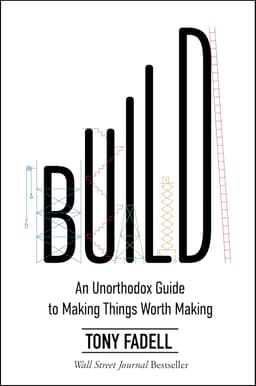
Book links are affiliate links. We earn from qualifying purchases.
Author
Hosts
Transcript
This transcript was auto-generated by our recording software and may contain errors.
Nathan Toups (00:00)
I think that Tony is correct in that it's a mistake because who you're hiring and how you're building the culture has to come top down.
Carter Morgan (00:16)
Hey there, welcome to Book Overflows, the podcast for software engineers by software engineers where every week we read one of the best technical books in the world in an effort to improve our craft. I'm Carter Morgan and I'm joined here as always by my co-host, Nathan Toups How are you doing, Nathan?
Nathan Toups (00:27)
Doing great, hey everybody.
Carter Morgan (00:29)
Make sure to like, comment, subscribe wherever you're at, share the podcast with your friends and coworkers. You can join us on our discord, link in the bio. You can book time with us on Leland, link in the, I guess, episode description, not the bio. And we're excited to talk about the book this week. This is our second week and final week covering Build an unorthodox guide to making things worth making by Tony Fidel. Tony Fidel, if you haven't heard of him.
The author of the introduction is Tony Fidel started his 30 plus year Silicon Valley career at General Magic, the most influential startup nobody's ever heard of. Then he went on to make the iPod and iPhone, start Nest and create the Nest learning thermostat. Throughout his career, Tony has authored more than 300 patents. He now leads the investment advisory firm Build Collective, where he mentors the next generation of startups that are changing the world. And the way Tony describes his book is,
Tony Fidel led the teams that created the iPod, iPhone, and that's learning thermostat and learned enough in 30 plus years in Silicon Valley about leadership, design, startups, Apple, Google, decision-making, mentorship, devastating failure, and unbelievable success to fill an encyclopedia. So that's what this book is, an advice encyclopedia, a mentor in a box. So we have now read the whole thing. My first time, Nathan, you're rereading this after a couple of years. Give me your thoughts, Nathan, after you have reread all of Build.
Nathan Toups (01:43)
Yeah, you know, it's funny how books can hit different over time. And I'm going to butcher the quote, but there's this idea that, you never enter the same river twice, right? Even if you go into the exact same spot, the rivers shifted, things that life itself has changed. And this book is just really, it's still very inspiring. I think it's very approachable to pick up. And it's really sort of this thesis on
continuous learning, improving, pushing yourself, pushing others, expecting more out of things. This is very like a startup founder way of looking at the world. And it's an interesting glimpse because it's somebody who's obviously accomplished a lot. So I still find this book very inspiring. It's very easy to recommend. I also walked away from it this time being like, man, I wanna do this again.
I learned a lot. made a ton of mistakes. was like, I was the CTO in early stage startup, got to build a team, never had the success that he did. And most people don't. But I will tell you that the building process and like getting scrappy and like building something from scratch with a group of people and having a unique perspective, it's so much fun and figuring out the right way to do this and like be deliberate in the way that you're building culture and...
understanding what your leadership style should be at different phases. like I like these break points that he talks about, we'll get into it in the book. I've just been thinking about this a lot more now that I've been in more startup teams. And I don't know, I'm super excited to talk about this book today. And I'm excited to also hear about like, what are your general thoughts?
Carter Morgan (03:25)
No, I really, really enjoyed this book. I think I feel the same way. have startup ambitions of my own. I've been really enjoying where I've been at right now. It's, you know, series a startup team, about 10 engineers, and I'm the lead. And it's probably about 40 people at the company overall. think it's more like 35 actual full time employees. So I really like what I'm doing, but
I still kind of itch every day. I'm like, you know what? One day I'd like to have my own thing, right? And just listening to Tony talk about the way he did it and when he had his own thing with the Nest, it's really, really inspiring. It's also like a little, like old school is a silly way to describe this, but like it kind of reminds me bit of like old school Silicon Valley in that like we've talked about this on the podcast before, is like,
The current iteration of Silicon Valley is really mean spirited, right? Like have fun in the permanent underclass. Like it's painting a vision of the future that isn't like abundant and cool for all, but is instead like, we're going to automate you all out of existence, but at least we're going to get rich doing it. If you're not doing something like that, then you're running a gambling platform. Right. And so
Nathan Toups (04:45)
Right.
Bye.
Carter Morgan (04:52)
I have a lot of distaste for all of it. but Tony is not like that at all. mean, it just, it's so refreshing that like, yeah, the dude made a thermostat, right? But like, was a really, really good thermostat. One that I'm proud to have on my wall. He talks about that in the book, like how crazy it was for him that like people were excited about getting thermostats under the Christmas tree. Right. And I think it's just like one of those. Not every company like changes the world and like a.
Makes it a transformatively better place But there are people who look at the world and say like, you know There's this piece of it that doesn't have to be this way and it could be better and like does that result in a thermostat? Yeah, but like again a great thermostat that saves energy that helps the planet that is a joy to use and I to me that's I really really like that about this industry. I really like this idea that like For most of us our work is not going to be
Nathan Toups (05:30)
brain.
Carter Morgan (05:51)
working on the thing that is the most important to us out of the entire world. But we can find a little corner of the world and say, this can be better than it is right now. And so I think Tony's reading this book was kind like a breath of fresh air. I kind of hope Silicon Valley finds its way again. And even if Silicon Valley doesn't, other people in the world will kind of carry that spirit forward. for those sorts of people, they should read this book because it really is, it's a great book.
Nathan Toups (05:56)
Right.
Carter Morgan (06:21)
And also we find out that Tony really doesn't like Google. We're going to get into it. He's very, he's very adult, mature about it. And I shouldn't lead with that because he says he's like best of feelings, but it was a culture clash.
Nathan Toups (06:25)
Yeah, this and it's really it's man. Yeah, it's so funny
Yeah.
No, it's and it's
it's a culture clash. I think he gets he I will say it's really nice for him to be just be like, show the oil and water scenario of like the culture that they had very carefully cultivated, then kind of being thrown into Google and then been thrown through the ringer. mean, again, we'll get into it because it's like it seems like the acquisition from Nest to Google was just complete chaos. It was complete chaos in his entire tenure that he was there.
Carter Morgan (06:54)
Yeah.
Well, let's just get into it right now because that's what you really have to understand about this is part five and part six, which is part five is build your team. Part six is be CEO. And the whole kind of book up until this point, he's been reflecting on all the different areas of his career, but most of the book has been concentrated on his time at General Magic, his time at Phillips, his time at Apple leading the iPod development. Part five and part six,
really focus on his time at Nest and building the Nest learning thermostat. And we're going to talk all about that, but I think it's worth talking about upfront, is Nest is acquired by Google and they really discuss, and it's quite like for a lot of money, like $2.2 billion or something like that. And there's a lot of discussion amongst the team, like should we do this? And they ultimately decide they should.
And something that was really interesting reading this book is I have only kind of ever really known Nest as a Google product because they were acquired somewhat early in their life cycle. And so to me, I'm like, yeah, well, Nest is a Google product. reading this, realize Nest at its core had an Apple identity and it is acquired by Google. I think like you described, Nathan, oil and water is kind of a great way of describing this.
Nathan Toups (08:28)
And this shows
the age gap between you and me because like I actually bought the Nest before the Google acquisition. And I was a little upset because there's this whole idea that like, do I really want Google to know when I walked down my hallway? Like I was already a little nervous about the fact that like, cause again, for the uninitiated Nest is a thermostat for HVAC systems. HVAC systems are really popular in United States. Now that I live in Costa Rica, it's like really important.
Carter Morgan (08:31)
Right.
Right.
Nathan Toups (08:57)
bring up the fact that a nest would never work with a mini split. Because each one of my bedrooms in the common space has its own little air conditioning unit. But one of the ways it kind of tuned itself and taught itself about your behavior is it knew if you walked down the hallway, if it's, you know, or whatever common space you're in, and then kind of like preemptively figured out how to like turn the AC on to a comfortable level before you showed up back to your house after work.
Carter Morgan (08:59)
That's fair.
Yeah, yeah.
Nathan Toups (09:27)
got things down at the cheapest way possible, down to a comfortable temperature before you went to bed at night, right? You can kind of program these kind of periodic things. And I thought that was really cool. But then I was like, man, do I really want Google in my house? And at the time, I was like, super concerned. was like, you know, huge EFF contributor. And I am big on internet privacy. I really am. I've unfortunately, like, relaxed some of my stances on things, but a lot of hand wringing. And then they got acquired by
Google and no one cared really, in the grand scheme of things. But I remember this time where I was like, I didn't know the inner inner workings from Tony Fidel. I guess he brings up in the story. He kind of alludes to it a little bit. But yeah, it's really interesting to see it from the inside.
Carter Morgan (10:15)
Yeah, I think, so one area he really has trouble with is he really wanted to maintain like a very scrappy culture at Nest. Like he really prides himself that like they started in a garage that has a squirrel problem, right? And he talks in the book about how like, you shouldn't give perks to your employees. you should give benefits to your employees. He's like,
Nathan Toups (10:27)
Yeah.
Carter Morgan (10:40)
He's like spend on what matters, right? He talks about healthcare, paternity leave, vacation time, but he's like gifts and trinkets and massage, the whole chapter is called F massages, right? He doesn't say the, he doesn't say F and you he feels strongly about this. Yeah. And so then he gets to Google and, I actually loved he, he talked about like numbers. basically said that like,
Nathan Toups (10:55)
It's got lots of colorful language, it's great.
Carter Morgan (11:07)
Prior to joining Google, think he says every employee at Nest cost like $250,000-ish. He's like, you figure, all in, yep. So that's salary, healthcare, benefits, equipment, office space, right? He says when they went to Google, it doubled, right? Like just because now they have to pay for the massages, they gotta pay for the free buses, they gotta pay for the gourmet cafes.
Nathan Toups (11:13)
All in, yeah.
Carter Morgan (11:37)
And then what he really hates is I guess right after they joined Ness, that's when Google launches Alphabet, right? Which is this idea that basically Google wants to have a parent company because they want to be able to show in their financial statements that Google, like the money printing machine, and Nathan and were talking about this before the podcast, everyone talks about Google's fantastic culture, but the answer is like Google has a money printing machine and like you can have a lot of success when you have a money printing machine.
But the money printing machine of search and ads, they wanted Wall Street to be able to see how well that was doing kind of untethered from everything else. so they decided to split everything out, which you'd think would kind of help like Tony keep Nest independent. But instead a big reason for joining Google was like,
we're going to be able to increase sales because we're going to be able to put things into the Google store and we're going to kind of all the synergy and connection is going to exactly. But then, so all of that kind of screeches to a halt because Google also the employees at Google were already kind of reluctant to help nest integrate. But now that they're not even officially Google, they're like, well, I don't want to do any of this. and then on top of that,
Nathan Toups (12:36)
All all the infrastructure will be handled by Google infrastructure.
Yeah.
Carter Morgan (12:58)
Now they have to be paying the alphabet tax. Like they have to pay alphabet even more money for all of this stuff that kind of got by just being part of Google, right? They said like the cost just to connect an employee's computer to the Google network was $10,000, not including the computer. Exactly, right? And so then he says that the cost per employee went up to like 800,000 or something insane like that.
Nathan Toups (13:14)
A year per employee, yeah.
And this is
where things got crazy. you know, if you think about from a rug pull standpoint, they get acquired and, you know, he's still as annoyed as he is about a lot of this. He's still very thankful. And there's actually some stuff that kind of arcs later in the story of like, would we have done this again? And even with all these complaints, he's like, yeah, the information that we had at the time and where things were going. And you have to remember, Nest, I don't think a lot of people realize this, but like,
There's a bunch of protocols for how Internet of Things devices talk to each other in your house. Nest actually created these protocols and they were not were not ubiquitous and they were first movers. And Tony saw, hey, all we have to do is get enough traction that one of these big players is going to come and destroy us. Right. Like that was the fear is that, hey, as soon as they see that people actually will pay for smart home connected devices and they realize that we've kind of gotten our foot in the door with this ecosystem.
Carter Morgan (13:52)
Yeah, yeah.
Nathan Toups (14:18)
Amazon or Google or Apple is going to be able to swoop in if they wanted to and just like destroy us. And so they were kind of riding this wave of adoption, which is great. They were looking for partners. Google was interested and Google was like, hey, you should integrate and like, you know, we're going to temporarily stop development in our ecosystem and cultivate this relationship with you. And this is kind of what brought on the acquisition.
And yeah, I think all in actually, it might've been like 2 billion in cash or so, but it's like 3.2 billion. I think it was like the total value deal. Huge, amazing deal for Nest. They thought they were gonna be brought in and become like Google Nest and do this whole thing. They'd create alphabet. They get swooped out. And yes, all of the sudden the operating expenses around employees and stuff like doubles, almost triples. And so now what's crazy is they come in and they're like, and every time they make a change, they're like, you know,
this is a thoughtful change that we're introducing. Google would always use these very almost Orwellian phrases, because you're like, obviously this wasn't thoughtful. Obviously you acquired us knowing alphabet was going to happen, and then didn't tell us, and didn't understand. And so then they're like, yeah, but you know, we're under a lot of pressure to operate our child businesses efficiently. So we need you to put in these cuts and...
Carter Morgan (15:17)
Yeah.
Nathan Toups (15:41)
do these things, might impact head count, it might impact how efficient you are. And he's thinking like, what? We just did the Google-y thing and increased comp and did all this crazy stuff so that we can integrate. You decided to make us independent again, and you're the one who doubled our operating expenses.
Carter Morgan (16:00)
And
they're the ones who set the sales goals. They're like, hey, you're not meeting your sales goals. Well, they're like, well, you set the sales goals. Those sales goals were set when we thought we'd be like an integrated part of Google. Yeah.
Nathan Toups (16:03)
and they also made up a bunch of sales.
Right. And in the Google
store, like they were really resistant to even put the Nest products. There's a lot of like resentment. And he talks about this like the anti-free of the terms he uses, like the antibodies are in the machine. And he said he learned this at Phillips is that, you know, you have to fight for your little product to make it through and that Google had their own antibodies and they're like, you're not Google enough. Right. Like this was kind of this culture clash where
Carter Morgan (16:16)
Yeah.
Right, right.
Nathan Toups (16:40)
And he was talking about some of the absurdities. And again, we learned some of this from in the Plex of it's all hand meetings, right? These all hands meetings at the time, they were still getting 150,000 plus employees to all do a two hour meeting like once a week or something. yeah. And of course, you know, this was the opposite of what Apple did, right? Apple never in a million years would have done something like this. They were. And I think some of it's probably because of his hardware.
Carter Morgan (16:47)
Yeah.
Yeah, he says they had a whole team dedicated to producing the all hands meetings, right?
Nathan Toups (17:09)
background, some of it's probably just because of like, org structure. it's, it was interesting to say, talk about the, like when a company is acquired by another company, and he brings this up, he's like, what Apple, for instance, does as a general rule, doesn't acquire mature businesses. It just doesn't do it. They will acquire, and again, we can roast Apple all we want, but a good example of Siri.
Carter Morgan (17:28)
Yes.
Nathan Toups (17:36)
Siri was not developed by Apple. Siri was a Silicon Valley startup. Many would argue that they just have sat on. But they acquired this because they were a small, scrappy team. They didn't have an HR department yet. They didn't have a legal team because integrating all of that stuff is hard. Right? Like how do you do a bunch of that stuff? And so if you're a scrappy 15 person team, it's probably all or mostly engineers, you know, maybe a few little things. Super easy to say, okay, you're joining Apple. You're part of our culture.
Carter Morgan (17:36)
Mm-hmm.
Yeah.
Nathan Toups (18:06)
you know, welcome to the team, we're doing this thing. But with Nest, where you're like generating a ton of revenue, you already have these org structures, you already are lawyered up and HR'd up and have all of these executive leaders. How do you integrate that? Like, how does it even work? And again, he explores this in the book. I think that one of the reasons we're riffing on this is that it's really like a cool, no-nonsense view into like, why is this hard? Or...
what kind of difficulties will you get or this sounds really good, but it's actually really bad. And I think that that makes the book kind of exciting in that area.
Carter Morgan (18:41)
Yeah. And, uh, it's just one small part of the nest journey. Yeah. It's really, really interesting. I, he points this out in the book, which is that like, there's this like mythology of like the founder whiz kid, you know, someone who like, you know, they're, 21, like Mark Zuckerberg is the prototype of this, right? 22 out of college. And then they just, they see the world new and they create this, you know, fantastic company and like, it like founding is a young man's game.
Nathan Toups (18:59)
Mm-hmm.
Carter Morgan (19:11)
Right. Um, but he points out that like most successful founders, I believe are in their forties. Um, and yeah, you're, you're prime real estate, Nathan. Yeah. Um, and, uh, and that's what's cool about Tony's story is that like he had founded some companies when he was younger, but they'd never really gone anywhere. And then he spends the bulk of his career, like in a stab, you know, big companies like, or general magic or I guess that's not a big company, but you know, prominent startup, right.
Nathan Toups (19:18)
Yeah, I'm prime real estate right now.
Carter Morgan (19:41)
and Philips and Apple. And then when he's in, I believe his 40s, I just kind of trying to keep track of the timeline. have to, yeah, it has to be late 30s at the very earliest. Yeah, yeah. And so it's neat.
Nathan Toups (19:48)
I think he was 40 when he started Nest, if I remember correctly.
And remember, he'd been sitting on this idea for 10 years, right? It's been kind of bugging him.
Carter Morgan (20:04)
to see someone with that wealth of experience come in and found a company. Although I didn't want to talk about that, about sitting on an idea. There's two ways, I find these two ways of startup thinking very, very interesting because on the one hand you have Tony who says, should really, if you have a startup, you should really have been thinking about it for a while, right? Like he says 10 years is probably too long.
Nathan Toups (20:30)
Yeah.
Carter Morgan (20:30)
But he
says, in general, this should be something that keeps coming back to you and you saying, this is a problem, I think I could fix this. And I really liked, mean, that resonates with me. But there's another way of thinking about it, which is like the Jeff Bezos way, which is Jeff Bezos, saw, Jeff Bezos had a, not a cushy, but a lucrative job on Wall Street. He saw a D.E. Shaw. Yeah, yeah.
Nathan Toups (20:52)
Yeah, I think he was a Goldman. Yeah. was he? Okay, interesting.
Carter Morgan (20:59)
He saw that the internet, adoption was crazy. It was growing like 2300 % year over year. And he was like, nothing grows this fast. And so he wanted to, he just knew he wanted to do something. He he wanted to sell something on the internet. He wasn't even sure what he was going to sell. Like when he left E.E. Shaw, he just, he put all this stuff in a moving truck and just told the movers drive west.
And then on the drive over him and his wife figured out where they would live. They wound up choosing Seattle because it was close to Microsoft and had no income tax. And I believe, and there were some other tax advantage reasons. the other reason, the other reason was because back then, if you sold something on the internet, you only had to collect sales tax for the state you operated in. And so, yes, exactly.
Nathan Toups (21:43)
Interesting.
I remember this, I remember this.
Carter Morgan (21:57)
So Washington was, it was this good combination of like it had a growing tech sector, but at the same time Washington's population is one of the, what is it? I only know states by how many electoral votes they get. And I think Washington gets about 12 or 13. And yeah, yeah. So about twice the size of Utah. Yeah, about twice the size of Utah, but a quarter of the size of California.
Nathan Toups (22:11)
That's amazing that you know this, that's cool. I'm bringing you to trivia night, yeah.
Well,
that's editing. You think about this. This also unlocks the early adopter market, which means that they could sell to Californians and not have to collect sales tax, which is an advantage over Silicon Valley based startups.
Carter Morgan (22:29)
Exactly. Sorry,
I need to figure out. Okay, I'm locking in 13 electoral votes. That's what Washington gets. Let's see. I'm trying to figure out Washington state electoral votes. come on. How can it? You can't get this answer. Dang it, it's 12. Okay. All right, sorry everyone. Okay, so. You should be.
Nathan Toups (22:42)
Do it.
I'm disappointed. I know we're all disappointed that you were off by one. It's an off by one error. So
classic.
Carter Morgan (23:01)
Anyhow, minor tangent about Jeff Bezos there. But that's just a very, very different way of thinking about building a startup. That's like, hey, this is hot right now. I should get in on this. The reason I've been thinking about this is because obviously AI is really hot right now. And I've been kicking around some ideas that are in the AI space. And there's a part of me that's like,
Well, you had this idea 72 hours ago. And so how much should you really charge at it versus like kind of the Tony Fidel approach of like, you shouldn't let it sit marinate on it or let it marinate, you know, and, you know, only when it kind of keeps coming back to you is that proof that this is an idea worth pursuing. What do you think?
Nathan Toups (23:49)
Yeah, I'm in the same boat. And I think this this actually gets down to like, maybe a Bezos versus Steve Jobs sort of thing. Because again, I think I brought this up last week, Seth Godin mentioned that for the longest time, Apple had a single customer, right? Like, everything was sort of if this Steve Jobs design, aesthetic workflow made sense to him, it just happened to be that millions of people around the world.
Carter Morgan (23:58)
Yeah, yeah.
Mm-hmm.
Nathan Toups (24:18)
also sort of resonated with that. But Apple was always very focused. Like they didn't have to go out and do tons of user testing. It's like, did the CEO like the glass that's on the iPhone and he loved it. And so therefore it ships, right? They even talk about this in the book, right? do you, know, pushing people to do things that feel impossible. Like Steve Jobs realized they couldn't ship a plastic screened iPhone. And, but the Vezo side of this, and I think you're right, like,
Can I take a sober look? And I think this is also kind of like how the Warren Buffett approach, right? Warren Buffett himself doesn't produce value. Like he doesn't create designs or do these other things. He kind of looks at it and goes, do I understand the fundamentals on a set of principles in a way that there's a blind spot in the market, right? Like he has this very sort of like analytical way of looking at the world. And I think Bezos is a lot like that, where they go, they see a deeper truth because everyone else is so tangled up.
Carter Morgan (24:59)
Later.
Nathan Toups (25:17)
in a bunch of stuff that doesn't matter. And he goes, okay, this is a fundamental truth. This is a fundamental truth. I can make a business on top of these two things being correct. If my bet is that, then I'll be here at the right place at the right time. It's a zero to one play. think that's actually another book that's interesting. It's Peter Thiel, which is an unsavory character, but I think he...
He has a view of the world that makes a lot of sense for these like winner takes all sort of markets. And I think though, for you to be a success in that area, you have to be the type of person who understands a fundamental truth of the universe and that you can make a bet on that. I don't think that that's most people. You know, like I think that there's not, there's only so many people that have the market insights of a Bezos that everyone else hasn't figured out. And again,
Carter Morgan (26:11)
Right, right.
Nathan Toups (26:13)
I'm a software engineer who's never started a multi-billion dollar company. take anything I'm talking about with a grain of salt. Yeah, right, yeah. I think for me, it makes more sense to solve a problem that really bugs me in my head. I can obsess over, there's a few ideas that I've had in the back of my head where I'm trying to figure out what the market viability would be. I'm also trying to think, think if you let it sit for a little bit,
Carter Morgan (26:20)
yet.
Right. Right.
Nathan Toups (26:42)
It gets, again, it gets back to, and the reason I'm happy to bring up Bezos is because actually Tony Fidel brings up Bezos. I thought it was a really kind of interesting piece of advice later in the book, the final chapter about being CEO. And then also beyond that about sitting on boards. And Bezos actually said, don't, don't accept the board positions. It's a waste of time, which I thought that was like a really funny, very Bezos way of looking at the world. And Tony's like, yeah, you know, I, I,
Carter Morgan (27:02)
Yeah, yeah.
Nathan Toups (27:09)
think about this every time I say no, but I haven't always said no. He kind of says, you don't always have to take all the advice of somebody who's super genius. But yeah, one of the things that Bezos I think also brings up is this idea of what won't change. It's very famous at this point. People ask him what's going to change in the next 10 years. And he said the much more interesting question is what won't change. And people are going to want shipping faster and more reliable and cheaper and all these things. One of the things that's kind of been
top of mind to me, and again, I don't know how to build a business on this yet, but I think about from a painkiller standpoint is that like engineering burnout has been a real problem, right? So I was just going to pose something. I'm not going to say this is a startup idea, but engineering burnout is real problem. And it has been for a while. Like we know that the satisfaction of a software engineer has been going down for a while in that AI tools have exacerbated this. Yes, you hear stories of somebody who's having more fun than they've ever had before, but the pressure on you to ship
Carter Morgan (27:47)
Right.
Right, right.
Nathan Toups (28:07)
and delivers actually just increase and it kind of makes you feel like a hamster and a hamster wheel if you're not careful. So from a Bezos standpoint, do I think that the desire for software engineers to not feel burned out will ever go down? And I don't, I think that there's actually like an increasing market for this, right? So I can't predict what AI tools are gonna do tomorrow, but I can predict that it's probably going to increase burnout or at least not solve the burnout.
Carter Morgan (28:27)
Right,
Nathan Toups (28:35)
And so therefore I could build a business on something about mitigating or minimizing burnout for software engineers, right? Like, and so yes, I can take a sort of Bezos idea, but I could also have something where I'm like, I don't want to be burned out either. Like, this is something I personally, like what do I need to do to make, you know.
Carter Morgan (28:51)
Well,
I like that. I like that kind of like mission driven approach. And like, it's funny, like, there's the pendulum swing in Silicon Valley. like, like where we joke about, like, you know, the TV show Silicon Valley, like, I don't know about you guys, but I don't want to live in the world where someone makes the world better place better than we do. Right. You know, and like, where Silicon Valley has talked in these very lofty, high minded terms for a long time. And it's like,
Nathan Toups (29:14)
Right. Exactly. Exactly.
Carter Morgan (29:21)
It's like, is it a little cheesy? Yeah. Is it sometimes very two-faced? Absolutely. But like, again, I prefer that iteration of Silicon Valley to the screw you, I got mine iteration of Silicon Valley we're on these days. you just, have to, whatever you work on, especially if it's your own thing, right? Cause I'm coming to realize this more and more is like,
Nathan Toups (29:34)
Right.
Carter Morgan (29:48)
Because when he talks about building a team, I think about, OK, if I were going to hire and I've got to recruit people to join my company, how are you going to do that? And I'm coming around to this idea more and more that you can't really join a startup unless it's going to be fun. It's not worth it. If you're looking for just a job, just a nine to five collective paycheck, there's lots of those in the world. But a startup is going to be
You know, it's going to be a lot of work and it's going to be a lot of ambiguity and it's going to be a lot of pressure. But in all, but you can find the kind of people who find that fun and you can cultivate a culture which makes that fun, right? If it's a cult, if it's a high trust, low ego, high ownership culture, right? I think there can be a lot of fun to be had in that, but you've got to work on something that really interests you.
There's this tweet that I love, is like, it's, you know, be a founder or like, basically they're talking about founders who like complain that candidates are asking for work life balance. They don't want the hustle enough. Then you check the founders bio. It is a meaningless AI startup every single time. Right? Like some stupid, you know, like it's a whatever, like the other one I saw.
this week was like, yeah, it was just like, it was like a messaging platform between buddies, but you could have AI buddies in there too. I'm just like, this is so stupid, right? Like maybe that's what you love and you think it's gonna be great, but this idea that like you're changing the world, I don't know, drives me nuts. Anyhow, I don't even know what I was talking about. I guess, yeah, I like the mission driven approach here. Yes.
Nathan Toups (31:21)
brain.
No, think this is, yeah, having a sense of purpose and we kind
of touched on this last week because like that's the driving factor and it really becomes even more important when you have the be the CEO section, which is that, you know, that's your primary job. Your primary job is like, why are we doing any of this? What is the purpose of this company? Why are we, and I like that he gets into the fact that
Carter Morgan (31:51)
Yeah.
Nathan Toups (32:02)
They did some studies and showed that founders, the same parts of your brain that engaging with a child, like the pride that you have in a child is from founders and the companies that they're building. Cause it is in a way that you've birthed this thing, this perspective, this unique perspective on the world and how to solve a certain type of problem, provide value for other people. You know, a healthy functioning business should provide more value
Carter Morgan (32:07)
Right.
Nathan Toups (32:30)
then you're charging for that service, right? Or good. That somebody should come away being like, I come away from this going, man, I really love this thermostat, right? It's worth every penny to spend $250 at the upper bound of whatever I'm willing to spend on a thermostat because it has so much more value than the Honeywell thermostats that are ugly and don't really do a good job. And they don't have a smartphone app or whatever at the time. I'm sure all of these things are not true anymore. But
Carter Morgan (32:33)
Right, right.
Right.
Nathan Toups (33:00)
I should walk away from this not going, man, they really got me this time. know, Nest is, you know, once again, just turned their turn the screw in and it really like businesses shouldn't be that really, really a business should be. I, you know, perfect example, we have a channel in our discord called Keebs, which is like everyone's all the people who are into like the keyboard scene. And it's so cool to see what
Carter Morgan (33:06)
Yeah, yeah.
Yeah.
Nathan Toups (33:28)
you know, a kit that they put together or something that somebody purchased. And it's an object in these people's lives that they're so proud of and they're so happy with. And it's something that they're spending a lot of time and energy, you know, thoughts flowing through their hands into their computer. And of course, having an object that you like having around and I'm sure that the high end keyboards are charging a premium, but it's not, they're not screwing you over.
It's a value. Somebody in the world says, you know what? I really want to invest in a high end keyboard. I think that that's so it's easily lost where we're like obsessed with user adoption. And again, he talks about this in the book. He's like, what happens if Metta decides that they have to change their business model and they can't because their business model is actually selling customer data to advertisers, right? Like right now they're able to operate the way that they do. But what happens if if
they decided they wanted to get into something fundamentally different. And look at them, they're not a hardware company. They're trying to be in AR, they're trying to do these other things, but it doesn't really make sense to the core of what it is unless it is just another platform to sell every ounce of your attention to an advertiser, which I think most people don't love. Like I'm not like, ooh, I want to use virtual reality. Can't wait till Mark Zuckerberg harvests all my attention on virtual reality.
Carter Morgan (34:39)
Right.
Nathan Toups (34:48)
And so I think, for instance, Apple is in a much better position if they can ever figure out how to not make it expensive and goobery and dumb. Whoever ends up cracking it, I don't think it's going to be the attention farming advertising companies that end up winning.
Carter Morgan (35:04)
Right.
No, and I think there's, I personally, it frustrates me like,
Like I saw, was like this video, it like a standup comedian. He was doing like crowd work, but like he was talking to someone in the audience who like built themselves as being very like progressive and like very like anti-war. And they worked for like, their job was they worked at like Lockheed Martin on the rocket engines. And I'm just a little like, you know, there's more than one job in the world, people, right? Like you, I, I,
Nathan Toups (35:35)
yeah.
Carter Morgan (35:44)
They were just very much like, no, no, but that's just my job. I don't believe in it. Exactly. I'm like, my gosh, like you, you can work on things that again, you don't my job. work on a, an online coaching marketplace. is not what I dreamed of doing as a child, but I think it's a good product and I think it helps people in the world. you know, like exact. Right.
Nathan Toups (35:47)
Right, I have to pay the bills, yeah. Yeah.
yeah. There's a lot of value that comes out of it, right? mean, there are people,
it's a marketplace where people who need perspective on something and people who have this perspective and can sell it in some sort of product, it makes sense. mean, again, it's, I don't look at this and go, you know, it's not like, and then there's a futures market on whether this person actually get the job or not. And you can, you know, our polymarket integration.
Carter Morgan (36:16)
Exactly.
Yeah, I know. Slow down, Ethan. I gotta write this down.
Nathan Toups (36:34)
I'm gonna bet
on your coaching customers on whether they actually are successful or not.
Carter Morgan (36:39)
I had this idea driving to work one, because thinking about kind of like startups and like what you want to build in your life, like I just thought like, weirdly enough, like the Morgan family is comprised of influencers, like, wait, I obviously we are, you know, in a niche here at Book Overflow, but you know, we've got an audience and a platform here. My dad is a religious self help author.
My mom is like a micro influencer with like a lot of our audience is incredibly concentrated. It's like 20,000 middle aged white ladies in Utah. Right. And then my younger one of my younger brothers, Davis Morgan, if you look at his channel, he's got he has like 120,000 subscribers on YouTube and he does horror literature reviews and he's the one of us that it's like, that's his real deal full time job. And so you know, we have like
Nathan Toups (37:14)
Okay.
Carter Morgan (37:33)
We're in this space a bit. And so I think about kind of like influencer based businesses and like, had this idea. was like, what if like AI video generation is getting pretty good and like my mom gets requests to like make video content for other brands. I'm like, what if she didn't have to do that? What if instead she could like just lend her likeness to this platform and then the AI generates a video of her. And I'm confident someone will build this business. And it is the last thing on earth I want to unleash into this world. Right.
Nathan Toups (38:02)
Right.
Carter Morgan (38:02)
Like I'm just like, again, like I think there's a certain type of founders. She's like, if there's money to be made, I just love building things. don't care what I'm building. And like, I'm not built that way. I'm just like, ugh, like I, I have to believe that what I'm building is good for the world. And in particular, I, like, I don't even want so much. Like there are some people who just are really jazzed about this idea of like, AI is just going to cut labor. And if you use my product, you can fire half your team. And it's like, they might.
Nathan Toups (38:17)
Right.
Carter Morgan (38:31)
very well be correct. It's just not a product I want to build. Anything I build, I like the idea of growing the pie. I like the idea of just a, you know, not a zero sum transaction, right? But something that's good for all parties. I think the Nest thermostat is great because like, is the Nest more expensive than other thermostats? Yeah, the margins on it might've even been higher, right? But it wasn't a zero sum transaction, right? Because it solved a real problem and was a joy for its customers to use.
Nathan Toups (38:35)
No.
Carter Morgan (39:02)
I don't know. think you got it.
Nathan Toups (39:03)
So this is one of the things
too that I think the book drives home really quick. So you're in a business that seems really boring, right? You're getting into thermostats and yet every action of this company was deliberate. he talks about, there's a few features and I'm going to go back to, we're jumping around kind of in the last couple of parts. There's a couple of things that number one, I thought it was really interesting. He gets into hiring and talking about how like your first 30 to 40 employees should be hired by the CEO.
Carter Morgan (39:13)
Right, right.
Yes.
Nathan Toups (39:33)
which it's funny because I've not seen that universally done. The best early stage startups that I knew, definitely the CEO is very hands on. But I have seen it delegated earlier than this. And I think that Tony is correct in that it's a mistake because who you're hiring and how you're building the culture has to come top down.
The CEO is such an important role in understanding of like these, getting these
biting questions and he talks about this. And I'll tell you, I interviewed right before I got laid off last year. I actually was, kind of, you know, I could see the writing on the wall. was interviewing at a company and I got through, I did amazing. I got through like seven rounds of stuff, like some systems design, technical interviews and all this stuff. Everybody gave me like apparently the highest marks. I sit down with the CEO and did a behavioral interview and bomb.
Like it was embarrassing and it, had to have been in the same school as Tony, because he really just like, he talks about really kind of asking these uncomfortable questions or looking for where they squirm a little bit and understanding like, who is this person? Like, what are they gonna be bringing to the culture of my team? And at that moment in my life, I think I was, I think he made the right call. Like he made the right call and was just like, yeah, this guy's got some, he's looking for something. He's trying to figure something out and like, I'm not.
I'm not the person, like we're not the right company for him right now, right? Like that's, and it's, taken me months to admit this, but I think he sensed something that I didn't sense in myself. And that's the job of the CEO, especially at this stage, like every freaking person in your company matters. And it's a design, and he talks about this design for everyone. I think it's like one of the sections. And he talks about how like design is in a department.
that everyone in the company should be thinking about design in every aspect of what they're doing, which again, I think is a radical departure from a lot of people's experiences. He even talks about getting into the customer support docs and being like, am I confused? Did I read this technical explanation and be like, I have no idea how to deal with a Nest thermostat after reading this set of instructions, which again, I'm sure, and he talks about this in the book, he's like,
Carter Morgan (41:30)
Mm-hmm.
Yeah.
Yeah.
Nathan Toups (41:53)
I think I probably drove some of my team crazy because it got 90 % good. And they'd like, cool, like 90 % good. We got so many other things to do. Let's just like move on. And he's like, no, that next 5 % and that next 5 % is all the difference. Like it is what matters to the business. And I think that this is why the culture clash between an Apple person creating Nest going to Google. Cause I think Google gets to 90 % all the time and just moves on, right?
Carter Morgan (42:15)
right?
Sometimes
they get to 60%.
Nathan Toups (42:22)
yeah, you're right. Exactly.
No, exactly. I mean, it's a problem. I'd say Google has a problem in that area.
Carter Morgan (42:30)
I've been
thinking about this a ton. Like there's a somewhat famous incident in my company, which is we had like an offsite last year and we all sit down to read like these essays, but it's like, you know, one those group like breakout room activities, right? And so we're all in just this one big room, but in different breakout groups. And we all sit down to read these essays by Frank Sluden, who's like the CEO of Snowflake or whatever. And in it,
One of the essays was about this idea that like, he said that like on his team, they either said something was insanely great or total crap. So there's nothing in between, right? And so we're reading this essay and I'm kind of in charge, like the discussion group. And so the whole room is quiet, right? And then I'm like, all right, well done. Great. Okay. Well, I think this essay is bull crap, right? Like, and like the whole room heard it. And I just kind of said, I'm like, I don't know if something is insanely great or total crap. think there's...
middle ground or like it's good enough to move you on to the next thing and the longer I've been at a certain about eight my year mark and the more I kind of look at what we've built and and Kind of what came before and what I'm trying to do and and how I'm trying to build things the more I'm like I Don't know. I don't know. I'm reevaluating this I'm thinking maybe we would have been better off if you could I don't think it's true that things can only be insanely great or total crap
But I wonder if you could only assign those variables, would you wind up building better things? And just reading about Tony, I have a feeling he would be in kind of like the insanely greater total crap dichotomy because he's talking about like, can't be 90 % good. It's gotta be 100 % good. And there's just enough where I kind of look around at our product and there are parts of it where I'm like, we should be embarrassed by this.
Nathan Toups (44:07)
Right.
Carter Morgan (44:19)
we should be embarrassed that our name is on this as engineers. But that comes with trade-offs, right? And the trade-off that my company has made up until this point has just been that you've got to build the right features to kind of grow the product to increase demand. And I think that makes sense. But I don't know, I think.
You know Tony doesn't talk about that a ton in the book, right? Like if you're gonna if you're gonna push your team to get to a hundred percent, right? by by nature there are trade-offs. What are you trading off? Are you moving slower? Right? Are you working your team harder and burning them out more? I don't know. I don't know what trade-offs he was encountering would have been nice to hear about that in the book a little bit
Nathan Toups (45:07)
I
agree. think it would have nice. It wouldn't have made sense for the flow of the book to have like case studies, but I wish there was a compendium of case studies because yeah, like looking, I would love to see a, here's the thing that they originally shipped, already a high functioning team. Let's just imagine their 90 % is probably a hundred percent for a lot of other companies. And I think this is actually the kind of cool thing. again, I go back to this FinTech company that I worked in.
Carter Morgan (45:13)
Right. Yeah.
Nathan Toups (45:37)
our head of engineering set the bar really high. He kind of reminds me of Tony Fidel in some ways. And it was so cool because when he would push back and it would be incredibly frustrating, we'd roll our eyes sometimes, but it was always out of respect and we would do the thing he asked. And then we realized this was just categorically better. This was this, I understand now why he had a view of the world that didn't quite make sense to me because I'm so used to doing good enough that doing it this way,
we now can build upon this foundation and not worry about these fundamentals. And having that sort of like understanding where that's actually worth doubling down on and pushing and when it's not was really helpful. The other side of this was shielding us from stupid requests, right? So he wasn't the CEO, but he could say no, and this is why, or this is why it'll put the project to risk. And I will say that like we did think about our product.
Carter Morgan (46:24)
rhyme.
Nathan Toups (46:36)
Like even though was internal, was literally just for a trading platform internally that we could use all these AI tools to do quantitative trading. And we literally had an audience of like the people who are in our investor portfolio and the monthly reports that were coming back, right? Like it wasn't, it's not like this was publicly facing. And yet we knew if I knew if I was dialing it in or if I was doing something that was amazing and it put me like,
All of us were trying to compete on being like, yeah, well, I didn't just do the CI CD pipeline. I wrote this internal command line tool. So next time you want to do this, you just do this thing. And it like auto validates and does this thing. Like we would be like doing product releases internally. And I was always so excited. There was a couple of team members where anything that they produced, I would be like edge of my seat talking about inversion of control and some testing bootstrapping stuff. And I'd be like, it's beautifully designed.
Carter Morgan (47:29)
Right, right.
Nathan Toups (47:33)
I could leverage this. And this is, course, before the age of agentic tools. So we really cared about the process. It's the only time I've ever seen that where there was no cynicism. We were scrappy. We were just building stuff. And we all trusted each other. There was never this one, you got to watch Tommy over here. He's dead weight. And honestly, we did have this one time. there's a couple of times, actually, when we're picking the right people.
Carter Morgan (47:54)
Right, right.
Nathan Toups (48:02)
And the team changed who they had on the team. just, it didn't stick around. was no dead weight. And didn't always feel fear, but that's how it was.
Carter Morgan (48:08)
Yeah.
Yeah, well, and just, I think that kind of gets in this idea of design. I think a lot about how Steve Jobs is insistent that the inside of the computer be just as beautiful as the outside, right? That's a very Steve Jobsian idea, right? And probably overboard in some respects, but I don't know. I've been thinking, I think, you don't think so?
Nathan Toups (48:25)
Yeah.
I don't think it was actually. I really don't. I think
that his fear was, if you're going to over optimize anything, his fear was, and it's kind of like, let's say you have a really beautiful kitchen and we all have a junk drawer, right? Every one of us on the planet has a junk drawer. I guarantee you that like Steve Jobs' junk drawer is like meticulously organized, right? And the idea was that if you let certain things slip, especially things that are out of sight, that it's going to spread like a virus, right?
Carter Morgan (48:53)
Yeah.
Nathan Toups (49:01)
in that Apple was so obsessed with out competing in thoughtfulness that, but I will tell you, this is the difference between a piece of furniture you get at Walmart and one that's made by a craftsman. If you actually look at how the inside of the drawer is finished, which one of these might be an heirloom that goes to your children and which one of these is not gonna make a rearrangement of your bedroom.
Carter Morgan (49:07)
Mm-hmm.
Mm-hmm.
Ryan.
Nathan Toups (49:29)
And sometimes you really don't care. Like you just need something to put some clothes in and you just like, you're gonna get a chest of drawers and you know that it's made out of particle board and it's gonna like fall apart. And then one of these is like, man, this brings me joy. I can look at this chest of drawers. My children are going to compete over who gets it, right? And it's just a different way of looking at the world, I think.
Carter Morgan (49:41)
Right.
It's
just, it's, it's all, there's all these like philosophies that are like competing in my head because kind of like my arc over a career is, and, it's why, like you talking about this, this team you are on and really taking pride in how you design things. Like I've really come to appreciate that because I think growing up, I was very much like, I very easily could have been an A student.
But instead I was a B plus student because I realized that exactly the work it required to get an A, like I could put in 10 % effort and get a B plus, or I could put in 60 % effort and get an A. And for Carter Morgan, 10 % for a B plus was a fantastic deal, right? And so I'm like, I'll take that deal. But then I think I kind of felt a little like, the other thing is that like I was able to,
Nathan Toups (50:19)
Me too.
Right.
Carter Morgan (50:44)
had a lot of success in high school and early on. I think about it as a missionary, for example, because I am fairly personable and outgoing and roughly charming. And so I kind of thought to myself, well, these are where my talents lie. And when I get into the workforce, I just got a different way of thinking about the world. And it's that unique perspective I bring that's going to give me a lot of value.
And what I've learned in the workforce is like, think one, a lot of that is still true and still valuable, but there is no substitute for just doing the work. There is no substitute for just honing your craft and getting better at it. And in the first few years of my career, I did not feel that way at all. Right. And it was only kind of. Yeah. Like when I start, yeah, you feel the same way.
Nathan Toups (51:24)
Yeah, 100%.
No, was,
same, but I am those memes of the gifted and talented student, right? So like, you get kind of patted on the back for being generally smart. know, I scored really well on IQ tests. I could do certain tasks that were like, they came pretty easy to me, but I was able to just, used this and dialed it in and basically just like maximized. And I will say, I don't regret aspects of this.
Carter Morgan (51:43)
Right,
Nathan Toups (52:04)
I call it strategic laziness. I spent a lot of my spare time doing exactly what was interesting to me, but I do wish I had a little more discipline in the areas of like pushing myself on stuff that was hard. So for instance, no one in my family, I mean, though I had a propensity to do computery stuff, no one in my family, I was ever like, hey, I know you've dialed it in, but like, you really need to make A's in mathematics.
And I know that it's going to take twice the amount of work to go from a B to an A, because public school B is like whatever. you know, but if I had really understood the material, it would have been nothing but fulfilling enrichment in my life. But at the same time, I was into skateboarding. I was into like music. I spent a lot of time like building speaker cabinets and learning about electronics and building skateboard ramps, which still teaches you a lot of like
Carter Morgan (52:39)
Yeah.
Right, right.
Nathan Toups (53:01)
trigonometry and fractions and practical how to use tools. I don't regret this because like the school system wouldn't have encouraged me to do that, right? But when it actually came to being like, should I, will I thrive in college? Do I have any idea how to make myself interesting and appealing to, you know, working at a startup or working in my first company is I was kind of aimless. Like I just didn't really know what I would do. luckily I was scrappy at
Carter Morgan (53:01)
Right.
Right, right.
Nathan Toups (53:30)
enough and I had good support from my spouse, which I think both of us have been lucky enough to have really good marital support, that we could founder a little bit and kind of figure things out and we're generally intelligent enough to like go do something. But I didn't thrive or push myself to my, you know, I didn't make myself appealing to like get into MIT or
Carter Morgan (53:35)
Yeah.
Nathan Toups (53:56)
join a startup that was changing the world in some way that as a 19 year or 20 year old, I was like, I need to stop everything I'm doing and go work on a problem like this, right? I wasn't equipped to even think that way. I didn't think about working on this type of category of problems. And so I will say it's inspiring to see someone who did, you know, I don't think of myself as a failure or anything. I think there's a lot of like really wonderful things that have come out of my life, but I didn't have like drive and purpose.
Carter Morgan (54:05)
Right.
Nathan Toups (54:25)
I was a late bloomer for those things. I kind of figured out in my mid-20s or so, directionally, that I'm really good at solving certain category of problems. The more I spend time thinking about infrastructure and computer science-y things and working with smart people that inspire me, the more fun I'm having, the more money I make too. I get to do both. It's kind of like a feedback loop.
Carter Morgan (54:44)
Right. Yeah,
Well, and I've said this before, we're very fortunate to work in an industry where if you put effort in towards kind of honing that craft and getting better at it, it often does translate to direct financial rewards. And that's why I've kind of bristled like in the age of AI, like this field is always changing. And I love our interview we did with Carl Brown, where he said, like, like, he's like, you just have to be comfortable with the field always changing if you're going to work here. But I think what I take umbrage with is this idea that like,
All of this craft is worthless now, right? That like, and like, I think there is, I don't think there's just still a place for careful, thoughtful design. I actually think it is so much more important now because LLMs are fantastic mimics, right? But they, and so if you drop it into a well-structured, easy to reason about code base, the odds are good that they will create well-structured, easy to reason about code.
Nathan Toups (55:26)
Even more. Absolutely.
Carter Morgan (55:44)
you know, with guidance along the way. And so, yeah, I think all that stuff still really matters. And I, this book has so much in it and like, I...
Nathan Toups (55:56)
It's
two areas that were weaknesses. again, I'd still say I didn't fully wrap my head around it, but I'm like, if I'm in a position one day, would love to. There's a death of a sales culture and lawyering up. We're interesting. And again, we're not going to get, I don't think I'll get too much into it, but he basically makes these cases of like, when do get lawyers and when do you get an in-house lawyer? And it's just so alien because I've never thought this way. I've never been like, yeah, you better lawyer up because
Carter Morgan (56:07)
Yes.
Yeah, yeah.
His advice was really...
Nathan Toups (56:25)
as soon as you start doing something meaningful,
you're going to like get sued.
Carter Morgan (56:28)
It was really interesting
where he said, he's like, your first lawyer should not be a generalist, right? Like you should hire a specialist who whatever's the most important to your business. And then, you know, he's like, if you hire a generalist, you'll find that they're just kind of farm out all of their work to specialists anyhow, which I'm like, I'd never even want to thought of that. The, the, death of the sales culture, this gets into one of my hot takes, which is I found a little woo woo. which I, I trust Tony's judgment. He obviously has better judgment than I do. I just found it really interesting because.
Nathan Toups (56:43)
Yeah.
Carter Morgan (56:58)
We joke at my company, Leland, that our CEO has created the inverse of every Utah tech company because Utah has a very vibrant sales culture, which honestly stems from the fact that most men, if you are a Latter-day Saint man, and a lot of men in Utah are, most Latter-day Saint men served two-year missions for their church. And so we're missionaries. And that is just two years.
of like it's I I hesitate to use that term selling because I Having been a missionary that the missionary Ethos is very very sincere. The missionaries are very sincere and what they're doing, but you are every day going out and Sharing something you believe in and trying to get people to buy into it. It is fundamentally sales persuasion exactly basically, right and also just like
Nathan Toups (57:38)
Yeah.
Yeah, it's persuasion, persuasion, boot camp, right? It's persuasion boot camp. Yeah.
Carter Morgan (57:55)
the experience of getting the door slammed in your face over and over again, when you're sharing something very sincere to you, a lot of men then graduate into like sales jobs and it's just kind of like, well, this is a piece of cake. Like I'm selling pest control. I have no personal like identity and pest control, but I already have all of this experience with like talking to strangers and getting rejected. So it's great. So Utah is a very kind of vibrant sales culture. And for some, just the way that it worked out at Leland, for some reason, all of our sales guys,
are not from Utah. They're from Michigan and Massachusetts. They moved to Utah for this job. And then the Utah tech culture is generally like, we're going to hire an army of Utah salesmen, but we're going to outsource the tech talent more to like, sometimes it's overseas. Sometimes it's like the whole tech organization is remote and it's out of California or whatever. But at Leland, it's the opposite. The tech team is all Utah talent. And then our sales team, just by coincidence, all came in from other places.
Nathan Toups (58:53)
Interesting.
Carter Morgan (58:54)
And so he talks about with a sales culture, Tony basically saying that like your sales should not be commissioned based. Your sales should be instead like he says, if it is commissioned based in his vested commissions and he even are advocates for not paying out your commission in cash, but in stock. So as you sell more, you can earn more stock and that that vests over time. And I actually thought the idea of like cash based commissions that vest over time.
Nathan Toups (59:05)
Mm-hmm.
Carter Morgan (59:21)
based on if the customer stays with the business. I actually thought that was really, really smart. It was more like the stock-based incentives and instead salesmen should have a flat salary kind of and just be paid like everyone else. I thought it was really, really interesting. He was very much like the way all sales cultures are done is wrong and bad and you shouldn't do it.
and instead you should do it this way. I just, knowing a lot of salesmen, I was just like, man, I can't even imagine getting people to buy into this, but maybe it is the best way to do it. I don't know. But to me, I was like, I don't know.
Nathan Toups (59:56)
Right? I don't know. Yeah.
Well, he does bring up a good point about the misalignment. So I think if you're in a mature business where you're not trying to acquire long term customers. let's, know, like I think the more of traditional sales stuff, but we've all been burned by predatory salesmen. Right. I think every one of us has been and I think his, you know,
Carter Morgan (1:00:05)
Yeah.
Yeah, absolutely.
Nathan Toups (1:00:24)
is a way to build a culture in which those people just are not interested. And you might lose some high performing honest people too, right? Because again, you look at it and you go, oh, I can make three X or five X or 10 X. But I would argue, you probably should just go into real estate sales or something because you do have, you get all commission and you can make a ton of money. But if you do sales that actually
helps push the company in a long-term healthy spot, you'll end up making way more money than you would in a traditional sales commission, right? No, there's a big if, right? There's a lot of startups that have no chance. And if you get a lot of your compensation in stock, you're basically being paid a monopoly money. And this gets in this chicken and the egg problem of like, are you actually in a visionary company, under visionary leader? And, but yeah, again, it's outside of my wheelhouse. I'm not a
I've done some sales stuff, but I thought that it's probably controversial, especially for sales cultures for what he was advocating. Yeah.
Carter Morgan (1:01:32)
Well, I want to make
sure we can get to our hot take. That was kind of my hot take. Nathan, do you got anything?
Nathan Toups (1:01:37)
Yeah, so it's funny. He talks about like chapter six is really about becoming CEO and then unbecoming CEO. And this idea of like, how do you transition? Are you the correct person to go through the various phases of a company? Like, are you a CEO who could be founder and then move in to being the CEO of a publicly traded company or a company, you know, in all these pieces? And he kind of goes over all this. And again, it's kind of like glimpsing a world that I just I've never been a part of those other transitions.
And it got me to thinking about exactly what he was talking about in this book. And this is written in 2022, that the Apple succession that's happening right now, like right in front of our eyes is prescient. is exactly what he describes, which he talks about that basically the framework is that you have this visionary and then you need to transition into an operator to make sure that the business operates the way it should. And then eventually you might go back to having a builder.
like coming back into the company and kind of bringing back the sort of essence of what's going on. I think this is where we are. Obviously we don't know what the long-term performance of this new CEO is gonna be, but he's the one who created, he was in hardware at Apple Engineering for a long time. He did lead the MacBook Neo project, which is interesting that a builder is now taking over the reins and that Tim Cook is moving into this chairman of the board.
Carter Morgan (1:02:59)
Yeah, yeah.
Nathan Toups (1:03:07)
position, which again, Tony talks about. He's like, yeah, actually, this is a great role for like, a CEO doesn't have to fully transition out, they can take on this. A lot of times CEOs will be CEO and chairman of the board. But that like, splitting these things out, especially when you're still mentoring a new CEO into what all of the roles of the responsibilities are. I just I thought it was cool that like a book written four years ago, perfectly described the like what we're witnessing right now.
Carter Morgan (1:03:17)
Mm-hmm.
Right, right.
Nathan Toups (1:03:35)
Tim Cook, obviously, probably the most effective operator of our time. He is not Steve Jobs. He doesn't have these visionary ideas of what a product should look like or crazy stuff here. when it came to logistics and making the ships run on time and really cultivating Apple into the new era, he did a phenomenal job.
Carter Morgan (1:03:59)
I'd like to see Apple. I they have so much money. They have so much capacity. I'd like to see them take some bigger swings, right? Like I feel that way about the Vision Pro. Like people like to harp on be like, the Vision Pro didn't work. I owned a Vision Pro briefly. I returned it because really cool device, just way too heavy. it's like, but I was really proud of that. It was cool using it and being like, this is neat. Like this is a glimpse of like what the future of computing or a section of the future of computing could be.
Nathan Toups (1:04:04)
Yes.
Yeah.
Read.
Carter Morgan (1:04:28)
Yeah, I'd like to see more of that stuff out of Apple, even if it totally flops. I think the Vision Pro probably has a future, whether or not the Vision Pro itself lives on. Some parts of the Vision operating system, I'm sure, continue into other products. But yeah, think, like you said, interesting that you're right, Tony Fidel kind of called that something like that might happen and did. As far as what we're going to do differently in our career, like I said, I've just
I'd like to have my own startup one day. have a startup idea. My mom actually came to me with like, I have this problem, right? And she was like, and I've been chatting with her about it. I'm like, you know what? I should just poke at this a little. Kind of see, you know, if there's a, cause she's actually, and actually she might've done some of the work for me. like, Tony has said, you know, like you should be sitting with this idea for a while. My mom has actually been coming to me with this problem for probably eight or nine months now. But every time she's come to me with it,
Nathan Toups (1:05:07)
Mm-hmm.
Carter Morgan (1:05:24)
I've kind of been like, but mom, couldn't build something like that. I couldn't build something to solve your problem. And only recently did I kind of say like, I could build this and this is actually something I could build and I could, I could validate quickly and it might solve your problem. And so I I've just been poking at that. And so, you I'm going to keep poking at that. How about you, Nathan?
Nathan Toups (1:05:35)
Hmm.
Very cool.
Yeah, he talks about that you choose what you pay attention to and that this actually really matters, sort of like the devil in the details. And so I'm going to spend some more time taking notes on paying attention to what I'm choosing not to pay attention to. And these are sort of like, do I let these things slide? I let, did I get notes from my 101? try to see if it's like,
yes, that's the correct thing. I really should not pay attention to that. Or you know what? I'm holding myself back because this is a set of expectations and I haven't used the design thinking on putting this all together.
Carter Morgan (1:06:26)
There you go. All right. As far as who we would recommend this book to, I mean, for me, it's just the same. It's like anyone who's thinking about starting their own tech startup, especially technical, you know, folks, which I assume if you're listening to this podcast, you are fantastic book, excellent storyteller, crisp writing flows very naturally and a fantastic audio book. think the whole thing, if you listen to it on like 2X speed is like five hours, six hours and like well worth purchasing this and, know, rotate.
Nathan Toups (1:06:38)
Mm-hmm.
Carter Morgan (1:06:56)
You know, add it to your podcast rotation. Just listen to this for an hour instead of another episode. Except for us, you should listen us every week and should never stop. Exactly. Yeah. You never know what great book we'll read next.
Nathan Toups (1:07:03)
Otherwise you never would have gotten this advice in the first place.
Completely agree. Super easy read, very approachable. You could read it from the, I'd love to know what perspective made the iPod creator who also created Nest hear his life stories, what you get out of it. If you're seriously thinking about being a startup founder, it's a no-brainer. You should absolutely read this book. And there's a lot of wisdom in here to help you avoid some important mistakes.
Carter Morgan (1:07:30)
All right, well, we'll be back next week with a learning domain driven design, aligning software architecture and business strategy should be fun. And you can always find us on Twitter at BookOverflowPod. I'm on Twitter at Carter Morgan. We're at BookOverflow.io and Nathan has worked with Rojo Roboto, his consulting agency are rojoroboto.com and his newsletter is there at slash newsletter. Thanks everyone. See you later.
Nathan Toups (1:07:50)
See you.