Don't Follow Your Passion - So Good They Can't Ignore You by Cal Newport
Entire Book
Book Covered
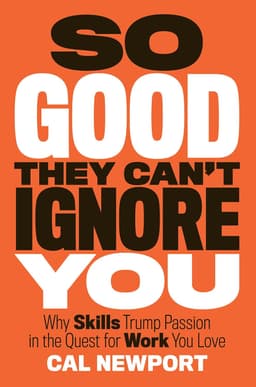
So Good They Can't Ignore You: Why Skills Trump Passion in the Quest for Work You Love
by Cal Newport
Get the book →Book links are affiliate links. We earn from qualifying purchases.
Author
Hosts
Transcript
This transcript was auto-generated by our recording software and may contain errors.
Carter (00:00)
There's a sugar high that comes with LLMs
Nathan Toups (00:01)
There really is.
Carter (00:02)
where you can just ship kind of like feature after feature.
Hey there, welcome to Book Overflows, the podcast for software engineers by software engineers, where every week we read one of the best technical books in the world in an effort to improve our craft. I'm Carter Morgan and I'm joined here as always by my co host Nathan Toops. How are you doing, Nathan?
Nathan Toups (00:22)
Doing great, everybody.
Carter (00:24)
Well, thanks for tuning in, everyone. Make sure to like, comment, subscribe, share the podcast with your friends and coworkers. You can join the Discord. All the links to do that should be in the episode description. our new schedule lineup is live. Is that is it's not live right now when we're recording, but it will be live by the time you're listening.
Nathan Toups (00:39)
It will
it's yeah, we're it's not live at this moment in time, but when you hear this, we will have a schedule up and up and running. And what's a big milestone to this is that we are using our public backlog. We had public voting on which books were most important to you. So if you join the Discord, you get a set amount of votes. I think it's either three or five that you get to pick. Once we select a book and it goes into our schedule, you get those votes back. And I'm actually using an event sourcing pattern to make this.
Carter (01:08)
Mm.
Nathan Toups (01:09)
really easy. It just counts the the votes that have not been promoted. So your entire vote history up and down actually is just like put into a a history that gets reconstructed. and so yeah, we're we're practicing what we preach over here.
Carter (01:24)
We
we've been all about event sourcing lately. Although I will point out that I was I did a pattern with notifications. I'm like, this is an event sourcing pattern. And the more I looked into it and rubber ducked with Claude, I I I was convinced not to do event sourcing. So we're not just like event sourcing everything, right? We're you know Yeah, we're we're
Nathan Toups (01:39)
Yeah. I'm not a we're not event source maxing over here.
Carter (01:45)
well we found out at work that I was like the number one token user of the month, but we think it's just because I had like an API key misconfigured.
They were like, hey, like look at Carter Go. And I'm like, I I promise I'm not doing anything weird. Like I'm just chatting with Claude. So I don't know. Maybe maybe maybe event sourcing requires a particular amount of tokens. Yeah.
Nathan Toups (01:56)
I don't know. I don't know. You've just got those really large context windows and Matt Pocock is gonna be upset with you.
Carter (02:05)
I know. I need to do a better job of compacting. Well, let's talk. we're gonna talk. This is adjacent to computer science, but not really. This is another Cal Newport book.
Nathan Toups (02:15)
PhD in
computer science, yeah.
Carter (02:16)
PhD
in computer science. You know, we'll start with his introduction actually before we get to the book. We have read one Cal Newport, Slow Productivity. I chose that as my number one favorite book of 2024. but this the Cal Newport, he is an associate professor of computer science at Georgetown University who writes for general audiences about the intersections of culture and technology. He is the author of eight books, including most recently, Slow Productivity, A World Without Email, Digital Minimalism, and Deep Work.
These titles include multiple New York Times bestsellers and have been published in over 40 languages. Newport is also a contributing writer for The New Yorker and the host of the Deep Questions podcast. And this book in particular, the little blurb we got is in an unorthodox approach. Georgetown University professor Call Newport debunks the long-held belief that follow your passion is good advice and sets out on a quest to discover the reality of how people end up loving their careers. So
Always good to read another good Cal Newport. I really, really enjoyed this book. I'm gonna get my full thoughts on it in just a sec. we're we're talking about the whole book today. we're gonna split it into two parts, but we had to go dark last week. And then we thought, you know what, this is this deserves a full episode for the entire book. Nathan, I really like this. Tell me what you thought.
Nathan Toups (03:29)
Yeah, so I've read a I've read several of Cal Newport's books, and I missed this one somehow. you know, just put a little perspective here. This one came out in September of twenty twelve. So I was in my professional career, I was even doing consulting and contract work at this point, running my own business. And I think it would have been such a nice book to read. I I'll also say that if you get into the path of like
feels like you you're doing something with your passion. I think we're I I know I'm really guilty of saying this advice to people, like, you should follow your passion. Let's figure out how to do this. And he makes a really good case as to why that's just complete hogwash. And I I've come around to agreeing. I think that I've put the cart before the horse. And that it while I do think that doing work that gets you excited and you know you want to to work on is there, you can't
pick that first and then figure out how to build a career around it. You he makes this really good argument that you actually you have to put all this work in at front and those turn into passions. Those passions turn into missions and these other kind of cool ideas.
Carter (04:37)
Yeah, it's it's interesting because you might think this is a book not about passion, but I actually don't think it is. I think it's more about like you're talking about the sequencing of passion and
Nathan Toups (04:52)
Yeah.
Carter (04:53)
how one develops it. And that's this is another one of those books that I wish I had read like 10 years ago. I made some mistakes in my early career. we talked about that when we read Software Engineer's Guidebook by George Auras.
And I think something that for a variety of reasons, when I first started out as a software engineer, I was not super into like the technology, which is weird. I had a I had a job at a company whose product I really liked. And so I liked being at that company because I really liked the product. but because I kind of liked the product so much, I kind of almost like always kept the technology at an arm's length. I don't know. I don't know why I was doing any of this. But anyhow,
Through a sequence of events, it became important to me to get really good at just like the pure technology programming side of the discipline. And then after that, I started to really develop a passion for, you know, the the craft of software engineering. And that's what this book is all about is this idea that people think, you you follow your passion. And then, you know, that's where your fulfilling career is to come from.
And he has we're gonna talk a lot about what makes a fulfilling career, but kind of one of the ideas that I just found so interesting is that passion comes from being really good at something. And you only get really good at something by practicing it a lot and investing in it in it, and especially early in your career. A lot of the things that make a good career, like autonomy and control, you're not gonna have early in your career. And so that's why so many young people find themselves frustrated.
But if instead you focus on just getting good at what you do, and you can do that early in your career, that's kind of what opens up the a lot of opportunities for a good, fascinating, fulfilling career. we're gonna talk in in depth about all of these ideas. but I I I guess maybe we can start from the beginning, which is kind of the the headline, the the jump out at you. This is the controversial take, which is he kind of divides the book up into four rules. And and rule number one.
Don't follow your passion, which I mean, I don't know. It's it's it's contrarian advice and and certainly was at the time this book was published.
Nathan Toups (07:08)
Yeah, so it's one of those things. I I think there were some other books that I've looked at in the past. I'm trying to remember. I think it was one of the there was a CEO's book that I read, and he was making this argument that you should always get like career advice from somebody who's one step ahead of you, not someone who's had their successful exit down the road. Right.
Carter (07:30)
Right, right.
Nathan Toups (07:31)
Unless your next step is a successful exit, for instance, you shouldn't be taking advice from like
Steve Jobs. And I he actually brings this up in chapter one. That Steve Jobs has his really famous speech. He talks about following your passion. And that it's really people who've had this amazing career paths and end up obviously have followed their passion and done these things undervalue all of the like very boring, sort of circumstantial, opportunistic sort of things that come up, right? Like I think if you'd asked a five-year-old Steve Jobs.
What was he going to be famous and known for? You know, building an incredibly successful computer company like probably wouldn't have been that, right? His passion
Carter (08:12)
Right.
Nathan Toups (08:13)
became computers, his passion became normal human beings who like design aesthetic, using a computer and unlocking all of the potential that computers can have, right? Like if that's if you think of sort of like his mission, right? What is Apple? Like what is Apple for creative professionals, for musicians, for architects?
you know, the sort of core audience that originally Apple was, before they were sort of a consumer device company. you know, and so if he goes and gives a speech of like, hey, go follow your passion and you know, throw caution to the wind, that's really not what he did, right? And and I think that's what he kind of makes this argument in this f first rule, which is
If you just decide, hey, I'm working in accounting, I don't like it. I really want to be a you know, a farmer and I'm just gonna like sell everything and go buy some land and like figure out how to farm, and that's where my passion is, it it's most likely gonna be disastrous, right? You you're not really prepared, you don't know how hard it is. you you're falling in love with this sort of fantasy of what an authentic existence is, and that it it really can like throw you off into sort of a
A spiral of unhappiness trying to find your passion.
Carter (09:27)
Right. Well, and and he he points out they they do surveys about like cause because there's the idea that like, we all have like pre-existing passions baked into us. And and that's what you you need. You just need to discover what that is, and then you that then you'll find your calling in life. So it's like they've done surveys. It's like most people don't have a passion. And if they do have a passion, it's like sports or me
consuming media,
Nathan Toups (09:53)
Right.
Carter (09:54)
which like for what it's worth, I mean I love, you know, there are things I love. Like I love BYU football. I love theme parks, right? And and I'll point out, you know, sometimes when I've tried to like take these passions and turn them into like something more than just a hobby, like sometimes it turns out really stressful. Right. And and you know, I think I there'd be a recipe for making myself both miserable and also very unsuccessful by saying like I'm gonna quit my software engineering job.
And I'm gonna become a BYU sports reporter. and you
Nathan Toups (10:26)
It's
Carter (10:26)
know, yeah.
Nathan Toups (10:27)
did did you did did you watch Arrested Development? Are you a fan? yeah, we have we we've we've because we've talked about all kinds of this is yeah Wayne Jarvis. This is Tobias Fuque, right? Tobias Fuquet is is a you know a
Carter (10:30)
I did I yeah, I love arrested development. Yeah. Wayne Jarvis, he's a professional. yeah, yeah.
Nathan Toups (10:42)
Ivy League therapist who's
Carter (10:46)
Yes.
Nathan Toups (10:47)
completely delusional that he wants to become an actor, right? And so therefore
Carter (10:49)
Yeah, right.
Nathan Toups (10:50)
spends the entire rest of the show never working, you know.
Sort of halfway pursuing something. and it's just this running joke. But I think he literally is the don't follow your passion sort of personified. Like how disastrous
Carter (11:02)
Yeah, right.
Nathan Toups (11:03)
it is. because yeah, and it's yeah.
Carter (11:05)
Could have been a very successful analyst.
Nathan Toups (11:07)
gosh. Yeah, an analysis and a therapist.
Carter (11:11)
Yeah.
Nathan Toups (11:13)
but yeah, so I mean it's so I think that that's the the the sort of trap. And and again, the book has a strong opener, and I it was a little visceral to me because I
I of the two of us, I'm definitely on the more like woo-woo end of stuff where, you
Carter (11:24)
Right, right.
Nathan Toups (11:25)
know, I'm like chase your bliss and this kind of thing. And it's a guy who decides that he wants to be sort of a Zen monk and he wants to go off to this monastery and he's gonna, you know, this is the meaning of life. Like he's gonna do this. And of course he goes through this whole journey and he gets to the end of it and realizes, like, I didn't need to do any of this, right? I I I it it
Carter (11:45)
Right, right.
Nathan Toups (11:45)
hasn't led to all this this dream life that I I thought it would be. He kept
Thinking about some future state where, when I attain enlightenment or when I do these things, then I'll really have purpose. I'll really understand what's going on. And he makes a very good argument and it kind of ties you into the other four or the other three rules that are in this book that, hey, there's something to this. Obviously, we all want to have meaning in our lives, but
Carter (12:10)
Right, right.
Nathan Toups (12:11)
but filling out a questionnaire by a bunch of, you know, and reading a bunch of self-help books on like how to get.
A job you're passionate about have the disastrously wrong. That people are like more unsatisfied
Carter (12:24)
Right.
Nathan Toups (12:25)
than ever. And so maybe there's is another approach. And so he, you know, the whole point of this book is and I get there's some actually the very, very end of the audio book, he goes back and talks about like what was the environment that he wrote this in. And he was just finishing up his PhD work. He was about to, he was looking for applying for jobs to become a tenured professor.
And he had this gap of time and this thing, these ideas that had come up in his blog. And he was like, I'm gonna reach out to people who are doing like really cool, weird jobs and figuring out like, did they chase a passion or what did they do? Is there a pattern here? And among and out of this emerge these four rules. And I don't know, it's a very it's the most like software engineer approach, computer science y academic
Carter (13:08)
Yeah.
Nathan Toups (13:10)
approach. You're like, I have a hypothesis.
I'm gonna test this hypothesis. I'm gonna get these samples. I'm gonna see if there's a pattern that emerges, right? and it and it's written as a pop book, right? Like you don't have to this you could give this book to anyone who's floundering, or maybe
Carter (13:25)
Right.
Nathan Toups (13:26)
you are worried that maybe they're trying to be Tobias Fuque and you maybe need to talk them off the ledge a little bit. but it's also like I think any of us can get sloppy. And I I'll tell you, like, I kind of have danced around these four rules, and I think that like
I feel I don't I feel like I have a pretty interesting sort of sort of niche sort of life I got to build for myself. But w have I fired on all cylinders and have I made it to something that's exceptional? No. And I think it's because I've gotten really sloppy, especially we'll get into it, like rule three and four is where I've been super sloppy, right? And this book gives you this sort of like framework for being intentional with with with this.
Carter (14:08)
Right. I I saw this interest there was some interesting discussion on Twitter where someone's saying, like, there's this whole class of jobs that you don't realize are designed only to be held by people with some sort of wealthy patronage behind them. Like they're married to a high earner or they they come from a trust fund. And so you'll look at the job description and be like, fifty thousand dollars for a museum curator in New York City. Like, what are you how does anyone live off that? And the answer is like, you don't. You,
Nathan Toups (14:35)
Right.
Carter (14:36)
you know, you you have
someone else funding you, but there are kids or or or young adults entering the workforce who don't understand that. And so if you think, well, my passion is to be a fashion columnist or something like that, you might wind up in these positions where you're just kind of perpetually confused. Like, why am I paid so low? right.
Nathan Toups (14:55)
there there
actually I love that it gets a little political, but I think it's okay. We're gonna do this.
Carter (15:00)
let's let's hear it.
Nathan Toups (15:02)
which is that there's a reason in the United States, especially the major media publications don't really criticize permanent wealth. And one of the reasons
Carter (15:10)
Right, right.
Nathan Toups (15:11)
is most of the journalists working at New York Times and Washington Post are many of them are trust fund babies, right? Like they
Carter (15:19)
Right, right.
Nathan Toups (15:19)
are able, they they are from
a place in which they either have some sort of endowment or they have, you know, some parents helping them out a good bit. And it's kind of hard to r criticize that class of society if it actually is what helps make ends meet. Right. And so
Carter (15:36)
Right.
Nathan Toups (15:37)
or just like it's it, you know, CNN isn't going to criticize, you know, a pharmaceutical company or a car company because it's literally every ad that's on there. Right. It's like if they went exactly. So I mean like
Carter (15:46)
Right, right. Well they're owned by Warner Bros, right? Like
Nathan Toups (15:50)
you can see where these sort of
These these these blind spots come up where you're like, how do you get that job? And you're like, Well, there's a very particular path amongst a very particular group of people. And if you don't criticize these things, then you're good. You can go criticize everything else, but you can't there's these untouchable topics that we don't you know, we don't
Carter (16:06)
Well, and and a
lot of those jobs you might think of as like passion jobs. Like I'm gonna go into this because I'm
Nathan Toups (16:10)
Mm-hmm.
Carter (16:10)
passionate, right? Are kind of wind up in that group of like they they don't they don't pay a ton. And we're gonna talk a bit about kind of how that relates to what he calls like career capital. but
Nathan Toups (16:21)
yeah.
Carter (16:21)
one thing I really, really like about this book is I I have actually th this advice has been floating around in my head for quite a while because I I used to read this blog called Ask a Manager, and like if you can believe it, I read it like in high school for some reason.
which is all it's just like a a manager and and you know, people write in, it's like a c an advice column. They'll they'll write in with questions about situations at work and she'll respond. And you know, I I like her. She I think for for one reason or another, I I think her advice started to diminish in quality in recent years. But what when I was in mid or high school and you know, it during college and my early career, I I I thought she had really good advice. But anyhow, one one thing she would kind of say a lot is is she would talk about this this idea of like, don't follow your passion.
For kind of the same reasons we're talking about here, that like a lot of the shops that are passion jobs don't pay a ton and that's gonna lead you to financial insecurity. But I I I I wish the the way she always phrases, like you need to find a job that that pays you well and provides a good degree of autonomy and authority. But it was always kind of like pitched as like, yeah, work is just work and I I don't know, like do something that just gives you money. But what I love about this book is I'm actually a big believer.
That like if you can find work that gives you meaning and purpose or or you know, just kind of like gives you energy when doing it. Like I think that's a really, really fortunate position to be in. And, you know, I find myself with just my current job, and this has not been every job, but like I will often I'm very strict that, you know, I leave work around five thirty, five forty-five. I live ten minutes from my work. So I'm I'm home for dinner. I'm I'm with the kids until eight o'clock. We we play together and do bedtime and all of that. But then the kids go down.
And the night is mine again, right? And I will often log back in to work just because it sounds like the most fun thing I could be doing. Like it sounds more fun than watching TV or playing a video game. and and I know not everyone's in that position, but like I I've just had to give myself permission to not feel bad about that. I'm like, that's a really fortunate position to be in in your life. If if your work is giving you actual meaningful joy.
And that's kind of what Cal Newport's talking about here is like I I I just had it drilled in my head too much. Like work is work. You should just do it to put food on the table and then after that forget about it and move on. When I think I had should have been aiming for jobs more that I could find real joy and autonomy and and and meaning out of. But the question is kind of how do you get there? Because you
Nathan Toups (18:56)
Right.
Carter (18:57)
think you're gonna find that by again going and being a theme park vlog.
But the answer is you don't. And and that's kind of the whole point of like rule number two, which is this idea of be so good they can't ignore you, which is I I think super fascinating.
Nathan Toups (19:13)
Yeah, this one's all about craftsmanship. And I
Carter (19:18)
Right.
Nathan Toups (19:18)
know that that's kind of become a like a sort of like I some in some circles, the craftsmanship they guess sort of this like toxic meritocracy critique that comes up, but I don't think it's in that sense of the word. I think what really this is is that there's a joy to working really hard on a set of things.
That you're not sure what the outcome's gonna be, but you know that the the effort that you're putting into it is itself a reward. And that obviously most things in life aren't that. But if you're searching for something, that's the piece. It's like, I I actually I enjoy playing the guitar, right? And he actually talks about this a bit of the difference between somebody who actually gets to be pretty good at something and somebody who becomes exceptional at something. And you know, they even
Talk about like the 10,000 hours thing, which is, you know, often quoted from Malcolm Gladwell. but that it's not even even for everyone, right? That how you use this time is fundamentally different between somebody who's like proficient, you can become proficient. And I would say like that's sort of like the the terminal level for a lot of folks, or somebody who's absolutely exceptional.
And it's it's it's not just about putting in the hours. It's about the way that you practice, it's about the way that you grow. And I think if you're fortunate enough to have found something where you get that feedback loop, it really doesn't feel fair. It actually feels like you get to play the whole time. even if what you're playing through is actually pretty uncomfortable. And he and he talks about this, right? Most people don't become exceptional at something.
because you actually have to do uncomfortable things on a very regular basis over a long period of time, right?
Carter (21:06)
Yeah.
He says like like a musician, like it it's fun and easy to kind of play scales, right? Like there's that
Nathan Toups (21:11)
Mm-hmm.
Carter (21:12)
kind of like and we talked about that in software engineering, this idea of like do you 10 years of experience or do you have one year of experience 10 times? Because you need to push yourself. He he says he likes the word stretch, right? Because a stretch, well, it can feel it feels good after. Like a stretch itself can be uncomfortable. And so yeah, it is like he says very few people actually do that in their
in in their careers, their professions, their craftsmanship.
Nathan Toups (21:41)
Yeah, and it one there's a couple of like really kind of cool stories that came out of this. And I think Yeah, I think that this it was in this section of of the book. We we he gets into chess because chess is actually really measurable. And he talks about how like you can spend your ten thousand hours of you know, y t to get to like a pretty high, you know, chess level. And the leveling system is, you know, widely accepted as a way of showing and demonstrating your abilities in chess.
In that you can get a pretty good level by just playing chess against people that are slightly better than
Carter (22:15)
Right.
Nathan Toups (22:15)
you, slightly worse than you, and just spending time doing this. Right. And I think that's how most people who are learning chess they might learn a few little tactics and techniques, but then most of the they're like on chess.com and just playing chess games. But the folks who become exceptional study chess, right? They they have a coach, they read so many books.
And understand the deeper strategies and they're constantly pushing themselves on the theory. And that part is uncomfortable, right? You really have to sit and think and work through stuff. And of course they're playing games of chess too. but it's that higher impact, finding those like higher impact leverages to to what how you're allocating your time really differentiates someone who becomes so good they can't ignore you versus somebody who's again pretty good, right? And I I
I will tell you that most things in our lives, we're probably just going to aim to be pretty good, right? That it I'm I'm
Carter (23:11)
Right.
Nathan Toups (23:11)
kind of those aren't my areas of focus. But if I do have an area of focus, it actually becomes really important that you try to adopt these high leverage activities that make you exceptional at it.
Carter (23:27)
So what do you think that is in software engineering?
Nathan Toups (23:31)
Ooh. That's a great question. I think I think it depends on what you're focused on, right? If you're more of a product focused engineer, it would make a lot of sense to actually like really study how excellent products are made, right? So not just building
Carter (23:49)
Right, right.
Nathan Toups (23:50)
software or like reading a case study of how they built a thing, but actually really understanding the process of what a product is. Like, you know, really understanding.
Hey, the first version of something you ship, you should be embarrassed of. That, well, how do you do proper feedback loops? Like the the deeper, the the craftsmanship, you know, read like Tony Fidel's book is so eye-opening, right? That is a deeper study of this guy's shipped obviously good products. I actually he he talks about this too. What it is it to what's the purpose of getting crap craftsmanship in in and pushing these things? It's because
It's because once you start producing great work, which is the purpose, right? If if I'm excellent in my craft, I can start producing great work. And I want to get what's called career capital. And he kind of builds this huge thesis around it, which is I want more control over my creativity. I want more control over the impact that I make on the work that I'm doing. And I want more control over my life. Right. That folks who become exceptional at this figure out how to say no to the stuff that doesn't matter and say yes to the stuff that does matter.
and again, this is an area where I've been sloppy over the years. I I'm I if I don't stop myself, I'm a natural people pleaser and I will say yes and overextend myself.
Carter (25:07)
Mm-hmm.
Nathan Toups (25:07)
So I have to practice saying no. And in and it's really because I'm doing a disservice to the things I've worked so hard for, if I don't. Right? If I'm exceptional at doing software architecture work, that's the the area that I really I really care about, you know.
distributed systems and correctness or something, right? Like that's an area of you know, if somebody thinks like, we're really like spinning our wheels, who do we talk to to get this problem solved? let's go talk to Nathan, right? Like that's if
Carter (25:36)
Right, right.
Nathan Toups (25:37)
you're excellent in your craft, that's the reputation you start building. And I'm so and I'm too busy running around, you know, writing very basic unit tests and going to 15 meetings a week, I'm doing a disservice to myself and to the people who want to engage with me. Right.
Carter (25:53)
I've been feeling that with LLMs. just like this idea of like snacking and
Nathan Toups (25:59)
Yes.
Carter (26:01)
there's a sugar high. There's a sugar high that comes with LLMs
Nathan Toups (26:03)
There really is.
Carter (26:04)
where you can just ship kind of like feature after feature.
I had this, we we redid our whole inbox messaging service. And I was very proud of like that whole process. And there was a lot of architecture work that went into that and like sequencing and backfilling the old messages and like making sure all of that worked, and so.
That felt like good. This is real deal engineering. Shipped it. But then I had like two or three days where I was just cause cause what we also did is since we moved from native iOS Swift to React Native, we get over the air updates so we can ship things to our users without having to go through the app store review. And I was just getting the sugar high from seeing like, like I'm gonna add a new typing indicator icon, right? And and ship that and then like seven minutes later, it's on my phone. Look at that. Or like.
like I'm gonna make the spacing bigger between the bubbles and and all sorts of things that like before, like pre-LLM would have been so annoying to figure out. But instead, now I'm like, you know what? Like I like how iMessage does it, where like messages will kind of get grouped in bubbles. And so, like, even if it's the same messages from one person, like they send 20 messages in a row, if if they came in three different chunks, there'll be different spacing between them. And like pre-LLM, I'm like, I'm not gonna figure this out. And now it's a prompt.
And like and I,
Nathan Toups (27:22)
Right.
Carter (27:22)
you know, and I just figured it out. I'm like, this is great. And I'm just getting this real sugar high from doing it. And I just had to I had to kind of stop and tell myself, I'm like, I'm not saying that these aren't nice little quality of life improvements, but like, come on, is this really moving the needle? Is this high leverage work? Is it like, you know, y
Nathan Toups (27:36)
Yeah, it's the it
it it it's my personal scope creep where I'm like, here's
Carter (27:41)
Yeah, right, right.
Nathan Toups (27:42)
the thing I'm guilty of. I have some MVP that I'm showing I want a proof of concept or MVP that I'm showing somebody and I'm like, yeah, well I was gonna do that after the MVP, but it's so easy. I could just add this one thing in. The demo's gonna be so much
Carter (27:52)
Yep, yeah.
Nathan Toups (27:53)
better. And then all of a sudden I've had added like five or six features and I'm like, did I need any or I get the worst is I've added the five or six features, but now I'm tangled up. Now I my MVP is like, it's not what I wanted.
like I really regret. or I stay up late because I'm having kind of fun doing it and it's the sugar high and it is added. Did I really need all that stuff? Yeah. Like yeah.
Carter (28:17)
Right. Wait,
we had this with w Claude has just been writing way too many comments in our code base. Like and it and it I I and we've talked about this on the podcast before, which is like Claude acts like you're never in the loop. And so it wants to leave all these comments because it's just gonna present this kind of finished artifact to you. But frequently I am in the loop with Claude. And also, even in like I I don't want those comments to live in the code base forever. Like
Nathan Toups (28:40)
Nope.
Carter (28:41)
put on the PR description or something. And so we had tried to put in like the Claude MD file, like
Good instructions on how to write comments and it just it wasn't working. And so yesterday I created like this little game, but like that I thought, like, well, maybe something we'll do is like I had Cloud create this little game. It's like a Tinder game, like a swipe left, slight, swipe right, where it would it it gathered every comment in our code base along with like the context around it, you know, like the the five lines above and the five lines below. And then if you swiped left, it would stick it in a JSON file, which afterwards you could run you because we'd say this is not a helpful comment. We could just run a script that would delete them all.
From the code base. I'm like, well, maybe maybe we'll just like play this game every week as an engineering team. And then we'll and then you could also like the good comments will stick in like a context file and they could like understand. But there are 32,000 comments. We're like, we're not going through
Nathan Toups (29:29)
wow.
Carter (29:29)
all of these. Like, what's going on? And so we just decided we we sanctioned off some sections of the code bases. Like the comments in these files are probably good. And we just nuked the comments in every other file. And then I wrote a script that runs on every Claude, like on one of the lifecycle hooks of Claude that just
strips all the comments out of its input before it can even write anything. So we're just like, it's writing so many comments that it's not even helpful anymore. And then what was funny
Nathan Toups (29:54)
Yeah.
Carter (29:55)
is we we stuck that in the Clot MD and basically said like any comment you write is going to be stripped. So don't bother. And then then it quit writing comments like before even the stripping happens.
Nathan Toups (30:06)
So that's interesting.
So I I've taken a slightly different approach with this because I I like the John Osterhout style of comment writing, which is that and this also goes if you look into the like the Go standard library, which I think are exceptional comments. There's a they do inline documentation. Like they do inline documentation. That's also part of the commenting system. It's a really the discipline again, and in the type of stuff that I write typically is
A declared description. Imagine I'm gonna generate some you know web
Carter (30:40)
Right, right.
Nathan Toups (30:40)
page that describes my code and that the comments are sort of like telling a person what the purpose of this function is, maybe what the inputs
Carter (30:49)
totally.
Nathan Toups (30:50)
are, what the outputs are, but there's a very s very strict criteria, which is this is what it should be for. Like if I need additional context, if I have a function called add and says x and y, takes an integer in the in an integer is the output.
The comment really should not the you probably don't even need a comment, but if you need it just for the documentation, it should literally be like add takes two integers and returns an integer, right? It could that simple. I I don't think it needs to like I I've absolutely have forbidden to give me this. I call them narrative comments. I have narrative comments
Carter (31:25)
Right.
Nathan Toups (31:26)
are forbidden. And I have a skill that all it does is do comment, it does a comment sort of analysis. So I I
Carter (31:33)
Right, right.
Nathan Toups (31:34)
And and it basically says, do we have the criteria of is it describing the intended behavior of this function? Does it actually work as documentation? Is it contributing something so that if somebody tried to change this function and it contradicts what the comment is and therefore it should be a violation, right? Like that's the kind of and again it has nothing to do with large language models. I have the same criteria for like any software engineer on my team. anything above that, I I really don't want, you know, like
I'm in the, I'm in a I'm in the camp of like, I'm okay with more verbose comments if it lets if somebody could read a if somebody could read my source code and go, wow, this really helps me understand why we wrote this library, right? I'm okay with that. It doesn't matter. It could be like it's actually like a 10-line function, but it has like a 20-line comment. I'm okay with that if that 10-line function is actually really important.
And you really need to understand why we wrote it this way or why the code's structured this way. That's not common, but it could be that we need to like to do that. and so I try to have a set of principles, then it goes off. But I will tell you, I completely agree. Claude left to its own devices will be like, you know, comment about like why it fixed it this way with a link back to the PR and like Yeah, exactly.
Carter (32:52)
Yes. It'll link to tickets. I'm like, no.
Nathan Toups (32:55)
And I'm like, I don't want all of that in the code base. That is literally what commit history is for, right? It is re
I can go back and like use git and look at the line, go to get blame or go to the the the logs and understand why the change was made. I mean there's a dimension there's a temporal nature to get that gives us that. We don't need that in the code.
Carter (33:16)
Well and that's, you know, I I think that's I I like your approach too. And I'm and I'm like, well, maybe we could have had like a skill that runs on at the end of kind of every session and it kind of audits the comments. And I think that would be good too. We had just we were just like, Yeah, let's just try this, right? 'Cause like if if we if
Nathan Toups (33:34)
yeah.
Carter (33:35)
we wind up and hate it, then then we'll get rid of it. because and what we did decide is I said, like, why don't we just run it as like a commit hook and just trip comments? And and one of our engineers like, No, like we should be able to write comments.
you know, and but he said, like when we're reviewing PRs,
Nathan Toups (33:47)
Yeah, which is also true. Yeah.
Carter (33:49)
if we are looking at something and we have questions like, why is this happening this way? Like, that's a sign that we need to go back into the code base and write a comment and say, you know, like I mean I I I I wish I got voted down on this one, but we I I wanted to forbid forbid all clawed in in PRs. Like we we said.
Claude you cannot use Claude to respond to comments on PRs, but I I wanted to get rid of PR descriptions too. I was just like, I don't find any of the AI generated descriptions helpful with Claude.
Nathan Toups (34:23)
So I will I will I'm gonna I'm gonna pitch something for a second. I actually have I'm shamelessly stealing some of this ideas from from Matt Pocock, who has like the best one of the best skills public repos out there. It's I think it's a couple hundred thousand stars at this point on GitHub. mine has like, you know, three because it's an audience of me and a couple of friends.
Carter (34:44)
Yeah.
Nathan Toups (34:45)
But I'm I've made a skill called Dry Pros, and Dry Pros
Carter (34:50)
Okay.
Nathan Toups (34:51)
is literally
I don't want all this fancy BS in here. I l I I
Carter (34:55)
Right, right.
Nathan Toups (34:56)
want to have a I don't want to have a personal voice. I want you to back things with research and facts. I want this to be like it's it's very sort of I I use it for writing documentation where I want to make sure that the stuff I'm writing and typically what I'll do is I'll start with something and then I'll get extra context and insights, you know, generated. But typically what I want is a third of what's written.
I don't like all of the BS
Carter (35:23)
Right, right.
Nathan Toups (35:24)
stuff that's in there. and I want a dry explanation of a a set of code or something. And then I'll go in and like, you know, fix errors and things like that. But I've noticed that if I take all the personality out of Claude, it's so much nicer. Like I don't need you to give me this, you know, suspenseful narrative of what I just wrote. And I'm just like, no, I, you know, I need to say that this is fixed this.
edge case in the state machine, and now we actually have deterministic tests that cover all state changes. And you know, like I that's if I go back six months from now and I don't want to be like, and then we did state changes, and we were wrong. And there were an edge case that sometimes could hit us when we're not looking. And you're like, I don't want any of this in my freaking code. Like, why did you this is
Carter (36:11)
Yeah, yeah, right.
Nathan Toups (36:14)
not, you know, this is not some like suspense novel. I just need you to be like, tell me the thing.
Tell me the thing that I have.
Carter (36:20)
I I need to
I need to put in like my personal Claude MD on my computer, like just like after a session finishes or whatever, and we're talking, and it spits out like nine paragraphs. And and like I I have to like skim it and just be like, What is going on here? I'm just like there I there's a more interesting discourse on Twitter where someone's basically saying, like, maybe this is just what it's like to talk to a super intelligence, and we who have
Typically been viewed as the smarter people are now talking to someone much more intelligent than us. And someone said, like, no, it's the opposite. Like the sign of a of an intelligent individual is to the to be able to explain concepts simply and and the fact that Claude just shoves all this jargon in there, like now, but
Nathan Toups (37:00)
It again, yeah,
it's it's just it's trying to guess the tokens that you're gonna want to read. And if you're just kind of dialing it in and this looks kind of I'll perfect example. My daughter's in a little school. I'm gonna I'm gonna shamelessly call this out because it drives me nuts. The principal will write these AI slop responses to things sometimes. And I'm
Carter (37:23)
Right, right.
Nathan Toups (37:24)
just like, I'm not even gonna read your seven-page AI
Carter (37:27)
Right.
Nathan Toups (37:27)
slop.
nothing. You know, i if this was important enough to send out, you should have written it, first of all. And it should be like short and actionable. Right. I'm not gonna read seven pages of like effective communication theater coming out of the
Carter (37:42)
Right, right.
Nathan Toups (37:43)
other side.
Carter (37:44)
Well and I'll I'll point out this is the magic of book overflow. Where else can you come and get a discussion about Cal Newport's Be So Good They Can't Ignore You that devolves into a a tirade on on comments. Yeah, exactly, right? Yeah. Give this advice. I'm just gonna
Nathan Toups (37:54)
So bad I want to ignore you, right? So this is this this is this is where I really do think the
AI slop is so bad, I will ignore you, right? Like it's like and
Carter (38:03)
Absolutely.
Nathan Toups (38:04)
are we gonna get into a world again already, or are we just gonna talk past each other where my AI slop's gonna talk to your AI slop? Like, I don't want to read your code review. Okay, well, I'm gonna get my AI agent to read your code review and then give you 19 paragraphs about why this thing was wrong, five of which are wild goose chases that don't matter.
And then your AI agent's gonna be like, you're absolutely correct. I should fix that. You know, you know, like it's just ridiculous.
Carter (38:28)
I started sending people at work. Have you seen it? It's like the meme. It's like this troll like holding like a beer. But like it's from like this old ad. But people do it on Twitter when someone like vague posts. It's like, what's the matter, vague boy? Afraid you might say something. And I I do I send the meme to people, but with with meat proxy. It's like when when they just clearly send me like claw-generated like slack stuff, like what's the matter, meet proxy? Afraid you might think something. I'm just like, don't just send
Nathan Toups (38:54)
Right.
Carter (38:54)
me like, you know.
AI slop over Slack. but anyhow, I think this actually kind of gets back to this idea of what he calls career capital, which is
Nathan Toups (39:03)
I yeah, yes.
Carter (39:05)
so it's like, well, how do you be so good you can't ignore you? Because he says, okay, basically, look, great work. When we talk about, he says, okay, so if passion isn't gonna make your life make your job fulfilling, right? What does make your job fulfilling? What does make your job a great job? And he says, creativity, impact, and control. Like, do you get to solve interesting problems?
Do those interesting problems have meaningful impact on your organization or the world? And do you have a lot of control over how you tackle these things? Like that makes a job great. But he says these traits are rare and valuable. And so just basic supply and demand, in order to acquire a rare and valuable job, you must offer something rare and valuable in return, which are skills. And that's what he talks about this idea of career capital, which is how do you build up
The skills necessary are necessary to become rare and valuable in the job market. and and that's what this idea of like the craftsman gets in, because he says, like, look, you you come out of school, you're fresh out of school, you're you're not gonna have creativity, impact, and control. How could you? Because you don't have anything rare and valuable to offer the world. And too many people, I was one of them, kind of start to feel this is like an injustice of how the world works.
But instead, what you should do is you should lock in and get good. You should, you know, you should where you can find fulfillment and joy in the early stage of your career is on being a craftsman and on honing those skills through deliberate practice, like we talk about. He has these really interesting examples of talks about this TV writer, Alex Berger, and how he kind of went on to become a very good, accomplished writer in Hollywood.
But Alex Berger would deliberately practice. He would set aside hours of his week just to practice writing scripts in his own spare time. And he also talks about this really interesting idea of like in you have to figure out in your career, is it an auction market or a winner-take-all market in terms of career capital, which is this idea that like some careers, I'd actually argue software engineering is one of them. There is a diverse amount of skills you can build.
All and and a combination of them can be valuable. he says in other skill markets though, there's only one skill that matters. He says that TV writing is one of them. All that matters is the quality of your writing. And he talks about blog writing too. He says he'll talk to people who'll say, like, Well, I'm really working on SEO or like site design or whatever. He says, No, all that matters with blog posts is are you writing something engaging for the audience? I'd argue
Nathan Toups (41:48)
Right.
Carter (41:48)
podcasting is like that too, where you know, we we were talking about this before.
Like we're we're we're pleased with the growth of the podcast and how many listeners we have, but we w we'd like it to be bigger. And podcasting is a winner-take all. Like all that matters is the quality of the content you're putting out. anyhow, I I thought that was a really fascinating thing, but I do think software engineering falls on the other side of that, which is I think it is a an auction market. I think you can have engineers who are really, really good at like just systems level thinking and
Nathan Toups (42:20)
Yeah.
Carter (42:20)
and
I don't know, like architecting
Nathan Toups (42:21)
Yeah. It
Carter (42:22)
a system versus industries who have really great product thinking. Right.
Nathan Toups (42:26)
Exactly. I
it it is. You know, if you think about auction markets, I think he kind of talks about the fact that unique skill combinations win, right? And I I
Carter (42:33)
Right. Yeah.
Nathan Toups (42:34)
was thinking about what was it that you know, we I think it was last week or the week before we were talking about like what was the first sort of professional programming job you had? But it I really did a disservice because I was actually like tinkering with stuff long before this, and this is gonna date me. Have you ever heard of the link so have you ever heard of the Linksys N SLU two?
Do you do you know what this device is? You you you probably wouldn't because
Carter (42:57)
no. I don't even know what those words are.
Nathan Toups (42:59)
you were you were a child when this
Carter (43:01)
Yes, yeah.
Nathan Toups (43:03)
so Linksys made this little print server. It was this little like print server so you could take a USB printer and put it on your network. That was like the whole point of it.
Carter (43:12)
Okay.
Nathan Toups (43:12)
But but somebody figured out how to somebody figured out how to root the root it so that you could put your your in own Linux distribution on it.
And then you could run it as a NAS, you could run any Linux software on top of it. And it was this tiny little thing. This was my first like deep dive into Linux servers, actually. I wanted to do something that wasn't on the device. And I like learned how to I learned how to root it and like write the custom firmware and start using Linux as a server. And I just I still remember that I spent hours.
Having to learn about what Linux was, having to learn about the Unix philosophy. This was like my first interaction with these ideas, mostly so I could unlock something that was like important to me, which is like, it wasn't, it wasn't because I was like, I'm gonna make a career out of this. I was technically oriented. And I think at the time I was even take maybe doing the A certification because I was interested in how computers worked. And I wanted to get working into computers a bit more. But
From a craftsmanship standpoint, I read I look back and I go, Well, I dropped my laptop. I think there's like a backstory to this. I dropped my laptop, which is like an old gateway laptop, and it had a hard drive on it, and the spinning disk hard drive broke. It's just very common. this is a cheaper laptop, so I don't think it had like what Apple has where it'll put itself away if it feels drop detection. And I didn't have any money. I mean, like we were poor college students, and so I found like the cheapest hard drive I could.
And I had a Linux distro. I like found an Ubuntu CD that was at the library. I'm pretty sure. That was like a common thing you would see. These little like sort of Ubuntu ev evangelicals would, you know, put these at the library and stuff. And so that was like I had Linux out of necessity. And then I had this NSLE2. Or they called it a slug. That was like a the kind of term for it. And I that was the beginning of my journey of of craftsmanship, of like I realized I liked tinkering.
I liked learning how systems functioned. I would do what would consider most people would consider boring work. Like who in their spare time, in their right mind, would like try to figure out why your Linux distro wasn't working all the time, which is like what using Linux was for a long time, at least for beginners. but I learned so much about networks. I learned so much about all of these things. And now I look back and go, hey, I was getting, I was developing a craft at that point.
Right. I wasn't even making any money at it. I didn't, I knew that
Carter (45:47)
Right.
Nathan Toups (45:47)
if I could spend time doing this kind of stuff, troubleshooting, problem solving, thinking in like systems, that that was like that was a good thing for me. Like I felt good. I and then I realized, I'm valuable to other people. And I think that was one of the that's the big arguments here is that if you develop skills that are rare and you develop skills that are valuable to other people, like so he he argues that the craftsman mindship is.
Focus on the value you produce. And that the passion mindset is that you focus on the value that your job offers you. Right. maybe the prestige or these other things. if I have this stuff, then I'm gonna sound awesome at a cocktail party, or you know, people will be jealous that I have this job and you don't. Where anybody who's actually doing real exceptional stuff, it's completely the opposite, right? There it yeah.
Carter (46:37)
And he he took
yeah, right. Well, he talks about the importance too of choosing to to get good at something that people are gonna pay you for, right? Like and and we're we're not talking about that too much right now because we're software engineers. We're encouraging you to get good at software engineering, which people will obviously pay you for. But I kind of like to think about like I just think this idea that like being good at something is fun, right? Like I just imagine, like if I woke up tomorrow and was the world's best unicyclist, wouldn't that be sick? That wouldn't like, you know, meaningfully change my life, but like that'd be awesome.
and I'd feel really proud of that. And and I think just this idea that, like, yeah, to be good at anything is a very cool experience. But like you're not gonna get there unless you practice. Like that's what Steve Steve Martin talks about it playing the banjo. I almost called him Steve Banjo. Steve Martin is good at the banjo. And someone asked him, like, how did you get good at the banjo? He's like, Well, he's like, I figured anyone who's played the banjo for 40 years is pretty good at it.
And if I just kept practicing and and never quit playing, then eventually I'd have played for 40 years, right? And obviously like there you have to have deliberate practice in there. But even then, if you if you weren't really stretching yourself, like he he's right, like just doing something for 40 years, like you'd you'd be pretty good at it. so yeah, I I don't know. I just that idea is just kind of was I think it's crystallized something I've thought for a long time, which is like it's just fun to be good at something and and you only get good at something by, you know, actually practicing it.
Nathan Toups (48:02)
Yeah, I this one's really good. So the what I loved about so we spent a lot of time. Rule two actually makes sense that we've spent a lot of time in here. Most of the book is in rule two, by the way. Like I
Carter (48:12)
Right, right.
Nathan Toups (48:13)
I think of the four plus hour audiobook, like an hour and a half of it is this one. So I think it it makes sense. And again, it builds the foundation of first he breaks on this idea that hey, following your passion first. And again, I I'll put it this way I went to college. I almost failed out as a physics student because I was a bad student.
I switched to theater because practically I knew I could make really good grades and get my scholarship back. and then I just but the thing is I actually worked at being an exceptional student. That was the main thing I was working at. I was like, okay, if I screw up one more semester, I'm done. Like I I will not have free college any longer. It was an incredible motivator. And so I, you know, academically being a theater student was not actually that hard. I had to I did have to like
Read stories and write argumentative essays and produce theater works and things like this, but like it was well within my wheelhouse. And I will tell you, I grew up in a house full of theater folks. Like my mom's a playwright and taught acting classes. I actually taught acting classes during college. So I had some entrepreneurial aspects to this. and so even starting my own consulting business wasn't my first business that I'd ever run. And I think that he you kind of talk about this like career capital.
Craftsmanship piece is that the goal really is to get good, right? And and it I I'll tell you that, like I ended up picking computers after college because I realized more and more computers were showing up everywhere. And again, you have to remember this is early 2000s. This is I I graduated college in 2006. the dot-com bubble had burst, but there was still computers were seeping into small businesses more and more. I saw this opportunity, and I also knew that I was smart enough.
To solve these kind of juicier problems for these smaller businesses. And again, that this fits really well within the framework of this book. I didn't have a deliberate understanding of what I was doing. What I was doing was building the craft of thinking through how businesses solved problems with hardware. And increasingly I got into software, right? I was doing sysadmin and sort of small business IT consulting, but that opened up as the world got eaten by APIs, as the world became
Amazon Web Services and everything else. And I made that transition. All the deep skills that I had, encapsulating complexity, understanding what, you know, things were actually important to businesses, things like this, they all came with me. It wasn't like I abandoned this. And I he makes this argument as well. he makes this argument, well, in rule four, and we'll get to that. I think we need to go through rule three first, but yeah, I th and I I I don't know, this this book I think.
really crystallizes something that if you've ever felt some of the things that we're talking about, but you didn't really know what to do with it, this book gives you like a really clear purpose on how on how to, you know, follow this path.
Carter (51:09)
Right. We he talks about rule three is all about this idea. It's called turndown and promotion or the importance of control. But this idea that control is probably the rarest of the the traits that make a job valuable. and I I can speak to it. Like I've I've thought about that just in my job these days, I have a a great degree of control over what I work on, how I work on it, when I work on it. and I've thought about like
You know, if I ever did move on from this job and I'm just like, like, I think I need to go somewhere where I have about that same amount of control because this has been immensely fulfilling. But he says, one of the things, you know, one of the ways you can keep that control. He says, turn down a promotion. and he gives some examples of someone, a QA engineer, actually, who got very, very good at her job and then kind of kept getting offered promotions. Like she became a contractor and they wanted to bring her on full time. And she's like, Well, I don't want to do that.
She was a contractor. She had control over her life. and you know, when she worked. And I think it was interesting. He he keeps coming back to a lot of examples in this book about people who like they get really good at the job and they they acquire the control and then they use that control to basically work less, which like I'm
Nathan Toups (52:31)
Yeah.
Carter (52:31)
not I'm not necessarily knocking that. I I I like to say, like, you know, in in your career,
You're either accumulating political capital or expending political capital. He would call that career capital, right? And I actually think one of we we've talked about this at work, which is like, and this I I guess it maybe fits more like political framing. I said I've been and talking to some of our junior engineers. I said, like one of the neat things about when you accumulate political capital is you then get the ch you can spend that, but if you spend it wisely, you can accumulate more in return. Like an example would be spending some of your political capital would be like,
I want to build this project. We're adjusting the roadmap to do this feature instead. But then if you execute on that well, you earn a lot of political capital instead. Like
Nathan Toups (53:15)
Right.
Carter (53:16)
we had this with engineering. We talked about this earlier in the year with our big migration, right? Where like we spent like all of the engineering team's political capital on that. On like we're not shipping any features for it. It was like it wound up being about two months. And we're just gonna do a big rewrite here. But what's nice about that is.
It it worked and like the the site stability improved dramatically. Our ability to iterate and and ship new features on top of the new code has just been so much better. And so I can see it like it's working, like we're earning a lot more political capital now than we ever would have on the old system because we can just move a lot faster with a lot more confidence about what we're we're building. but anyhow that that gets to this idea of like, yes, you accumulate this capital.
And and you accumulate control, but but how do you spend that capital? Well, that that's up to you, right? And for me, I don't know. Like I've kind of said, like, some people are really into like the fire movement. They're gonna retire at 40 after saving a ton of money. I've never really been someone like that. Like, I I would just
Nathan Toups (54:22)
Mm-hmm.
Carter (54:23)
rather when we talk about control, the control I'd like is to have a job where I have a lot of control over what I work on and I have a lot of say about what we're building.
That's really important and impactful to me. and so whether or not that's turning down a promotion or whatever, for me, I think what it manifests as, I was actually thinking about this the other day when I used to work at like big tech. And I remember being really nervous. One of the big tech companies I worked at, they did return to office. And so I knew that my job was ending because I I didn't live in in the city. And I remember being really, really nervous about like, well, what if what if the next place I go to pays less?
And and that that
Nathan Toups (55:01)
Right.
Carter (55:02)
seemed, yeah, that was really scary to me. And what I didn't realize at the time was yes, to work at that big tech company, to have that quality of life I had at the big tech company, but to make a third less would have just been miserable. Cause I hated working at that big tech company. And and and doing it for even a penny less would not have been worth it. but I hadn't quite factored in that if you're willing to take a pay cut, you actually open up a ton more places you can work.
And those and out of all those places you can work, you can find a much better fit and and something that
Nathan Toups (55:36)
Right.
Carter (55:36)
that is a lot more fulfilling. And so for me, when it comes down to turning down a promotion, I don't think for me that necessarily means like don't keep kind of rising in the ranks, but I do think it means be means be more selective about what you choose. And perhaps instead of for me, it's not turning down promotion, it's turning down money. Cause I know I could go back to like the big tech thing and make a lot more than I'm making right now, but I'd be sacrificing a good amount of control.
And and I
Nathan Toups (56:01)
Right.
Carter (56:01)
think I I just I agree with Cal Newport here that that control is so important to how much you enjoy your career.
Nathan Toups (56:09)
Yeah, and this is rule number three is where I think I've made I've made real mistakes in my in the past, which is I think Ryan Holiday also talks about this, who, you know, writes a lot about stoicism, which is like don't take the money, right? That that's his his big argument is don't sacrifice your principles for the money. And it's kind of funny, I had full autonomy, especially the first time I lived in Costa Rica. Lived I lived here till right right before the pandemic. So it was December.
2019 or twenty January 2020, I moved to Colorado. And the I I was running my own consulting business. I had like three like solid regular clients. I had a lot of control over my time. And then I got back to the US and I was like, but I probably should get like health insurance and be more aggressive about saving for retirement. And my biggest client offered me a full-time job. And on its surface, it wasn't bad, but it
constrained how much control I had, right? All of a sudden, being an expensive individual contributor, contractor, or consultant, people were very careful about what meetings they brought you into. Right. I I would only be brought to meetings that were I was high impact. Clearly I needed to be there. And when I became an employee, it's like all of a sudden it didn't matter anymore. They just yank you into 15 different meetings. you know, it's butts and seats, how many hours you're doing stuff obviously you want to do
results-oriented work and he kind of talks about this for building up capital. But it's a different relationship when you're like a f a full-time employee after having the autonomy that I had. And so it's taken me a long time to get back to where I was. And I will tell you that like the scariness of getting back and making sure that I'm doing something that's valuable for others and building out that book of business was took a little bit of time. But I also, it's like meeting an old friend, having the control over
saying yes or no and partially saying yes or no, right? Like now I can actually say no to a client or let one of my clients go if it's no longer a good fit. And it's not a full all or nothing decision like it is with a job, like a full-time job. And I'm not knocking, I actually think I I grew a lot and I'm able to do the kind of work I'm doing now because I took that five and a half year window doing full time employment. And I'm really thankful
Carter (58:29)
Right.
Nathan Toups (58:29)
I had opportunities that have unlocked and relationships that have unlocked that I wouldn't have had otherwise.
But I had neglected the importance of control for that period of time. I did, I'm always able to like kind of scrappy out a lot of companies I was working for, I'd be a startup within a startup. So like if I was at a Series C company at one point, and we basically ran our team and the the stuff, the problems that we were solving as a startup inside of the bigger company. And so again,
Carter (58:56)
Right.
Nathan Toups (58:56)
that I found a semblance of autonomy. I found the ability to, you know, propose and make pitches for things.
I need that. I I and I think that actually like I like working with companies, for instance, where they're small enough that I can slack the CEO. Right. I I thrive in that environment. I if it if we're if we're in ten thousand employee company and the CEO's five layers away, that that doesn't make a lot of sense to me. Like it's not how I like to work, you know.
Carter (59:23)
Right, right. I've been really enjoying that about being in a smaller place too. the the last chapter, we can talk about rule number four. I
Nathan Toups (59:31)
Yeah, yeah, yeah, yeah.
Carter (59:32)
d this is called Think Small, Act Big, or the Importance of Mission. This I did find I think this is interesting, kind of like coda to the book, because for me, so much of what I found kind of revolutionary about this is this idea that like
Maybe you don't need a mission necessarily. Maybe you can just be really good at something and find fulfillment out of that. But then he talks about the importance of a mission. you know, he gives this example of a computer scientist, Party Sibeti, who, or not computer scientists, sorry. She's a she's a biologist, Party Sibetti, who she is a geneticist fighting infectious diseases. and and how she finds a lot of
Focus and fulfillment out of this idea that, you know, this is what she should be doing with her life. But that you find a lot of people tend to find that after accumulating a lot of career capital. And you know, maybe that's what I'm kind of feeling here is I'm still at the the stage of my career where I'm accumulating career capital. And maybe, you
Nathan Toups (1:00:33)
Yeah.
Carter (1:00:33)
know, five years from now, 10 years from now, I will find a venture where I'm like, it's not just that I like being good at something, it's that I like executing really, really well.
on this thing because I think this thing is very important to like making the world a better place. I don't know, right? but it's it's it's interesting.
Nathan Toups (1:00:55)
Yeah.
Rule four, this is the one that you have to grapple with. And it's funny too, because it almost feels like he's gone full circle, where he's relabeling passion for mission. Right. And it's not that, and and I think it's basically if you're so good they can't ignore you, and you have you really optimize for the importance of control, that if you really want to take this to the next level of what he calls like, you know, being exceptional or
you know, w was it the term exceptional that he used, or he used a different term. I think he used something about
Remarkable. That was the term. So, you know, if you want to be remarkable, meaning that when you do something, people remark about it, right? It's literally what remarkable is in this context. people write stories about you in the newspaper. you get to speak at conferences. People will want you to write a book from your blog that was going on, right? If you want to actually get to the step of remarkable, this is sort of like that last step above.
all of the other hard work you're doing on craftsmanship and control. And that those who have full control and have a a deep understanding of the craft, of the thing that's rare about them. The next part is actually it's it he actually argues it's like it's a marketing, right? There's this you have to do something that he actually he he points out another author. I think we actually have some of his books in our backlog. There's a guy named Seth Godin who a little woo woo
But also great sort of like marketing guru. And he has a there's he talks about this sort of in the missions require marketing. It's chapter 15. It's like the last chapter before the conclusion. Seth Gooden wrote a a a short book called Purple Cow, and that basically it's really easy, like brown cows are normal, the normal thing that people do. No one will ever they're not remarkable, right? It's just kind of unexceptional. It's a brown cow. If you want people to understand.
And compel people to remark about the things that you're doing, you have to make a purple cow, right? You have to do something that somebody looks at it and instantly goes, wow, that's like that's really interesting what you're working on, right? So think about your favorite things that come up on Reddit or Hacker News or other things where I love the and I don't know about you, like which which things stand out to you. I love it when somebody goes, I built
You know, I built this you do I I wanted to th there was there was someone who actually puts it in our Discord. This is a perfect one. One of our listeners shared this and I I absolutely loved it. He likes to have a to-do list with physical it he he took a receipt printer and so he'll tell Siri, like, remind
Carter (1:03:55)
that's fun.
Nathan Toups (1:03:56)
me to pick up, you know, get some milk from the grocery store, and it will print out that and he just like rips it off and then like puts it in his he he likes having physical media with it.
Carter (1:04:05)
that's really
Nathan Toups (1:04:05)
Well,
Carter (1:04:06)
cool.
Nathan Toups (1:04:06)
that whole journey, and he has an open source project around it. That is we're talking about it right now. I'm remarking about it. It's a remarkable thing. It
Carter (1:04:12)
Yeah, right.
Nathan Toups (1:04:13)
was absurd, but cool. It solves a problem. I bet if I went into the code base, I'm like, man, thermal printers are kind of neat. You know, like I it and and it's this beautiful sort of thing that you can find on the internet. and I I think that there's something to that. I mean, I hope what I'm hoping and and we'll we'll walk away from this is that I think that there's something.
That we can do with book overflow, for instance, right? Like where do we take book overflow from being a brown cow to a purple cow, right? How do we get what's the thing that is the through line for what makes continued education, really investing in our craft and our career, right? These are things that we we deeply care about, cultivating sort of like T-shaped thinking, right? Like these these ideas.
How do we take these ideas of thinking small but acting big that really sort of like serve our audience and serve us in a well that can be more meaningful? And I I love, I want to spend time thinking about this.
Carter (1:05:19)
Yeah, I I think the same way. book overflow is where I've thinking about it the most. I've kind of had to act I I don't know if I have to accept, but like I don't know. I d I I think there there's value to knowing yourself. And I I thought I just don't think I'm ever gonna be the kind of person who's like on the forefront of technology, right? Like I I I I I vibe with the Apple ethos of like they're not ever
Doing a ton of like real innovation on like the hard technology. But by the time they get around to do the Apple take on it, they've put in a lot of thought and effort and often become the category leader. Like that, I I'm just not the kind of person who like is always I I'm not the first adopter of hardly anything, right? I'm I'm early in the curve, but but never the first adopter. And so I I've been trying to think about like, okay, so what are my purple cows? Because I I don't think I'm a tinkerer in that light.
I'm gonna write this protocol to control to buy I'm gonna buy a bunch of lawn gnomes and and put them all on, you know, spinners and write this protocol that will control them in like a synchronized dance. Like someone should do that, I'd watch it. Right. I know,
Nathan Toups (1:06:29)
That sounds pretty awesome actually, yeah.
Carter (1:06:31)
right? But I I know myself. I'm not going to do that. And so it's like and and getting back to this idea of like career capital, like I I think I've it's like, am I the best programmer?
Or software architect in the world? No. There are people who are better than me. Am I the best product thinker in the world? No. Am I the best kind of people manager in the world? No. But I do think I'm better than average at all of those things in a way where it's a rare combination to find someone who can kind of do it all like me. And that's worked out very well for me. so yeah, I don't quite know what my purple cow would be, but I think I think I wrote that down as kind of my commitment. Like I wanna kind of, yeah.
Spend more time exploring remarkable ideas for for someone with my skill set, because I think I've I've just decided this point, like that's my skill set. It's kind of being pretty good or or or very good at a lot of things rather than being like world class at one thing. How do you combine that? How does that become how do I make a purple cow out of those things? How do I have something remarkable? I don't know.
Nathan Toups (1:07:31)
Yeah. And
I I think one of the things that's inspired me again about this book is that number one, we're already learning the importance of community. We have a small but like really cool community on Discord. And it's been really fulfilling. Like if I think about Book Overflow and I think about 2026, where we are right now, so much of the like really cool the coolest things that are coming out of Book Overflow are actually the feedback loop that we're starting to develop. We're at the very beginning of it. And this idea of like cultivating
This building in public career growth is the other part, right? We decided to start reading books and recording this in public. Along the journey of us growing as software engineers, I think that there are other folks that enjoy this as well and also want to grow. And now we're in this volatile time where we're constantly being told that all of our jobs are going to go away because AI is doing everything. And we increasingly know that that's absolutely not true. But
What does it mean to cultivate and grow your career now? And I think that there's something here that we could we could dig into that would be even more valuable to the folks around us and more valuable to ourselves. Like what is the craft of continued education? Or how do we make experiments that we can explore? And that that is one quick topic I'll say in this last chapter.
All of these exceptional people did this thing called using little bets. Like he he really talks about this this concept. I think it's Peter Sims concept of of taking a bunch of small, concrete, cheap to fail experiments. And
Carter (1:09:13)
Mm-hmm.
Nathan Toups (1:09:14)
that if you get good at that, you cannot, you don't have to have it all figured out, right? We just like, did this work? Did this work? Did this work? He just kind of stacked those things up. And again, you have the craft and you have the autonomy.
There's something to that if you're deliberately trying to push yourself in those ways. And so that's what I'm going to try to do with this platform and with us thinking about what is what's the purpose of Book Overflow long term? You know, why do you show up and listen to what we're talking about? and can I serve that mission better? Right. That's that's an interesting question to me. And that's that's something actually I I feel a lot of responsibility over as we as we keep going.
Carter (1:09:56)
Yeah, it's gonna be purely AI generated content. I think that's our purpose. Yeah. Yeah. It's good.
Nathan Toups (1:10:00)
Yeah. Right. It's it's all br
it's all gonna be like brilliant and Nord VPN and what ground news. No, I'm just joking when I
Carter (1:10:08)
Yeah, yeah. Yeah, yeah.
We're gonna we're gonna be hawking a lot of supplements in the future. So get used to it. Yeah, yeah.
Nathan Toups (1:10:16)
Right. I'm gonna start wearing really obnoxious sponsored t shirts. No, I
Carter (1:10:22)
well, as far as who would recommend this book to, for me, I I say new grads, especially, just because like I remember
Nathan Toups (1:10:27)
Absolutely.
Carter (1:10:28)
coming out of the my college and here's I've actually been thinking about this a lot. We've been debating what ours what my company's face in the
it might be in the world in this regard, which is like one thing I I I I kind of regret is spent a lot of time on Reddit in college. And it's hard to actually find spaces on the internet where if you say like, I like my job and I'd like to be better at it, right? Like, where do you go? Right? Like,
Nathan Toups (1:10:53)
Yeah.
Carter (1:10:54)
cause Twitter can be okay for that. Reddit is a cesspool. And and I just there's so much like just like work sucks.
Capitalism sucks or whatever. Just like it's so negative. And I kind of I absorb too much of that and just like always kept my work at an arm's distance. And I'm not saying don't neglect your kids. Don't neglect your hobbies and personal fulfillment. Don't just don't work a job you hate, right? But again, if you can find a job you like and you like doing it, like that's a good place to be. And Reddit was just very much like, I don't know, it was very negative and cynical. And I I got sucked into it a bit too much. And so,
Nathan Toups (1:11:34)
Well yeah,
I I would say also like to to kind of to earmark that as well, like yes, I agree, new grads would be a great audience for this. I think anyone who's st really kind of being like, I gotta get out of here and I gotta go, you know, become a you know, I'm gonna go buy a sloth ranch or something, right? Like, read
Carter (1:11:54)
Right.
Nathan Toups (1:11:55)
this book, talk yourself off the ledge. you know, maybe sloth ranch is a great idea, probably not if you're gonna like
Quit your job and sell everything and then just go like all in. And I think this book gives you like a pretty good counter argument. and I I I agree, like there is
Especially earlier in career, getting good at as long as you're not doing something unethical. And I think again, he talks about this in the book,
Carter (1:12:22)
Right, right.
Nathan Toups (1:12:22)
as long as you're not doing something unethical, it's okay for you to like not absolutely love your job. And it's okay for you to figure out how to be as valuable as possible within the constraints. Like paying your rent and having autonomy and like living on your own, I would say are more important than having like the dream job when you're, you know, twenty-two years old.
And that through that, you can you directionally get yourself closer to something that is more fun on a day-to-day basis. And by more fun, I mean working with the people you like, working on the types of problems you like. And I'll I'll be honest, you don't really know what you want yet. And it's okay.
Carter (1:13:00)
I agree.
Nathan Toups (1:13:01)
You know, it's and it's okay to kind of, you know, not do a traditional career trajectory or worry about this kind of stuff. I I I think all of those things are okay as long as you're being intentional with how you are trying to grow.
This person.
Carter (1:13:18)
All right, well that wraps us up for this week. thanks for tuning in, everyone. always great to cover another Cal Newport book. we actually don't know exactly what we'll be covering next week because the the schedule is going live. We'll you you'll you'll find out on Monday. And you can check out bookoverflow.io. to well, yeah. By the by the time I say this, you just look at the schedule online. That that's what we're covering next week. We'll figure it out. Well, we always figure it out.
Anyhow, thanks for listening, everyone. yeah, go to bookoverflow.io, find us on Twitter at BookOverflow Pod. I'm on Twitter at CarterMorgan and Nathan and his work with this consulting agency are rohorobotto.com. thanks, folks. We will see you later.