Building a Culture of Candor - Radical Candor by Kim Scott
Book Covered
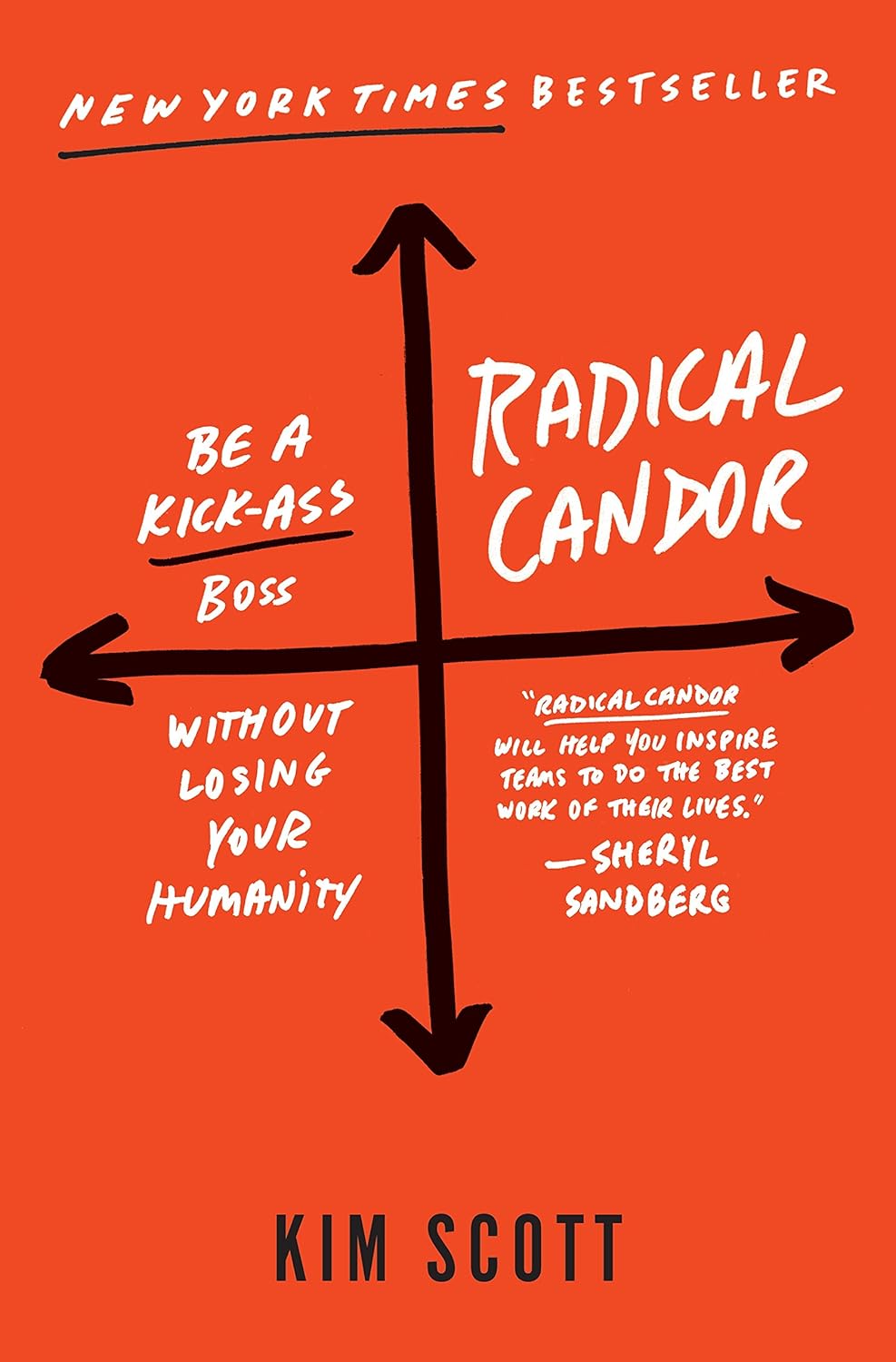
Book links are affiliate links. We earn from qualifying purchases.
Author
Hosts
Transcript
This transcript was auto-generated by our recording software and may contain errors.
Carter Morgan (00:00)
Hey there, welcome to Book Overflows, the podcast for software engineers by software engineers where every week we read one of the best technical books in the world in an effort to improve our craft. I am Carter Morgan and I'm joined here as always by my co-host, Nathan Toops. How's it going, Nathan?
Nathan Toups (00:12)
Doing great, everybody.
Carter Morgan (00:14)
Well, thanks for sticking around, listening to everyone. Make sure to like, comment, subscribe. If you're on YouTube, you can leave a five star review on any audio platforms. And we mean that if you're a regular listener and you haven't left a review yet, take a moment now, pause the podcast and, and leave a five star review and thanks for following us on YouTube as well. We just hit 9,000 subscribers on YouTube. think I haven't checked the audio numbers in a while, but it's around that across all the other audio platforms too. So.
That's exciting for us. mean, Nathan, you, texted me about that yesterday. So obviously you're excited. How you feeling about 9,000.
Nathan Toups (00:46)
Yeah, you know, we've had some steady growth. think month to month, there's no exponential growth, but we're getting steady growth. I love the increased engagement in the comments. Those mean a lot to us, both positive and negative. We want radical candor as well from our listeners. ⁓ you know, yeah.
Carter Morgan (00:58)
yeah.
The nice thing with the podcast is that we're learning a ton from it and we have a ton of fun recording the episode. So I think we'd still be doing this if we had two listeners, just because like we're getting a lot out of it, but it makes it a lot more meaningful that there is a lot of listeners and we are grateful and hope that you guys feel like you're learning too. That's what the whole point of this podcast. ⁓ And yeah, you can always book time with us on Leland if you want to learn more, if you want to have more in-depth conversations with us individually.
⁓ and if you talk with us on Leland, you will be subject to our radical candor because we have just finished radical candor by Kim Scott. Cover the first half last week where it did the second half this week, it's divided into two parts. ⁓ and, it has an afterword, which is actually quite long. And so, yeah, I was, I was like, Hey, we finished the book. I'm like, there's two and a half hours left because I did this on audio. ⁓
Nathan Toups (01:53)
Yeah.
Carter Morgan (02:00)
Well, let's talk about it. Just a reminder. So Kim Scott, she is a former executive at Google and Apple who developed the radical candor framework while teaching a management class at Apple University. After leading teams at some of the tech's most successful companies, she co-founded Radical Candor LLC to help organizations worldwide implement compassionate direct communication. Her work has transformed management practices globally, making her one of the most influential voices in modern leadership. And
A reminder, the book introduction is, radical candor offers a simple but powerful management philosophy. You can care personally and challenge directly, avoiding the traps of being either a pushover or a jerk. Kim Scott drawing from her leadership experience at Google and Apple shows how to build relationships where both praise and criticism help people grow. The framework has become required reading for successful organizations, teaching leaders to create cultures of compassionate candor, build cohesive teams and achieve results collaboratively. So.
We wrapped up this book this week. We've now officially read all of radical candor. Give me your thoughts, Nathan. What are your thoughts on radical candor? Maybe particularly the second half of the book.
Nathan Toups (03:05)
Yeah. So, you know, the second half is sort of the playbook. The first one was the philosophy of how all this stuff should work. The second half is really a lot of tactical pieces. And I think my conclusion is this is an important book. I think it has had a huge influence in the industry. And I think that some of the ways that people have interacted with me are probably like from manager standpoint, are probably like half understandings of radical candor.
Carter Morgan (03:09)
Mm-hmm.
Mm-hmm.
Nathan Toups (03:33)
You know, like, it's like, they almost get the concepts and I'm like, that didn't land properly. And I think she, you know, Kim Scott even brings this up in the foreword of the book of like, why the joke happens in Silicon Valley TV show, why these other things people have used, kind of used and abused aspects of it. But I will say some of the tactics are really good. And I think I will probably refer back to parts of part two, when I need to understand or maybe structure.
what the expectations are on a good one-to-one or, you know, some of these other pieces that kind of come up. ⁓ I will say though, the tone of the book, I can't shake that it has a very like McKinsey consultant approach that I don't love. ⁓ I've worked with lots of McKinsey and I'm not making this a dig as to McKinsey consultants. I would say the worst part about a McKinsey consultant is how obnoxiously achievement oriented and successful they are.
Carter Morgan (04:18)
Uh-huh.
Nathan Toups (04:30)
I will see this and I'll be like, wow, that's an amazing way to operate. I'm not that person. Like I'm not Ivy league, you know, this world. And so I think that this book is a really good playbook for those to be like, Hey, you're going to be interacting with a lot of normal people that are not us. And here's how you need to like make sure to think about regular people. Because again, Harvard and Stanford didn't care about me. That was never like on my trajectory of like, you know what?
If I just push a little bit harder, I'll get into Stanford. nah. ⁓ But that being said, I think that she's talking to herself in the past. If I put my radical empathy, hopefully not ruinous empathy, but if I put empathy in here, I'm like, Kim Scott's giving a playbook to herself earlier in her career. And I think that there are Kim Scott's that are coming through the system all the time that need this book. And...
Carter Morgan (05:00)
Yeah.
Nathan Toups (05:26)
I would inevitably, you're gonna interact with somebody who has that background. And I think that this is a really good book for them to be the best manager for people who might be, like I would say that I'm much more likely to be in the rock star category. I've had places where I've done superstar kind of breakthroughs, but I'm much more of a rock star kind of person. Like I like to do deep technical dives. I want to be domain expert. I want to do these things. And so again,
What I reasons, I love the books in the way that we read them is that like, it helps me understand when I go, this person isn't making any sense to me. ⁓ actually, I think they might be using aspects of this framework of radical candor. And this helps me understand how to interact with them better too, I guess. anyway, that's my long winded ⁓ intro.
Carter Morgan (06:17)
That all makes sense to me. ⁓ yeah, it's. Cause this book has the reputation of kind of being like the Silicon Valley management book. And I realized about maybe halfway through the second section that I was being way too unfair to this book. I had like my Thanos moment when he says to, you know, what's his daughter Nebula. And he's like, perhaps I treated you too harshly. And that's, that's how I felt to, to radical candor because I spent about.
I've only worked at big companies in my career, up until now, I guess. but, I spent about three years between two kind of classic Silicon Valley, big tech companies and listeners. kid you not. When I say that I did not have a single good manager at either of those companies and with one copy at all. And I'll get that done in second. You might say, well, that's not surprising. Only three years. Well, here's the thing. I was there for, I had seven managers.
Nathan Toups (07:06)
Thank
Carter Morgan (07:17)
across those three years at those, those two companies. Yeah. Insane. And that's where you can kind of say like, well, okay, seven managers and none of them were good. Maybe there's a common denominator here. It's like that's possible. I also think it's really weird to have seven managers in three years. And yeah, not a single one was, was good at their job with the exception of one who I still am. ⁓ we're in contact today.
Nathan Toups (07:18)
Wow.
Carter Morgan (07:40)
But he was in the awkward position of just filling in in between one manager leaving and trying to find another one. And he was also the director of our organization. And so I think he could have been really good ⁓ if he had been just my manager. ⁓ but he, he was just torn between a lot of places. I don't blame him at all for it, but I'll say out of the seven, he is the only one who explicitly told me I practice radical candor. Like this was his philosophy. so there's a part of me when I was reading this book and like, I was like,
Nathan Toups (07:48)
Hmm.
Carter Morgan (08:09)
applying it to all my managers and kind of like assuming that they had all read and lived by this book. And I was like, yeah, well you guys think you're so great. You're the Silicon Valley managers. Well, you all sucked. And then I was like mad at this book because I was like, well, my Silicon Valley managers stunk and you're the Silicon Valley textbook. ⁓ And then as I kind of thought about it more, like, no, the thing is all of those managers would have really benefited from
having read this book and applying its lessons, right? And again, the only one who I think would have been really good, had he been able to focus on solely being a manager, ⁓ was the one who had read this book and did actually apply its lessons. And so I think, I think all the kind of parade of poor managers I had, ⁓ I think Kim Scott saw those people too and thought, you know what? We really need a playbook for these people. So yeah, I think I was applying a lot of like,
Nathan Toups (08:40)
Right. ⁓
Carter Morgan (09:08)
I was projecting a lot under this book and after kind of being able to take a step back and being like, no, let me just think about this as management philosophy. It's a good book. And, and I think more people will benefit from reading it.
Nathan Toups (09:10)
Yeah
Yeah, it reminds me that, and it's not just a radical candor problem. There's other frameworks, right? So I'm a big fan of Dave Ramsey ⁓ and people call in. I'm like, I love it. It's one of my guilty pleasures. I'll watch like the Dave Ramsey highlights on YouTube. And a lot of times people come in real tangled up and be like, this, the system's not working or this or that. And they'll go through and he's got these baby steps that are like very
Carter Morgan (09:29)
Yeah.
like call-in shows, I do enjoy a good call-in show.
Nathan Toups (09:47)
clear seven step process and they do it out of order. And that's one of the critical steps of doing the Dave Ramsey plan. have to do it step one, step two, step three, step four, like absolutely in order. If you do it out of order, it gets really confusing. It's too many plates that you're spinning. It's too crazy. Even if you're following the step, you're just doing it in the wrong order. And I think this is similar in that some of these pieces feel counterintuitive. And if you don't understand the context of why
you need to give immediate feedback right after a meeting or that the purpose of a one-to-one is not to give a status update. The purpose of a one-to-one is to give this sort of two-way street of feedback. ⁓ And a lot of it should be, and all of it actually should be driven by the person that's reporting to you, right? Like there's these kind of like core concepts that we'll get into that if you don't do that, right? If you just make your one-to-ones a status update and then nobody ever really says anything honest to each other. And then you go six months goes by and
they've missed all their OKRs and you don't, you you haven't set clear expectations and the next thing you know, you give them a pip. Well, what have you been doing? Like you haven't been doing anything that the system gave you. And now you're saying, I use radical candor. And you're like, did you? You know, like there's all these like, and so I think that's the that's the part where you're like, if you're going to identify with the system, you really should understand the system. Otherwise, you're kind of cargo colting in the same way that I've seen. I've walked into so many shops and they go, ⁓
Carter Morgan (11:00)
Yeah, yeah.
Nathan Toups (11:14)
we have CI CD in place and you're like, do you though? Like, do you actually have these automated tests and deploy processes? Like, you kind of have it. Maybe you have some GitHub actions working or something, ⁓ but do you know how to do these deeper things? I think all of us, if we say we're using a system, you really should familiarize yourself with the system and understand like, what are you actually signing up for?
Carter Morgan (11:42)
Yeah, well, let's, let's get into it. Then we've got part two. part two, ⁓ like you talked about Nathan, if part one is kind of the philosophy part two is titled tools and techniques. And so it's divided that into a four different chapters. ⁓ and, kind of techniques for each area of a radical candor. So chapter five is relationships, establishing trust with direct reports. Chapter six is guidance and getting, giving, encouraging praise and criticism. Chapter seven is team, avoiding boredom and burnout.
And chapter eight is results, getting stuff done together faster. And as a reminder of radical candor, the base, I guess the kind of core idea behind radical candor is, as care personally challenged directly. so she has kind of like a quadrant system. And so you can see if, ⁓ if care personally is the Y axis and challenge directly is the X axis. Then if you care personally.
But do not challenge directly. That is ruinous empathy, which we talked a lot about last week. You don't want to see it be seen as a jerk. You end up really hurting people's careers. If you don't care personally and don't challenge directly, you wind up with manipulative insincerity. This is the one that gets talked about the least. How would you summarize manipulative insincerity, Nathan?
Nathan Toups (13:00)
Ooh. So unfortunately I've witnessed this. This is the kind of person who, well, I think the emperor's new clothes outlines this perfectly, where, you know, no one really believes the emperor has these beautiful clothes, right? But everyone acts like they do because it's actually the easiest to do this. It's completely insincere, right? You're really just trying to power grab. You're really just trying to.
Carter Morgan (13:04)
Okay.
Right. Okay.
Mm-hmm.
Nathan Toups (13:27)
to do these things and yeah, so it's this, have no, there's no empathy whatsoever, but you're also, know, and so maybe the king then starts getting more and more demanding of like more and more absurd and crazy things because everyone's acting like, you know, everything's normal. And so I think that there's forms of that where, and I've seen this where it's like, I look around the room and I'm like, everyone knows that this is not legitimate and yet,
maybe they want to keep their job or they want to do these other things. And at least that was my interpretation, but they don't really talk about it too much actually in the book, you're right.
Carter Morgan (14:04)
Yeah, they spend a lot more time with that ruinous empathy quadrant and then the quadrant where you challenge directly, but you do not care personally. And that is obnoxious aggression, which I think we all have an experience with that. Exactly. Right. It's true. It's true.
Nathan Toups (14:15)
Right. Which the jerk boss, right. The jerk boss though that gets stuff done, right? in a, in,
in they talk about this, right. They're like, most people when asked, they would actually rather the jerk boss who gets things done than the ruinous empathy boss who's like just completely incompetent, but wants to be everybody's best friend. The Michael Scott, right. Michael Scott's ruinous empathy.
Carter Morgan (14:34)
Absolutely. Right, right.
Yeah.
When I was reflecting across my seven managers at Silicon Valley companies, that was the one, the one where I said, you know what, this one clearly did the worst job was the one that I liked personally the most. And again, it's because at least I think there was one who did just objectively a worst job. Like he was not only was he incompetent, but he also wasn't
Nathan Toups (14:53)
Yeah.
Carter Morgan (15:07)
nice and was hard to have a conversation with. But at the same time, because he rubbed me the wrong way personally so much, I knew to be on my guard. Like he at least was doing me that kindness. The one who was just totally in ruinous empathy, like it's way worse because you don't even know to be on your guard. You don't even have the alarm bells going off of like, ⁓ I shouldn't trust this guy. And so like, yeah, like weirdly enough, that's the worst one. Anyhow.
Nathan Toups (15:31)
Yeah.
Carter Morgan (15:35)
So if you care personally and challenge directly as is the thesis of this book you wind up with radical candor ⁓ So yeah that that's just a summary again of kind of what radical candor is all about So now we get into our actual tools and techniques for radical candor ⁓ And I guess we can start with chapter five. We got relationships establishing trust with direct reports What are your thoughts your key takeaways from this chapter nathan?
Nathan Toups (16:00)
Yeah, this one, this one, I actually spent a little extra time thinking about. ⁓ so I'm not technically a manager in my role, but I do kind of halfway manage and you'll see this happen in some companies where I'm technically the tech lead, but I'm also kind of in a management role unofficially. And so while this doesn't, you know, she'll talk about, this much of your week needs to be dedicated to all this stuff. I'm not really my
Carter Morgan (16:18)
right.
Nathan Toups (16:27)
performance is not based off of the performance of these other people. But I do have some sort of like hybrid roles. And so I do have one to ones with these guys, for instance. And ⁓ I've actually been kind of sloppy in how we structure our one to ones. And this was like a really nice reminder of like, this is actually for relationship cultivation. One of the things I loved, she framed it and I could
strongly answer yes to either one of these, which is the coffee test, I think is what she called it, which is would you go grab coffee with this direct report given the opportunity? know, if there's like this sort of impromptu, hey, you want to go grab coffee? Would that be reciprocated? Would the two of you like love to go grab coffee and catch up? She's arguing that if you don't have that relationship that you're completely missing out, like you don't actually understand ⁓ what's going on in your team, which I thought was a good framing.
And ⁓ I also, you know, she, think she also refers to one-to-one meetings as like sacred time, which I don't think I ever thought of one-to-ones as sacred time. And again, I've had some companies in which one-to-ones were something I looked forward to every week. And I've had companies where I've worked in that one-to-ones were something I kind of dreaded. Like I was just like, ⁓ this is the ritual that we're doing. It's kind of silly. ⁓
Carter Morgan (17:35)
Yeah.
Hmm.
Nathan Toups (17:50)
But I think if I had kept them focused like it's expected in radical candor, it's a real opportunity to dig into some juicy stuff that you don't have any opportunity to do otherwise, right? It's like a very specific type of catch up that you're doing. And I would love to know, like, on the relationships chapter, did one-to-one stand out to you, or what was the thing that was important to you in this?
Carter Morgan (18:14)
I mean, I'm very pro one-to-one. uh, I've seen engineers kind of. And so I remember when I first worked at my first job out of college, was like a big entertainment company and kind of seeing my manager, like he kind of like on one-to-one day, you he didn't have his own office and he kind of just like go on a walk with someone and then come back and get the next person. And I was always surprised that some of the more senior engineers, like they just say like, Oh, I don't have anything to discuss this week. he'd be like, okay.
And then like move on. And I kind of was like, why would you pass up your one to one? Like, this is your chance to really, to, to, to grow your career. And then as I've gotten older, I've kind of recognized that like, we talked about this last week, idea of like rock star and superstars. Like people are at different, you're not always a rock superstar, always a rock star. Some people are, I guess, but like a lot of times you move in different phases and I could see.
Some of these older engineers I was working with who were a little like, Hey, you know, I've kind of done what I wanted. Like I've gotten to where I want. This is kind of the job I just want to have. And so I have a ton to talk about, but I've always been very pro one-to-one. I feel like it's where you can, ⁓ yeah, you can get a lot of value, a lot of connection. can really make sure you and your boss are on the same page about what you're wanting out of your job. but I, I've now also never been in the position where I have been on the opposite side of a one-to-one. I've always been an individual contributor.
⁓ so yeah, I, I really liked them. I thought it was interesting when they're talking about one to ones and like the whole point of, one to ones is like you said, like you can kind of cargo colt it and be like, this is just something we do. ⁓ but the whole point is to grow that relationship and establish trust. One thing I really liked her talking about, she was talking about, dreams, like asking your, your reports about their dreams, which I thought was kind of interesting. ⁓ I'll read directly from.
Nathan Toups (20:04)
Yeah.
Carter Morgan (20:10)
the chapter, uh, she talks about her friend Russ, who was managing a large team. And so she's trying to figure out like, okay, how do I encourage these people? Um, I believe this was, and it's funny because you pointed out that this book is fun to read after we read in the plex because we have an understanding of kind of what was going on at Google around this time. And I surmise from this book, I believe what's going on here is that Google had just acquired double click, which if you remember was like the big online advertising network and
Nathan Toups (20:28)
Yeah.
Carter Morgan (20:40)
Russ takes over the team of the double click salesman and it's really, really critical that Google retains this double click team at least for a couple of years or else the whole acquisition kind of fall apart. And the salesmen are feeling kind of like burned out or skeptical joining Google. And so that's Russ's job here. It's like, okay, how do I retain these people? And so he starts asking about not just their long-term visions, but their dreams. so, ⁓
This is the one she says, You want more, deserve more. Todd wasn't budging. Russ tried another tech. Okay, that's one vision, but nobody really knows what they want to do when they grow up. Give me another vision. This time Todd confessed he wanted to be more like a mini Jack Welch than a Russ Laraway. I need to be a CEO, but perhaps not a Fortune 500 CEO. Russ knew he was getting somewhere now.
Something similar happened when we tried this again with another person, Sarah. First she said she wanted to be like Russ, then she talked about another larger ambition. What about another vision? Russ asked a cad, a, I don't swear, a crazy butt dream. Now Sarah said what she really wanted to do was to start a spirulina farm. Well, what spirulina Russ learned is a superfood. Now Russ was intrigued. How was a job persuading people to use DoubleClick to serve their ads going to help Todd become a mini Jack Welch or Sarah to manage a spirulina farm?
⁓ so I don't know. thought that was really, really interesting that like, not just want understanding what your, your, your reports want directly out of this job or even what they kind of imagine the next 18 months to look like, but like, what are they trying to get out of their entire life and, how that can kind of help frame a job? I don't know. Is this a little too woo woo? Is this, do you think?
Nathan Toups (22:29)
Yeah.
I see. I
love this. one of the things that stuck out to me was the amount of confidence that you have that you want these people to potentially grow up and get out of the company that you're in. And I think this is sort of like a scarcity versus prosperity sort of worldview. And Google seems to actually cultivate this quite well, which is, you know, hey, we, you know, and I think one of the things that they frame in this book, which is kind of cool is, well,
Carter Morgan (22:48)
Right.
Mm-hmm.
Nathan Toups (23:02)
I think the woman in the story, she was kind of beating herself up over trying to develop some skills that she was weak in. And really what he identified was that she needs to double down on some leadership skills that she needed, which was actually going to make her just stronger in general and also serve the team better, right? Be in these mentored roles that would actually, and I think what he figured out was how do I help push them on a trajectory that gets them to their dreams?
but along the way serves our team the best it can be. And that's cool leadership. Like when you see that, I go, man, I wish I had more managers that were like that. That had really dug into getting me to say something that was a little vulnerable. Where do I see myself in a few years? And then instead of being like, well, you're in the wrong job. Why are you here? If you want to be an entrepreneur one day or whatever, why are you here? Instead of being like, how do we...
Carter Morgan (23:35)
Mm-hmm.
Nathan Toups (24:00)
harness those entrepreneur desires to our advantage and then also help him on the path to doing what he ultimately wants to do. That's the kind of manager I would want to be as well, right? That's really cool.
Carter Morgan (24:14)
Yeah, I,
I enjoyed this. I, I'm pretty direct and, I know myself pretty well. And so I feel like I don't get kind of lost in like, uh, I don't know what I, what I want out of this job. Um, and so I kind of come to my managers with this sort of stuff. I actually did this recently where I, I was feeling, I don't know why, like,
Nathan Toups (24:33)
Mm-hmm.
Carter Morgan (24:38)
I know actually was going, I was tired. I hadn't been sleeping enough. And when I get tired, like one of the things I do is I kind of get like existential and like a little mopey. And I was just feeling a little like, cause I'm really enjoying my work right now, but I know this isn't where I want to be for the rest of my life. Like I have larger ambitions outside of this. And so I just thinking like, man, am I doing the wrong thing? I in the wrong place? And, I have entrepreneurial aspirations. And so what I did was I wrote down a list and like, what is everything I want to learn at my current company? Not just.
tech wise, but leadership wise, business wise. And said, and I'm like, I should write all this down. And then at least I can know every day, as long as I'm making progress towards one of these things, I'm good. And then I know that I, that maybe I'll leave the company before I learn all those things if the right opportunity comes up. But at the very least I can kind of know that my time is not poorly spent as long as I'm learning one of these things. And so I wrote everything down. It was, I got 36 things on the list. And so, ⁓
And so I've been talking to my managers about that saying basically like, as long as I'm learning one of these things, like I'm happy. ⁓ but if I ever start feeling like I'm too bogged down in the, in, in some forever task or something like that, I'm not making progress towards any one of these things. Then I'm going to start feeling like my time isn't well spent here. ⁓ but I was able to make that list because I have an idea of kind of what my dream is. Like I would love to start my own company and be, you know, the, technical CEO of it. Right. ⁓
That's the thing in particular. I have a lot of interest in kind of like the Utah startup scene. And Utah has a lot of like tech companies, but a lot that the Utah business model is kind of like make software that's good enough, usually like B2B software, and then hire an army of salespeople to sell it, right? And Utah is pretty successful at that model. But I would like to see more engineering driven companies out of Utah. Although we did just have a really great success story ⁓ here where DX, which I have never used.
Nathan Toups (26:31)
Yeah.
Carter Morgan (26:35)
You've used DX, Nathan? Okay, yes.
Nathan Toups (26:35)
Yeah, I rolled it out. Yeah, I rolled it out to our
engineering org. We had like 300 ICs at a company of about 700 people total. And I led, when I was on the platform engineering team, I led the DX initiative and it was transformative. So what this tool is, it, yeah, yeah, yeah, yeah. So actually Nicole Forsgren, who was on the, the, know, forward in the book, the DevOps handbook and is sort of monumentally important for
Carter Morgan (26:50)
What does the X do? Yeah, yeah.
Yes.
Nathan Toups (27:03)
things like Accelerate, working with Gene Kim, ⁓ this is the Dora Metrics, Space Metrics. ⁓ She's an advisor to this company. So that was one of the kind cool things. But they basically created this thing called the DX Core 4, and they are a platform engineering developer experience platform where you basically overlay qualitative and quantitative data. So this will, you you'll gather up all the things like how many PRs, you know, are being
Carter Morgan (27:09)
Yeah.
cool.
Nathan Toups (27:32)
put out and how many things are being deployed to production. But then they would give these ⁓ every 90 days, you would do a survey amongst the engineers and the company. And these would be like CSAT, which are the satisfaction scores, but it would also ask other questions on like, how effective are things? ⁓ Do you feel like you're getting interrupted a lot? Which parts are you thinking of the weakest? And so basically, if you've ever seen that like,
the state of software surveys that come out from the GitHub and Stack Overflow and stuff. It's like that inside of your own company. And you also put your org chart on top of it. So you can see, for instance, for the platform side, we would say, okay, we know this team's high performing. They have lower bugs shipped to production. Their cycle times are really low. We're really happy with the shape of this team. Can I look at the behavior of this team versus one that's struggling and see if
Like what's the difference in the way that they answered the surveys or what's their cadence of how they're working. And it's not one of these where you're like, well, they do five PRs per engineer per week. And this other team's not doing that. And so we need to like crack the whip. It's not that at all. It's this idea that, well, you know what? This other team, they actually complained that they're interrupted. Well, they don't get deep focus time, right? Like I see this, like this team says like, we get lots of deep focus time and we're doing all this cool stuff.
Carter Morgan (28:33)
Mm-hmm.
Nathan Toups (28:58)
team over here. And so it's typically an opportunity for us to go in and talk to organizations and say, Hey, look, I think the way you're structuring your work might be off. Right. Like I think the engineers to feel disempowered and it gave you things like predicting attrition, right? Like things that are really expensive to a company. Like you can kind of get indicators of which teams and individuals are flight risks. It gave you like all kinds of really good data. Yeah.
Carter Morgan (29:25)
Interesting.
Nathan Toups (29:27)
And so if the company actually cares, a platform like DX is meant to increase developer happiness, right? So it's not like there's some other companies that just measure developer productivity and you feel like you're a little automaton and you're like, man, I'm being surveilled all the time. This sucks. ⁓ DX went to the other side of this and said, you know what, why don't we make it a great, we know what great engineering environments look like. Let's see how your company compares to it. And so the other cool thing was they anonymized the data and compare your company.
to 50th percentile, 95th percentile across the industry. Yeah. So again, it was one of those things where like people were very skeptical, but when we rolled it out, it had a huge impact. And I was able to then using real data to executive leadership say, this is why this part of the company is struggling. Right. You guys, you kind of beat up on like, they're never meeting their deadlines. They're never doing this thing. And I'm like, the data shows us this. The data shows us this is what functional teams look like. And this is the one that they're complaining about. And so
Carter Morgan (29:58)
interesting.
Nathan Toups (30:27)
anyway, they just got acquired by Atlassian. that was just announced. Whoa. Yeah, they were crazy. And they had actually only, I knew a lot about them. So I actually took full disclosure. ⁓ they did a case study on my time at flyer. There's actually a, if you look up Nathan tubes, DX, ⁓ I there's like a little blog case study of like us using DX. so I'm a fan boy.
Carter Morgan (30:30)
billion dollars. They have about a hundred employees. Yeah.
interesting.
Nathan Toups (30:51)
You know, I've actually stayed, I've stayed in communication with those folks. then they have, they've, they've kept a really tight, knit team. ⁓ they're, they're CTOs amazing. Their CEO is amazing. They have a really great, ⁓ sub-stack called engineering enablement, which is like, ⁓ just a really good newsletter in general. And so, ⁓ I don't know, I'm a huge fan. I think whatever they do either in DX or any of the leadership, if they go off to do other things, ⁓
Carter Morgan (30:52)
Yeah.
Nathan Toups (31:19)
It was funny because Nicole Forsgren actually just announced that she took a position at Google like two days ago. So like right before the announcement for DX, which I mean, I think it makes probably more sense now, but, maybe it was just coincidence. don't know. ⁓ But anyway, I always, these are the kinds of people that you keep track of, like keep track of Gene Kim, keep track of Nicole Forsgren, ⁓ Abby, who's ⁓ the head of the CEO DX. ⁓
Carter Morgan (31:25)
interesting. ⁓
Nathan Toups (31:48)
Lortaco who's the CTO. I follow those people. They're awesome.
Carter Morgan (31:54)
Well, yeah, I mean, I was just kind of just learning about them, but I was excited to hear about them because again, they kind of break the Utah tech business model ⁓ where they really are. They are really engineering driven, really developer focused. That's the kind of company I would love to build one day. But it helps. It helps if you have a kind of idea of like, okay, what is your dream? ⁓ Because it can kind of guide you to know what you want to do in your career. But not a lot of people think that way. Or if they
Nathan Toups (32:09)
Yeah.
Carter Morgan (32:21)
Maybe they just don't have the time to introspect or it doesn't come naturally. And so that's what Kim Scott is talking about in this book is that is one of your job as a leader. That's one of your jobs. That's how you care personally is you need to understand not just what your, your report wants out of this sprint cycle, but what they, and not even just what they want out of the next 18 months of their career. All those are talks about how that that's important too, cause that's kind of the concrete next steps, but what do they want out of life in general?
Even if that is just, you know, not working, right? Like, because even that will influence kind of the choices you make in your career or how you perform. ⁓ So yeah, I thought that was all interesting. Any other thoughts on Chapter Five, Nathan Relationships? Or do you want to move on to Chapter Six, Guidance?
Nathan Toups (33:09)
Yeah, let's move on to chapter six.
Carter Morgan (33:11)
Okay, so we got guidance, getting, giving, encouraging, praising, criticism. ⁓ She talks about, she kind says there's an order of operations here. Says one, and this is very important, before you can give feedback, you need to solicit feedback. You need to show that you are the kind of person who values feedback. ⁓ And she says, you have to solicit feedback sincerely. When you get feedback, you need to ⁓ actually act on it.
And she also says like, have to be pretty persistent in soliciting feedback from people. Like she says, you got to be comfortable with the silence. Like she recommends six seconds of silence. So you say something like, there anything I can start doing or stop doing that would make your job easier? And she says, wait, six seconds of silence. And then after that, you have to keep pushing. Like, come on, I'm telling you there's, you know, there's gotta be something. She has a lot of people won't give anything, which is why it makes it so important when someone does give something that you have to act on it immediately.
because otherwise, like, people aren't gonna trust you. You ever worked with a boss that's been really good at acting on feedback?
Nathan Toups (34:18)
No, actually,
never once did a boss ask me this directly. ⁓ so I, I will say though, I did it this week. So I, I had my first, you know, sort of focused one-on-one. We have a junior dev on our team. And so this is his first real engineering job after college. And I was like, you know, I'm not doing any, any good service if I'm not showing him what to expect. And we're not trying to dream big about where he wants to go.
Carter Morgan (34:26)
Yes.
Okay, there you go.
Nathan Toups (34:48)
And I'm not being, you know, a good mentor and sponsor and these kinds of things on top of that. And so, um, he was obviously really sheepish, uh, to say, to give me an answer. And I literally just use the tactics here. Right. And I was just like, brought it up again, gave the silence, which, you know, for a person like me, six seconds silence feels like, you know, two minutes of silence. And, uh, but it was really good. Something actually came out of it. He, you know, one of things was.
Carter Morgan (35:09)
Hahaha.
Nathan Toups (35:18)
We'll, we have a tendency to go off and work in silos, which is just very natural to the company culture, actually. I think maybe some of this has to do with the fact that we're doing a lot of open source work. A lot of people just go off and do their own thing. But we've actually had some really, he pointed out quite well that we've actually had some nice breakthroughs when we've done pair programming and in sort of mob programming on certain juicy problems. And that we should, like I should lead in.
making a concerted effort to do this on a regular basis. And I thought that was incredibly healthy feedback, right? That ⁓ really it wasn't just something that can come from the ground up, that this is something that we need to set as a culture for our team and, you know, how we work with others. And I thought that was really great. And so was, I mean, it's the first one, right? Like we can get, we're going to dive deeper later over time, but I didn't realize how important that was. We'd done it a few times, but I didn't realize how important it was to him until he gave me that feedback. Like,
I like working this way. feel like it stops a lot of back and forth and that I can actually move faster and it helps me understand the code base better. And, know, ⁓ it was, it was really, I thought it was a really cool piece and it actually opened up other sort of conversations about what he's looking for and, know, where does he see himself going? And, ⁓ I didn't realize how powerful, yes, what could I do or stop doing to make it easier for you to work with me? It's like a very clear scripted sentence, but.
I highly recommend giving it a try if you're in a position like that.
Carter Morgan (36:46)
Yeah, absolutely. And I think I've worked with some managers that are really good about acting on feedback when you give it to them, which works well for me because I tend to be fairly open and direct, but a lot of people aren't. And so I think if you're a manager, you might be saying like, yeah, well, I do great when people give me feedback, but I think you got to ask yourself, well, how often are you soliciting feedback? Yeah. ⁓ she talks about next giving praise. ⁓ and I thought this was very interesting about her advice on giving praise.
Nathan Toups (37:06)
Exactly.
Carter Morgan (37:14)
She said, your praise needs to be specific and sincere. mean, sincere, think we all get, no one wants hollow praise, but she talked a lot about how your praise should be as specific as your criticism. ⁓ Maybe I'll be able to, over the course of this conversation, look up her example, because she has some good examples here. ⁓ But ⁓ yeah, I don't know. How do you feel about this? Because she talked about how if your praise isn't specific, it can feel hollow.
I know if I agree with that so much. I like a attaboy every now and again, but obviously it lands better when it's specific.
Nathan Toups (37:48)
Yeah,
I think specificity, and we learned this in Made to Stick, right? Specificity actually goes way further, ⁓ always. And I think it may be, I do like to give praise. ⁓ And I typically do specific praise, but I will know if I'm being sloppy, I'll just be like, you did a, that was a great job. ⁓ in that presentation, you know, it was a great job where that's not that useful where I go, you know what? ⁓
Carter Morgan (37:57)
huh.
Nathan Toups (38:18)
You know, I'm going say Tom has been pretty skeptical of this project. And I could tell that from Tom's questions that he's really engaged. And so I really like what you did in that presentation. I think that because you framed it this way, it was, it was really useful. And I think you should make sure to make time for that in the future. Right. Way better piece of praise, right. Instead of just like, you did a great job. ⁓ that they go back and go, you know what? Nathan saw that I actually put in the effort to do this. And I actually, cause a lot of times they'll go, you know what? I was concerned about Tom.
And that was exactly what I was thinking. I'm glad it landed, right? We have candor. That is a real trust relationship that we're building. ⁓ They took my feedback. I took their feedback. They listened. This is what a healthy environment looks like. If I just said, job, they'd probably go, yeah, I did do a good job. I'm glad you thought that too, but it doesn't land nearly as much, right?
Carter Morgan (39:10)
Yeah. She mentions like a lot of people try to make sure that they have the facts straight before giving criticism, but you should be, you spend just as much time making sure you have the facts straight before giving praise. Um, which again is a, I think in our made to stick framework to me, that kind of falls squarely in like uncommon sense. Like, like, Oh, like I've been thinking about that idea a lot because of that. Like it surprised me. I was like, Oh, that's interesting that you would view praise as.
Nathan Toups (39:30)
Yes.
Carter Morgan (39:39)
something you need to be very certain about. she gives an example with our co-founder Russ where, ⁓ she, he's a little league coach and she says that she kind of offhandly told tells him like, really admire that you're a little league coach. And he says, thanks, you know, but then she, said, ⁓ he said, usually that would have been that, but I realized later that my compliment had not been specific. I didn't told Russ why I admired that he was a coach. mentioned the irony to Russ. He replied, well, the real problem is that I don't think you meant it. You hate sports.
Now I realized it was even worse than I thought. wasn't just that I've been vague and helpful. He knew I cared about him, but he thought my praise was insincere. So she's saying this is kind of how you, ⁓ you avoid, ⁓ the manipulative and sincerity quadrant being specific and help you be sincere or at least sound more sincere, convey the sincerity you, you really actually feel. And so she gives an example. She says, the other day I gave you a hard time out leaving early for practice and I felt bad about it.
Nathan Toups (40:15)
Hmm
Carter Morgan (40:36)
Because in fact, I really admire that you're a little league coach. You do as good a job integrating your work and your life as anyone I know. I always wonder if I'm spending enough time with my kids and the example you set by coaching helps me to do better. Also the things you've learned from the positive coaching Alliance, which is something we've read about it made to stick, um, have been enormously helpful in our work. Um, so that's an example of like unspecific praise versus specific praise. Um, and I also think another thing that, cause this kind of ties in with one of the techniques she talks about, she says,
Two minute conversations. You got to get feedback immediately between meetings in the moment. You can't save everything up for your one-on-ones and then kind of dump on people. ⁓ and I thought this was an example of like, I think it'd be really weird to be like in a one-on-one that starts with like five praise statements that are all kind of formatted like this. Like that would kind of feel like robotic, but if this is something that's happening like in between conversations, like, I don't know. I think that makes a little more sense and feels a little less weird. What do you think?
Nathan Toups (41:27)
Right.
Yeah, no, exactly. And so it's funny. I talked about this sort of like tech debt ⁓ feedback thing that was actually, I didn't make it clear. Those were notes that I took because we're all virtual and remote. The two minute conversation after a meeting is an easy thing to do if you're in person, right? You're walking out of the room and I can be like, hey, you blah, blah. But a lot of times I'll write down specific feedback. And the reason I was saying this was like, well, if I let the same feedback get written in my notebook twice,
Carter Morgan (41:49)
Right.
Totally, totally.
Nathan Toups (42:04)
But it was based off of this two minute conversation idea. Cause I was like, oh, I'm actually generating tech debt. Like this is actually like feedback debt is how I was thinking about it. I think this is, this is like a really interesting idea though of like, she puts all these formal processes in place, but then she also kind of in this tech technique section is like, Hey, don't wait for these like things. Like if there's an opportunity to do feedback, do it immediately. You know, like the,
It, the, uh, the praise and criticism thing is a perfect example to, let's say you did have a piece of criticism. Um, and I think this is where that insult to injury thing could come up. So if I just said, Hey, you did a great job on the presentation, but I really think that you, you should stop interrupting Alice. Alice tried to ask a question and I think you preempted what she was going to ask, but she didn't get to finish asking it. And you just assumed that you knew what she was asking and she looked a little frustrated, right? Like that would be the criticism.
That would have taken a lot better if I said, you did a great job on the presentation. You, Tom's finally coming around. Like I can see that you put a lot of effort to address this because he was very skeptical in the last meeting, but I wanted to give you feedback that Alice, you kept interrupting her and you filled in the gap and you didn't give her a chance to finish asking her questions. She looked really frustrating. Which of those pieces of criticism would you take better? Right. I just gave you very specific example of how you pulled Tom in and I'm really happy about that.
But I think if I just given the generic good job on the report and then talked about Alice, you'd be like, wait a minute, then I didn't do a good job. Like, what are you talking about? And so I think, again, that's not manipulative. That's you not being sloppy. You had a very specific feedback about interrupting Alice. But you also need to give specific praise. Otherwise, you really do risk the reputational harm there.
Carter Morgan (43:37)
Yes. Right, right.
Well, one thing she points out is that most people want more feedback than you think they do, which I think is totally true. We think about this and absolutely. Right. ⁓ again, it's like we talked about last week, like by far the biggest quadrant and the most career ruining quadrant is ruinous empathy. You kind of know what you're getting when you have obnoxious aggression, ⁓ but ruinous empathy. And that comes from people who are too scared to give feedback. And I've heard me like, why are you a manager? To be in the developer of being like, I'm scared to write.
Nathan Toups (44:00)
Yeah. Yep. I do. Right.
Carter Morgan (44:26)
code. but with feedback, we talk about this with, with parenting, my wife and I, which is, think she read in some books somewhere, but it's like the roller coaster, ⁓ philosophy of parenting, which is that like, when you get on a roller coaster and you put the lap bar down, you will push it up like instinctively. And what you're doing is making sure that it stays. ⁓ and like, that's what kids do a lot. Like they'll act out and they'll push boundaries, not because they would even be happier.
Nathan Toups (44:48)
Right.
Carter Morgan (44:56)
getting what they want, but because they're trying to kind of like push and see where are the limits. And then by giving them boundaries, you help them feel safe and secure. ⁓ I think there's a similar thing going on here with feedback where it's like, you can think you're being nice by like never being feedback or always being their buddy, but people want to, I want feedback. I want to know how I'm doing. I want to know if I'm on track for my big dreams, for my goals at this particular company.
Nathan Toups (45:06)
Exactly.
Carter Morgan (45:24)
And if you never get feedback, like you're not actually helping your employees.
Nathan Toups (45:28)
Yeah. So I was framing this a little bit in that one-to-one earlier this week. I'm going to bring this up again, kind of giving the basic, a variation of the example given in the first half of the book about having spinach on your teeth. Right. And I think we've all, this is a great story because it's like, it's one that we've all experienced, right? You've spinach on your teeth and nobody purposefully has spinach on their teeth. And it's very distracting. And, you know, but have you ever been at a party?
Carter Morgan (45:42)
Right.
Nathan Toups (45:56)
where you have spinach on your teeth and nobody said anything, right? You're sitting there and going, I ate a salad 20 minutes ago. I've had spinach on my teeth for 20 minutes. I've talked to five different people. No one said a freaking thing that I had. And finally, maybe somebody tells me, or I go to the bathroom and realize there's spinach on my teeth. Now there's a way to be a real jerk and giving feedback and be like, ⁓ somebody's been enjoying the salads like in front of everyone. And you can be a real jerk and kind of embarrass them or you can kind of pull them to the side and be like, hey.
you get spinach on your teeth, just like giving you a heads up, just, you know, kind of knock that off and then let them get back to doing their things. That's part of the goal here is that you want them to bring their best self to the party. don't want to, they're already doing a great job, but there's something so distracting that people are just like, ah, this is kind of weird. And so this is the purpose is that we can give little pieces of feedback that just kind of help you operate at a higher level, right? It doesn't even have to mean fix a character flaw.
or something, it could just be like, some tactical thing that you're doing wrong. Well, you need to give that feedback if you have the ability to do this. And so that was one of the things I was talking to him in this one-to-one about. was just like, hey, this is what I want. I want this culture in which you can give me feedback. I can give you feedback with the goal of us being the best versions of ourselves. ⁓ so, yeah, I love this stuff. Again, I think that this is sort of the guidance piece.
is if you have this high trust environment, ⁓ you can give guidance and it's received, right? Because the other thing I hate is unsolicited advice, right? Sometimes somebody will come in and like give me a pointer and I'm like, you know, ⁓ I'm going to be an entrepreneur one day and they're like, yeah, well, I'll tell you what to do. And I'm like, you've worked in a government job your entire life. Like, why would I take entrepreneurship advice from you? You know? And so, ⁓ yeah, I think it's important to have that context.
Carter Morgan (47:36)
bright.
Yeah.
Well, that takes us to chapter seven team and avoiding boredom and burnout. Uh, a couple of points here. Uh, uh, one is that idea of rock stars and superstars. And she calls it the problem of permanent markers, which is that like, you're not always going to be a rock star. You're not always going to be a superstar. You'll drift in between, uh, sometimes from job to job, sometimes even at the same job. Um, she talks in particular about.
a personal life affecting it. Like you'll see this happen a lot where some might be really motivated and have a lot of fire in their belly earlier in their career. And then they get married and they have kids and then they, kind of settle down and fall a little more into a rock star. I kind of did the opposite where I had kids really young. And so by the time I got my first job out of college, my son was like a year and a half. so kind of, I was more.
I was consumed with that and I was doing things like getting my master's degree and it's kind of only been very recently finishing the master's degree and things have kind of stabilized around home that I've had a lot more energy to put in my career. And I feel like I'm more on the superstar trajectory than the rock star one, but I I'm just sharing that as an example of like people drift in and out. You're not always a superstar. You're not always a rock star. and yeah, so, and just making sure that you have things for both of those people to do.
Nathan Toups (49:20)
Yeah. I was surprised by this chapter in the book because I think that if you as a leader are concerned with avoiding the boredom burnout aspect of this, radical candor really comes from a really wonderful place. You know, I think that this is the kind of idea of like,
Yes, this again, some of this seems a little alien to me because I'm not from that Harvard Business School, know, Mackenzie background. But if if your heart really is in this, how do we grow and cultivate in that boredom and burnout? They really do. They're just so bad for everybody, right? They're bad for the team. They're bad for you. You can get really cynical and
Carter Morgan (49:52)
right.
Nathan Toups (50:12)
This is where you can kind of feel stuck. This is where you can kind of feel resentful, like all these things that nobody wants. And, you know, she makes a really good point in here, basically saying that you owe it to them to not let them be in this position, right? Like that if they're underperforming consistently, it's not that they're a bad person. And it's not that necessarily that you're even a bad manager.
Carter Morgan (50:34)
Right.
Nathan Toups (50:37)
You are a bad manager if you let them stay there, right? Like the idea is set those expectations, but also help them figure out what they actually want. You know, that this was like a really, this is kind of an eye opening thing to me of like, if you see, if a manager sees an employee struggling, don't just vilify them, put them on a pimp and kick them out. It's really just like giving them the feedback saying like, Hey, I don't think this is a good fit for you. And this is why not in a passive aggressive way, but just being like, I think you need a different.
Carter Morgan (51:03)
Right.
Nathan Toups (51:06)
We're not in alignment with what is making you excited. And I think you can do this in a very disingenuous way where you're trying to cover your butt as a manager, but I think you could also do it in a way that's like super amazing. might be the eye opening wake up moment for them being like, you know what? I'm doing this because I thought the narrative was really nice, but actually I don't want to do this at all. I want to go be a, you know, a I want to be a captain of a boat and I don't want to work in tech at all. Right. You're like, Hey.
Carter Morgan (51:32)
Yeah.
Nathan Toups (51:35)
You should go do that because this is an awful way to be a captain of a boat. You don't want to be here if that's what you want to do in life.
Carter Morgan (51:42)
You know, I was actually thinking about one of my bosses I had back in college who had a great radically candid moment with me where, so back in college, I sold football tickets, football and basketball tickets for BYU athletics over the phone. And so it was like a commission based job and we would call people who had bought like a single game ticket in the past and like try to upsell them on a season ticket or we call season ticket holders and try to upsell them on it's called the cour club membership, which is like, it's a donation, but then it gives you extra perks.
Priority seating or a parking pass, things like that. Um, so I was working that job and our shifts started at eight, eight 30 in the morning. Um, and I struggled with being late, not very late. Like we, we had kind like our morning stand up at eight 35, but I would frequently show up around like eight 33 or eight 34. Like it's something I've just never been good at in my life. And it's why I've selected into tech, which is not a value.
extreme punctuality. ⁓ and, but I was just a little late. I kind of thought it was no big deal. My boss had kind of told me like, you know, you should be here on time. Like, okay, okay. But in my mind, I kind of turned to like, I am here on time. I'm here before the meeting starts. Right. And eventually he sat me down and he said, he's like, you need to be here at eight 30 said, and if you do not show up at eight 30, he said, I will fire you. He says, and not because I don't like you, not because he's like, I think you're a good salesman.
He said, but I will fire you to teach you this lesson. So you do not make this mistake again in life when it's more important than it is at this college job. And I was like, Whoa. And so from then on I was, I was on time. I made sure to be there, you know, before eight 30 every single day. Um, but it only helped because he was radically candid and, and it was a perfect example of caring personally and challenging directly. Um,
Nathan Toups (53:34)
Yeah.
Carter Morgan (53:35)
I mean, it was a huge challenge him saying, like, bring out the big guns, like, this is important. I will fire you if you don't meet this. But he tied it in with that, that care personally, I mentioned him saying like, I will do this for your own good. ⁓ she, her kind of radical candor story, ⁓ she mentions in the first half of the book is she adopts like this, the golden retriever puppy. ⁓ and she loves it, but it's very, very soft with it and is not disciplined. And so she's like at like a stoplight.
And like the dog is like yanking on the leash and like go, you know, and she's like, it's okay. You don't spark your whatever the dog is like, it's okay. Don't worry. Just wait for the light. And the dog is just not listening. And the man standing next to her says, he says, I can see you care for your dog. ⁓ but if you don't train him, ⁓ you're going to get him killed. And then he says to the dog and a commanding voice, says, sit. And then the dog sits and she says, he says, it's not mean it's clear. And he just walks off.
And she points that out as a great example of like, he established that he cared personally. says, like, can see you care for your dog a lot, but then he also challenged her directly. And she said that, you know, and it was because he cared personally that he challenged directly. If you don't care, if he didn't care about this woman or about the dog, he would just said like, yeah, this woman doesn't know how to handle her dog and moved on with his day. ⁓ so yeah, I think.
And she talks about that in this back half of the book too, which is that it can be really helpful when you're trying to like implement radical candor in your career and with your reports, sharing your radically candid story. Basically like when, when is a moment when someone's radically candid with you and that it made a big impact on you and it can help your reports understand like, ⁓ that's why they're trying to do this because it really helped them and they think it'll really help me too.
Nathan Toups (55:26)
Yeah. That's cool. That's a great story. I know I've had folks, I had one, wasn't, it wasn't the do this, you know, show up at eight 30 or you're fired standpoint, but again, the best manager I've ever had was very, did practice the radical candor piece. And I remember I had just joined the team.
And all the software engineers, they did two weeks sprint cycles. And actually we had really good rituals around that. It was one of those where it was kind of the scrum process, but they followed it to a T. And so it wasn't this annoying thing. It was actually just like a really good way to understand what everybody had on their plate. We were really good at estimating stuff. ⁓ It was one of the rare times that actually didn't mind the process and thought people really understood what they were doing.
But I was doing SRE, like site reliability engineering stuff, and kind of slipping into a lot of DevOps-y type things, but some of them were bigger software initiatives that I was actually writing code on the API backend and doing some other kind of cool stuff. But I was kind of skirting around the process. Like I wasn't always making tickets for myself. I wasn't always estimating properly. I wasn't, you know, making sure that I had a good backlog, prioritization and coordinating. And he pulled me aside and he was just like, hey,
Carter Morgan (56:22)
Mm-hmm.
Nathan Toups (56:48)
I noticed that you had worked on this ticket and you just like put it in the done column. I was like, oh yeah, yeah, I didn't want to be like annoying to other people. he's like, no, he's like, we have this process in place so that we can trust each other. And if I have to, if I don't know that someone else didn't, you know, do a code review of this, of the things that you're working on, I can't take you seriously as someone part of the software team. Like you're just going to be doing ops work, right?
that this is this is. If you actually want to do SRE, you follow the process like everybody else. And it was very like humbling. Cause I was just like, I was definitely, I had screwed around it I was just used to kind of do and hustle stuff when we were tiny, we were putting all this formal structure in place. And I never, I never screwed up the process again. He didn't say fix this or you're done. Right. But it was definitely one of these pieces where like, I expect this level of behavior if you're going to be taken seriously. I
Carter Morgan (57:36)
Right, right.
Nathan Toups (57:43)
He knew I wanted to be taken seriously. He knew that I wanted to be, ⁓ a part of the team in that way. And, ⁓ yeah. And then after that, I operated within those boundaries and it was actually really cool because then I got to have like, really like better discussions and I'd get good feedback and all the other things that you wanted. And so I always really appreciated that. And, ⁓ and yeah, there are, there are other managers who could have just been like, yeah, Nathan just skirts around the rules and doesn't really do what he's asking. And, know, eventually he's like, well,
Carter Morgan (58:10)
Right, right.
Nathan Toups (58:12)
We had this production on it because you don't follow the rules and like been real passive aggressive. But no, he just fixed it back when it was just a procedural thing and then it never was a problem again.
Carter Morgan (58:21)
Yeah, we have this, a similar thing kind of play out at work where we were, we had a big project we had to deliver and we were debating kind of like what the deadline would be. And I had an engineer who was a little like, a little hesitant to set a deadline because, know, obviously it's hard to estimate engineering work. and kind of what I said, I'm like, this project has a deadline. Whether it's explicit or implicit. That's our decision. Right. And.
Implicit deadlines suck so much worse than explicit deadlines. Like I had that at a project. I worked on it at a company where I was working on this thing. I hadn't been given an explicit deadline for it. And so I was working on this thing and I think I had said like it would take like 12 weeks and, then it kind of stretched and grew into more. I kind of thought like, well, you we're learning things and there were, there was unforeseen tasks and so it's okay. You know, we're still moving along. And so I finally got the thing done and it took.
closer to like six months with maybe actually four months of active development work, then we were kind of waiting on other people for some things. And it was done, and I was really proud. And I was like, hey, this is great. Like, I'm really glad we got this thing done. And my boss wasn't. And I was like, well, what's wrong? Like, it's done. He's like, Carter, if I had known this thing would take six months instead of three months, I wouldn't have done it. Like, it's not worth six months.
And that really shocked me because I was just kind of like, but I was engineering. was working the whole time. so doesn't that mean I was doing a good job? But like that was frustrating. It would have been kinder of him to say this thing needs to be done in three months. It's not worth it if it's not done in three months. so hustle, get it done in three months. Like, cause it was way more annoying to find out after the fact that this thing that I thought I'd done a good job on, I thought I should be proud of was actually viewed as like time wasted. ⁓
Nathan Toups (1:00:14)
Yeah.
Carter Morgan (1:00:15)
But that whole idea of like, it's not mean, it's clear. Um, well, maybe we can talk about chapter eight, that this is about results, getting stuff done together faster. This really gets at the heart with managers kind of her talking about like, okay, well, if you have all this new stuff you're supposed to do to be radically candid, is this just consuming all your time? Like when do you actually do your job? Um, she talks about like kind of at Google, the performance review culture.
Nathan Toups (1:00:18)
Right.
Carter Morgan (1:00:43)
like where it would take like basically one every twice a year took about 40 hours to kind of get all your performance reviews done. But like your job doesn't stop during performance review season. And so you're just like, it's like you have a second job for like two weeks out of the year. ⁓ and so she's saying like, okay, well, how can you actually get stuff done and how can you as a team get stuff done faster? Lots of stuff here, I guess I'll just touch on. She talks about
the importance of debating and deciding. So basically creating space for disagreement, but also knowing when to cut off the debate. And this was a point I thought was really interesting. She says, you need to make it really clear to your team. When are you debating and when are you deciding? right. She says, making it really clear that you're just debating and not deciding. And I realized I've been in these positions before. If you're just debating, but you think you're actually deciding something, it can make the debate feel really high stakes.
Nathan Toups (1:01:27)
Yeah.
Carter Morgan (1:01:41)
And it can make you kind of dig into your position because you feel like this is the time. If we don't, if I don't make my points excellently right now and, and, and really push for my case, then I'm going to lose that on the, on the, the decision. But then at the same time, sometimes you just have to decide and you're saying, okay, we we've talked about this as much as possible. We're done evaluating the pros and cons right now. We're just going to make the decision and that can get people out of kind of that debate space of like playing devil's advocate. And now it's time to.
to actually make the decision. But I thought it was interesting to say, I think we kind of mesh debating and deciding into like, this is just like the decision-making process, but it is important to separate the two out. And that gives people the space to disagree while at the same time letting them know like, okay, here's where we're actually getting on board.
Nathan Toups (1:02:31)
Yeah. Again, back with that, the best manager that I've ever had, was the only company that I've ever seen that we had very clear debate and decide, ⁓ meetings. And it was, it was the coolest experience that I ever had. Cause it was, we wrote an RFC. We, somebody would write an RFC of like, and that's a request for comments of like something that you really cared about. thought architecturally maybe you needed to change, you know, some, any, any sort of bigger software change.
In this one we were struggling with, and this is kind of like a fun engineering problem I'll touch on briefly. We were training these models for doing automated stock trading and the data would change over time, but we needed to be able to have data that was reproducible, meaning ⁓ we get minute by minute ticker data that would come in continuously. We these big data pipelines and then we'd make decisions. But sometimes ⁓ the stock market would make updates.
there was a factual inaccuracy in some reporting for some quarterly data or something like this. And they would do amendments or we would maybe this acquisition would happen and the ticker name would change for something. ⁓ And they would sort of make these adjustments. But what we needed to know is at a point in time, what did the data look like as of a certain date? Right. So like I asked the data this question on October 1st, what did the world look like on October 1st?
versus November 15th. And so we had to structure the data in our database is like very particular way in which all the data was there, but I could also historically ask it, what did it look like at some point in the past? And so we needed, there was these very important columns. There was these like date range things or some other pieces and how we were doing these pipelines. But we ended up building out this very cool database in which you could actually basically imagine move a cursor over time and say, tell me,
Carter Morgan (1:04:28)
I see.
Nathan Toups (1:04:29)
query the data as it was true on this date into the past. And was kind of a juicy, and it was one of those things where until you start really thinking about edge cases, it's actually like a pretty complicated thing with the understanding how the data feeds work and all these other pieces. And for us, it was really, I need a reproducibility of a model. So let's say we pick a model to do some trades on, and we find a bug or something in it. I actually, all of a sudden,
what the world looked like at some point in the past becomes incredibly important. If we need to troubleshoot, we need to know that I can like grab that data set and know exactly what the world looked like. ⁓ And so we ended up, and we had this huge debate. I mean, it was like, whether some date range should be date inclusive or date exclusive and like, how do we actually do the annotations and what happens if these things happen in production or what happens if we have these other issues? It was this huge thing back and forth and just witnessing this was like,
It, some of it felt very pedantic cause it was like literally a column and some data type conversations. And then finally it kind of felt like the dust had settled and there we came to a point to make a decision and that was a separate meeting. And we kind of looked at all this stuff that we'd been duking it out and a decision was made and that's what we, that's what we did. This was like, this is the way that we deal with append only, you know, cursor moving as of date stuff. And it was settled in.
All of us could independently with like commander's intent, all of us could independently go and apply this to all these other services that needed this kind of like pattern to it. And it was just, it was cool because all of a sudden you didn't have to have 15 debates about how do we do it and all these interesting implementations. had kind of like settled this whole thing categorically and moved on. And I had aspects of that in different organizations, but this was like the clearest thing where we're like,
this is what real engineering looks like. This is really cool. This is like a really like high trust, high productivity team around that.
Carter Morgan (1:06:31)
Yeah, I, ⁓
I've just, I'm getting ahead of myself with the book, because now I'm kind of thinking about like, okay, well, who would I recommend this to? ⁓ I mean, maybe we can kind of jump to our closing thoughts. I have a lot of thoughts kind of like around, not just chapter eight, but like the general book at this point. Yeah, well, I mean, any hot takes, anything about this? ⁓ go ahead.
Nathan Toups (1:06:52)
Yes, let's do it.
yeah,
yeah, no, no hot takes. That's a great one. I'm trying to think. ⁓ hot takes I have is, ⁓ yeah, one of the hot takes I had was if more managers actually asked for feedback than gave feedback, ⁓ I think workplaces would be a lot healthier. ⁓ If it's just coming down, I think it's a lot.
It's hard to take that feedback as much unless I feel like there's a two way street, right? Especially if a manager can drive you crazy sometimes. If I don't feel empowered ⁓ to go back and give that feedback and feel like it's a safe place to give that feedback, ⁓ you know, there's this dysfunctional buildup over time. ⁓ Another hot take I have, really, I guess, have you had that feeling? mean, do you ever wish that you had a better relationship with a manager where you're like, I wish I could get feedback, but I don't really feel comfortable doing this?
Carter Morgan (1:07:27)
Right.
absolutely. Right. ⁓ and you just know, like, if you give feedback, like I've had the kind of the opposite where like, am someone who gives feedback pretty willingly. ⁓ and I've just had to happen with the managers and like it just, either they react really poorly to it or they, just don't implement it at all. And then you just kind of, it's demoralizing. You're like, okay, well, I guess I, I'm not going to do, you know, I'm not going to get anywhere here. ⁓ yeah, I, ⁓ for me.
Nathan Toups (1:07:53)
Yeah.
Right.
great.
Carter Morgan (1:08:22)
I think I have two kind of takes about this book. So one, this is a very minor thing, but the second edition of this book was done during like what I call peak woke, like kind of like that summer of 2020. And like, there are some things that sneak into it, which are like a little silly, I think. Yes, yes. Just kind of like, as an example, look, the guy who writes Dilbert has some crazy opinions, right? And I've seen,
Nathan Toups (1:08:34)
Yeah.
It's annoying. Yeah, exactly.
Yeah.
Carter Morgan (1:08:50)
some of what he says, and I don't agree with everything that guy says. think sometimes he's like often in La La Land, right? She references Dilbert in the book, which like Dilbert is a great comic strip. And especially like for us, like nine to five white collar tech workers, like there's a lot you can read in Dilbert and like, it's a funny satire, right? But she can't just mention the Dilbert comic strip without also slamming Scott Adams who writes Dilbert. And I'm a little like, it's fine. Like.
You can disagree with Scott Adams. you reference Dilbert, I am not assuming you are implicitly endorsing everything Scott Adams has ever said or done. Like Dilbert can just be a funny comic strip. So there are a couple moments like that where it's little like, No, absolutely, right? Like.
Nathan Toups (1:09:28)
He is cuckoo, I will say like, but at
the same time, yeah. And there's that sort of like, yeah, it's this sort of like, hand wringing, half apology stuff that it's kind of become part of the fabric of Silicon Valley to kind of be like, acknowledge your privilege, you know, all the stuff and you're like, you're like, yeah, you're saying these words, but are you what have you changed to actually make any
Carter Morgan (1:09:40)
Yes.
Right.
Nathan Toups (1:09:56)
There's still the knot in my backyard and all these other problems that happen in all these cities. ⁓
Carter Morgan (1:09:57)
Right. Right, ⁓ are
you a, do you two have strong feelings on zoning? We should talk about this. Not on the podcast, but I, right. Yes.
Nathan Toups (1:10:07)
well, it's hypocrisy. It's hypocrisy that bothers me. Right. So
it's one of these things where you're like, well, we need, ⁓ you know, low income housing to solve the housing problem. And you're like, cool. Well, we need it in your neighborhood. You know, your downtown San Francisco. We need it your neighborhood. They're like, well, not my neighborhood. You know, I just mean, like, generally, like, why don't we why don't we put on the edge of the suburbs? You know, you're like, OK. ⁓
Carter Morgan (1:10:24)
Right, right. Your Berkeley neighborhood, right? Right, right. Yeah.
Nathan Toups (1:10:35)
But why is it appropriate for them and not for you? To me, it's the hypocrisy. I do think housing is, there's a lot of problems. There's a lot of policy issues. But ⁓ in the very same places that seem to saber-rattle about it a lot, it's like, ⁓ yeah, well, anyway. Hypocrisy drives me nuts. Hypocrisy drives me nuts. I'm like, there's no easy way to do it, but yeah.
Carter Morgan (1:10:42)
Okay.
And there's a... So... And
so ⁓ as a pro for Kim Scott in not being a hypocrite, she actually does talk a lot in this book. She talks more about gender issues than race issues because she's a woman, so she's kinda coming from that background. And she does... Yes.
Nathan Toups (1:11:09)
She has some really heartfelt stories that I was like, wow, that
had to have been tough and horrible, you know, like, yeah.
Carter Morgan (1:11:17)
And she says, she's
like, it's a problem. She's kind of talking about kind of like peak woke saying that like managers feel uncomfortable challenging women because they get, they feel like they're, being too aggressive with them. And basically she, she has some great tips and we can't get into all of them about like, how do you handle this when there is a gender dynamic? But the point she says like society has become too fraught and it's too hard to have these conversations, but it's not kind not to have them. And you still owe people.
Even you might need to be a little more tactful about it, but you still owe people challenging them directly. And so I was very impressed because again, there's a little bit of hand wringing. There's a little bit of like covering your woke bases, so to speak, which like sounds super stupid. I know, but like you kind of get what I'm saying that I was a little like, ⁓ is this book talking out of both sides of the mouth? And she gets to that point and basically says like, no, it's still really important to be radically candid, even when there's tricky gender or race or culture issues.
I'm like, you know what, that's really, really cool. So a big thumbs up to Kim Scott there. And then I have another thought, but maybe we can talk about it kind of when we talk about who we would recommend this book to. So I guess first let's say, what are we going to do differently in our career? Because we've finished Radical Candor.
Nathan Toups (1:12:35)
Yeah. So, this week and I've already, I've already taken this advice, right? So as make sure to ask the, what could I do to stop, what could I do or stop doing that would make it easier to work with me? ⁓ it's such a powerful question. I, I had committed, I'd actually written this earlier this week. ⁓ I committed to doing this and I actually did it, yesterday, ⁓ no day before yesterday. ⁓ and it's, it's super powerful, highly recommended, highly recommended. It's such an easy.
simple thing to get started with. You don't even have to understand the rest of the context of the book. So I'll continue this.
Carter Morgan (1:13:11)
Yeah, I, for me, it's a bit of a cop out answer, but I didn't mean it sincerely, which is just care personally challenged directly. And I think this book is actually a really great example of like the made to stick communication philosophy, because if you boil radical candor down to simple, what is the core idea of radical candor? It's this it's care personally challenged directly. And then the rest of the book is basically a collection of stories meant to, ⁓ to, to instruct you, how do you actually implement this idea?
And so what I really want to remember in my career are those two stories, her story and my story, as far as radical candor goes, her story of her training the dog and the stranger at the stoplight giving her the advice. And then my story of my sales boss threatening to fire me if I didn't show up on time, because both those stories, I think really illustrate that these are people who cared personally, but they challenged directly. And I just want to make sure when I'm giving feedback that I'm, I'm.
coming from that direction, where I do sincerely care about the person, but I'm also being direct in what I need to see from them. ⁓ So yeah, I I think this book does a really good job of kind of boiling its core idea down to something simple and then helping you understand that. Because like in kind of the anti-medistick, you'd absolutely say radical candor is revolutionizing the workplace and transforming how individuals engage with each other in a sincere manner while
maintaining the humanity of relationships. And then it's like, what does that even mean? Right? ⁓ So I saw you've given a laughing emoji to my, would I recommend this book to? Why don't you go first and then I will go second. ⁓
Nathan Toups (1:14:53)
Yeah. So, as I do, still, my advice for last week, think it's not changed. ⁓ new managers who are terrified of being mean and probably over-optimized to ruin the sympathy. You absolutely need to read this book. Like you just for your career and for the career of the folks that report to you, ⁓ tech workers, this book is so ubiquitous and it's misapplied so many places. ⁓ I think all of us, I really appreciate.
being able to understand how systems actually work and radical candor is a system. if you wanna do apply systems thinking to your organization, read the book because it at least helps you understand. ⁓ And there are some really good pieces in here that I think that, I came out of this book better for it.
Carter Morgan (1:15:39)
Yeah, I would recommend this to the same as last week to really basically any manager, but I think here's the trick with radical candor. You have to pretend that you have never heard of this book. You have to pretend that like you've walked into a bookstore. You've just seen this. You're the first person in the world to ever read this because this book has absolutely become a victim of its own success. And Kim Scott is aware of that. That's the whole Silicon Valley joke, right? This guy talking about how he's practicing radical candor, but really he's just being a joke. And then like some.
Nathan Toups (1:16:00)
Yes.
Carter Morgan (1:16:08)
old coworker or boss comes into the coffee shop and he like ducks under the table to hide from him, but insists that this is still part of radical candor, right? And like, you can kind of, I think there are too many people who like say they practice radical candor, but are just kind of jerks or say like, yeah, I'm a totally radically candid guy, but haven't read the book, right? Either don't apply it, right? And like, ⁓ I think it just becomes so popular that if you ask any boss, like, are you a radically candid boss, especially in Silicon Valley, people are like, yeah, I'm a radically candid boss, but like,
Are they actually doing the things in this book? And so you can wind up like me where you're like, this book sucks because I've had radically candid bosses, but they were all bad at their jobs. But the answer is they weren't really radically candid. And I hate to be like true radical candor has never been tried. Right. but I do think if you kind of just pick up this book with no misconception, just say like, interesting book. Let me read it. And let me see if there's anything in here for me to apply to my management style. I think you'll find a lot.
Nathan Toups (1:16:53)
Right... Right...
Carter Morgan (1:17:07)
And you can't think of it as like, let me put all of Silicon Valley management on a trial and, ⁓ and see if this book is what all it's cracked up to be. Cause I think you'll wind up like me and be kind of frustrated with the book until you realize that you're not actually mad at the book. You're mad at some of the managers you've had.
Nathan Toups (1:17:26)
Yeah.
Carter Morgan (1:17:28)
Well, that wraps up Radical Candor this week. We're very excited. We have a great backlog coming up of books. We felt like we've done a couple kind of like career and culture focused books. And so we've been feeling like, you know what? It's really time to dive into some hard technical topics for a while. So I'm excited about what we've got. We've got the next two weeks are going to be Mastering Open Telemetry and Observability.
very, very excited for this one personally. I've been really, really interested in this at work and actually done a lot of work in getting, we're using Java or GraphQL with Java Spring. And I finally just kind of got everything instrumented so that we're getting automated metrics for our GraphQL requests. And yes, it's been huge. ⁓ So that's been really, really cool. ⁓ After that, we're doing Learn React with TypeScript. ⁓
Nathan Toups (1:18:11)
life changing. stuff. Yep.
Carter Morgan (1:18:21)
We're hoping that this book isn't so much like, I'm really interested in how React works underneath the hood. ⁓ And so I'm hoping this isn't so much like, here's how to build a web app, but more like, okay, what's the actual science behind React? Which we're excited about. Nathan, this is one you recommended. You said this author has been very popular on LinkedIn. Beyond Vibe Coding, what is this?
Nathan Toups (1:18:42)
Yeah, this one is a, the guy's like on the Chrome, the Google Chrome team, but they're doing, he's also doing a bunch of AI stuff. ⁓ I saw a talk of his where he basically was like, Hey, we shouldn't call it prompt engineering. should call it context engineering. It is very well reasoned. it was like, kind of talking about the inner workings of how LLMs function, everything else. And this was the book that he kind of wrote along with this. And so I think a lot of it is like, how do you get into
Carter Morgan (1:18:48)
cool.
Interesting.
Nathan Toups (1:19:11)
architecturally how LLMs work so that you can actually use these tools better. And, ⁓ it's why, I don't know. It seemed very well reasoned. It's also got like tremendous amounts of praise. And, ⁓ thought potentially, obviously we don't ever promise, but like he'd be a cool guest. He's just a good speaker. ⁓ but also the book looks really, I want to under, I've been using Claude code and some other tools a lot more recently. And, ⁓ this looked like a good deep dive.
Carter Morgan (1:19:33)
Right, right.
Yeah, I'm excited about this. And then listeners, you're in for a treat. We promised this one. ⁓ now I am looking at the schedule. This is slated for November 17th. We do try to take December off and try to have some bonus episodes. So this might get pushed into the new year, but you're in for a treat designing data intensive applications. It is on the list. think by the time we read it, the second edition will be done. Although the second edition is out and you can read the preview version of it. And so that's what we'll read if we get to it. So.
Whether this happens around November or I think more likely January, we'll see, but we're going to do it. We're going to do designing data intensive applications. We're going to devote as much time as we need to do it. And this is by far the most requested book from our listeners. So you're in for a treat. Very, very excited to be tackling this one. Well, that's a sneak peek of what's coming up on Book Overflow. Thanks for listening, everyone. appreciate, like we said, it's great having listeners and we appreciate anytime you interact.
Nathan Toups (1:20:10)
Right.
Carter Morgan (1:20:34)
with us when you email or comment. And you can do that. You can leave a comment on whatever platform you're on if it allows commenting. And you can email us at contact at bookoverflow.io. You can find us on Twitter at BookOverflowPod. I'm on Twitter at Carter Morgan. And Nathan's newsletter, Functionally Imperative, is at functionallyimperative.com. ⁓ It's ⁓ been great reading Radical Candor, and we hope to see you around.